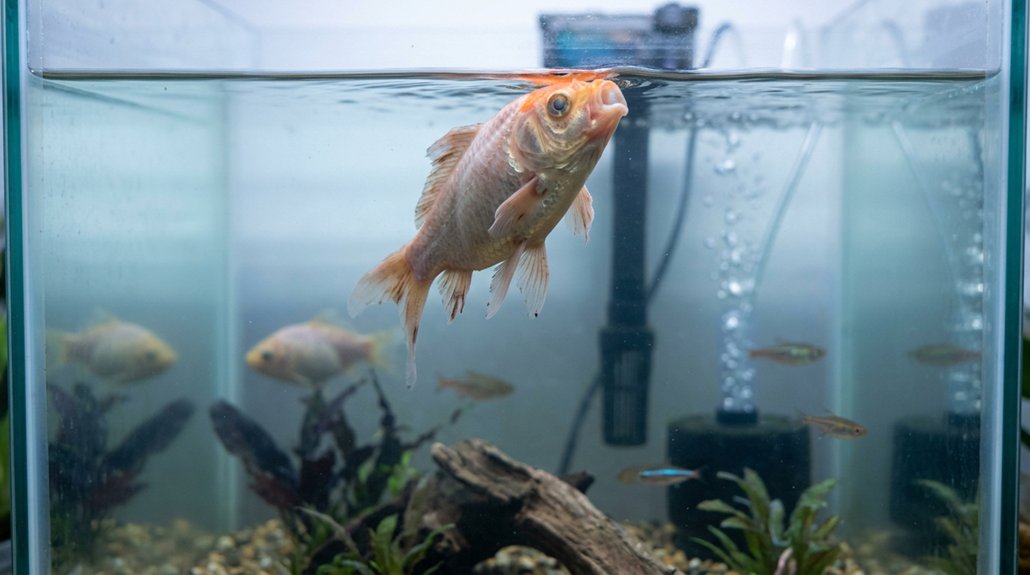
Take action right away if you notice lethargy, hiding, clamped fins, loss of appetite for 24 to 48 hours, abnormal swimming, or white spots, frayed fins, or ulcers. Test ammonia, nitrite, nitrate, and pH immediately, since poor water quality often triggers illness. If needed, move the fish to a properly matched quarantine tank within 24 hours and treat early. Acting fast can stop a small problem from spreading, and the next steps matter.
Key Takeaways
- Take action if your fish becomes lethargic, hides, loses appetite, or shows clamped fins, fading color, or frayed fins for 24–48 hours.
- Check ammonia, nitrite, nitrate, and pH immediately; test water quality before assuming illness.
- Do an emergency 25–30% water change if ammonia or nitrite is above 0 ppm, or if nitrate is above 40 ppm.
- Quarantine sick fish within 24 hours in a separate hospital tank with matching temperature and pH.
- Contact an expert if symptoms worsen, multiple fish are affected, or ammonia, nitrite, or pH remain abnormal after correction.
Signs Your Fish May Be Sick
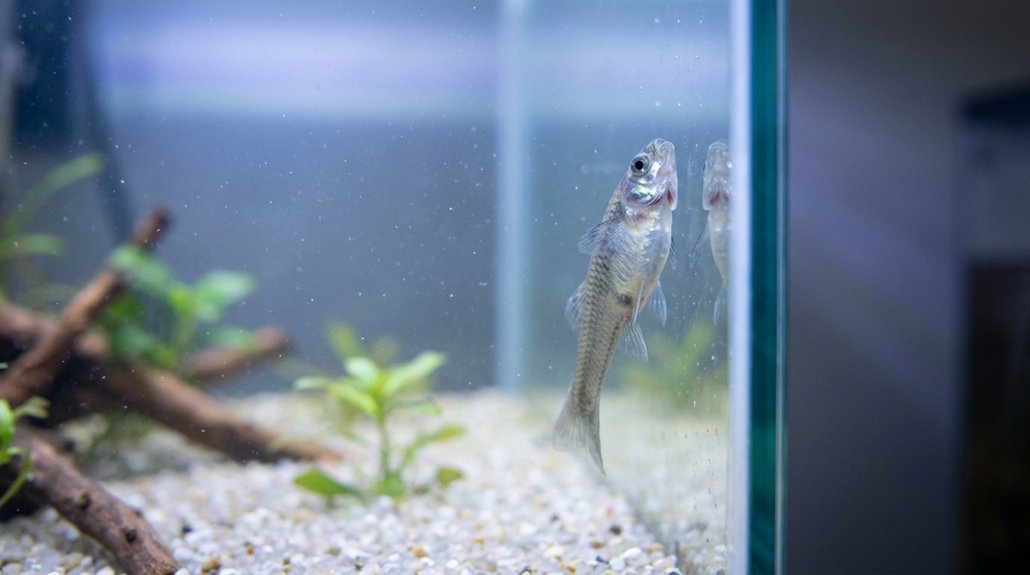
If your fish suddenly becomes lethargic, hides, rests on the substrate, or shows a marked drop in activity, treat it as an early warning sign. You should assess behavioral cues closely: reduced swimming, clamped fins, loss of appetite for 24–48 hours, and abnormal darting or rubbing all suggest illness. Watch for visible changes too, including faded coloration, frayed fins, cloudy eyes, ulcers, or white cotton-like patches. If your fish lists, floats upside down, or can’t maintain balance, suspect swim bladder dysfunction, parasites, or neurological trouble. External spots, red streaks, sores, or pale cysts require prompt attention. These signs often reflect infection, stress, or thermal stress, and they don’t resolve on their own. Document what you see so you can act quickly.
Check Water Quality First
Before treating the fish directly, test the aquarium water right away with a reliable kit for ammonia, nitrite, nitrate, and pH. Use rapid testing to confirm whether the environment is the problem before you add water additives. If ammonia or nitrite is above 0 ppm, or nitrate is over 40 ppm, act immediately with a 25–50% water change and retest within 24 hours.
| Parameter | Action |
|---|---|
| Ammonia/nitrite >0 ppm | Emergency water change |
| Nitrate >40 ppm | Partial water change |
| Temperature off-range | Correct slowly |
Keep temperature within the species’ range, since swings increase stress and worsen water chemistry. Retest daily until ammonia and nitrite are 0 ppm and nitrate stays below 40 ppm. Continue regular partial changes to prevent recurrence.
Common Fish Illness Symptoms
You should watch for lethargy or sluggishness, since a fish that’s inactive or unusually withdrawn often has an underlying health problem. You should also note appetite loss, because reduced feeding commonly signals stress, infection, or poor water quality. Color changes, clamped fins, or frayed fins are further warning signs that you shouldn’t ignore.
Lethargy And Sluggishness
Lethargy is one of the earliest and most common signs that a fish is unwell, often appearing before any visible lesions. If you see sluggish swimming, clamped fins, or a fish resting motionless for more than 20–30% of daylight hours, start closer observation and water testing immediately.
| Sign | Action | Likely concern |
|---|---|---|
| Slow movement | Test water | Ammonia, nitrite |
| Bottom resting | Check behavior | Temperature swings |
| Worsening in 24–48 hours | Quarantine | Bacterial, parasitic, internal disease |
Measure ammonia, nitrite, nitrate, pH, and temperature at once. Improve behavioral enrichment and confirm light cycling are stable. If multiple fish are affected, or one worsens despite corrected conditions, quarantine it if you can and begin appropriate treatment promptly.
Appetite Loss Signs
Another early warning sign is appetite loss: if a fish that normally feeds well refuses food for 24–48 hours, treat it as a possible sign of stress, poor water quality, or disease. You should verify feeding schedules, because a consistent refusal is more significant than a skipped meal. If a normally voracious fish hasn’t eaten for more than 48 hours, test ammonia, nitrite, pH, and temperature immediately. In fry or small-bodied species, even 12–24 hours without feeding can be critical. When appetite loss occurs with lethargy, bloating, or weight loss, the risk of bacterial, parasitic, or internal infection rises. Document the duration, then use water-test results to decide whether to quarantine, perform a partial water change, or begin targeted treatment. Nutritional supplements won’t replace diagnosis.
Color And Fin Changes
Faded or patchy coloration is often one of the earliest visible signs that a fish is under stress, and a sudden loss of vibrant color warrants immediate testing of pH, ammonia, nitrite, and nitrate. If you notice seasonal dimming, compare it with the fish’s normal pattern and behavior; a true change is usually broader, duller, and persistent. Watch the ventral stripe and other markings for blanching or uneven fade. Frayed, ragged, or white-edged fins suggest fin rot and often worsen quickly, so start treatment and correct water conditions at once. Clamped fins, redness, swelling, ulcers, or cotton-like growths indicate illness, injury, or infection. Quarantine if possible, perform a 30% water change, and seek prompt diagnosis and medication.
Quarantine Sick Fish Quickly
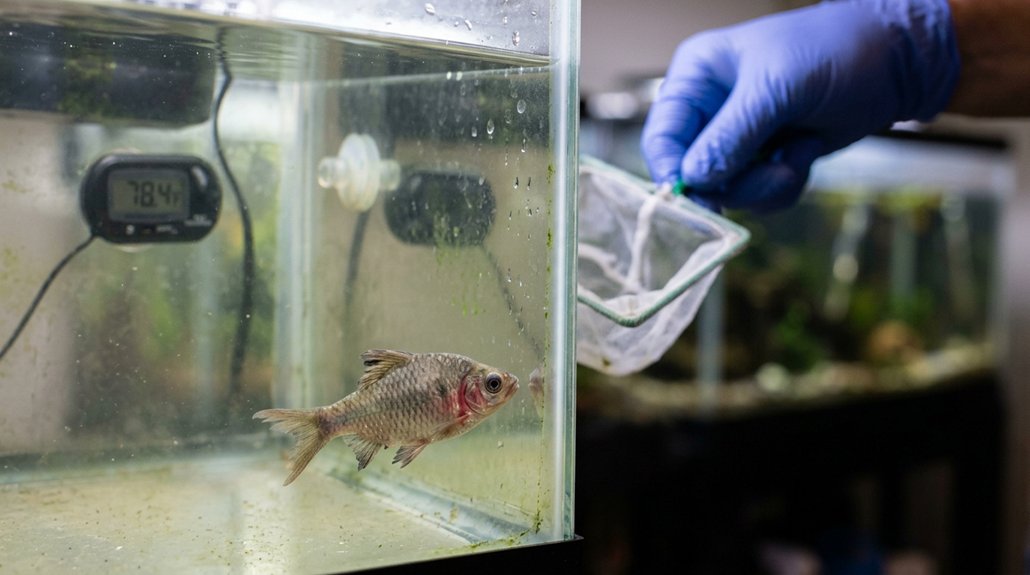
If you spot lethargy, clamped fins, white spots, ulcers, loss of appetite, or abnormal buoyancy, you should separate the affected fish within 24 hours. Move it to a properly sized hospital tank with matching temperature, pH, and filtration, and perform a 30% water change during transfer to reduce stress. Quarantine it there for treatment and daily monitoring so you don’t expose healthy fish to pathogens or medication.
Spot Symptoms Early
Spot symptoms early and move at once: clamped fins, lethargy, white spots, ulcers, bloating, or abnormal swimming all warrant immediate quarantine to stop disease from spreading. Early detection gives you the best chance to limit damage, and gentle handling reduces additional stress while you transfer the fish. If you notice reduced appetite or unusual behavior, test ammonia, nitrite, nitrate, and pH within 24 hours and correct any water-quality issue with a 30% change. Keep the affected fish under close daily observation for worsening signs, and note whether symptoms improve over 3–5 days. If several fish are involved or recovery stalls, seek identification support and prepare targeted treatment promptly.
Separate Ailing Fish
At the first clear sign of illness, move the fish to a clean quarantine tank within 24 hours to reduce cross-infection and make assessment easier. Use a tank at least 10–20% of the main tank’s volume, with matching temperature and water chemistry, so you don’t induce shock. Perform a 30% water change in both systems, add dechlorinated water, and use aquarium salt unless the species or plants are salt-sensitive.
- Watch for white spots, cottony growths, ulcers, lethargy, and anorexia.
- Test ammonia, nitrite, nitrate, and pH daily for 7–14 days.
- Offer food, then make any diet adjustment and behavioral enrichment as needed.
Keep the fish isolated until you identify bacterial, fungal, or parasitic signs. Quarantine new arrivals for 2–4 weeks before transfer.
Treat Bacterial, Fungal, And Parasite Problems
Act quickly when bacterial, fungal, or parasitic disease is suspected, because these conditions can worsen within 24–48 hours. You should start the right medication promptly and respect medication timing, since ulcers, white cottony patches, frayed fins, or cloudy eyes can progress fast. Test ammonia, nitrite, nitrate, pH, and temperature first, then correct any imbalance; poor water quality often drives infection and undermines immune support. Quarantine sick fish when you can to limit spread. If that isn’t possible, treat the tank by volume with API- or veterinarian-recommended antibacterial, antifungal, or antiparasitic products. For ich, complete the full course, raise temperature slightly if the species tolerates it, and use aquarium salt only when appropriate. Check appetite, behavior, and symptoms daily, and keep up water changes.
When To Treat The Whole Aquarium
Treat the whole aquarium when you can’t safely isolate the sick fish, because the medication must cover the full water volume. This treatment timing is critical when disease is spreading. You should treat immediately if multiple fish show ich, fin rot, or cloudy gills.
- Use whole-tank treatment when the agent’s unknown and several fish are lethargic, anorexic, or ulcerated.
- Treat the entire system if ammonia, nitrite, or major pH or temperature swings are present; perform a 30% water change.
- Dose based on total volume when salt, copper, or antibiotics are required, and check medication interactions.
Follow product instructions exactly; underdosing can fail, and overdosing can injure fish. Monitor response closely and adjust only with clear evidence.
How To Prevent Fish Illness
Preventing illness starts with consistent husbandry: test your water weekly with a reliable kit for pH, ammonia, nitrite, and nitrate, and correct any ammonia or nitrite above 0 ppm or nitrate above 40 ppm promptly. Maintain proper filtration and stable lighting schedules to reduce stress and support immune function. Perform 20–30% partial water changes weekly, and vacuum substrate to lower bacterial and parasitic loads. Quarantine new fish for 2–4 weeks in a separate tank, and watch for white spots, clamped fins, or lethargy before adding them. Keep stocking density appropriate, match species compatibility, and hold temperature and pH within species-specific ranges. Feed high-quality food in small amounts once or twice daily, remove uneaten food within 5 minutes, and replace opened feeds every 90 days.
How To Clean Tanks Safely
Cleaning the tank safely helps reduce pathogen spread without disrupting the biological filter. Wear disposable gloves, wash your hands before and after, and use a dedicated siphon, scrubber, and bucket for aquarium use only. Clean tools in a bathtub or outdoors so chemical residues don’t contaminate sinks. Perform weekly 25–30% water changes with dechlorinated, temperature-matched water, and vacuum substrate to remove debris; if substrate replacement is needed, do it gradually. Rinse filter media gently in removed tank water, not tap water, to preserve beneficial bacteria.
Clean gently: weekly water changes, dechlorinated refills, and rinsed filter media protect beneficial bacteria.
- Disinfect nets between tanks with 1:10 bleach, then rinse and air-dry.
- Use 70% isopropyl alcohol when appropriate.
- Avoid bleach on live plants or sensitive species.
This routine keeps ammonia, nitrite, and nitrate within safer ranges.
When To Contact A Fish Expert
If your tank is clean and water quality has been corrected but fish still look unwell, it’s time to contact a fish expert. Call a veterinarian or experienced aquarist immediately if you see rapid breathing, bloody or ulcerated skin, severe lethargy, buoyancy loss, or dropsy. These signs can indicate serious bacterial or systemic infection. Seek help when multiple fish are affected or symptoms spread within 24–48 hours, because tank-wide disease may need coordinated treatment. If ammonia stays above 0.25 ppm, nitrite is above 0 ppm, or pH swings exceed 0.5 units after a 30% water change, get expert guidance. Before prescription therapy, ask about live plants, invertebrates, sensitive species, veterinary referral, and insurance coverage.
Frequently Asked Questions
What to Do When Your Fish Looks Sick?
Test your water immediately, isolate the fish, and do a 30% tank maintenance water change. Watch behavior changes, add salt if appropriate, and start targeted treatment fast; you’ll reduce stress and limit secondary infections.
How Long Does It Take a Fish to Recover From Poor Water Quality?
Like a storm clearing, you’ll usually see mild recovery in 24–72 hours, moderate cases in 3–7 days, and severe damage may take weeks. Use water testing, gradual adjustments, acclimation period, and stress reduction.
How Do I Know if My Fish Is Unhealthy?
You’ll know your fish’s unhealthy if you notice color changes, odd behavior, clamped fins, loss of appetite, rapid breathing, spots, lesions, bloating, or rubbing. Test water immediately and quarantine affected fish.
Can Fish Recover From Disease?
Yes—your fish can recover from many diseases if you act fast. Prompt treatment, stress prevention, and immune support improve outcomes. You’ll need clean water, quarantine, and careful monitoring; severe cases may still need euthanasia.
Conclusion
When your fish seem dim or listless, think of your aquarium as a small city under strain. First, inspect the water, because many “sick” fish are reacting to hidden chemistry, not disease. Then isolate any ill fish, treat confirmed infections promptly, and disinfect carefully. If symptoms spread, act on the whole tank. Your fastest, safest response is measured observation, timely quarantine, and expert guidance when conditions worsen.