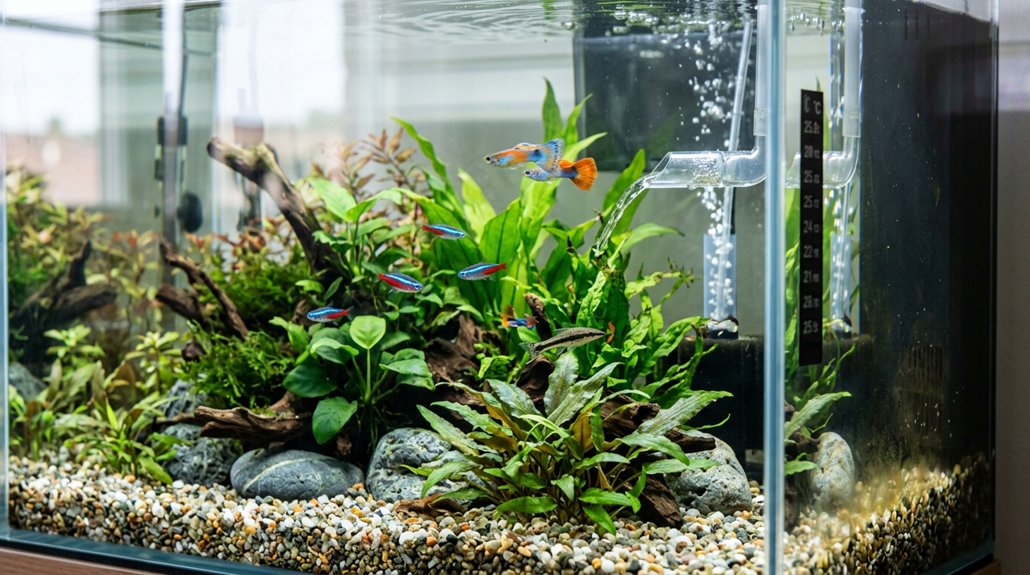
Common fish tank problems usually show up as cloudy water, debris, algae, or planaria, and they often point to overfeeding, weak filtration, or unstable cycling. If ammonia or nitrite rises above 0 ppm, you should change 25–50% of the water, remove waste, increase aeration, and use a detoxifier. Keep biological media intact, test parameters regularly, stock slowly, and feed sparingly. With a few targeted adjustments, you can stabilize the tank and learn the next control steps.
Key Takeaways
- Cloudy, green, or hazy water usually means overfeeding, algae, weak filtration, or a bacterial bloom.
- Test ammonia and nitrite often; any reading above 0 ppm needs immediate action.
- Do a 25–50% water change, remove waste, and increase aeration during toxic spikes.
- Protect beneficial bacteria by keeping biological media intact and replacing filter media in stages.
- Prevent most problems by stocking slowly, feeding sparingly, and doing regular partial water changes.
Common Fish Tank Problems to Spot
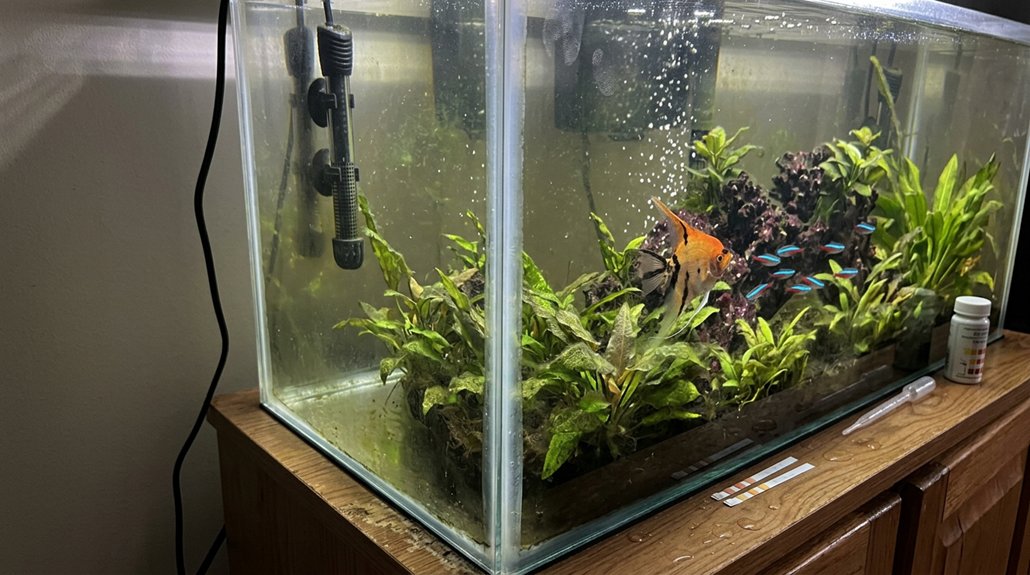
Common fish tank problems are often visible before they become serious. You may notice tank pests such as white or tan planaria, which usually point to overfeeding or excess organic debris. Look for algae spots on glass or decor; green water often means a microscopic algal bloom driven by excess nitrates, phosphates, and light. In new setups, cloudy white water can signal a bacterial bloom linked to elevated ammonia, while suspended particles or murkiness suggest weak mechanical filtration or too much food. Invisible ammonia or nitrite spikes are more dangerous: you won’t see them, so test frequently and keep both at 0 ppm. If you spot these signs, reduce feeding, remove uneaten food, improve filtration, and use partial water changes to stabilize conditions quickly.
What Causes Cloudy Water and Debris
Cloudy water and floating debris usually point to a specific water-quality or filtration problem rather than a vague tank issue. In your tank, a white haze often signals a bacterial bloom during cycling or after you’ve overfed, added too many fish, or removed too much beneficial bacteria with overcleaning or chlorinated water. Fine particles from uneaten food, plant matter, or weak mechanical filtration can also suspend in the water and create a dull, hazy look. If the cloudiness is green, you’re likely seeing microscopic algae driven by excess light and nutrients. Persistent particulate haze means your filter media is undersized or fouled; clean or upgrade it, use micron pads, and remove debris sources.
How to Stop Ammonia Spikes Fast
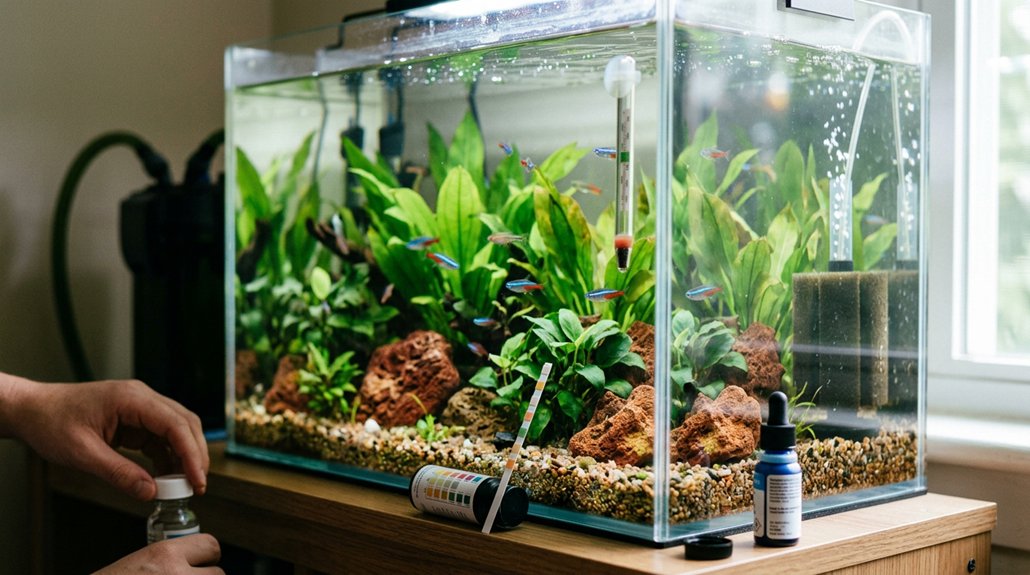
When you detect any measurable ammonia, perform an immediate 25–50% water change with dechlorinated, temperature-matched water to dilute the toxin fast. You should also dose a commercial ammonia detoxifier and remove uneaten food or detritus to lower ongoing ammonia input. To rebuild beneficial bacteria, keep filtration running, rinse media gently in tank water, increase aeration, and add a nitrifying bacterial supplement.
Immediate Water Change
To bring an ammonia spike down fast, start with an immediate 25–50% partial water change using dechlorinated water matched to the tank’s temperature to dilute the toxin without shocking the fish. If readings stay severe, do an emergency transfer only to a prepared, aerated holding tank with temperature matching.
- Siphon out uneaten food, decaying plant matter, and detritus from the substrate and filter intake.
- Dose a commercial ammonia neutralizer or detoxifier exactly as directed on the label.
- Increase aeration with an air stone or higher filter outflow, then test ammonia and nitrite right away and daily.
Don’t add new fish until both read zero. This protocol reduces acute exposure, stabilizes dissolved oxygen, and gives you time to correct the source of the contamination.
Rebuild Beneficial Bacteria
After the immediate water change, rebuild the tank’s nitrifying bacteria so ammonia doesn’t rebound. Test ammonia and nitrite now; any result above 0 ppm means your biofilter’s still impaired. Add a proven nitrifying supplement exactly as labeled for nitrifier seeding, and keep aeration high with an air pump or airstone to support oxygen-dependent recovery. Feed sparingly, or skip a day, to reduce waste input while bacteria repopulate. Don’t clean all filter media or substrate at once; preserve residual colonies for media colonization. If possible, keep the filter running continuously and avoid replacing cartridges unless they’re collapsing. Monitor daily, because even small ammonia increases are toxic. With dilution, oxygenation, and bacterial replacement, you’ll restore biological filtration fast and limit repeat spikes.
How to Fix pH and Water Change Problems
If your tank’s pH keeps drifting or your water changes seem to trigger stress, check the full water profile first: test pH, KH, ammonia, nitrite, and nitrate weekly with reliable kits, since a stable pH of about 6.8–7.8 and KH around 3–8 dKH is appropriate for most tropical systems. Use these steps:
- Change 10% weekly or 25% every two weeks with dechlorinated, temperature-matched water.
- If pH falls after gradual topping, do partial changes and apply buffer adjustments with KH increasers or a small dose of baking soda.
- Avoid >30% changes and simultaneous filter-media replacement; stagger maintenance to prevent ammonia spikes.
If source water is hard and alkaline, blend with RO/DI water or conditioned tap water, then soften slowly with peat or driftwood.
How to Prevent Fish Tank Problems
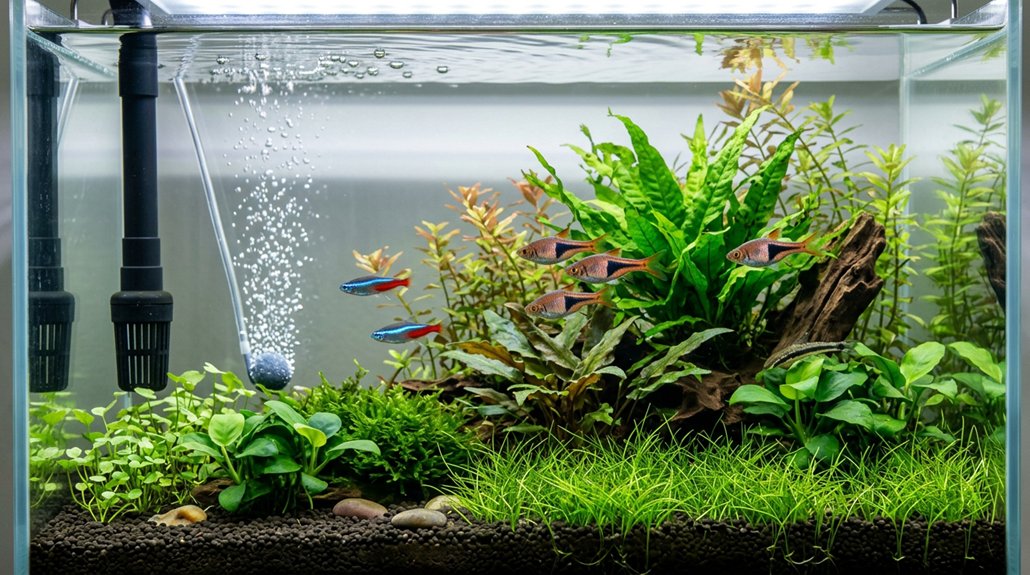
You’ll reduce most tank failures by starting with the largest tank you can support, then cycling it fully before adding livestock. Test ammonia, nitrite, nitrate, pH, and phosphate weekly, and maintain routine partial water changes to keep chemistry stable. Stock fish slowly, feed sparingly, and avoid overcleaning so your biological filtration stays intact.
Start Smart
Start smart by choosing the largest aquarium your space and budget can support, ideally 20–55 gallons for a first tank, because greater water volume stabilizes chemistry and slows the onset of problems. When you choose tank size, include budget planning for filtration, substrate, and maintenance supplies.
- Run the system 2–3 days before buying fish; add only after ammonia and nitrite are zero.
- Stock slowly with a few hardy fish, then wait weeks between additions so biological filtration can mature.
- Use a filter rated above your tank volume, maintain it regularly, feed once daily in small amounts, and change water routinely to limit debris and nutrient buildup.
Test Water Regularly
Regular water testing is one of the most reliable ways to prevent fish tank problems before they become emergencies. In a new aquarium, test ammonia and nitrite daily, or every other day, until both stay at 0 ppm. In established tanks, use a reliable liquid kit or quality strips weekly. | Parameter | Target | Frequency |
| — | —: | — |
|---|---|---|
| Ammonia | 0 ppm | Daily/every other day |
| Nitrite | 0 ppm | Daily/every other day |
| Nitrate | <50 ppm | Weekly |
Retest after water changes or substrate disturbance. Your tap testing ritual should check chlorine, chloramine, pH, GH/KH, and hardness before water enters the tank. Record results in a test logbook with dates and recent changes; trends often reveal gradual imbalance before visible stress appears.
Stock and Feed Slowly
Once ammonia and nitrite read 0 ppm after the initial 2–6 week cycle, add stock gradually: no more than 1–2 small fish, or about 1 inch of fish per 5 gallons, at a time so the biofilter isn’t overloaded. Use gradual stocking and re-test before each step; wait 1–2 weeks between additions so nitrifying bacteria can expand with the bioload. Feed with minimal feeding: once daily, only what’s consumed in under two minutes, to limit uneaten food and ammonia spikes. Choose species by adult size, behavior, and tank volume, not purchase size.
- Add fish in small batches.
- Monitor ammonia and nitrite.
- Increase load only after stability.
If you’re adding multiple fish, oversize filtration and perform 25% weekly water changes until the system stabilizes.
How to Keep Water Quality Stable
To keep water quality stable, you should test ammonia, nitrite, nitrate, pH, and chlorine/chloramine weekly—daily during cycling—and maintain ammonia and nitrite at 0 ppm while keeping nitrate below about 20–50 ppm for most tropical tanks. Use consistent testing to detect drift early, and apply buffer dosing only when pH or alkalinity trends become unstable. Perform partial water changes of about 10% weekly or 25% every two weeks; topping off won’t remove dissolved pollutants or correct chemistry. Match filtration to a larger bioload, keep biological media intact during cleaning, and replace media in stages. Feed sparingly, remove uneaten food quickly, and stock slowly so the biofilter can adapt. If ammonia or nitrite rises, increase aeration and consider bacterial additives during recovery.
Frequently Asked Questions
How Often Do Fish Tanks Fail?
Fish tanks often fail early if you’re inexperienced; small setups and cycling errors raise risk. Your tank lifespan improves with stable maintenance, while equipment failure, overstocking, and poor testing can trigger recurrent collapse.
What Is Killing My Fish in My Tank?
Ammonia or nitrite spikes are killing your fish. You’ve likely got poor filtration, overstocking, or aggressive species stressing them; “an ounce of prevention is worth a pound of cure”—test water, dechlorinate, and feed sparingly.
What Not to Put in a Fish Tank?
Don’t add untreated tap water, household cleaners, soap, pesticides, copper remedies, or wild-caught livestock. You shouldn’t use Plastic plants, Colored gravel, un-rinsed driftwood, or unquarantined substrates; they can leach toxins, spread pathogens, and disrupt filtration.
What Are the Signs of an Unhealthy Fish Tank?
You’ll notice cloudy water or an algae bloom first; over 0 ppm ammonia or nitrite is unsafe. Fish may gasp, hide, lose color, or move rapidly. Excess algae, detritus, and pests signal poor water quality.
Conclusion
Keeping your aquarium stable is like balancing a sealed ecosystem: every small shift matters. When you monitor water clarity, ammonia, pH, and change schedules, you can catch problems before they harm your fish. Test regularly, avoid overfeeding, clean filters correctly, and adjust changes gradually. Consistent maintenance prevents most tank failures and keeps conditions predictable. If you stay methodical and observe closely, you’ll give your fish the safest, healthiest environment possible.