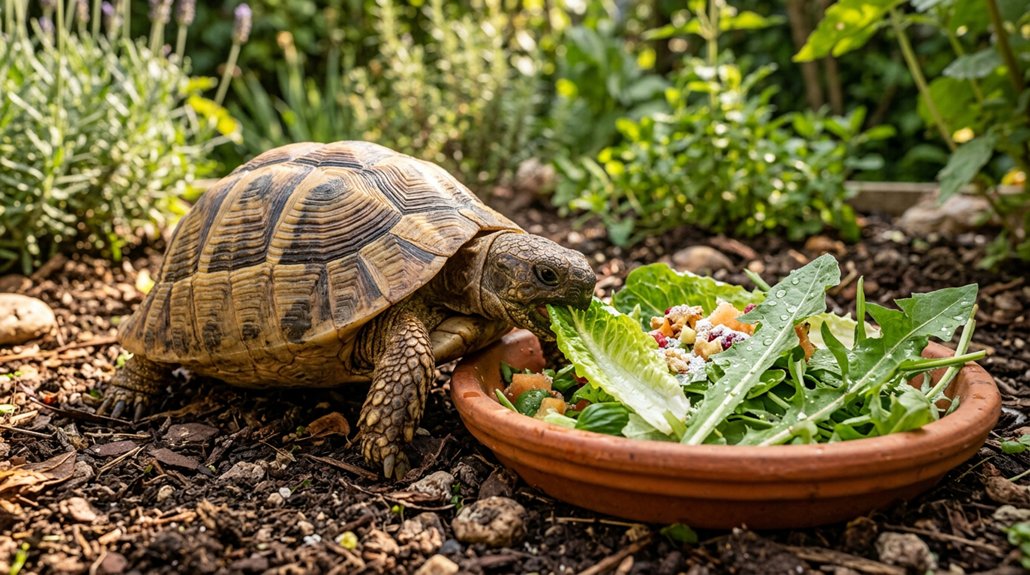
You’ll need to provide tortoises with a diet rich in fibrous leafy greens, grasses, and select flowers, aligning with their herbivorous nature. Breed specifics matter; Mediterranean tortoises thrive on low-fruit diets, while red-footed tortoises enjoy some fruits and proteins. Careful portion control is key, especially for rapid-growing hatchlings. Ascertain plant safety to avoid toxicity, and monitor weight for health indicators. By exploring further, you’ll uncover tailored nutritional needs for different tortoise breeds.
Key Takeaways
- Tortoises primarily consume grasses, leafy greens, and flowers, requiring a diverse plant-based diet for optimal health.
- Mediterranean tortoises need a low-fruit, high-fiber diet, focusing on leafy greens and calcium-rich plants.
- Red-footed tortoises can include small portions of fruit and protein in their omnivorous diet.
- Portion control is vital, adjusting food based on shell size and weight, ensuring healthy growth.
- Introduce a variety of safe plants; consult veterinarians for personalized dietary advice and regular health monitoring.
What Do Tortoises Eat? An Overview
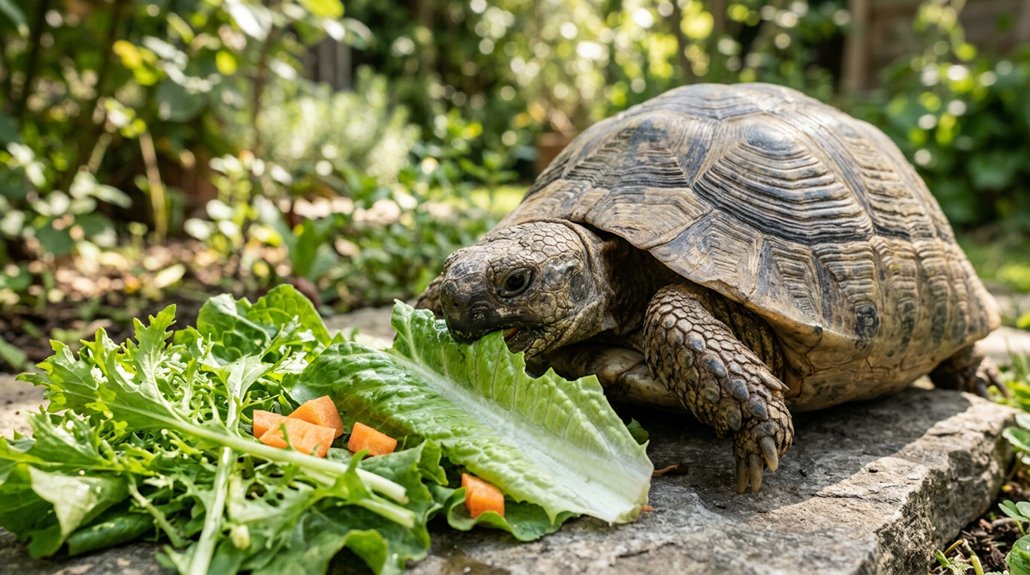
Understanding what tortoises eat is essential to providing them with a nutritionally complete diet. Primarily herbivorous, tortoises thrive on grasses, leafy greens, and flowers. In their natural tortoise habitats, they consume over 200 plant species annually. This diet helps them meet diverse nutritional requirements and prevents digestion issues. Some species, such as the red-footed tortoise, can tolerate small quantities of fruit and protein. However, offer fruits sparingly—no more than 1-2 times a week—to avoid gastrointestinal problems. Daily servings of fresh, nutritious greens are recommended, along with occasional mineral and vitamin supplements, particularly calcium, for ideal shell health. Always make sure fresh water is available and avoid toxic plants to maintain the overall health of your tortoise.
Ideal Feeding Schedules and Portions
When it comes to feeding schedules, hatchlings and young tortoises require daily feeding, possibly divided into two meals, while adult tortoises can thrive on a daily schedule with occasional meal omissions. A precise approach to portion control involves offering a quantity of leaves and flowers that matches the tortoise’s shell size, ensuring consumption within a 20-minute timeframe while preventing overfeeding. Regular weight monitoring is critical, especially for Mediterranean tortoises, as a consistent weight gain of 1g to 3g per month necessitates careful adjustments in portion size to foster healthy growth.
Daily Feeding Recommendations
Although feeding schedules for tortoises can vary based on age and species, adhering to structured daily regimens is critical for ideal growth and health. For hatchlings and young tortoises, daily feeding or splitting into two meals guarantees adequate nutrient intake and stimulates consistent growth monitoring. Adult tortoises benefit from daily feeding or may skip one meal per week without adverse effects. The recommended daily feeding strategy involves offering as much food as a tortoise can consume within 20 minutes, assuring the portion size includes enough leaves and flowers to cover their shell. This practice supports a disciplined tortoise feeding approach, particularly for Mediterranean species aiming for a weight gain of 1g to 3g monthly. Regularly monitor growth patterns and adjust feeding schedules for healthy development.
Portion Control Guidelines
Establishing a precise portion control strategy is vital for maintaining the health of tortoises. Hatchlings and young tortoises require daily feeding or two meals a day due to their accelerated growth rates, while adult tortoises can thrive on once-a-day feeding schedules or skip a day each week. To prevent overfeeding, portion sizes should align with meal duration, offering a quantity that can be consumed within 20 minutes and ideally covering the shell area. Diverse diets are essential; make sure they’re not repeatedly fed the same plant type. Regular assessment of growth patterns is significant—Mediterranean species should gain 1g to 3g monthly, while larger species follow distinct growth guidelines. Monitor feeding and weight to avert dietary-related deformities and guarantee peak health.
Picking Safe and Nutritious Foods for Tortoises
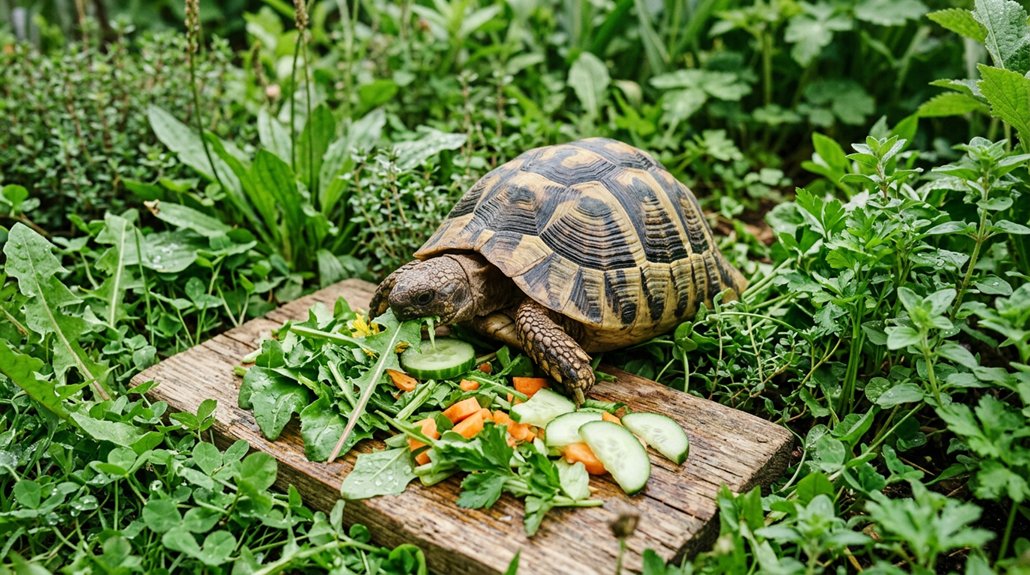
To guarantee your tortoise receives a well-balanced and nutritious diet, it’s important to focus on providing a varied selection of safe plant matter. Opt for safe plant options that support nutritional balance, such as a range of leafy greens and grasses. Kale and spring mixes are excellent sources due to their favorable calcium-phosphorus ratio, promoting shell and bone health.
Include a variety of flowers like hibiscus and dandelions, known for their dietary benefits. While fruits should be given sparingly, choose from apples, peaches, and melons to prevent digestive issues. Avoid low-nutritional salads like lettuce. Always verify the safety of new foods, as certain plants may be toxic. Regular oversight guarantees your tortoise’s dietary needs, specific to their species, are met effectively.
Why Diverse Diets Ensure Healthy Tortoises
Variety in the diet of tortoises serves as a critical factor in ensuring they receive essential nutrients required for peak health and developmental growth. Tortoise foraging in the wild naturally includes consuming up to 200 plant species a year, which highlights the necessity of a varied diet to replicate their intrinsic habits. Including a diversity of safe leaves, flowers, and vegetables fosters nutritional balance and prevents issues such as metabolic bone disease caused by improper calcium-phosphorus ratios. Remember, moderation is key; offering certain plants in tandem with others averts anti-nutritional effects. Ultimately, a well-balanced diet enhances activity levels, making your tortoise more lively and engaged. By mimicking natural foraging patterns, you contribute considerably to your tortoise’s well-being.
How Environments Affect Tortoise Nutrition
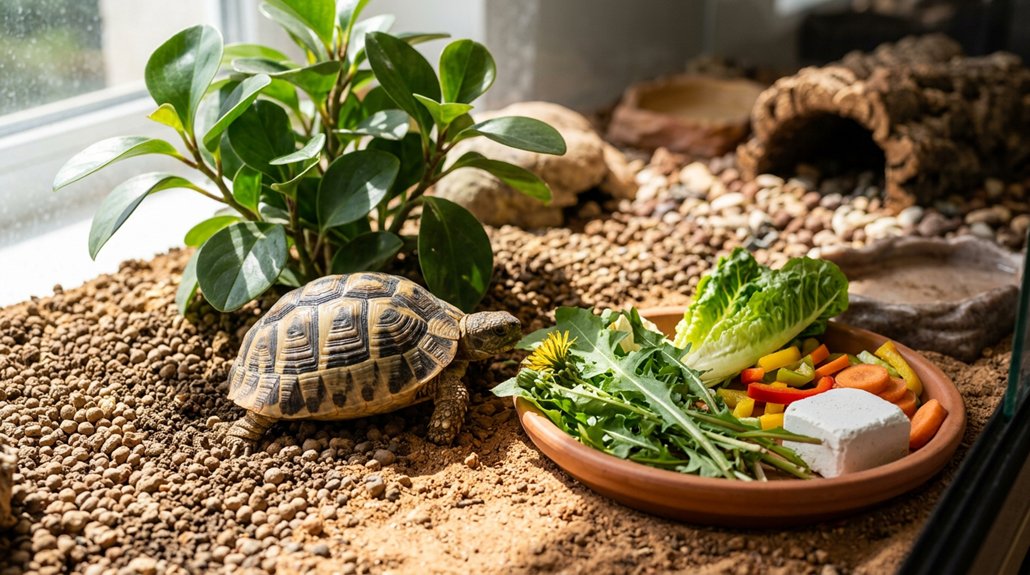
Although environments play a pivotal role in a tortoise’s nutrition, making certain their habitat mimics natural conditions is essential for their health. Grazing habitats influence dietary intake due to the range of grasses and leafy greens available. Sunlight exposure is vital because UVB rays support calcium absorption, important for shell and bone health.
In indoor settings, you’ll need to substitute with safe, leafy vegetables to replicate their natural diet.
| Factor | Influence on Diet | Requirement |
|---|---|---|
| Grazing Habitats | Access to diverse vegetation | Varied plant species |
| Sunlight Exposure | Necessary for calcium uptake | Regular UVB exposure |
| Seasonal Changes | Alters food availability | Seasonal diet variation |
| Temperature Levels | Impacts digestive efficacy | Stable and moderate |
| Humidity Levels | Affects appetite | Appropriate balance |
Maintain appropriate temperature and humidity to promote digestion efficiency.
Special Diets for Tortoise Breeds
You’re tasked with understanding the breed-specific nutritional needs for tortoises like the Mediterranean, Red-footed, Russian, and Marginated tortoises, as their dietary requirements vary greatly. For example, Mediterranean tortoises need a low-fruit, high-fiber diet, while Red-footed tortoises thrive on an omnivorous diet that includes proteins. As diet composition directly influences health and development, it’s essential to implement tailored feeding practices, seeking guidance from your veterinarian to optimize each tortoise’s nutrition.
Breed-Specific Nutritional Needs
Understanding the breed-specific nutritional needs of tortoises is crucial for their health and longevity. Tortoise dietary preferences vary, necessitating breed-specific foods. For instance, Mediterranean tortoises like the Greek and Hermann’s tortoise flourish on a high-fiber diet composed chiefly of grasses and leafy greens, eschewing high-protein foods. In contrast, the Red-footed tortoise requires a diverse diet replete with fruits and protein sources, such as insects. Russian tortoises exhibit a preference for dry grasses and weeds, with an emphasis on calcium-rich plants congenial to their digestive system. Similarly, Marginated tortoises thrive with a fiber-rich diet, focusing on non-toxic broadleaf weeds and vegetables. Tailoring each tortoise’s diet is essential, as dietary requirements differ considerably across species, ensuring ideal health outcomes.
Tailored Feeding Practices
Recognizing the unique nutritional requirements of different tortoise species naturally leads to crafting specialized feeding practices. For instance, Mediterranean spur-thighed and Hermann’s tortoises thrive on specific plant-based diets emphasizing leafy greens. When establishing feeding techniques, consider that Red-footed tortoises can incorporate higher fruit and protein, including insects, given their dietary tolerance. Russian tortoises, conversely, should focus on high-fiber grasses and avoid excess fruit or watery vegetables to prevent health issues.
Marginated tortoises benefit from a diverse combination of weeds, leafy greens, and hay. Incorporating dietary supplements is essential for ensuring that all tortoises meet important nutrient levels. Always consult a veterinarian for expert advice tailored to your tortoise’s breed and age to optimize growth and overall health.
How to Tell If Your Tortoise Is Eating Well
How can you determine if your tortoise is eating well? Observing feeding behavior is vital; a healthy tortoise displays enthusiasm during mealtime and actively seeks food, which serves as a robust appetite indicator. Regular inspection of droppings is important; well-formed feces indicate efficient digestion and a nutritionally balanced diet. Monitor weight gain closely; hatchlings should gain approximately 1g–3g monthly, while adults need to maintain consistent weight levels to prevent health risks. A varied diet comprising diverse, safe leaves and flowers guarantees nutrient adequacy and mitigates deficiencies, promoting overall wellbeing. Finally, consult a veterinarian immediately if there are abrupt alterations in eating habits or health indicators, as these may signal potential health complications. Maintaining vigilance facilitates ideal tortoise health management.
Frequently Asked Questions
What Do Tortoises Mostly Eat?
You’ll mostly feed tortoises fresh vegetables and a variety of plants to guarantee nutritional balance. Their diet requires high fiber sources and proper calcium intake to support health, emphasizing diverse feeding practices for ideal tortoise growth.
What Makes a Tortoise Happy?
You’d increase a tortoise’s happiness by offering a diverse diet, environmental enrichment, and consistent hydration. Make certain they have safe outdoor grazing and UVB lighting to mimic natural conditions, enhancing tortoise behavior and promoting overall well-being.
How Often Do Tortoises Need to Eat?
Tortoise feeding is so essential, it could rival a space mission plan! For adults, adopt varied dietary routines, feeding them daily or skipping one day weekly. Hatchlings require daily feeding to guarantee ideal growth and nutrient absorption.
What Can My Tortoise Not Eat?
Your tortoise shouldn’t consume meat, processed foods, or high-water content items like iceberg lettuce due to dietary imbalances. Avoid plants with toxins, such as rhubarb and foxglove, and limit oxalic acid-rich foods, respectively impacting digestive precision and calcium metabolism.
Conclusion
By understanding tortoise nutrition, you’ve revealed the secret to their health. Remember, a varied diet isn’t just preferred—it’s crucial. When you offer leafy greens, fruits, and specialized supplements, you’re mimicking nature’s blueprint. Consistent monitoring of your tortoise’s weight and shell appearance will reveal their dietary success. Isn’t it fascinating how a balanced diet can influence longevity and health? So, embrace the science, adjust for environmental factors, and watch your tortoise thrive in its micro-habitat.