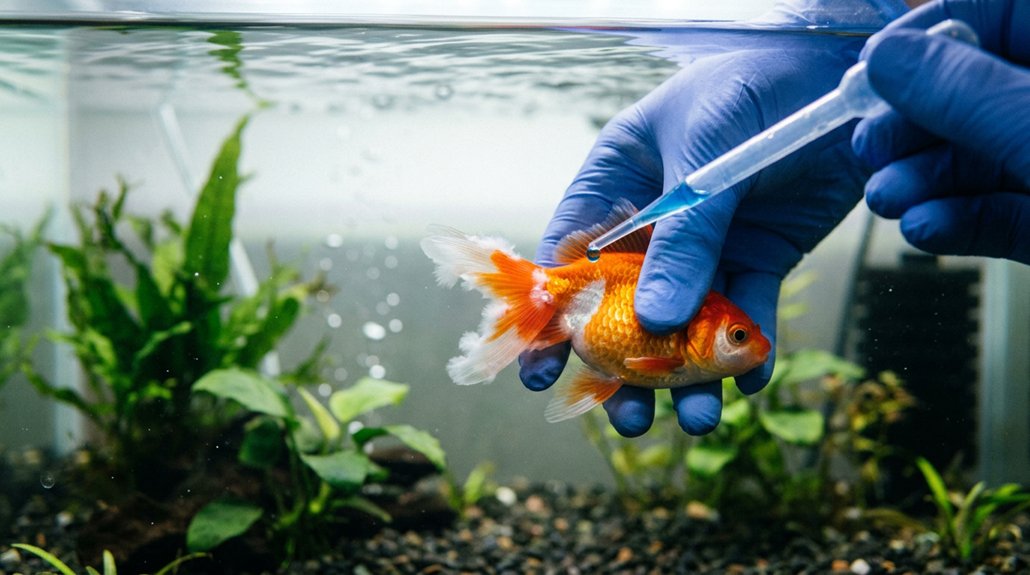
You treat fish “fungus” by fixing water quality first, because most cases are opportunistic water-molds on damaged tissue. Test ammonia, nitrite, nitrate, pH, temperature, and salinity, then do partial water changes until ammonia and nitrite are 0 ppm. Remove dead fish and debris, reduce stress, and isolate affected fish if needed. Use a species-safe antifungal product exactly as directed, and consider aquarium salt only when appropriate. More details can help you target the cause better.
Key Takeaways
- Test and fix water quality first: eliminate ammonia and nitrite, reduce nitrate, and perform partial water changes.
- Remove dead fish, debris, and overcrowded or aggressive tankmates to reduce stress and spread.
- Keep temperature stable and provide good nutrition to support healing and immune function.
- Treat confirmed external fungus with a fish-safe antifungal or commercial product exactly as directed.
- Use aquarium salt cautiously only if appropriate for the species, and consult a vet for gill, mouth, or severe infections.
What Fish Fungal Infections Look Like
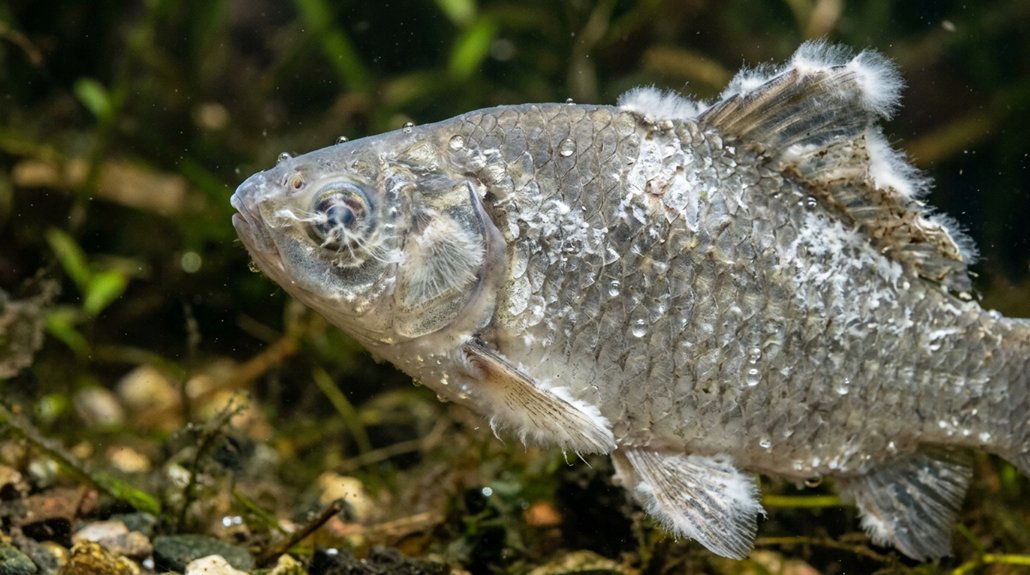
Fish fungal infections typically present as white, tan, or yellow fuzzy or cotton-like patches on the body, fins, eyes, or gills. You’ll often see pale gills with slimy or fuzzy overgrowth, and affected fish may breathe rapidly or laboriously. In advanced cases, you may notice lethargy, reduced appetite, or sudden death, especially in warm, overcrowded tanks. For visual identification, assess whether lesions are superficial and centered on damaged tissue, because many freshwater “fungal” growths are actually water-molds. These organisms can resemble true fungal disease but don’t invade healthy skin. Bacterial infections, including Columnaris, can look similar. Because of these mimics, visual identification alone isn’t reliable. You’ll need microscopic confirmation, or a veterinary diagnosis, to distinguish fungal disease from bacterial lesions or tissue injury.
Common Types of Fish Fungal Infections
The most common visible “fungal” lesions in aquarium fish are actually opportunistic water-mold infections (oomycetes), which form white, tan, or yellow cotton-like growths on the skin, fins, eyes, or gills, usually over damaged tissue. In your tank, these cases are often consistent with Saprolegnia descriptions, a surface-colonizing oomycete that’s clinically distinct from true mycoses. By contrast, Branchiomyces outbreaks involve true fungal gill disease and can be aggressive, invading gill lamellae and sometimes internal tissues, with rapid mortality. You may also see “egg fungus” on dead or unfertilized eggs; this isn’t healthy-egg infection, but decay-associated colonization. Rare systemic infections can present with dyspnea, lethargy, anorexia, and sudden death. Because Columnaris and trauma can mimic these lesions, you’ll need microscopic scrapings or veterinary confirmation for accurate identification.
Why Fish Develop Fungal Infections
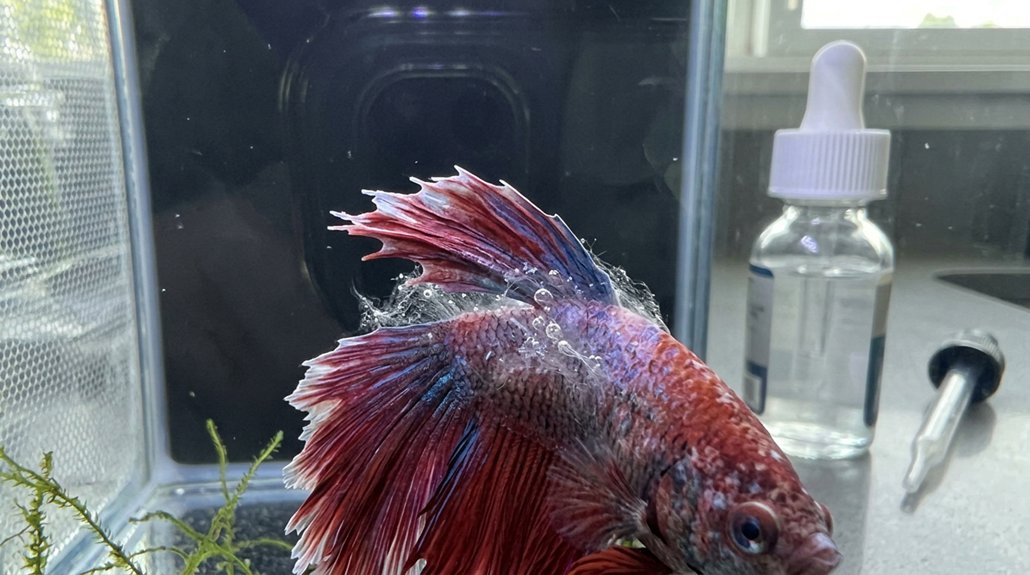
Because these infections are typically opportunistic, they usually develop when damaged skin, fins, or gills are exposed to water molds or true fungi after stress or injury weakens normal defenses. You’re most vulnerable when poor water quality, overcrowding, or aggressive tankmates persist.
| Risk factor | Effect |
|---|---|
| High ammonia/nitrite | Tissue irritation |
| Low oxygen | Reduced resistance |
| Overcrowding | Chronic stress |
| Sudden temperature shift | Immune suppression |
| Poor nutrition | Higher susceptibility |
Stress hormones rise, immunity drops, and surface organisms such as Saprolegnia colonize dead tissue. Prior bacterial disease, aging, or salinity change can further compromise repair. In many aquaria, the visible “fungus” isn’t invasive at all; it’s a water mold exploiting necrotic tissue. True fungi can be more aggressive, but the same underlying pattern applies: you’re seeing disease emerge where host defenses are already failing.
How Fish Fungal Infections Are Diagnosed
Diagnosis starts with a physical exam and a review of the tank or pond history, including recent water changes, tankmates, injuries, and other stressors that may have predisposed the fish to opportunistic infection. You’ll then assess water quality by measuring ammonia, nitrite, nitrate, pH, temperature, and salinity, because abnormal values often underlie water mold outbreaks. Next, skin scrapes and gill swabs examined microscopically can show surface growth, true fungal invasion, or secondary bacteria. In unclear or advanced cases, culture or histopathology of tissue samples may identify organisms such as Branchiomyces. Diagnostic differentiation also relies on integrating lesions, white cotton-like patches, pale gills, labored breathing, and tank history to separate fungal disease from Columnaris or necrotic tissue.
How to Treat Fish Fungal Infections
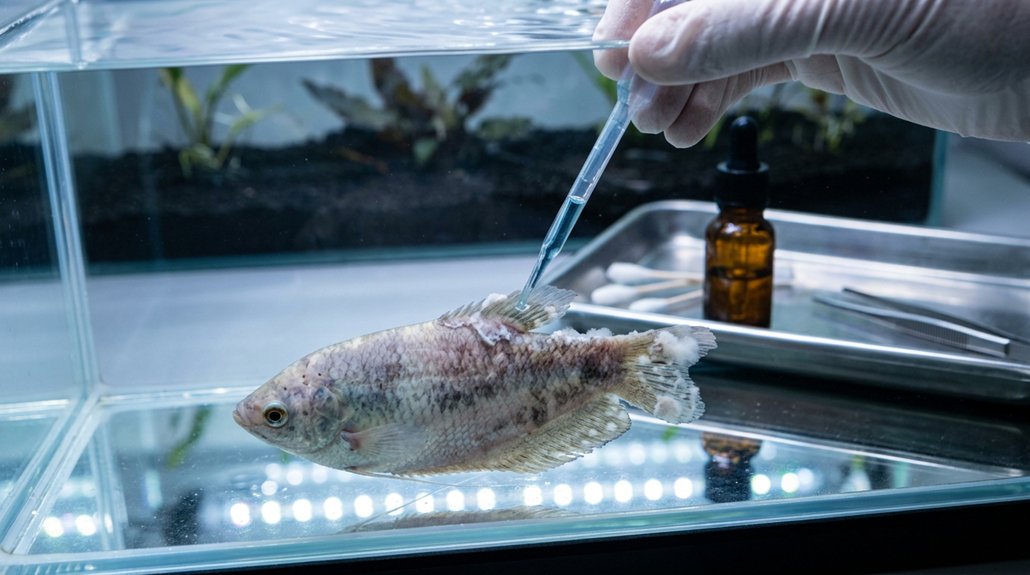
Start by correcting the husbandry issue that let the fungus take hold: test water immediately and bring ammonia and nitrite to 0 ppm, keep nitrate low, perform partial water changes, remove dead fish and debris, and reduce overcrowding or aggression. Once conditions are stable, you can support mild external lesions by raising temperature only to the species’ safe range and feeding a high-quality, stress-free diet to improve the immune response. If needed, use a targeted topical antifungal or a commercial product exactly as directed; don’t stop early. Suspect mouth or gill involvement? Pair treatment with an appropriate antibiotic after consultation. Persistent, systemic, or gill-invasive disease needs microscopy or veterinary review, because true fungal infections can become serious and raise treatment costs.
How to Use Aquarium Salt for Fish Fungus
Add aquarium salt as a supportive therapy for external fungal infections by dissolving it thoroughly and maintaining a stable concentration of about 1–2 g/L during treatment; a common low-support dose is roughly 1 teaspoon per 5 gallons. You can escalate in steps only if response is inadequate: roughly 1 tablespoon per 3 gallons for 5–7 days, then 1 tablespoon per 2 gallons, and, in severe cases, 1 tablespoon per gallon. Don’t use it with live plants, freshwater invertebrates, or salt-sensitive fish; consider plant alternatives instead. Mix and measure precisely, then monitor for stress. Salt doesn’t evaporate, so salt removal requires calculated partial water changes after signs resolve. Weekly 30% changes can lower concentration. Pair therapy with improved water quality and correction of the underlying cause.
How to Prevent Fish Fungal Infections
Prevention starts with limiting the conditions that let fungi colonize damaged tissue: keep ammonia and nitrite at 0 ppm, hold nitrate low—ideally under 20–40 ppm—and use regular partial water changes to maintain stable, clean water.
- Use routine water testing to verify parameters and catch drift early.
- Practice substrate maintenance by siphoning weekly and removing uneaten food, dead fish, and decaying plants.
- Prevent stress by avoiding overcrowding, matching tank mates carefully, keeping temperature stable, and feeding a varied, high-quality diet.
- Quarantine new or sick fish for 2–4 weeks with observation before introducing them.
If you keep brackish-raised species, acclimate them carefully and add minerals or salt only when appropriate.
Frequently Asked Questions
Can Fish Recover From Fungal Infection?
Yes, you can expect recovery from mild fungal infections if you correct stressors and support their immune response. You’ll need long term monitoring, water testing, quarantine, and treatment, since systemic cases often worsen.
How to Remove Fungus From Aquarium Fish?
You’ll remove fungus by quarantining affected fish, improving water quality, and using antifungal baths as directed. Sterilize the aquarium, remove debris, and treat secondary bacterial infections if present; severe cases’ll need veterinary evaluation.
What Is the Most Common Fungal Disease in Fish?
The most common fungal disease in fish is water mold infection, often called skin mycosis. You’ll see cotton-like patches on damaged tissue, especially after stress, injury, or poor water quality, clinically suggesting opportunistic oomycetes.
Conclusion
To treat fish fungal infections, you need to identify the lesion early, improve water quality, and apply an appropriate antifungal therapy. For example, if you notice white, cotton-like growth on a guppy after an injury, you should isolate it, correct ammonia and nitrite levels, and begin treatment promptly. You can also use aquarium salt carefully as supportive therapy. With fast intervention and stable tank conditions, you’ll reduce fungal spread and improve recovery.