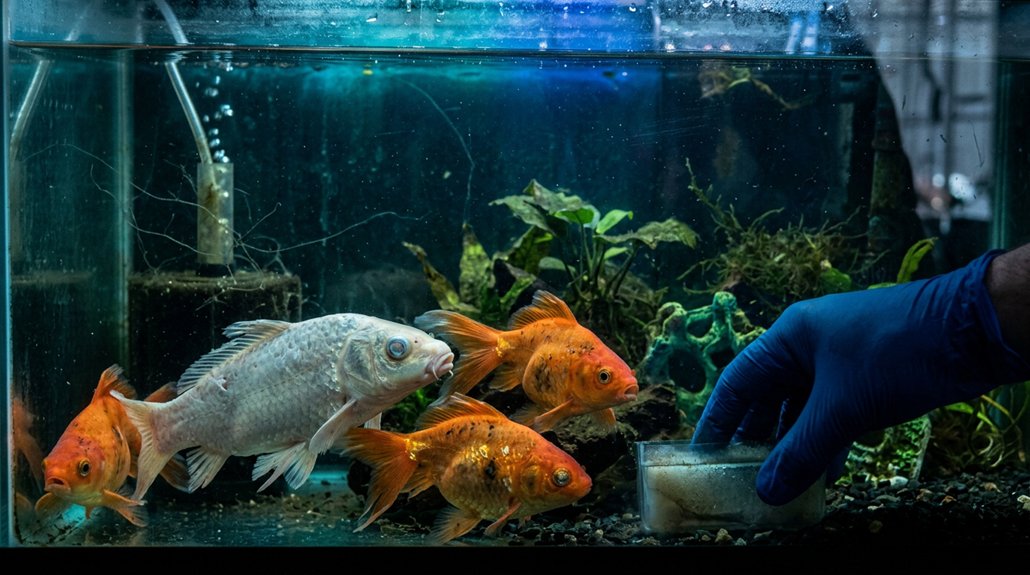
You may have a sick fish if you notice faded color, frayed fins, cloudy eyes, odd swimming, hiding, loss of appetite, rapid gilling, white spots, sores, or swelling. Check your water right away for ammonia, nitrite, nitrate, and pH, then correct any unsafe levels with a water change. If possible, move the fish to a bare quarantine tank and remove carbon before treatment. The next steps can help you narrow down the cause and act fast.
Key Takeaways
- Look for color changes, such as fading or darkening, which can signal stress, poor water quality, parasites, or nutrient problems.
- Watch for behavior changes like lethargy, hiding, erratic swimming, circling, or resting on the bottom.
- Check for appetite loss, rapid gilling, gasping, white spots, shredded fins, sores, cloudy eyes, or swelling.
- Test ammonia, nitrite, nitrate, and pH immediately; treat toxic readings with a 30% water change and conditioned water.
- Quarantine sick fish, remove carbon and UV during treatment, and use targeted medication based on symptoms.
What Are the Signs Your Fish Is Sick?
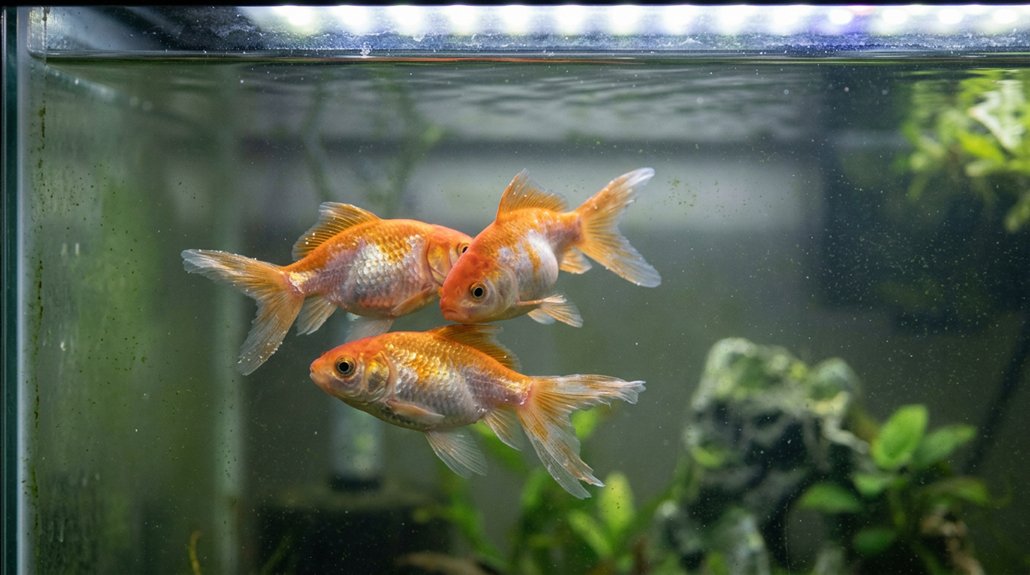
The most common signs your fish is sick are changes in color, behavior, and appearance. You may notice pale, washed-out coloration, reduced appetite, or small white spots on the body and fins. Shredded fins can indicate fin rot, while bulging or cloudy eyes and excess mucus suggest trauma or secondary infection. Watch your fish’s breathing patterns closely: rapid gilling, gasping at the surface, or labored respiration can signal stress, poor water quality, or toxic ammonia and nitrite. Behavior often changes too. Lethargy, erratic swimming, circling, or loss of schooling behavior can point to respiratory distress or swim bladder problems. Any sudden shift from normal activity warrants immediate assessment. Early recognition lets you correct water conditions and seek treatment before the illness worsens.
Check Color, Fins, and Eyes
You should check whether your fish’s colors have faded, because pale or dull coloration often signals stress, illness, poor water quality, or an inadequate diet. You should also inspect the fins and eyes for shredding, fraying, white spots, cloudiness, or swelling, since these changes can indicate infection, parasites, injury, or systemic disease. If you notice mucus, lesions, or discolored patches, you’ll need to test the water promptly and consider appropriate treatment.
Faded Colors
Noticeably faded, pale, or washed-out coloration is often an early sign that a fish is stressed or unwell, especially when it appears alongside clamped fins, reduced activity, or a decreased appetite. Compare your fish’s current appearance with its normal coloration; a persistent loss of brightness suggests illness, poor water quality, or another systemic problem. Test for ammonia and nitrite spikes, confirm temperature is correct, and review your feeding to rule out diet-related deficits. Parasites can also impair color. If the fish’s fins look shredded, frayed, or discolored, infection may be contributing to the dull appearance. Look for cloudiness or swelling in the eyes. Prompt correction of the cause gives the best chance for color restoration and pigment recovery.
Fin And Eye Changes
Check your fish’s fins and eyes closely for changes in color, shape, and texture. Shredded, frayed, or ragged fins often indicate bacterial fin rot, especially when water quality is poor, decor is sharp, or tankmates are aggressive. If you see fin edge necrosis, inspect the fish immediately. Cloudy, bulging, or swollen eyes suggest infection or injury, and untreated cases can progress to vision loss or eye loss. Ocular hemorrhage, pale discoloration, or slimy margins around the fins or eyes point to secondary fungal or bacterial colonization. Rapid fading or darkening can reflect stress, nutrient deficiency, or disease. Check gill-adjacent fins and eyes for white spots, ulcers, or excess mucus. If present, quarantine the fish and test ammonia, nitrite, pH, and temperature at once.
Watch for Lethargy, Hiding, and Appetite Loss
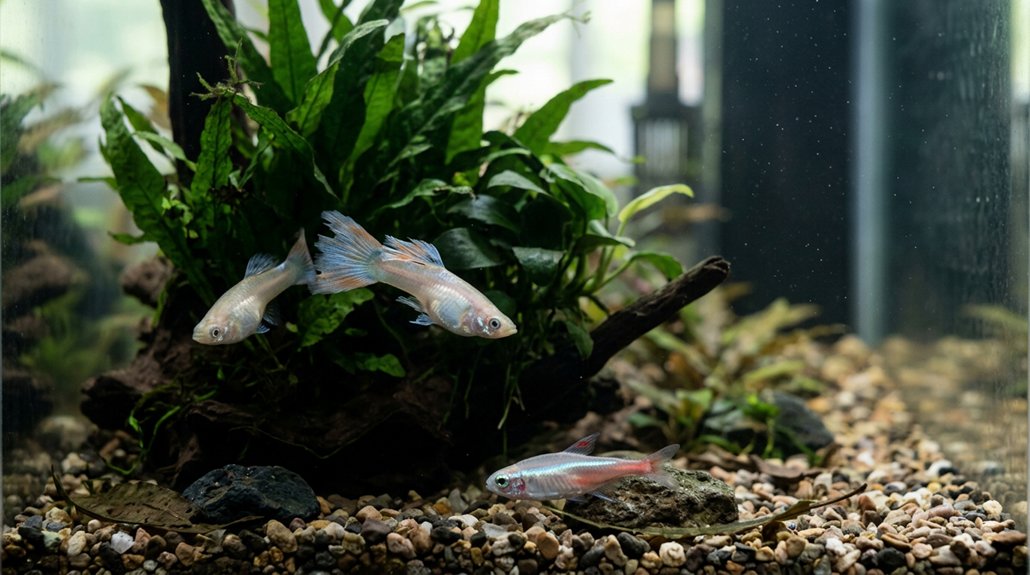
If your fish is unusually inactive, lying on the bottom, or showing low energy, you should test the water at once for ammonia, nitrite, and pH. If a normally active fish starts hiding, that’s a sign of stress or illness, and you should consider quarantine if you can. If it refuses food or only eats partially, track the change closely, since appetite loss can be an early sign of infection, parasites, or internal disease.
Spotting Low Energy
Low energy in fish usually shows up as unusually little activity, resting on the tank bottom, or a general reluctance to move, and it’s often linked to improper water temperature or poor water quality, especially elevated ammonia or nitrite. You should assess behavioral thermoregulation and check whether normal activity rhythms have shifted. If your fish is also losing appetite, leaving food uneaten, or breathing hard, suspect a systemic problem rather than simple fatigue. Erratic posture, surface gasping, or weak swimming can indicate respiratory distress or swim bladder involvement. Test pH, ammonia, and nitrite immediately, then isolate the fish if possible. Prompt correction of environmental, parasitic, or bacterial causes improves prognosis and limits spread. Don’t wait for signs to worsen.
Noticing Excessive Hiding
Excessive hiding, especially in species that normally swim openly, is a clear stress signal and often appears alongside lethargy or appetite loss. You should treat this as an acute behavioral change, not normal caution. If your fish is active at night but now stays concealed by day, note that shift in nocturnal activity and inspect for poor water quality, parasites, or bullying. Test ammonia, nitrite, nitrate, pH, and temperature immediately; even small ammonia or nitrite spikes can suppress activity. If possible, quarantine the fish and watch for white spots, fin damage, or discolored gills. Start basic corrective steps at once: perform a 30% water change, verify temperature, and offer high-quality food. If signs persist, consider quarantine treatment.
Tracking Appetite Changes
A sudden loss of appetite is often one of the earliest signs of illness in fish, especially when it appears alongside faded color, lethargy, or visible parasites, so watch closely if a normally enthusiastic fish refuses food for 24–48 hours. Compare this change with your fish’s behavioral baseline and review feeding logs for recent decline. If it still shows interest, try a high-quality, recently purchased diet or a live or frozen treat to separate poor palatability from true illness. Persistent lethargy, bottom resting, or excessive hiding can reflect temperature error, ammonia, nitrite, nitrate, pH imbalance, stress, or infection. Test water immediately, isolate the fish if possible, correct chemistry, and observe tankmates. If appetite doesn’t improve, consider broad-spectrum treatment under quarantine.
Look for White Spots, Sores, and Swelling
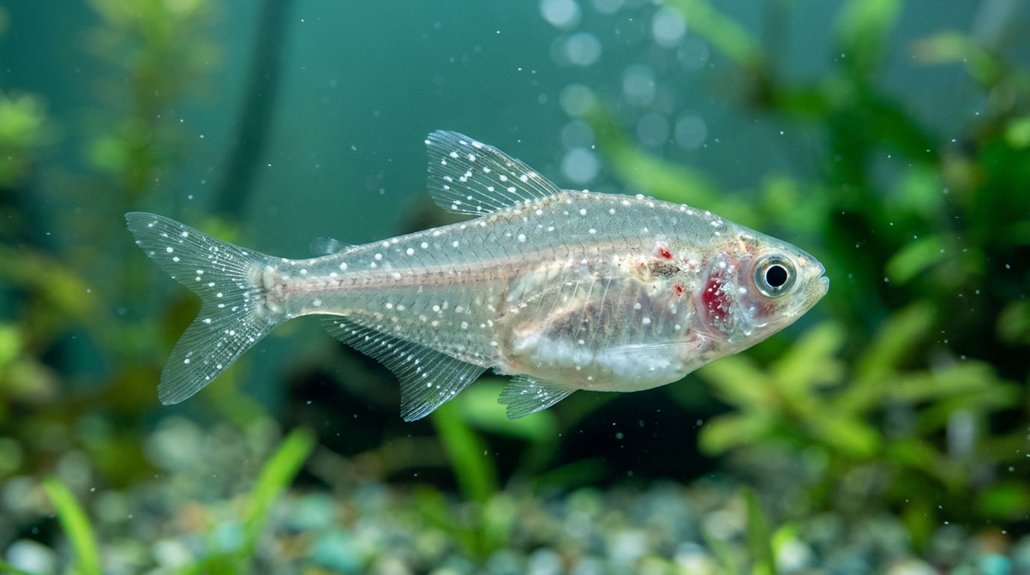
White spots, sores, and swelling are among the clearest visible signs that your fish may be ill. You should inspect each fish closely for:
White spots, sores, and swelling are clear signs your fish may be ill.
- Small white grains on body or fins, which often point to ich and require parasite identification.
- Open sores, ulcers, or raw patches, which suggest infection and call for careful wound management.
- Raised lumps, puffy eyes, or bloating, which may indicate parasites, bacterial disease, or organ dysfunction.
If these changes appear on several fish, the cause is likely infectious, and it can spread quickly. Use magnification to confirm subtle lesions, and don’t dismiss brief changes as harmless trauma. Accurate observation here helps you act before the condition advances and complicates treatment.
Test Water and Fix Tank Conditions
If visible sores, swelling, or spots suggest illness, check the water right away because poor conditions often trigger or worsen disease. Use water testing with an API Master Test Kit for pH, ammonia, nitrite, and nitrate. Any ammonia or nitrite above 0 ppm, or nitrate over 40 ppm, signals urgent correction. Do tank maintenance immediately: change 30% of the water, and replace it with dechlorinated, conditioned water. If ammonia or nitrite is detected, repeat daily until readings are safe. You can add aquarium salt unless you keep live plants, shrimp, or salt-sensitive species. If you’re medicating later, remove carbon or Purigen and switch off UV sterilizers. Increase surface agitation or aeration to support oxygen, and quarantine affected fish in a bare hospital tank when possible.
Treat a Sick Fish Safely
Once you’ve identified a sick fish, isolate it immediately in a bare quarantine or hospital tank with the same water parameters to reduce stress and limit pathogen spread. Before isolate treatment, test ammonia, nitrite, nitrate, and pH in both tanks; if any toxic level appears, perform a 30% water change and condition the water. Then begin targeted therapy promptly:
- White spots: use ich medication.
- Fin rot or ulcers: use an antibacterial such as Maracyn.
- Suspected internal parasites: use ParaCleanse.
Follow medication dosing by tank volume and the product label. Remove carbon and Purigen, turn off UV, and increase aeration. During intensive treatment, don’t feed or feed sparingly. If the cause isn’t clear, use the quarantine med trio at manufacturer dosages, or space them weekly for weak fish, then reassess and seek veterinary advice.
Frequently Asked Questions
How Do I Help a Sick Fish?
You help by testing water, making water changes if needed, quarantining the fish, and starting appropriate medication dosing quickly. Stop feeding briefly if bloated, maintain heat and aeration, and consult a vet if you’re unsure.
Can Fish Recover From Sickness?
Yes, your fish can recover if you act quickly. Good water quality supports their immune response, and targeted treatment often works. Don’t assume it’s hopeless; severe, advanced infections may still be fatal.
Do Dying Fish Float or Sink?
Dying fish often float due to gas buildup or swim bladder/buoyancy disorders, but they can also sink if they’re weak, oxygen-deprived, or ill. You should assess surface floating, rapid sinking, and water quality immediately.
How Do Fish Act When They Are Sick?
You’ll notice lethargic behavior, loss appetite, and erratic swimming; you may see rapid gill movement, surface gasping, or rubbing against decor. You might also spot isolation, hiding, or sudden aggression, all clinically concerning signs.
Conclusion
If you notice your fish acting off, don’t wait. A single missed sign can become a tank-wide problem fast. In one aquarium study, poor water quality was linked to more than 60% of common illness cases, showing how often the issue starts with the environment, not the fish. Check color, fins, eyes, behavior, and appetite, then test the water right away. When you act early, you’re far more likely to reverse the problem and protect the rest of your tank.