
Shih Tzus are affectionate companions with sociable temperaments, perfect for various environments. To keep your Shih Tzu happy, daily brushing and grooming every 4-6 weeks are crucial. Start training early using positive reinforcement and socialize them with different experiences. Regular exercise, a balanced diet, and consistent vet visits will guarantee long-term health. Address barking and separation anxiety promptly with clear routines and rewarding calm behavior. Discover more ways to enhance your Shih Tzu’s life.
Key Takeaways
- Shih Tzus are affectionate, sociable, and adapt well to various living environments, making them excellent companions.
- Daily brushing and professional grooming every 4-6 weeks are essential for Shih Tzu coat maintenance.
- Use positive reinforcement and consistent routines for effective training and socialization starting at a young age.
- Provide balanced nutrition with quality small-breed food, divided into 3-4 meals to support their health.
- Address behavioral issues like excessive barking and separation anxiety through early intervention and routine management.
What Makes Shih Tzus Great Companions?

Shih Tzus are cherished for their affectionate personalities and sociable tendencies, making them exceptional companions. You’ll find their emotional support invaluable, particularly through life’s ups and downs. Their calm demeanor guarantees they adapt well to various environments, including apartments or larger homes. As family-oriented pets, they integrate seamlessly, spreading joy with playful confidence and endearing antics. Historically bred as royal companion dogs, Shih Tzus bring over 1,000 years of loyalty to your life.
Their friendly nature offers companionship benefits that reach across all ages, making them perfect for families with children or other pets. You’ll appreciate how they thrive on interaction, keenly enjoying cuddles and engaging with everyone around them. With a Shih Tzu, you gain a steadfast, loving companion.
Essential Shih Tzu Care Practices
To keep your Shih Tzu’s coat in excellent condition, daily brushing is necessary, along with professional grooming every 4-6 weeks to prevent tangles and matting. Guarantee your furry friend receives a balanced diet by feeding them high-quality, small-breed puppy food in portions of ¼ to ½ cup, 3-4 times daily. This routine fosters ideal growth and health while maintaining their unique appearance and vigor.
Grooming and Maintenance Essentials
Given their distinctive long, flowing double coat, it’s vital to adhere to a consistent grooming routine to keep your Shih Tzu looking and feeling their best. Daily coat care is essential to prevent tangles and matting—invest in a quality brush and comb. Stick to a grooming schedule by booking professional grooming sessions every 4-6 weeks to guarantee their coat remains manageable. Regularly clean your Shih Tzu’s prominent eyes to prevent tear staining. A gentle wipe each day maintains eye hygiene. Bathe your Shih Tzu every 3-4 weeks with a gentle puppy shampoo, keeping the coat clean without irritating the skin. Don’t forget to trim nails and clean ears regularly to maintain overall health and comfort. Establish early routines for a positive experience.
Proper Nutrition Guidelines
Ever wondered how to best fuel your Shih Tzu’s energetic lifestyle? Focus on puppy feeding with a high-quality small-breed puppy formula. Aim for ¼ to ½ cup per meal, split into 3-4 servings throughout the day. This supports their growth and manages their energy needs effectively. Keep an eye on your puppy’s weight, avoiding excessive treats, since small breeds like Shih Tzus are prone to obesity. Shift from puppy food to adult kibble around seven months to promote dental health. Moderation is key when offering table scraps, as some foods can be harmful. Nutritional supplements might be beneficial but consult your vet. Tailor their nutrition by considering factors like activity level and health status, ensuring peak care.
Training Tips Specific to Shih Tzus

When training your Shih Tzu, start with basic command training like “sit,” “stay,” and “come,” and focus on positive reinforcement by using treats and praise. Early socialization is essential, so introduce your puppy to different people and environments during the key period of 6-8 weeks. Consistent routines, combined with crate training for housetraining, will help your Shih Tzu become well-mannered and adjust seamlessly to your home.
Positive Reinforcement Techniques
To successfully train a Shih Tzu using positive reinforcement, it is essential to understand that these affectionate dogs thrive on praise, treats, and playtime more than on harsh corrections. For effective results, consider incorporating clicker training, as this method provides a precise way to mark desired behaviors. Make sure your reward timing is impeccable—deliver treats or praise within three seconds of the behavior to reinforce learning. Focus on one command at a time, enabling your Shih Tzu to master each instruction. Consistency is key; keep training sessions short and frequent for maximum impact. Practice patience, as these dogs respond best to gentle prompts and predictable routines. With dedication, you’ll foster a bond built on trust and progress.
Socialization Essentials
Although it might seem early, beginning socialization for your Shih Tzu at three weeks is vital for their development into a confident and well-adjusted adult dog. During this important socialization period, introduce them to new sounds, people, and other dogs. By five weeks, interactions with children and a variety of adults are critical to bolster their adaptability. Consistent exposure experiences each week play a significant role in shaping behavior. Aim for five new experiences weekly.
To facilitate successful socialization:
- Positive Reinforcement: Use praise and treats to encourage well-mannered behavior.
- Regular Playdates: Important during the 6-8 week window to prevent future behavioral issues.
- Varied Environments: Take them to different places to build confidence and sociability.
These steps guarantee a happy, well-socialized Shih Tzu.
Command Training Basics
Effective command training is vital for raising a well-behaved Shih Tzu, and this breed flourishes with clear, step-by-step instruction. Start by introducing one command at a time, ensuring your furry friend masters each before progressing. This clarity helps solidify learning and supports ongoing obedience. Use positive reinforcement—praise or treats work wonders—to boost your Shih Tzu’s cheerful, enthusiastic-to-please nature. Remember, command consistency and training patience are essential, especially as puppies reach adolescence (around 7-8 months), where they might temporarily forget commands. Avoid harsh corrections; gentle encouragement fosters trust and confidence. Keep training sessions short and regular, ideally paired with socialization exercises, to enhance obedience and maintain a balanced temperament in your Shih Tzu companion.
Shih Tzu Puppy Development
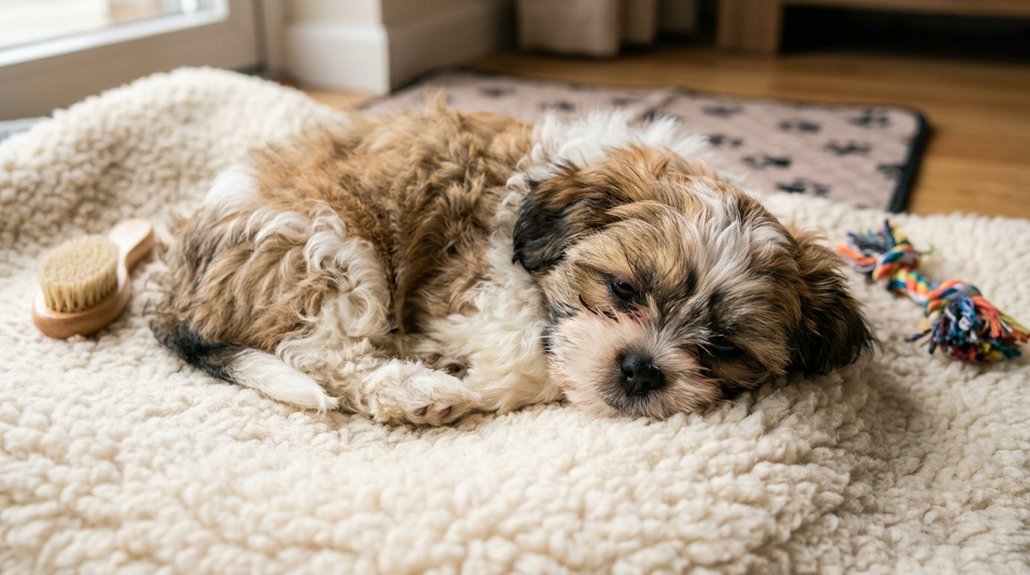
As soon as a Shih Tzu puppy arrives home, getting a head start on their development is crucial for nurturing a well-balanced companion. Understanding puppy milestones and socialization stages helps guide you through this process.
Start socialization early, around three weeks, ensuring they’re exposed to different sounds, sights, and interactions. This lays the foundation for well-adjusted behavior.
By five weeks, increase their interactions:
- With children and adults to build confidence and prevent fearfulness.
- With larger dogs to promote adaptability and social skills.
- Through structured play to encourage positive habits and prevent boredom.
Stick to a consistent routine for feeding, sleeping, and playtime. Don’t forget daily grooming, which is essential for maintaining their coat. Remember, during adolescence, positive reinforcement is key to managing moodiness and stubbornness.
Keeping Your Shih Tzu Healthy and Happy
To keep your Shih Tzu healthy and happy, prioritize a balanced approach to their physical and mental well-being. An important component is regular exercise routines, offering 30 minutes to an hour of short walks and engaging indoor play daily. Provide a nutritious diet with a high-quality small-breed formula, split into 3-4 small meals to support digestion.
Don’t overlook grooming; daily brushing and professional grooming every 4-6 weeks prevent matting and promote skin health. Regular dental care, like brushing with dog-specific toothpaste, is vital for preventing common dental issues. Keep an eye on their prominent eyes for injuries or infections, and schedule regular veterinary visits to catch potential health problems early. Consistent care guarantees their long-term wellness.
Addressing Common Shih Tzu Behavioral Issues

Many Shih Tzu owners encounter behavioral issues that can be addressed with thoughtful guidance and consistent training. It’s important to tackle excessive barking and separation anxiety with strategic methods. For effective barking management, redirect your Shih Tzu to appropriate behaviors and reinforce silence consistently. Address anxiety reduction by maintaining a predictable routine and gradually increasing their alone time to build their confidence.
- Use positive reinforcement training to avoid creating fear and anxiety. Harsh corrections can exacerbate issues.
- Redirect nipping and biting to safe toys, pairing with the “leave it” command for learning.
- Prioritize early socialization by introducing your Shih Tzu to five new experiences weekly, which fosters confidence and reduces behavioral problems.
Consistent efforts will foster a well-behaved, happy Shih Tzu.
Frequently Asked Questions
How Do Shih Tzus Behave Around Children and Other Pets?
You’ll find Shih Tzus generally display playful interactions with kids and other pets. To guarantee harmony, focus on early socialization. Simple socialization tips include supervised playdates, gradual introductions, and positive reinforcement to build their confidence and friendliness.
What Are Common Allergies in Shih Tzus and How to Handle Them?
Don’t worry about those allergies; Shih Tzus often have food sensitivities and seasonal allergies. For food, opt for hypoallergenic diets, and for seasonal allergies, regular grooming and vet-recommended treatments will help ease discomfort.
Are Shih Tzus Prone to Any Specific Health Conditions?
Yes, Shih Tzus are prone to specific health conditions. Conduct health screenings to detect genetic disorders like hip dysplasia or eye problems. Regular vet visits and prompt attention to symptoms can help manage potential issues effectively.
How Often Should I Bathe My Shih Tzu?
You should bath your Shih Tzu every 3-4 weeks. It’s a practical frequency ensuring good skin care without over-drying. Did you know nearly 40% of Shih Tzus experience skin issues if bathed too frequently? Keep it balanced!
What Type of Toys Do Shih Tzus Enjoy the Most?
You’ll find that Shih Tzus love interactive toys and chew toys. Interactive toys stimulate their sharp minds, keeping them engaged, while durable chew toys help satisfy their natural urge to chew. Rotate toys regularly for continued interest.
Conclusion
In nurturing your Shih Tzu, think of it as cultivating a delicate flower in your life’s garden. Regular care and patient training will help your furry companion blossom, showering your world with loyalty and affection. Keep their health in check and address any behavioral issues proactively, as these are the keys to a happy, balanced relationship. Embrace this journey with wisdom and commitment, and you’ll enjoy the cherished companionship that only a Shih Tzu can provide.