
Your hamster’s nighttime activity stems from its natural crepuscular habits, making it most active during twilight hours and occasionally displaying nocturnal tendencies. This behavior aligns with their survival…
Hamsters
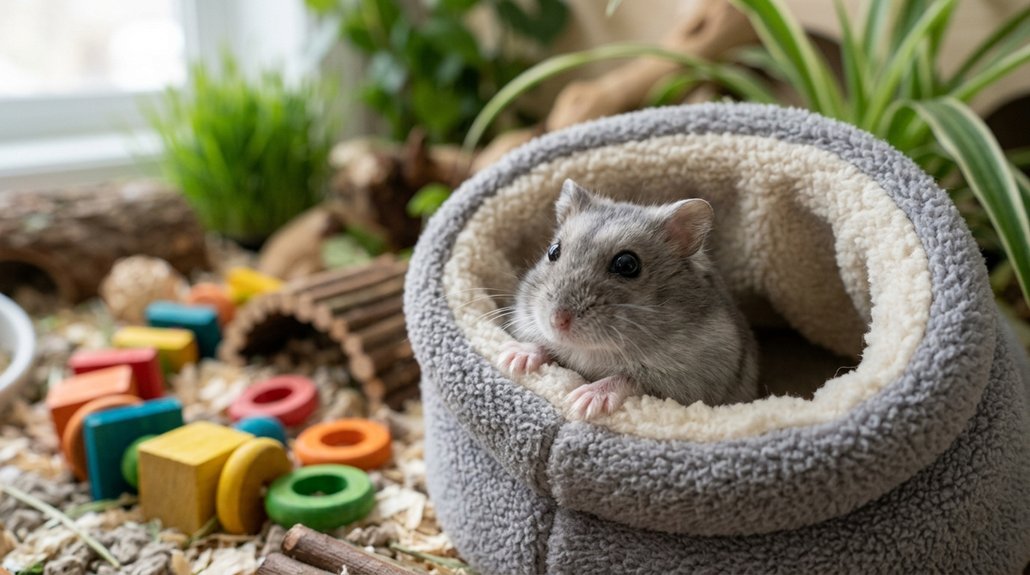
What to Do if Your Hamster Seems Stressed or Unhappy
If your hamster seems stressed or unhappy, start by identifying signs like unusual behaviors or weight changes. Verify its habitat is stress-free by placing the cage in a…

Hamsters
How to Tame a Hamster and Build Trust
To tame your hamster and build trust, create a cozy environment in a quiet area with quality bedding and essentials like food, water, and toys. Understand your pet’s…
Hamsters
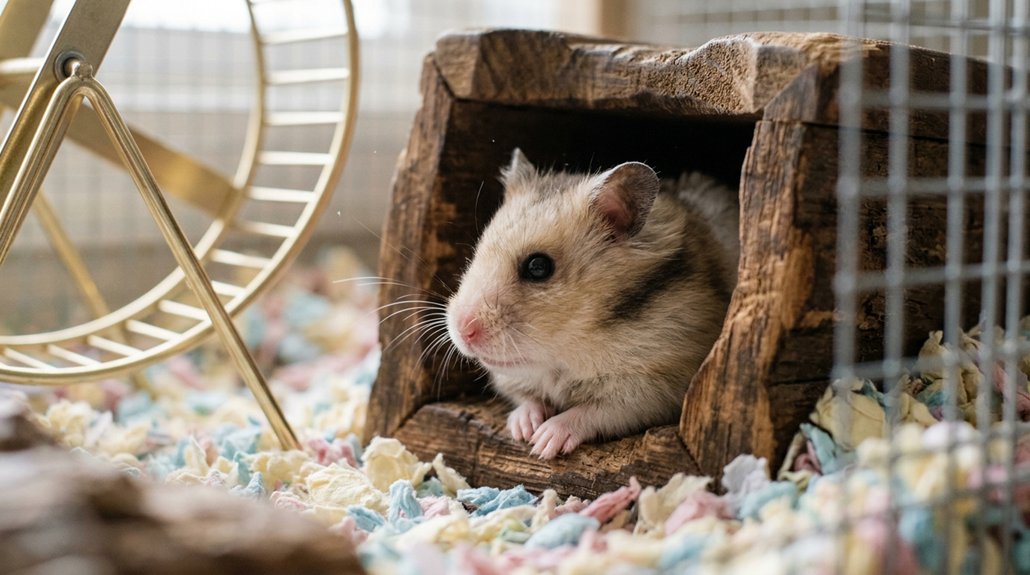
Why Your Hamster Is Hiding (and When to Be Concerned)
Your hamster’s hiding is instinctual, offering security and comfort. However, excessive hiding might signal stress or health problems. Monitor environmental factors like temperature (ideally 65-75°F), noise, and habitat…

Hamsters
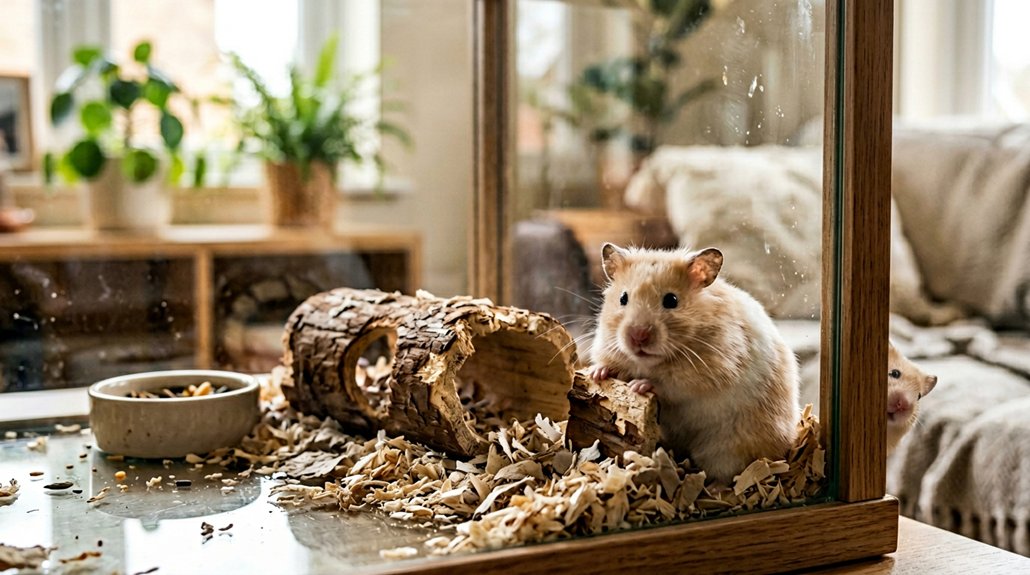
Why Your Hamster Is Biting (and How to Stop It)
Your hamster might be biting due to fear, confusion, or stress triggered by sudden movements, loud noises, or unfamiliar scents. To reduce biting, allow acclimatization time, and create…
Hamsters
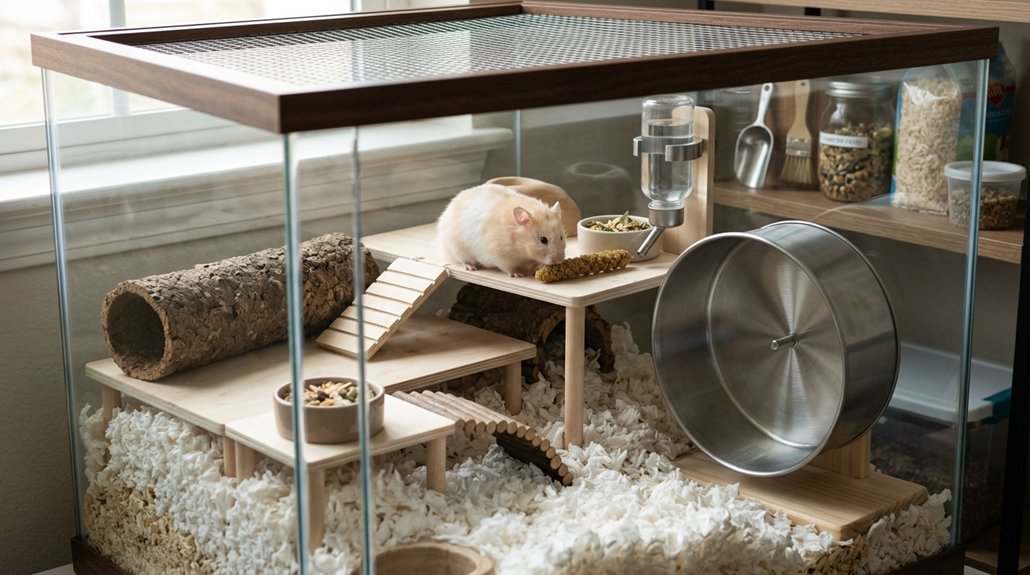
Common Cleaning Mistakes Hamster Owners Make
Avoid common cleaning mistakes that can affect your hamster’s well-being. Over-cleaning disrupts their familiar scents, causing stress and anxiety. Use paper-based or kiln-dried aspen bedding to effectively absorb…
Hamsters
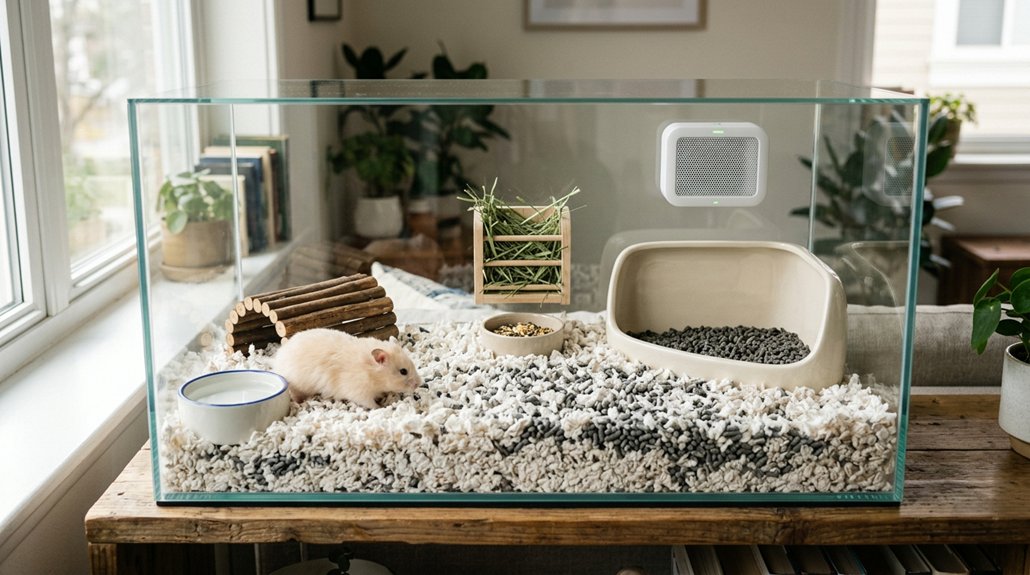
Best Tips for Keeping a Hamster Habitat Clean
To keep your hamster’s habitat clean, prevent bacteria buildup by sweeping waste and replacing soiled bedding daily. Wash water bowls and clean the exercise wheel with soap and…
Hamsters
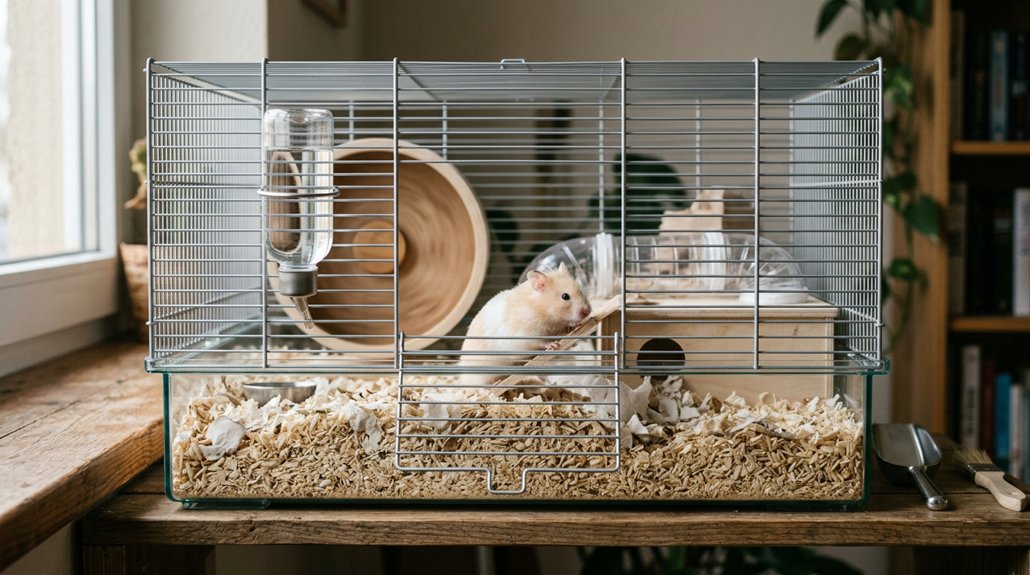
How to Control Odor in a Hamster Cage
To control odor in a hamster cage, focus on hygiene and appropriate materials. Clean the cage weekly with an antibacterial cleaner made for small animals, and guarantee thorough…
Hamsters
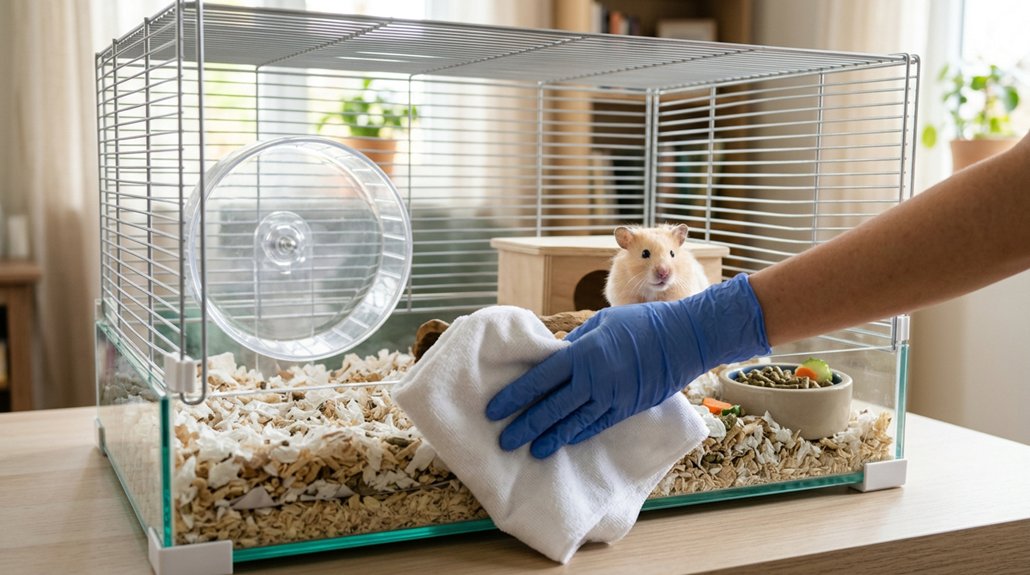
How Often Should You Clean a Hamster’s Cage?
You should clean your hamster’s cage with a structured routine: daily spot cleaning, weekly maintenance, and monthly deep cleaning. Daily, remove soiled bedding and uneaten food to monitor…
Hamsters
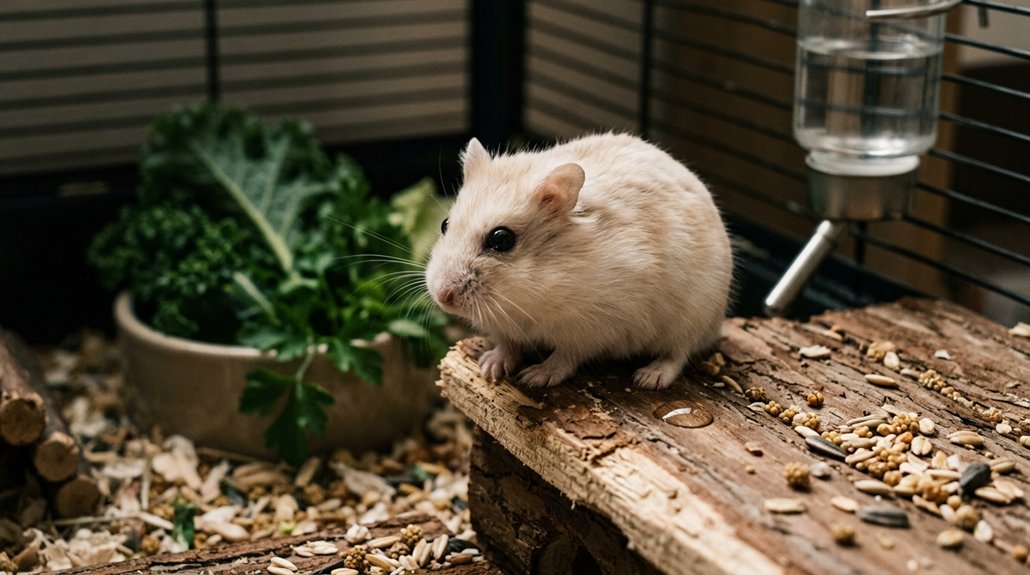
How to Clean a Hamster Cage the Right Way
To clean a hamster cage correctly, start with daily spot cleaning. Remove soiled areas, sanitize water bottles, and guarantee fresh sand is accessible. Weekly tasks include cleaning the…
Hamsters
Why Your Hamster Isn’t Eating (and What to Do)
If your hamster isn’t eating, check for dental issues, dehydration, and stressful changes. Urgently schedule a veterinary visit and offer soft foods or critical care nourishment like Emeraid…

Hamsters
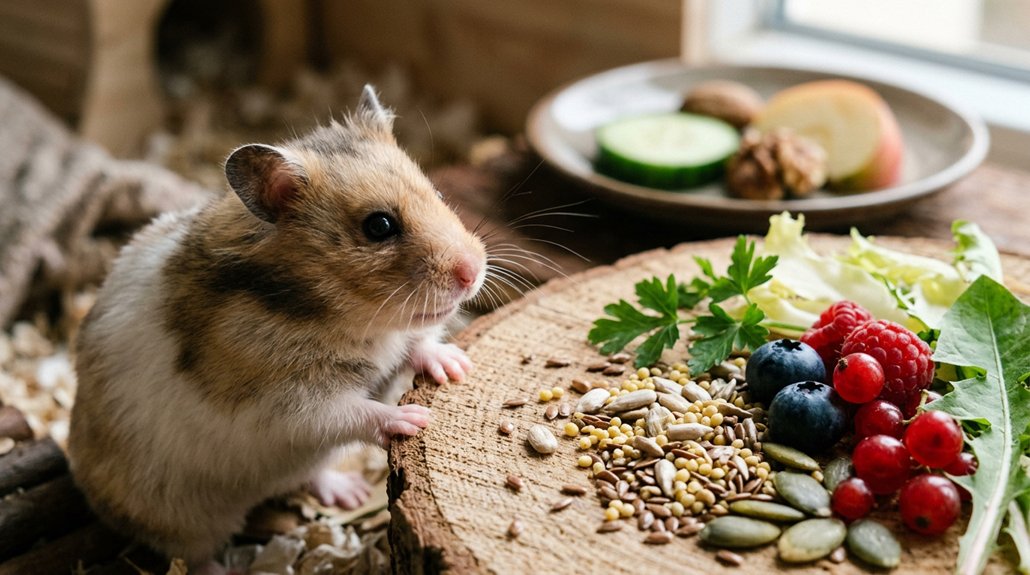
How Much Should You Feed a Hamster Each Day
For ideal hamster health, feed 1-2 tablespoons of high-quality commercial mix daily. Syrian hamsters require 1-2 tablespoons, while dwarf hamsters need about 1 tablespoon. Adjust based on your…
Hamsters
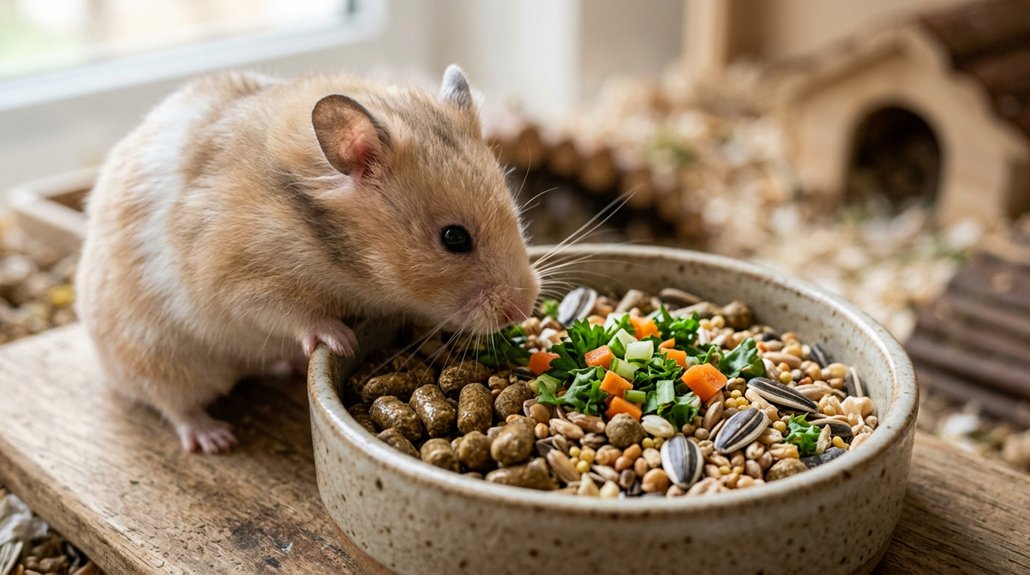
Foods Hamsters Should Never Eat
You should never feed hamsters citrus fruits, onions, or garlic due to their toxicity risks. Avoid high-fat snacks and processed treats, as they lead to obesity and health…
Hamsters
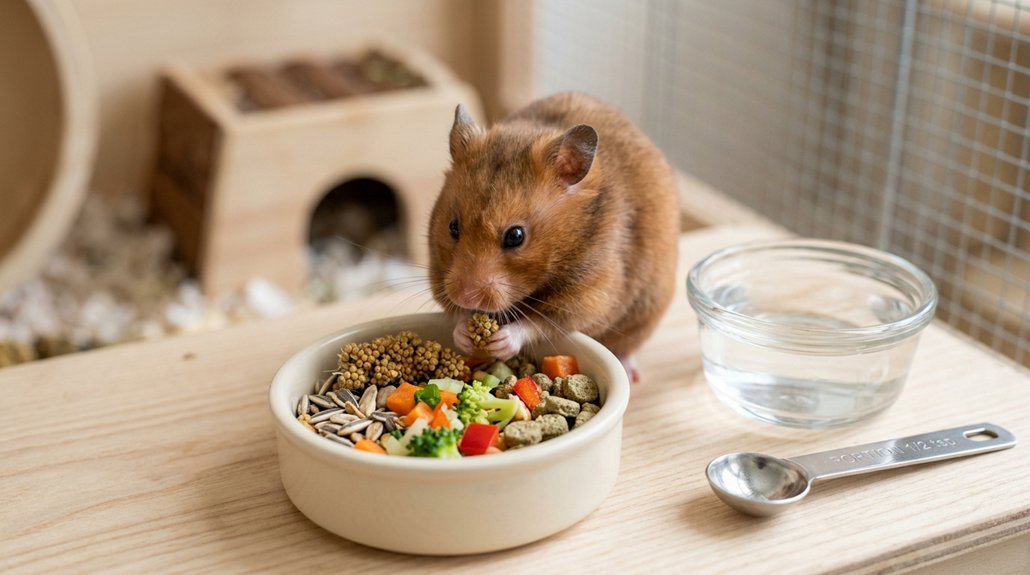
Hamster Diet Basics: Pellets, Seeds, and Fresh Foods
Make certain your hamster’s diet is nutritionally complete by focusing on pelleted food as the cornerstone, supplemented with seed mixes and fresh vegetables. Pellets provide essential nutrients; select…
Hamsters
What to Feed a Hamster Daily for Proper Health
To guarantee your hamster’s ideal health, provide a diet primarily of high-quality commercial pellets, making up 90% of their intake. Incorporate fresh vegetables like kale and spinach for…