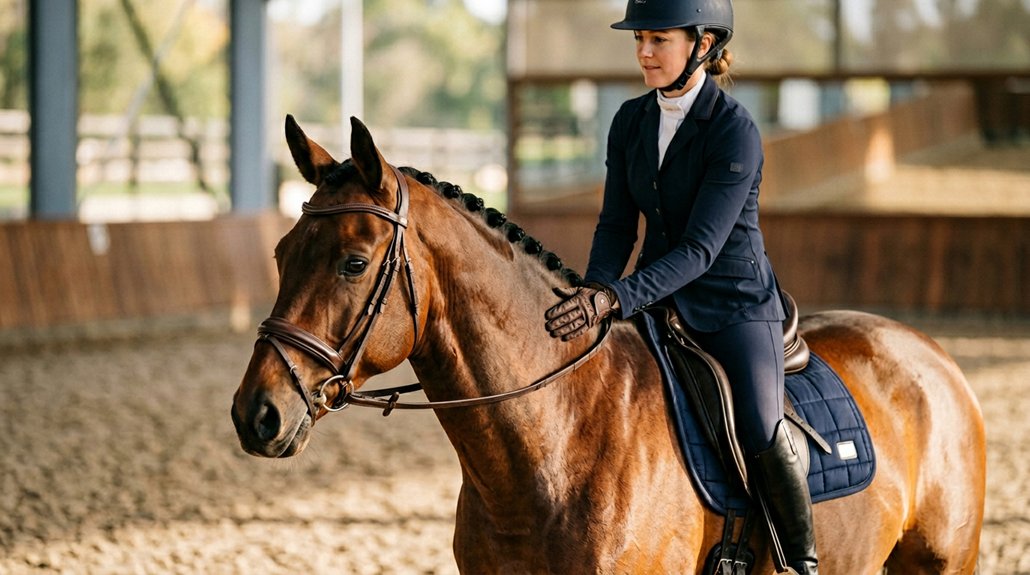
To build a strong rider-horse relationship, focus on understanding and trust. Start with respectful initial contact, paying attention to nonverbal cues like ear position and muscle tension. Prioritize…

Behavior & Training
How to Lead a Horse Properly and Safely
To lead a horse properly and safely, start with a well-fitted halter and a lead rope. Hold the rope correctly, standing on the horse’s left side. Use clear…

Health & Wellness
How to Keep Your Horse Healthy Year-Round
To keep your horse healthy year-round, adjust their diet seasonally and increase caloric intake during colder months. Guarantee they have fresh water and consider electrolytes when it’s hot.…
Behavior & Training
How to Improve Your Horse’s Ground Manners
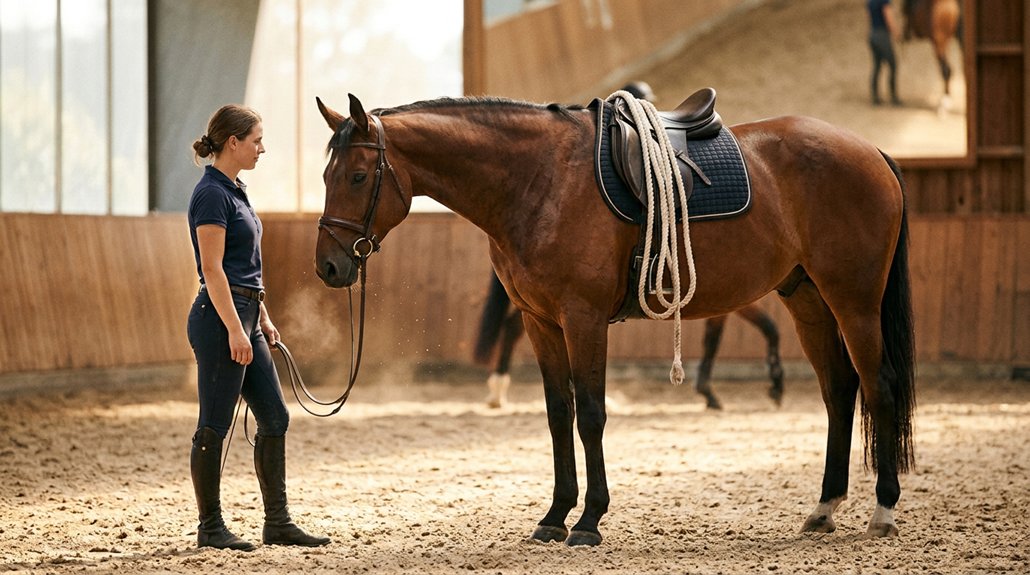
To improve your horse’s ground manners, establish clear personal space boundaries using body language and consistent reminders. Practice leading with precision, ensuring your horse stays slightly behind your…
Health & Wellness
Preventative Care Tips for Keeping Your Horse Healthy
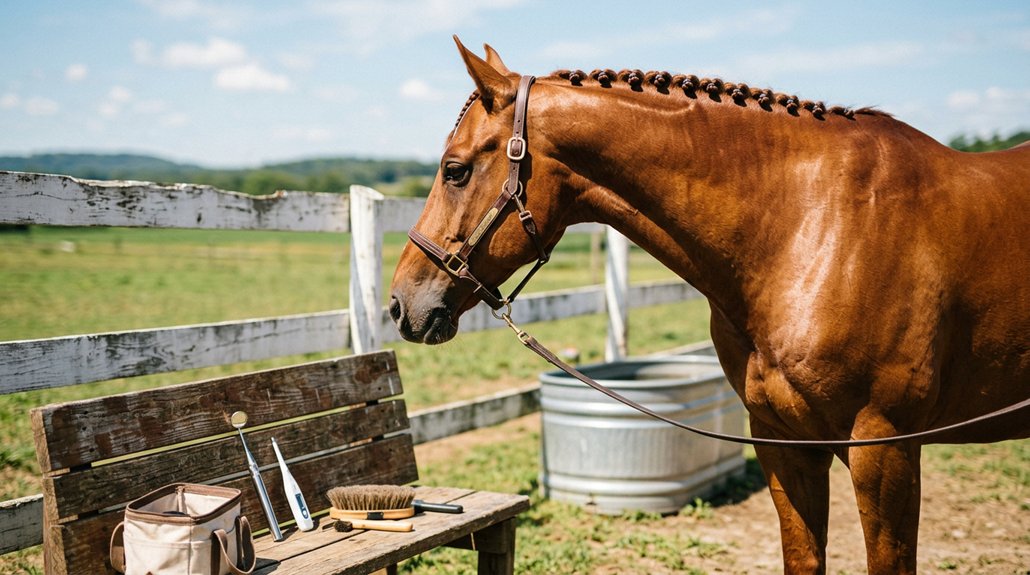
Guaranteeing your horse’s health involves regular wellness exams, structured exercise, vaccinations, and parasite management. Provide a balanced diet with 1-2% body weight in quality roughage, and guarantee access…
Horse Breeds
How to Match a Horse Breed to Your Riding Goals
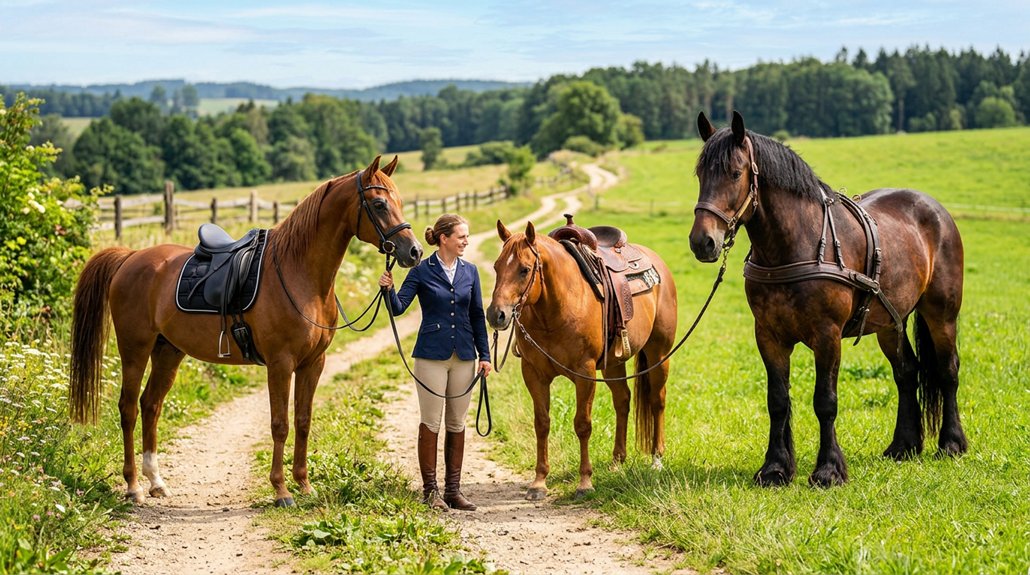
To match a horse breed to your riding goals, assess your experience level and preferred riding style like Western or English. Identify goals such as jumping or leisure,…
Behavior & Training
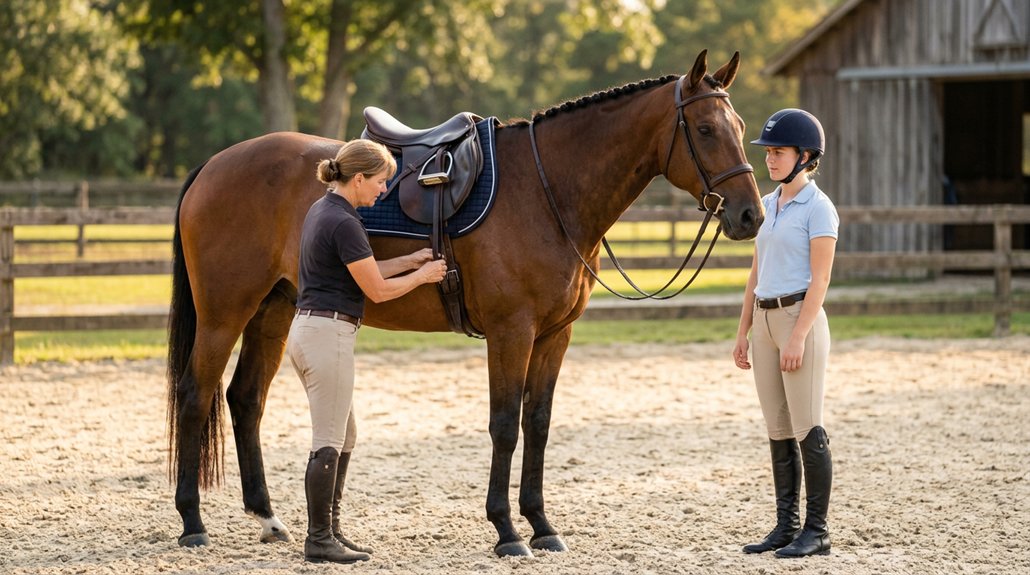
How to Prepare a Horse for First-Time Riders
To prepare a horse for first-time riders, recognize its comfort signals like ear and tail positions. Build trust through groundwork, ensuring the horse sees you from both eyes.…
Horse Ownership
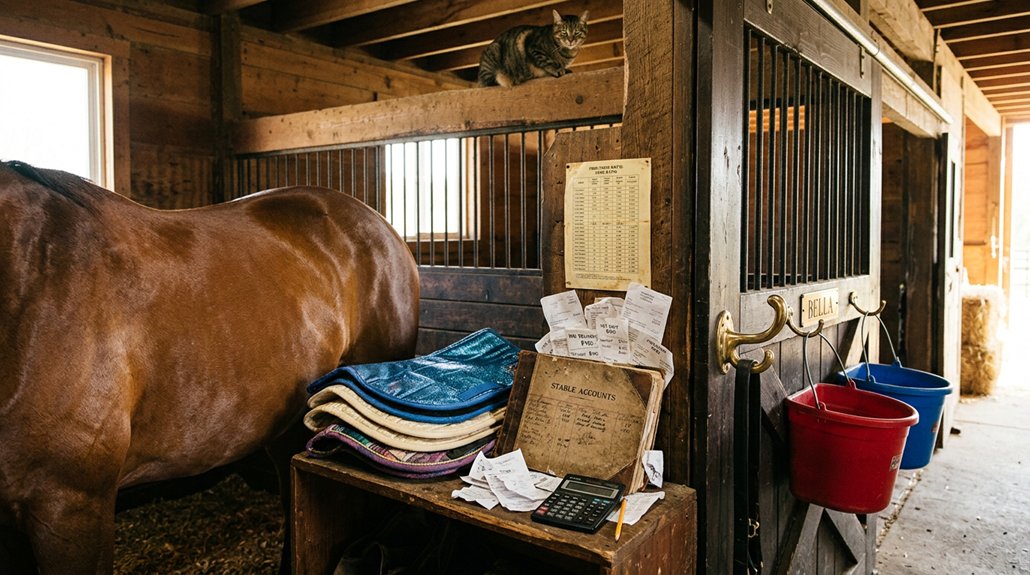
Financial Mistakes New Horse Owners Make
As a new horse owner, common financial missteps include underestimating initial and ongoing costs. Budgeting is essential; aim for a $10,000 yearly budget to cover essentials like feed,…
Health & Wellness
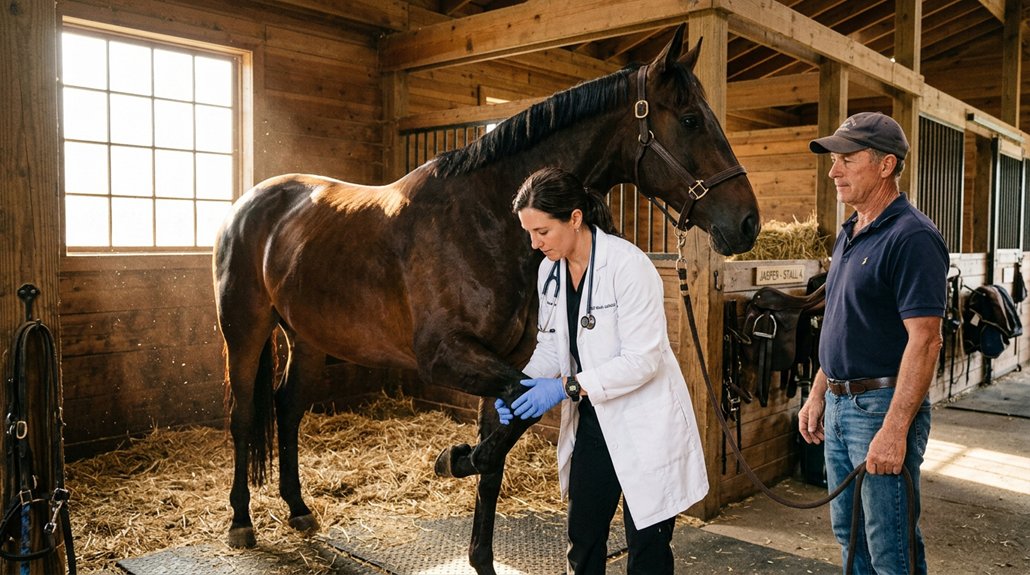
How Often Should a Horse See a Vet?
A horse’s age and health history dictate vet visit frequency. Foals require check-ups every 3-4 months, while young horses need semi-annual exams. Adults benefit from annual visits, and…
Horse Breeds
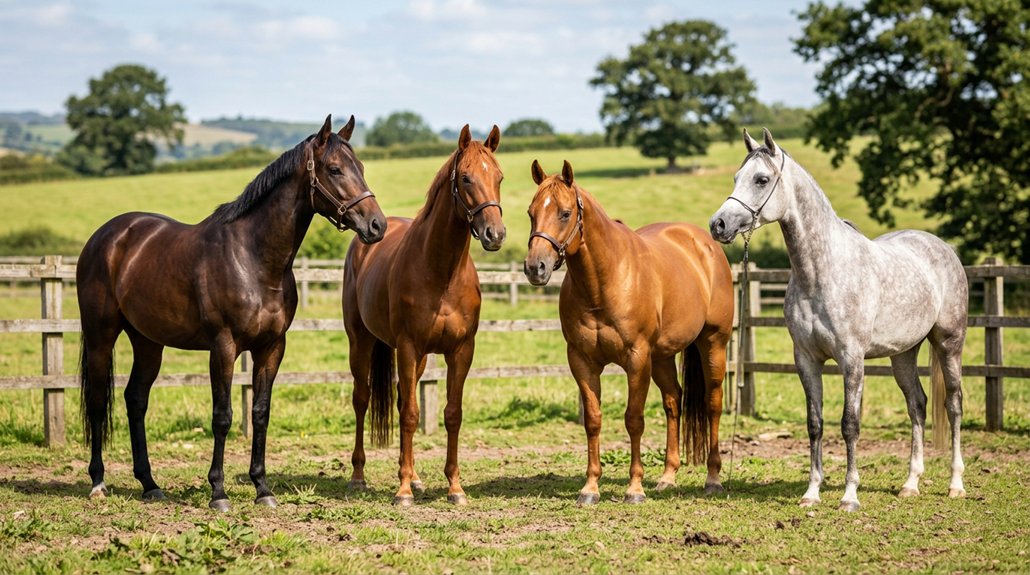
Mixed vs Purebred Horses: What’s the Difference
When comparing mixed and purebred horses, mixed breeds benefit from genetic diversity, enhancing health and adaptability, but may lack consistency in traits. Purebreds offer predictable characteristics due to…
Behavior & Training
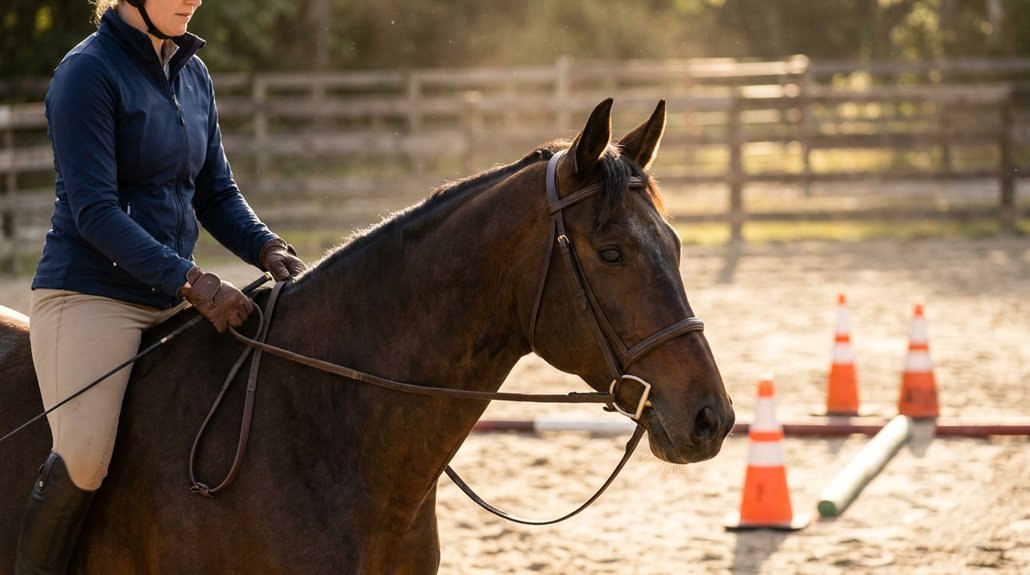
How to Train a Horse for Riding
Begin training a horse for riding by focusing on groundwork to establish trust and communication. Use basic commands and gradual exposure to new stimuli to build confidence. Introduce…
Horse Ownership
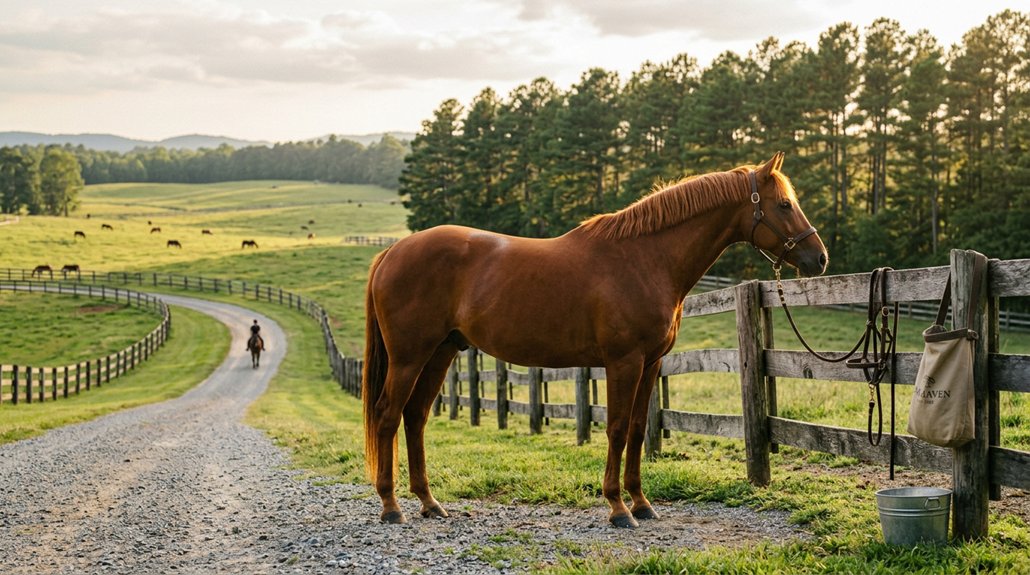
Is Owning a Horse Worth the Cost?
Owning a horse is a significant financial commitment, with ongoing costs ranging from feeding to healthcare. Monthly expenses can rival luxury vehicle maintenance, with boarding alone costing $600…
Health & Wellness
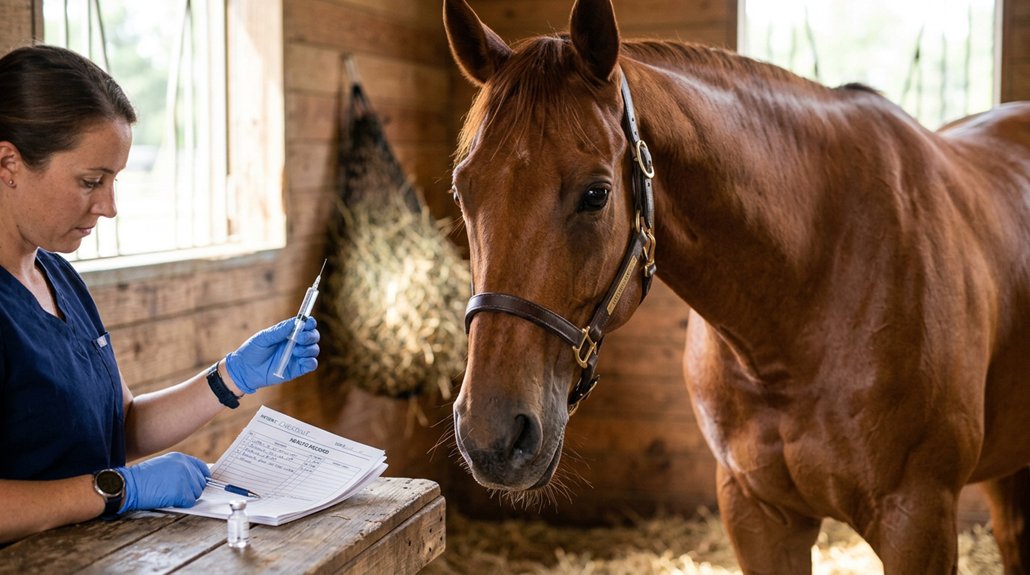
What Vaccines Do Horses Need?
Your horse’s health relies on core vaccines like rabies, tetanus, Eastern and Western Equine Encephalomyelitis (EEE/WEE), and West Nile Virus, which are essential for immunity against fatal diseases.…
Horse Breeds
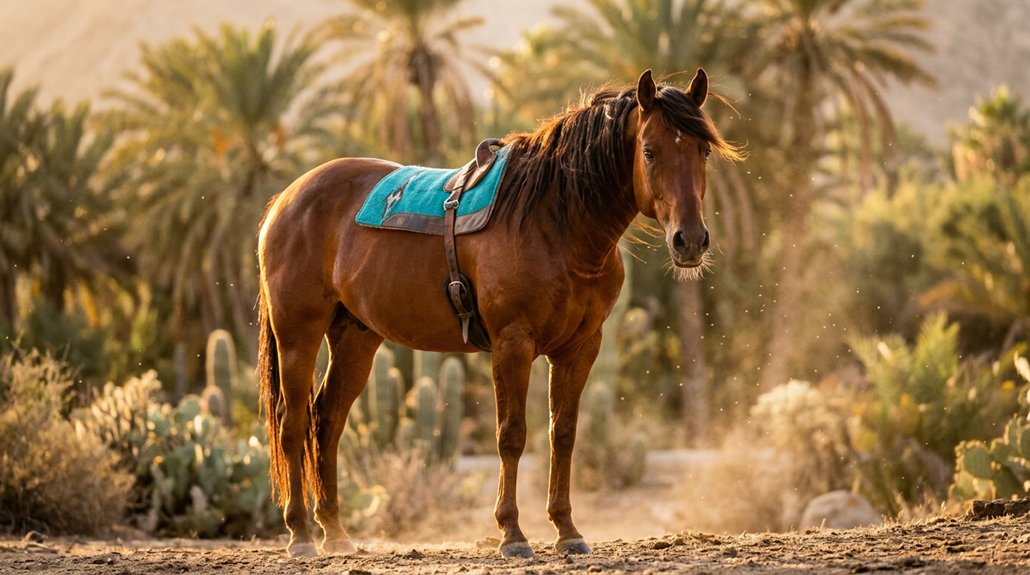
Best Horse Breeds for Warm Weather Environments
When selecting a horse for warm climates, prioritize breeds like Arabians and Mustangs that exhibit evolutionary adaptations such as efficient sweating, adept hydration strategies, and thin coats for…
Behavior & Training
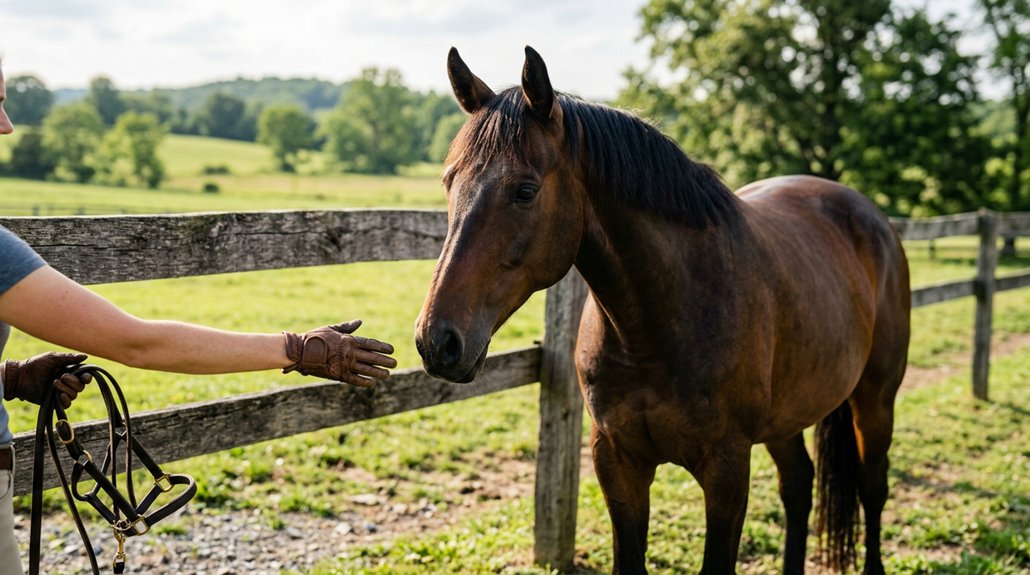
How to Set Boundaries With a Horse
To set boundaries with a horse, balance empathy and technique. Use consistent body language to signal personal space, reinforcing this without aggression. Gentle pressure and non-verbal cues help…