
To keep your horse healthy year-round, adjust their diet seasonally and increase caloric intake during colder months. Guarantee they have fresh water and consider electrolytes when it’s hot.…
Health & Wellness
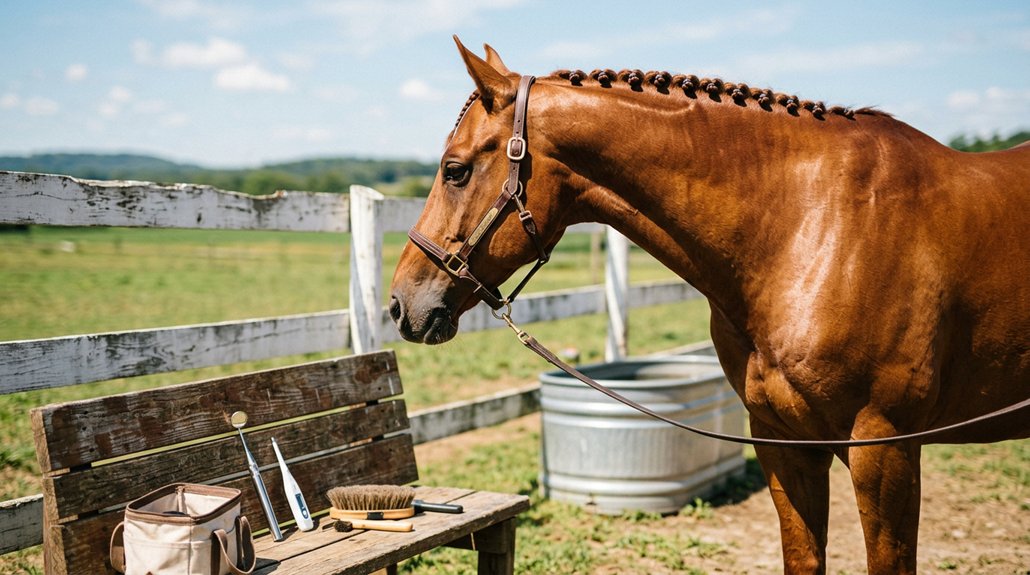
Preventative Care Tips for Keeping Your Horse Healthy
Guaranteeing your horse’s health involves regular wellness exams, structured exercise, vaccinations, and parasite management. Provide a balanced diet with 1-2% body weight in quality roughage, and guarantee access…
Health & Wellness
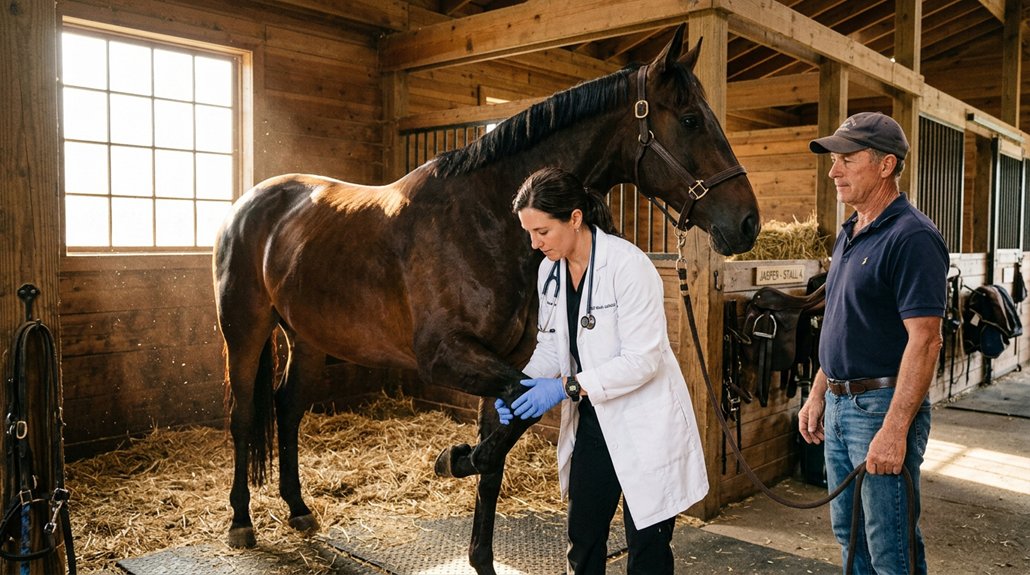
How Often Should a Horse See a Vet?
A horse’s age and health history dictate vet visit frequency. Foals require check-ups every 3-4 months, while young horses need semi-annual exams. Adults benefit from annual visits, and…
Health & Wellness
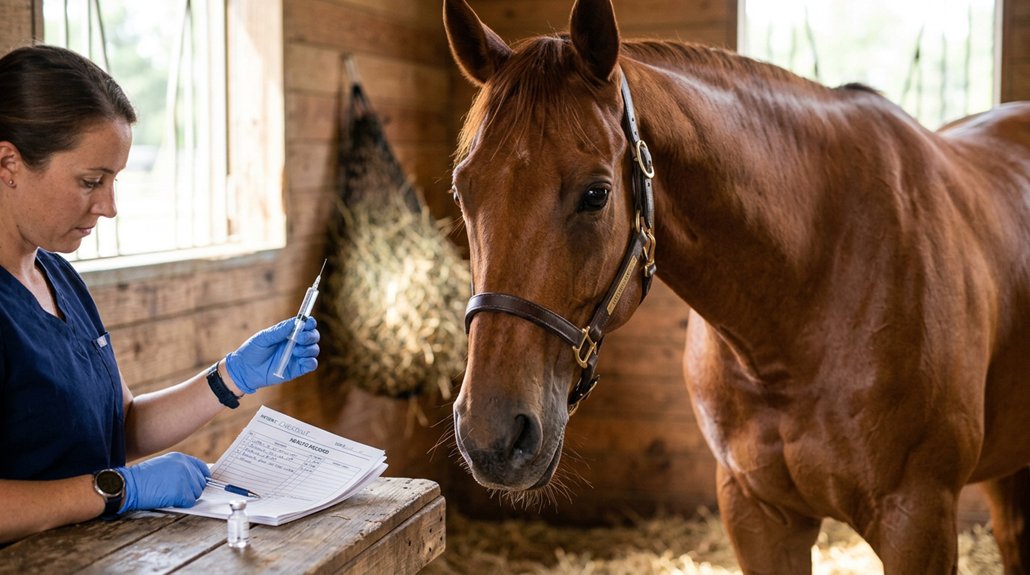
What Vaccines Do Horses Need?
Your horse’s health relies on core vaccines like rabies, tetanus, Eastern and Western Equine Encephalomyelitis (EEE/WEE), and West Nile Virus, which are essential for immunity against fatal diseases.…
Health & Wellness
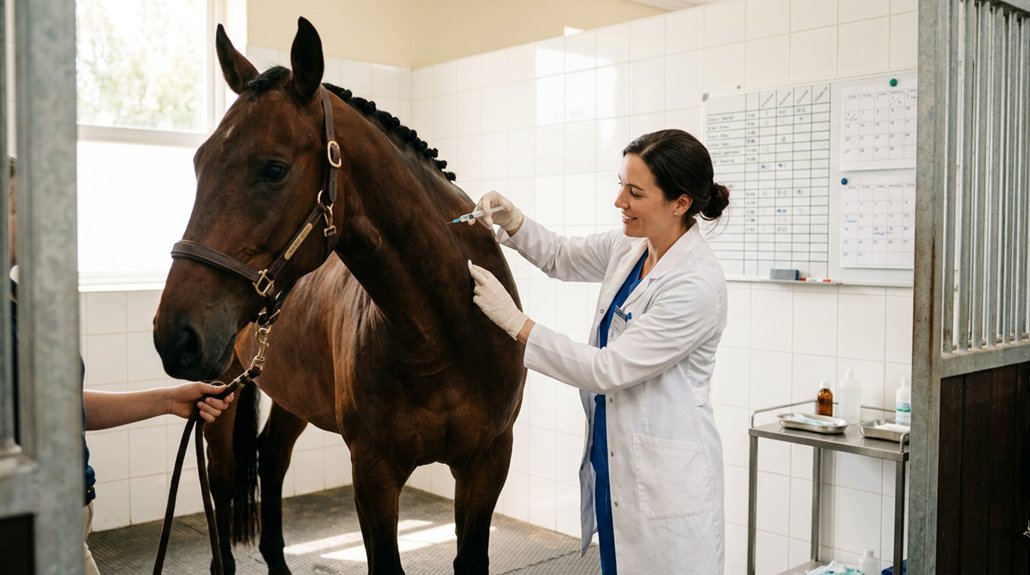
Horse Vaccination Schedule: What to Expect
Your horse’s vaccination schedule is essential for protection against serious diseases like rabies and West Nile Virus. Core vaccines, including EEE/WEE, Tetanus, and Rabies, are administered annually, while…
Health & Wellness
How Diet Affects a Horse’s Performance and Health
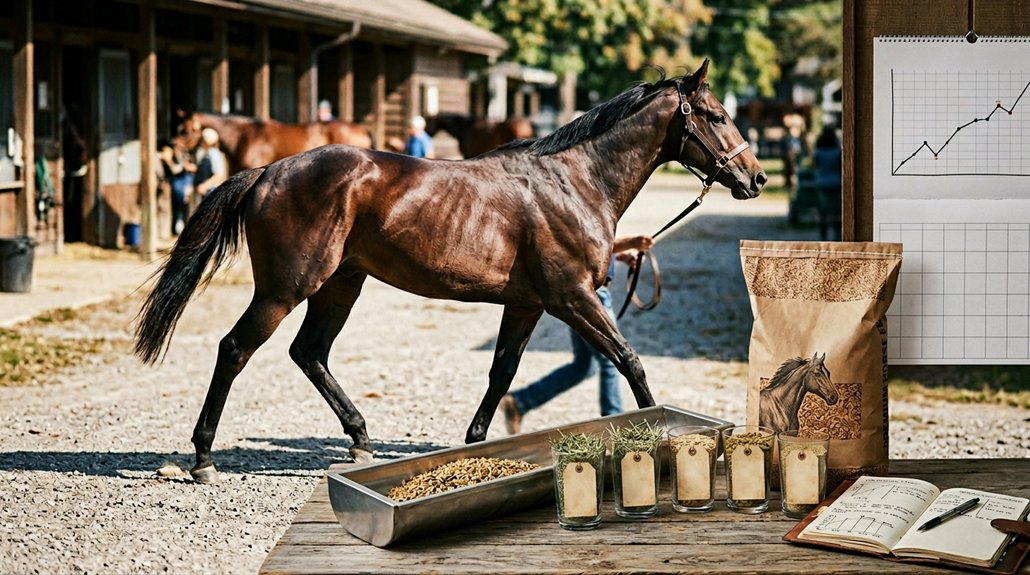
Your horse’s diet is vital for its performance and health. Prioritize fiber-rich forage to align with natural grazing instincts, preventing sugar spikes and related health issues. Avoid high-grain…
Health & Wellness
Best Diet for Maintaining a Healthy Horse
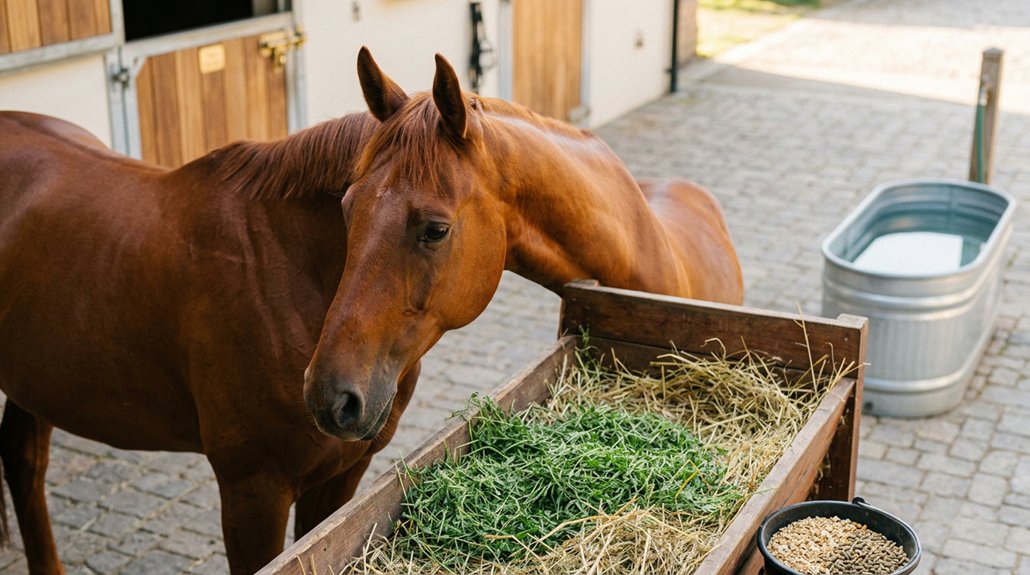
To maintain a healthy horse diet, prioritize high-quality forage, like grass or legume hay, making up 1-2% of the horse’s body weight daily. Use grains sparingly, matching the…
Health & Wellness
How Much Should a Horse Eat Each Day?
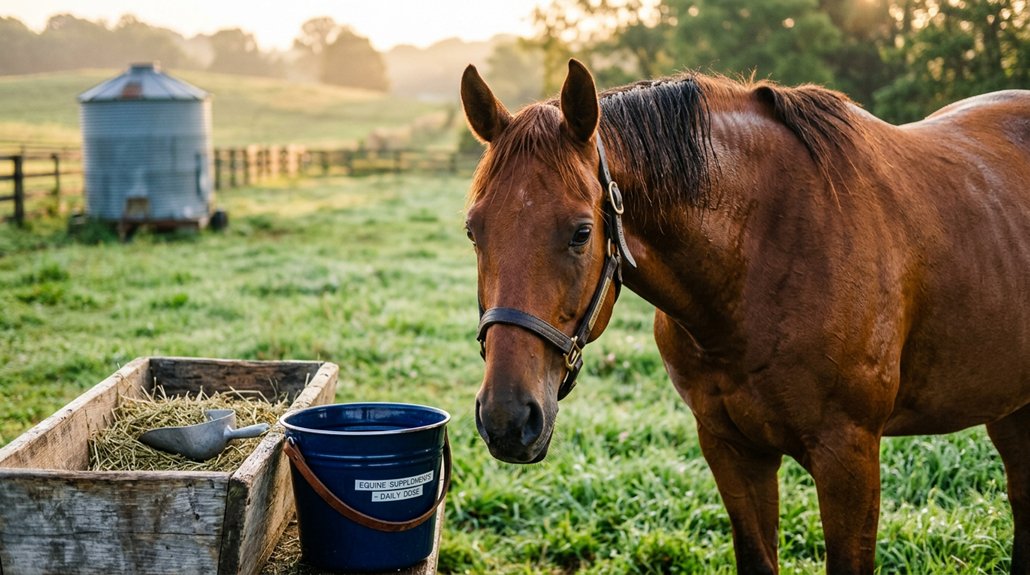
Your horse should consume 1.5-2.5% of its body weight daily in high-quality hay and supplements. For instance, a 1,000-pound horse needs about 20 pounds of hay, with adjustments…
Health & Wellness
What to Feed a Horse for Proper Health
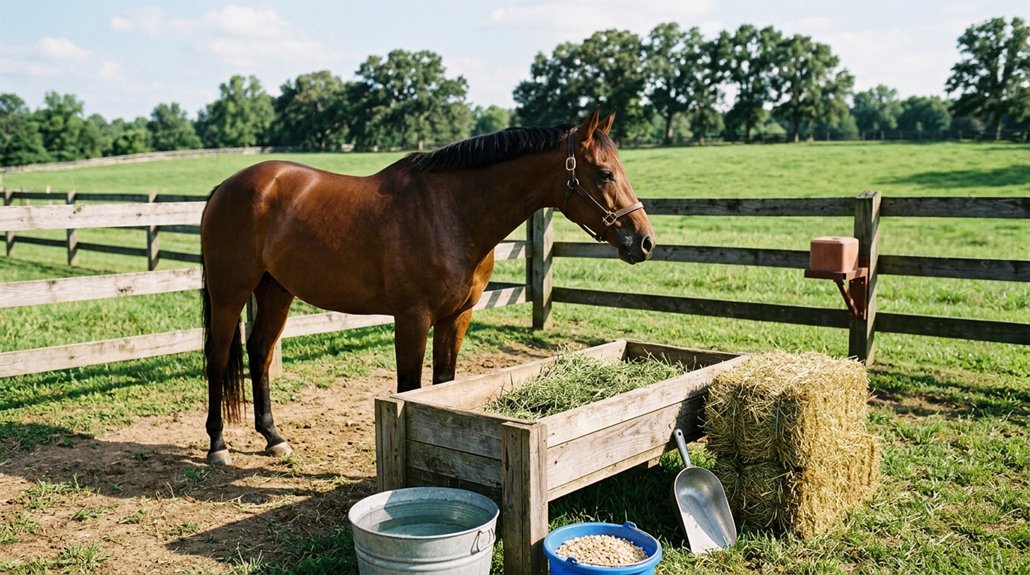
To guarantee your horse’s proper health, prioritize a diet rich in high-quality forage, providing 1.5-2% of their body weight daily, along with unlimited fresh water. Limit grains and…
Health & Wellness
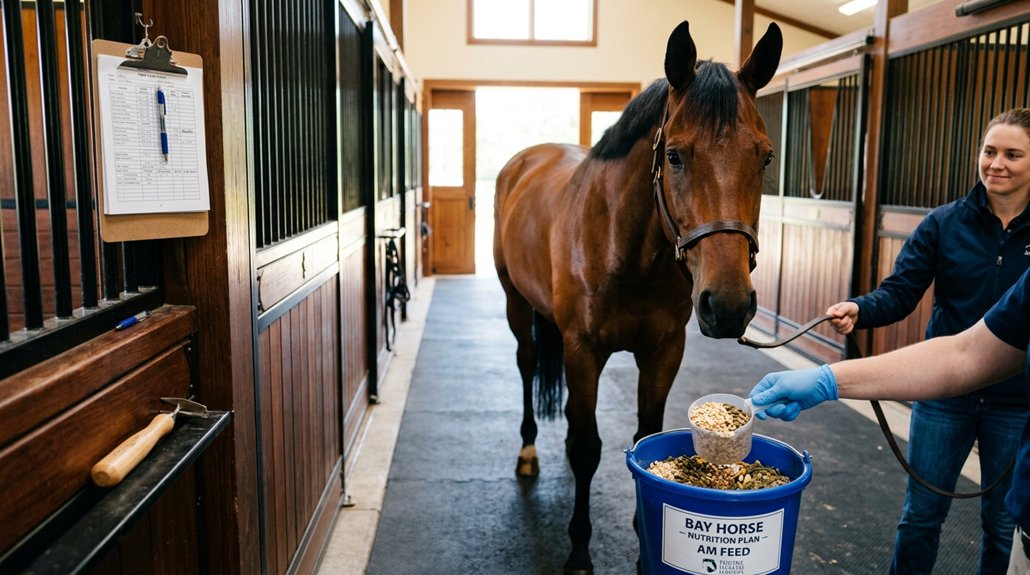
Horse Nutrition Basics: What Every Owner Should Know
To guarantee your horse’s health, provide 1.5-2% of their body weight in forage daily, choosing types like alfalfa or grass hay for balanced nutrients. Maintain a 2:1 calcium…
Health & Wellness
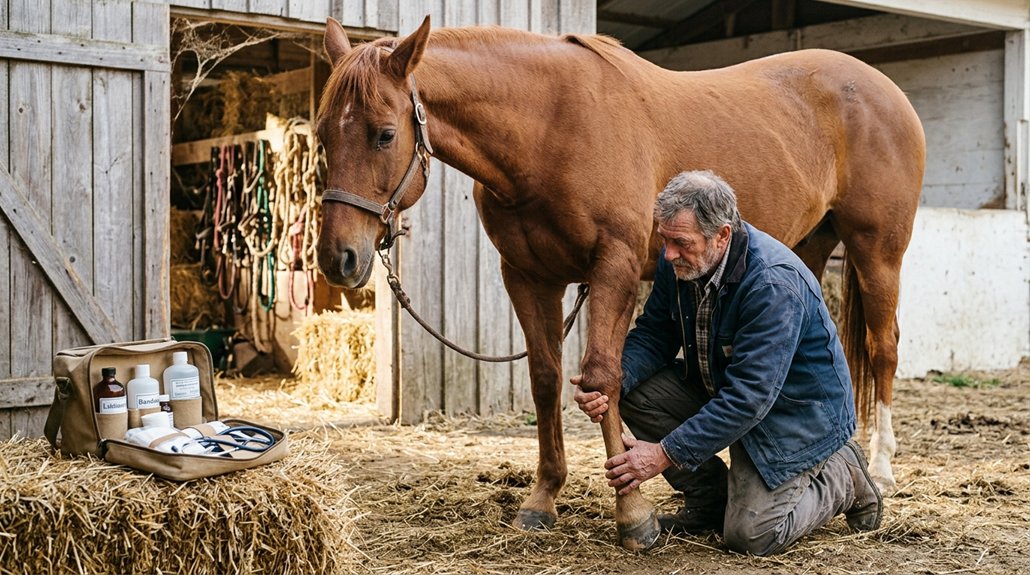
When to Rest a Horse vs Call a Vet
When deciding to rest a horse or consult a vet, consider the severity of symptoms. Mild distress like slight lameness may just need rest, but severe issues like…
Health & Wellness
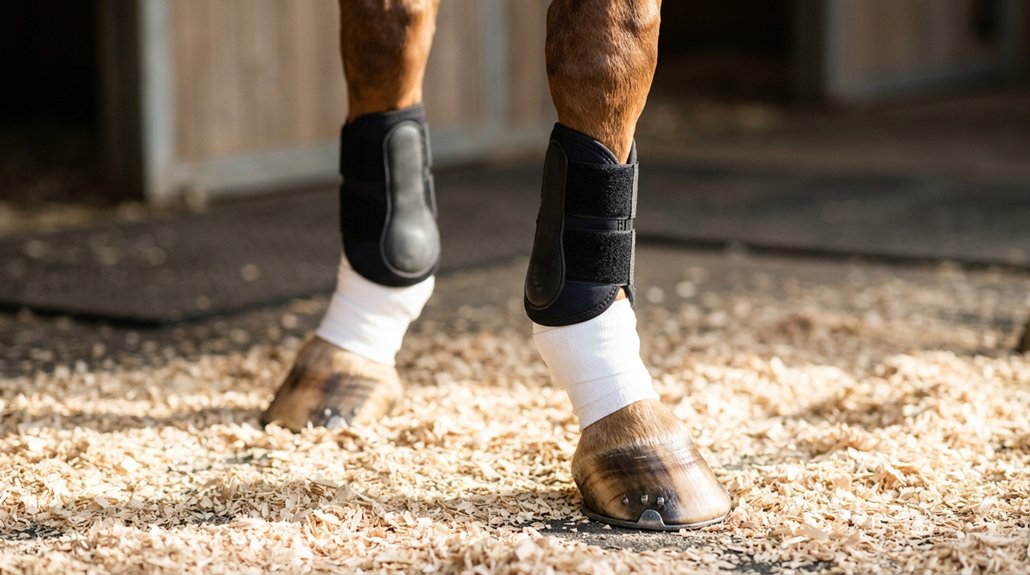
How to Prevent Lameness in Horses
Preventing lameness in horses involves meticulous daily hoof and leg care, including regular hoof inspections and debris removal. Assess the breed’s suitability and conformation for specific disciplines to…
Health & Wellness
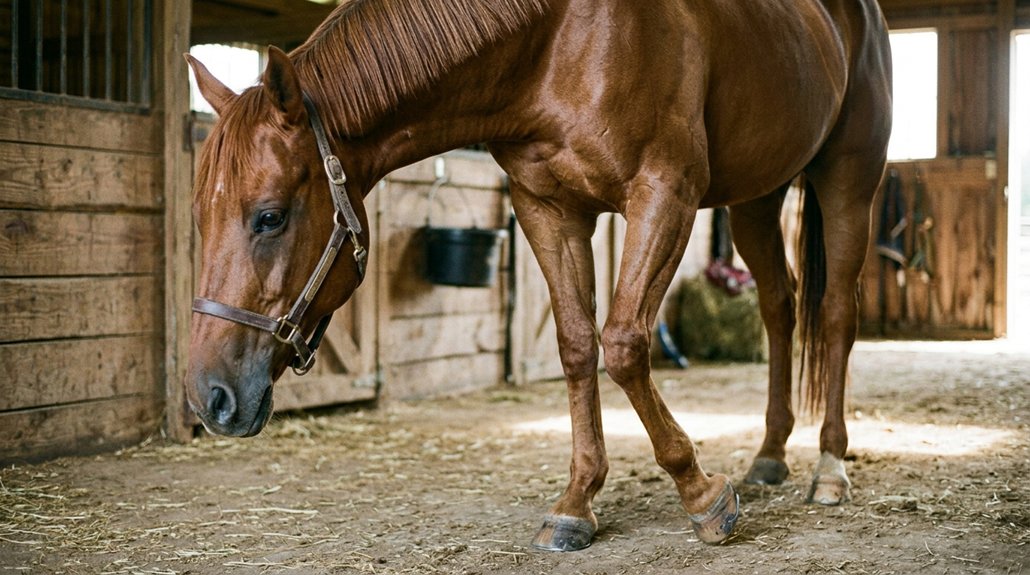
Common Causes of Lameness in Horses
You’ll often find lameness in horses is due to musculoskeletal pain from conditions like hoof abscesses, subsolar bruising, navicular syndrome, and laminitis. Acute injuries or chronic issues such…
Health & Wellness
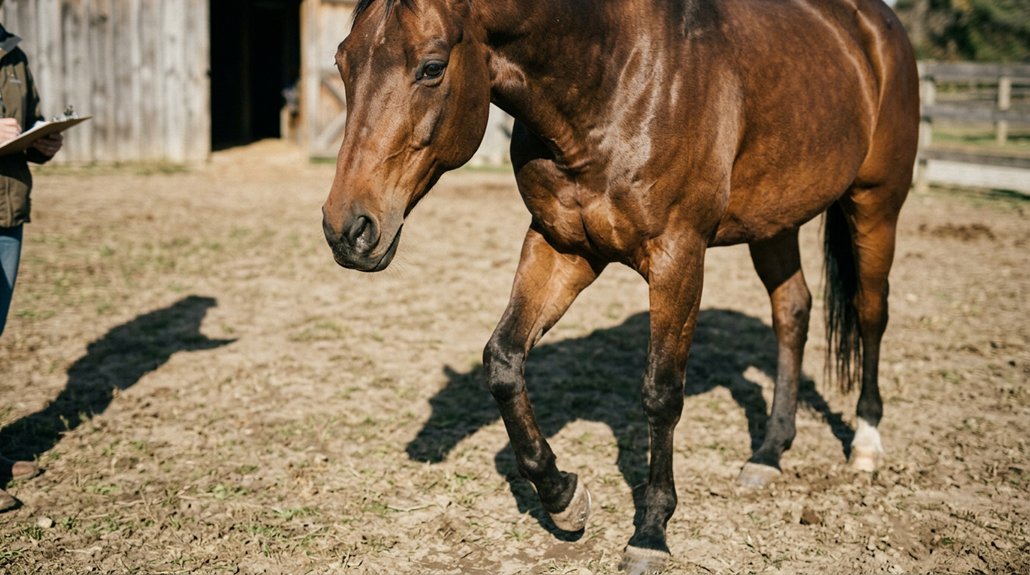
Why Your Horse Is Limping and When to Be Concerned
If your horse is limping, it may be due to conditions like hoof abscesses, injuries, laminitis, or osteoarthritis. Look for signs such as changes in stride, reluctance to…
Health & Wellness
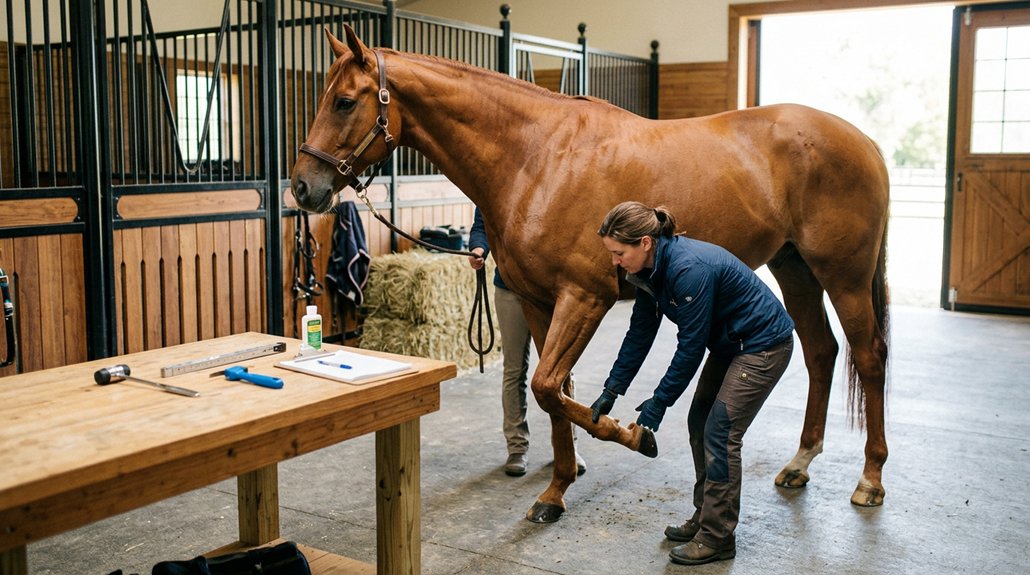
Lameness in Horses: Causes and Treatment Options
Recognizing equine lameness involves spotting abnormal gait, swelling, toe pointing, or head bobbing. Common causes include hoof abscesses, soft tissue injuries, and bone fractures. Treatment options range from…