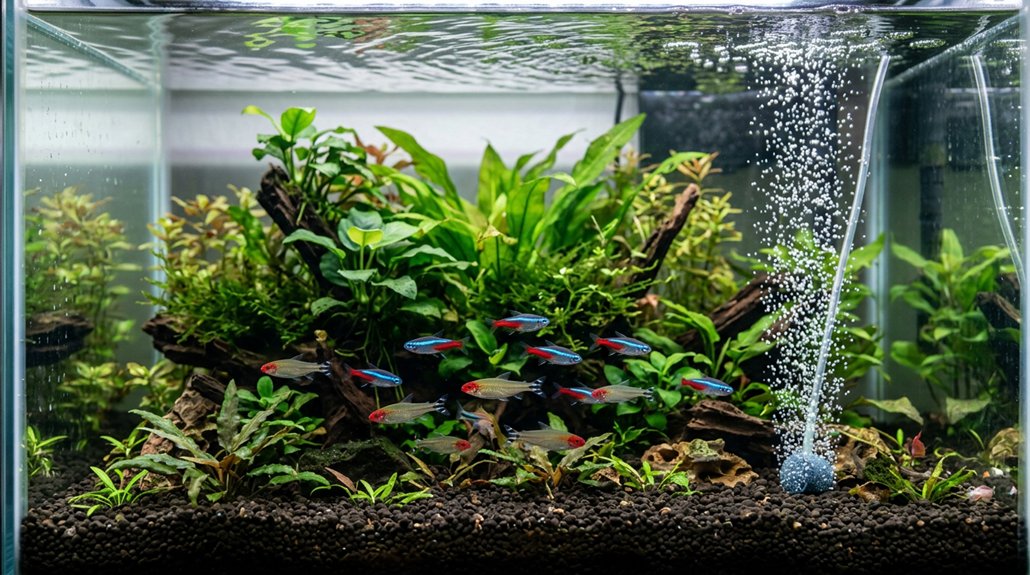
Nitrite and nitrate problems in your fish tank usually mean the nitrogen cycle is out of balance. Nitrite spikes often happen in new tanks, after overstocking, overfeeding, or when filter media gets rinsed or replaced and bacteria are lost. Nitrate builds up when waste keeps converting to nitrate but water changes, plants, or filtration don’t remove it fast enough. If you keep going, you’ll see how to spot and prevent these issues.
Key Takeaways
- Nitrite spikes often happen in new tanks while beneficial bacteria are still cycling and converting ammonia to nitrate.
- Overstocking or adding fish too quickly can overwhelm the biofilter and cause ammonia, nitrite, and nitrate buildup.
- Overfeeding and decaying waste raise ammonia, which then leads to higher nitrite and nitrate levels.
- Filter problems like replacing all media, clogging, or rinsing in chlorinated water can remove helpful bacteria.
- Poor water changes, source-water nitrate, and weak plant growth allow nitrate to accumulate over time.
What Nitrite and Nitrate Mean in Fish Tanks
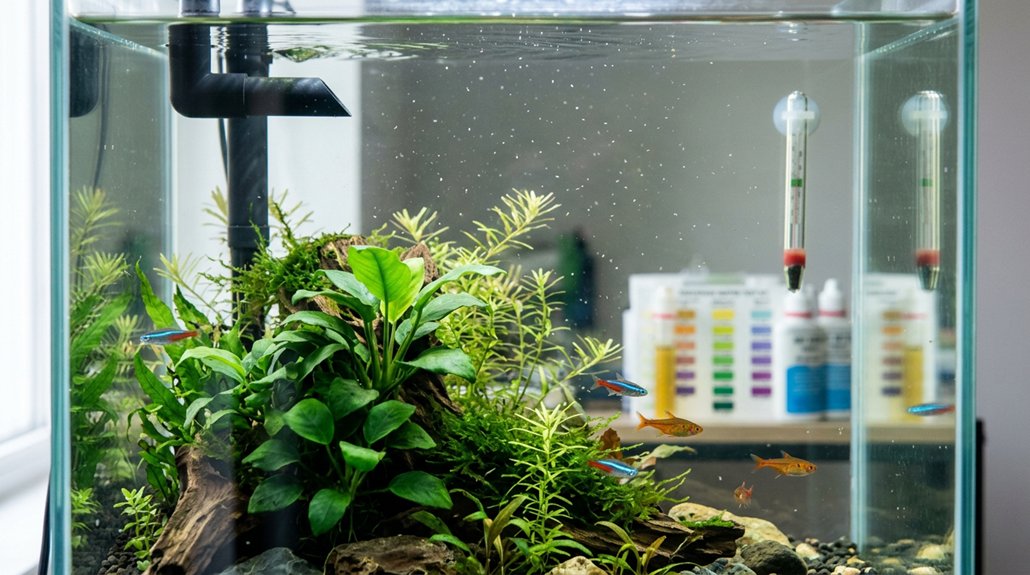
In a healthy tank, nitrite and nitrate are distinct markers of where the nitrogen cycle is breaking down or accumulating. In aquarium chemistry, nitrite (NO2−) has a clear biological meaning: it’s an intermediate formed when nitrifying bacteria oxidize ammonia from waste and decaying matter. You should treat any detectable nitrite as unsafe, because it enters fish through the gills and converts hemoglobin to methemoglobin, reducing oxygen transport; the target is 0 ppm. Nitrate (NO3−) is the next oxidation product, so it’s less acutely toxic, but sustained elevation can still stress fish. Many aquarists aim to keep nitrate below 20–40 mg/L. Together, these values tell you whether filtration is incomplete or waste is accumulating.
Why Nitrite Spikes Happen in Aquariums
Nitrite spikes usually appear when the aquarium’s nitrifying bacteria can’t keep pace with nitrogen input. In new tanks, the 4–6 week colonization phase often leaves you with excess nitrite because ammonia-oxidizers establish before nitrite-oxidizers. You can also trigger a spike by adding too many fish, overfeeding, or missing a decaying organism.
| Cause | Effect |
|---|---|
| New tank cycling | Nitrite rises |
| Bio-load surge | Bacteria overwhelmed |
| Filter disruption | Bacterial loss |
| Low oxygen/cold shock | Slower nitrite removal |
Rinsing media in chlorinated water or replacing all media at once removes biofilm. Low temperature, poor oxygenation, or poor filter capacity slows nitrite use. Anaerobic pockets can further impair filtration. Untreated water changes may obscure the cycle and let nitrite persist.
What Causes Nitrate Buildup in Aquariums
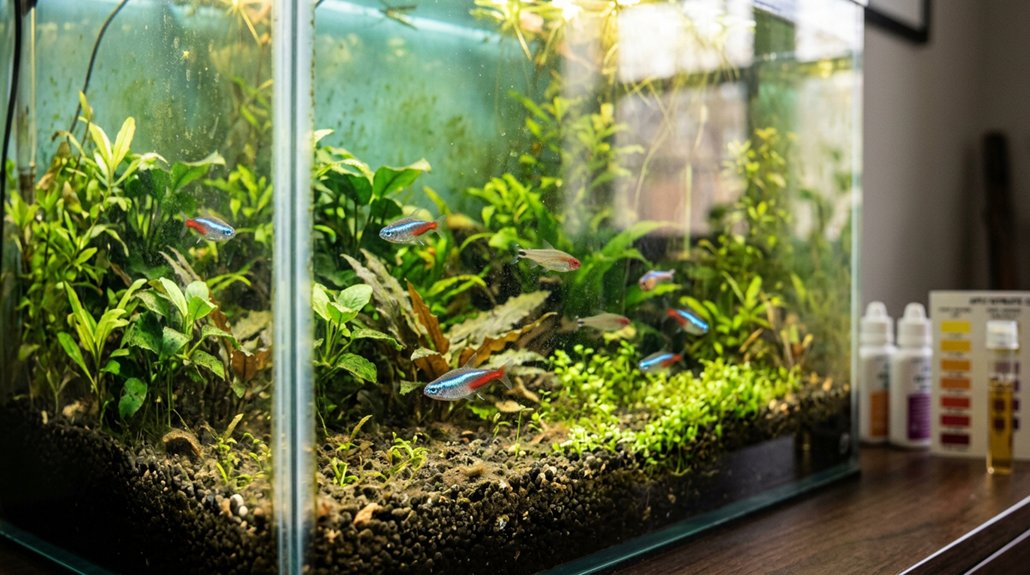
Nitrate builds up when the nitrogen cycle keeps converting ammonia from fish waste, uneaten food, and decaying organic matter into nitrite and then nitrate, but the aquarium doesn’t remove it fast enough. You’ll see higher levels when bacterial oxidation outpaces export. Plant uptake can lower nitrate, but only if you’ve got enough healthy growth. Substrate denitrification may also reduce nitrate in low-oxygen zones, though it’s usually limited in typical tanks. If you don’t change enough water, nitrate stays in the system and concentrates. Source water can already contain nitrate, adding to the load. Regular testing helps you detect accumulation before it reaches unsafe concentrations, and low-nitrate replacement water keeps the balance closer to target.
How Overstocking and Overfeeding Raise Levels
When you pack too many fish into a tank, ammonia production rises per liter of water and can outstrip the nitrifying bacteria’s capacity, which often leads to nitrite spikes during conversion. You’re also increasing nitrate accumulation, especially if stocking is sudden rather than gradual.
| Cause | Mechanism | Result |
|---|---|---|
| Overstocking | More waste per liter | Higher ammonia, nitrite, nitrate |
| Overfeeding | Uneaten food decomposes | Ammonia rises quickly |
| Rapid additions | Bacteria can’t adapt in 4–6 weeks | Spikes follow |
Your feeding frequency should match demand; excess food left after 5 minutes should be removed. Fish genetics can affect waste output, but bioload still matters more. If you add livestock slowly, you give bacterial colonies time to scale. Chronic excess often pushes nitrate above ~20 mg/L in sensitive species, so you’ll need partial water changes or live plants.
How Filter Problems Trigger Nitrite Spikes
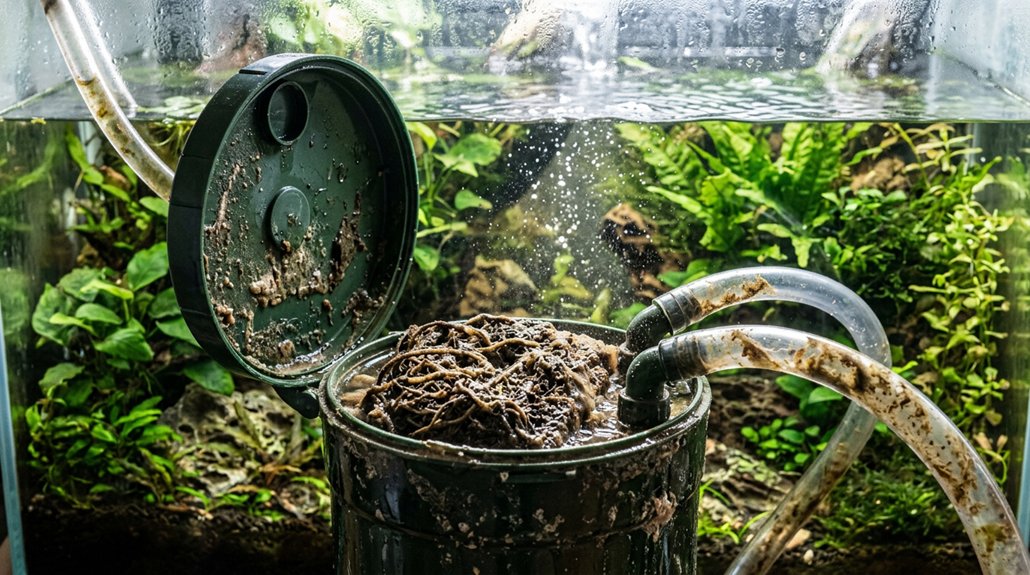
Even with a reasonable fish load and careful feeding, filter failures can still drive nitrite up quickly. If you remove or rinse all media at once, or swap cartridges without seeding, you wipe out nitrifying bacteria, and nitrite often rises for 4–6 weeks while colonies re-establish. An undersized or clogged unit causes flow disruption, limiting oxygen at the biofilm and suppressing Nitrosomonas and Nitrospira activity. In a new filter, unseeded media may oxidize ammonia to nitrite faster than nitrite can be converted to nitrate. Sudden temperature drops, pH swings, or chlorinated water can kill bacteria outright. During filter maintenance, avoid complete media replacement and keep flow stable. If you add biomass too fast, the filter’s processing capacity can’t keep pace, and transient nitrite spikes result.
How to Test Nitrite and Nitrate Levels?
To accurately measure nitrite and nitrate, use a reliable liquid test kit rather than strips, and check whether the results are reported as nitrite‑N/nitrate‑N or as the full compound so you interpret the numbers correctly. Use the manufacturer’s chart, and apply calibration techniques by matching color under consistent light.
| Parameter | Target |
|---|---|
| Nitrite | 0 ppm |
| Nitrate | <20–40 ppm |
| Established tank | Weekly |
| Cycling/stress | Daily |
| Source water | Test first |
Use precise sampling timing: collect a sealed tank sample, then read the kit exactly when directed. Retest immediately if nitrite appears, and monitor nitrate trends after water changes. Test tap or RO water before large changes, because input water can already contain nitrate.
How to Prevent Future Spikes
Preventing future nitrite and nitrate spikes starts with a fully cycled tank: give new setups 4–6 weeks for ammonia- and nitrite-oxidizing bacteria to establish, so nitrite remains at 0 ppm. Test water weekly, or daily during stocking changes, with a liquid kit and keep nitrate below 20 mg/L for sensitive species. Don’t overfeed; provide only what fish consume in 2–3 minutes, and avoid overstocking. During regular maintenance, siphon detritus, change 20–50% of the water as needed, and never replace all filter media at once. Rinse media gently in tank water, not tap water, to preserve bacteria. If tap water contains nitrate, use RO water, fast-growing plants, or targeted water additives to reduce accumulation and stabilize conditions.
Frequently Asked Questions
How Do I Fix High Nitrite and Nitrate Levels in My Aquarium?
Do immediate water changes of 50% or more, then repeat daily until nitrite’s near zero and nitrate’s below target. Reduce feeding, vacuum waste, increase aeration, and prioritize biofilter maintenance to restore safe chemistry.
Can a Fish Recover From High Nitrate Levels?
Yes, you can often help your fish recover; like pulling a thorn from a paw, prompt nitrate reduction matters. You’ll need water changes, aeration, and monitoring. Chronic exposure can trigger stress response, gill damage.
What Eats Nitrites in an Aquarium?
Nitrobacter bacteria eat nitrites in your aquarium, converting them to nitrate. You’ll also get help from plant uptake, especially fast growers. These biological processes reduce nitrite, but they aren’t instant in new tanks.
How Long Does It Take for Nitrite Levels to Go Down in an Aquarium?
Nitrite levels usually drop within 4–6 weeks as your tank completes cycle duration and bacterial establishment occurs; you’ll often see the peak in 1–3 weeks. After a spike, your readings can fall within hours after a 50% water change.
Conclusion
To keep your tank stable, you need to control the biological load, maintain effective filtration, and test water regularly. Overfeeding, overstocking, and neglected filters can disrupt the nitrogen cycle and drive nitrite or nitrate levels up. As the adage goes, “An ounce of prevention is worth a pound of cure.” If you catch changes early, you’ll protect your fish from stress, disease, and avoidable losses.