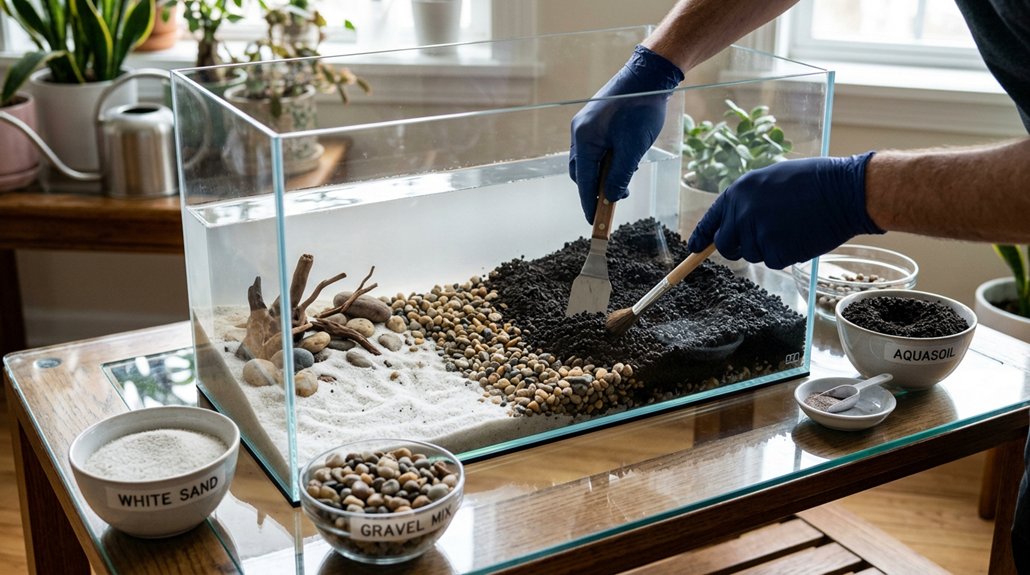
Choose your aquarium substrate based on your fish, plants, and water goals. Use nutrient-rich aquasoil or capped soil for heavily planted tanks, inert gravel for easy maintenance, and fine sand for corydoras or other bottom-dwellers. If you need harder, more alkaline water, crushed coral or aragonite can help buffer KH and pH. Match particle size to root growth and cleaning needs, then rinse well and maintain it with light vacuuming, raking, or root tabs as needed.
Key Takeaways
- Choose nutrient-rich aquasoil for heavily planted tanks; use inert gravel or sand for simpler, low-maintenance setups.
- Match particle size and texture to livestock: sand for bottom-dwellers, gravel for most freshwater fish, smooth media for delicate species.
- Consider water chemistry effects: crushed coral raises pH and KH, while most gravels and sands are chemically neutral.
- Plan for maintenance and cycling; soils may release ammonia initially, and sand or gravel need regular cleaning to prevent compaction.
- Use the substrate depth and structure your plants need, and add root tabs or mixed layers when nutrients must be boosted.
Choose the Best Aquarium Substrate
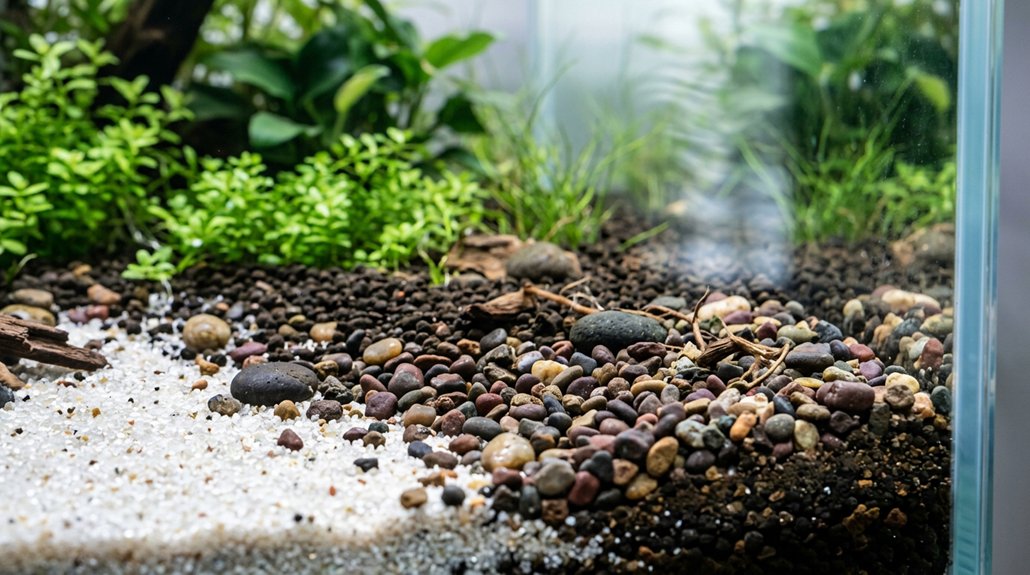
Choosing the best aquarium substrate depends on your tank’s goals and livestock: for heavily planted setups, use nutrient-rich aquasoil or aquarium soil such as ADA Amazonia or Tropica soil because it supplies root-accessible nitrogen, phosphorus, and trace minerals, with root tabs usually needed only after several months. For a low-maintenance layout, choose inert gravel around 1–3 mm; its size anchors roots well and resists compaction, but you’ll need root tabs or water-column fertilisers. Use fine sand when you keep digging or sand-sifting species, and choose aragonite or crushed coral only if you need KH/pH buffering. For budget builds, cap mineralized topsoil with inert substrate to balance nutrients and substrate aesthetics. Match your choice to biotope authenticity, then support it with proper maintenance.
Gravel vs. Sand vs. Soil
Once you’ve matched the substrate to your tank’s overall goals, the next decision is the material itself: gravel, sand, or soil. Your choice changes grain size, maintenance, and visual texture.
| Material | Best use |
|---|---|
| Gravel | Stable, inert, easy to vacuum |
| Sand | Smooth look, digging fish |
| Soil | Fast plant growth, nutrient rich |
| Mixed | Balance rooting and cleanliness |
| Caution | Match chemistry and upkeep |
Gravel, usually about 1–3 mm, holds decor well and accepts root tabs, but you’ll need regular vacuuming. Sand looks natural and suits bottom-dwellers, yet fine grains can compact and trap gases if you don’t stir it. Aquarium soil drives strong rooting, but it can deplete and alter pH. If you want both aesthetics and function, a capped mix can work well.
Pick the Right Substrate for Plants and Fish
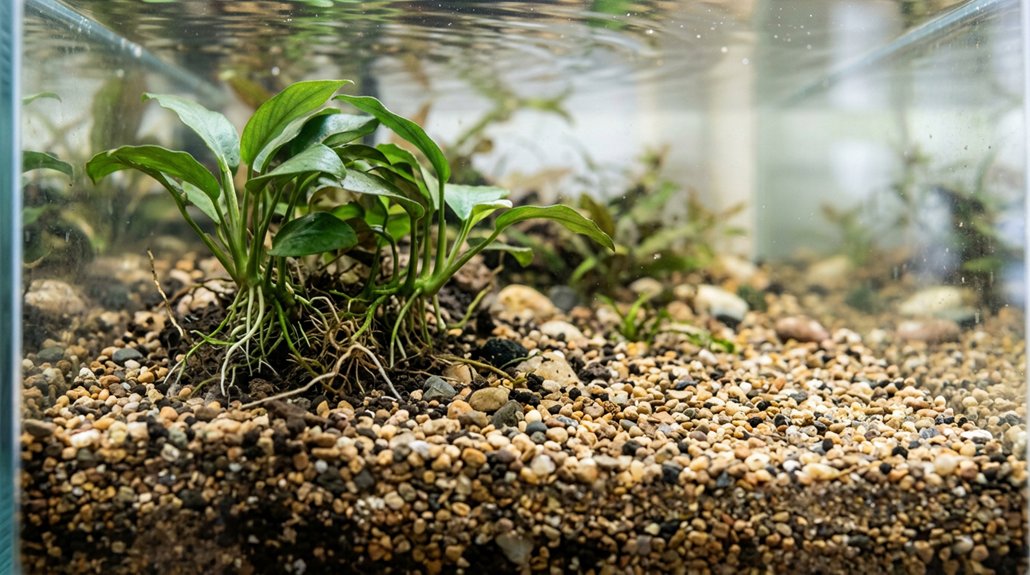
If your tank is heavily planted and you want rapid, dense growth, start with a nutrient-rich aquasoil or garden soil-based substrate such as ADA Amazonia, Tropica, or a capped DIY topsoil mix, since these substrates supply root-available minerals and encourage strong root development. For low-maintenance layouts with frequent replanting or delicate roots, choose 1–3 mm fired-clay gravel and dose root tabs. Use fine sand for Corydoras or Geophagus so it protects barbels and supports natural digging, but prevent compaction by stirring it or keeping diggers. Match substrate chemistry to species needs: avoid peat-rich soils for neutral or alkaline fish, and use aragonite for African cichlids. Darker substrates improve substrate aesthetics, while also influencing fish behavior and color contrast.
How Substrate Affects Water Chemistry
Substrate chemistry can markedly shape your aquarium’s water parameters. If you choose crushed coral or aragonite, you’ll get carbonate leaching, which raises KH and pH and adds buffering, so they’re useful for African cichlids and marine systems. Peat-containing aquasoils and many commercial soils do the opposite: organic acidification gradually lowers pH and can reduce KH and GH, often keeping water slightly acidic. Inert media such as silica sand and most gravels stay chemically neutral, so your source water and additives determine stability. Nutrient-rich soils may also release ammonia and other nutrients during the first few weeks, especially with products like ADA Amazonia, so you may need a 2–3 week pre-cycle or frequent water changes. Over time, these effects usually taper as nutrients are used up.
How to Maintain Aquarium Substrate
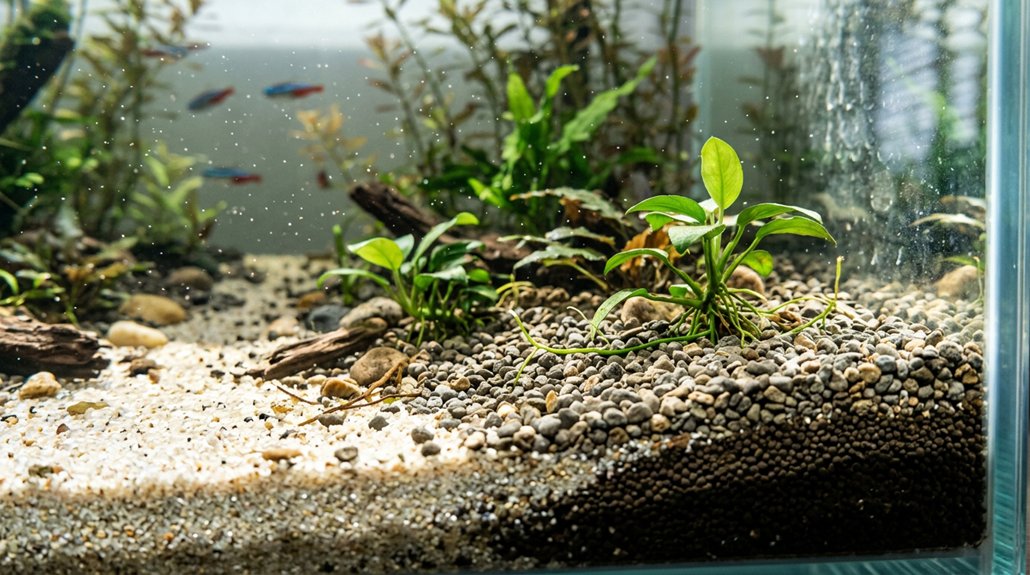
You should vacuum gravel or mixed substrates weekly, removing about 25–50% of surface debris without deep stirring that can uproot plants or disrupt beneficial bacteria. For sand, gently rake or lightly siphon the top layer once a week to prevent compaction and anaerobic pockets, and let digging fish help where appropriate. Pair this with regular 20–40% water changes and trimming excess plant matter so less organic waste settles into the substrate.
Routine Cleaning
During weekly 20–30% water changes, vacuum the substrate with a siphon head matched to the grain size—narrow for sand, wider for gravel—to lift uneaten food and fish waste without stripping out all beneficial detritus. Use weekly vacuuming as a steady maintenance habit, and pair it with light surface raking to break crusting. In planted tanks, root tabbing keeps heavy feeders supplied.
- Keep the top 1–2 cm loose
- Skim sand slowly; don’t dig deep
- Redistribute trapped organics
- Refresh depleted aquasoil as growth slows
- Watch for black patches, bubbles, or rotten-egg odors
If you detect these signs, target those spots, replace compromised media, or boost flow and oxygenation. Gentle, consistent cleaning preserves aerobic zones, supports roots, and keeps your aquarium substrate functioning efficiently.
Preventing Compaction
Preventing compaction starts with keeping the bed loose and breathable, because packed substrate can trap waste and create anaerobic pockets. You should stir sand gently every few weeks with a siphon, or let digging fish like Corydoras or Geophagus maintain substrate aeration. Watch for compaction indicators such as blackened zones, sulfur smell, or stagnant debris. Keep sand shallow: under 2–3 cm in bare areas and 2–5 cm where roots anchor. In planted tanks, avoid very fine silica sand alone; use coarser grains or a capped soil base so roots penetrate without compressing the bed. A porous underlayer of fired clay or 1–3 mm gravel improves pore space and bacterial colonization. Vacuum gravel routinely, and lightly rake or siphon sand weekly to remove trapped organics before they settle and harden.
Best Aquarium Substrate for Your Tank
If you’re weighing sand vs. gravel, choose fine, smooth sand for Corydoras, Geophagus, and other diggers, but use 1–3 mm gravel when you want a stable, inert base that’s easy to plant and support with root tabs or water-column dosing. For heavily planted tanks, nutrient-rich aquasoil is usually the best substrate because it supplies root-accessible nitrogen, phosphorus, and trace minerals that drive faster growth. If your tank needs specific chemistry, crushed coral or aragonite can raise and buffer KH/pH, while peat-based soils can soften water and lower pH for soft-water setups.
Sand Vs Gravel
Sand and gravel each suit different aquarium goals, and the best choice usually comes down to your fish, your plants, and how much maintenance you’re willing to do. Sand’s smooth particle size supports Corydoras and Geophagus, and its natural finish fits many aesthetic choices, but you’ll need to stir it to prevent compaction. Gravel, ideally 1–3 mm, offers better root support, porosity, and hardscape stability, yet it traps debris and needs vacuuming.
- Feel relief when delicate barbels stay safe.
- Enjoy a cleaner planting layout with gravel.
- Worry less about sand shifting under diggers.
- Accept extra upkeep if you want a soft look.
- Remember inert media won’t feed plants.
Soil For Planted Tanks
For densely planted aquariums, aquarium soil—whether commercial aquasoil or a baked topsoil blend—gives you a nutrient-rich base that supplies phosphorus, potassium, and trace minerals directly to plant roots, so growth is typically faster and denser than in inert gravel or sand. You’ll get better root penetration because porous granules resist compaction, preserve pore space, and support oxygen and bacterial colonies. Expect fresh aquasoil to leach ammonia and organics; pre-cycle the tank for 1–3 weeks and change water often. Match the soil to your target pH and hardness, since peat blends soften water and aragonite mixes raise it. Over time, nutrients decline, so use root fertilizer or replace sections of substrate. A microbial inoculant can help accelerate colonization and stability.
Frequently Asked Questions
How Deep Should Aquarium Substrate Be for Optimal Plant Growth?
You’ll want 2–3 inches of substrate for most rooted plants; deeper in the back helps tall species. If your substrate is inert, add root tabs beneath heavy feeders to maintain nutrient access and strong growth.
Can Substrate Choice Affect Fish Spawning Success?
Yes—your substrate can shape spawning success. You’ll want fine, smooth grains or bare areas to support breeding cues and egg adhesion, while avoiding sharp particles that’d damage eggs, stress parents, or disrupt natural courtship.
How Often Should Substrate Be Replaced Completely?
Usually, you shouldn’t replace it completely unless contamination, compaction, or severe nutrient depletion occurs. You’ll instead vacuum and rinse periodically. If grain size causes anaerobic buildup or substrate breakdown, replace sections every 2–5 years.
Do Different Substrates Change Tank Cleaning Frequency?
Yes—substrates can be like a vacuum’s appetite, changing how often you’ll clean. Fine grain size traps debris and needs gentler siphoning; chemical buffering substrates may reduce maintenance by stabilizing water, but don’t eliminate vacuuming.
Which Substrate Works Best for Shrimp Tanks?
You’ll usually do best with fine inert sand or shrimp-specific aquasoil; it supports active biofilm, protects delicate legs, and, if you need mineral buffering, aquasoil helps stabilize pH and hardness for breeding.
Conclusion
Choosing the right aquarium substrate can feel like a small decision, yet it often shapes everything else in your tank. When you match gravel, sand, or soil to your fish, plants, and water goals, the results tend to align by coincidence: healthier roots, steadier chemistry, and easier maintenance. So, don’t just pick what looks best—pick what works best for your setup. With the right substrate, you’ll create a more stable, functional, and successful aquarium.