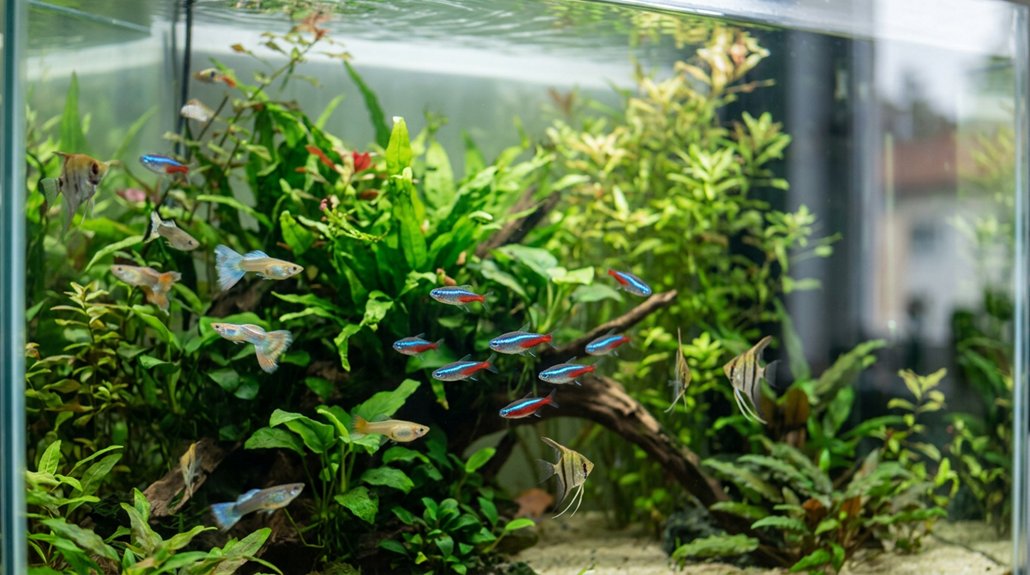
For freshwater aquariums, choose a filter that matches your tank size, fish, and upkeep routine. Aim for about 4–6 tank volumes per hour, and go higher for messy fish like cichlids or goldfish. Sponge filters are great for fry, shrimp, and small tanks, HOB filters suit most community setups, and canisters work best for larger or heavily stocked tanks. Use mechanical, biological, and limited chemical media together, and you’ll see why setup matters so much.
Key Takeaways
- Match filter type to tank size: sponge for nano tanks, HOB for 10–40 gallons, canister for larger or heavily stocked aquariums.
- Target about 4–6 tank volumes per hour; increase flow for messy fish and reduce it for bettas or gouramis.
- Choose mechanical, biological, and chemical media together; bio-media is essential for ammonia processing.
- Rinse mechanical media in removed tank water, and leave biological media undisturbed to protect beneficial bacteria.
- Use pre-filter sponges, adjustable outputs, or baffling to protect small animals and soften strong current.
How Aquarium Filters Work
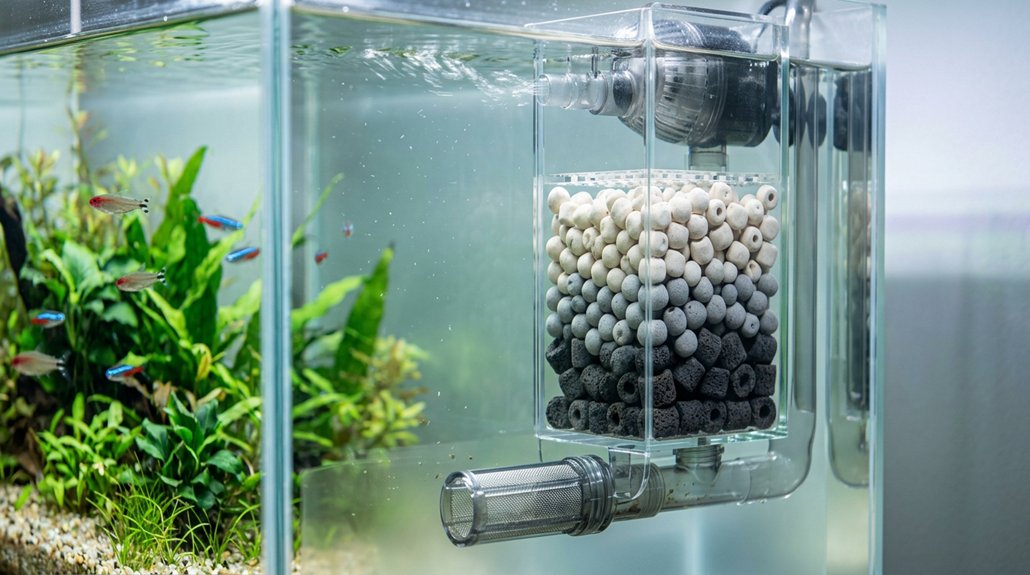
Aquarium filters work by moving water through three main stages: mechanical, chemical, and biological filtration. First, mechanical media like sponges and floss trap debris, so the water stays clearer and the filter mechanics keep flowing efficiently. Next, chemical media such as activated carbon or resins remove dissolved organics and discoloration. Finally, porous biological media provide surface area for nitrifying bacteria that turn toxic ammonia into nitrite, then nitrate. You should leave bio media undisturbed and rinse it only in tank water to protect those colonies. Keep flow near 4–6 tank volumes per hour, adjusting for fish and load. Clean clogged mechanical media promptly, and replace exhausted chemical media. Matching filtration to your tank also helps manage energy consumption.
Choose a Filter Rated for Your Tank
You’ll want to match the filter to your tank volume first, aiming for a flow rate of at least 4× the aquarium size per hour, so a 20-gallon tank should have about 80 GPH or more. If you keep messy or heavily stocked fish like cichlids or goldfish, choose a filter rated for 6–10× the tank volume and enough media capacity to handle the extra waste. Make sure the filter fits your tank’s size and setup, and if the current seems too strong for delicate fish, use an adjustable model or a baffle.
Match Tank Volume
A good rule of thumb is to choose a filter rated for at least 4× your tank’s volume per hour, so a 20-gallon aquarium should have roughly 80–120 GPH to handle a typical bio-load. When you’re doing tank sizing, match the filter style too: sponge or internal units suit tanks up to 10–15 gallons, HOB filters work well for 10–40 gallons, and canister or sump systems fit tanks over 40 gallons. Check media capacity as well, because bigger tanks need more room for mechanical and biological media to keep flow steady and bacteria stable. If you keep heavier-demand fish, size up to 6–10× per hour. Also, manufacturer GPH ratings are idealized, so allow for head pressure losses from hoses, height, and spray bars, and pick a little extra flow.
Consider Fish Bio-Load
When sizing a filter, don’t just look at tank volume—factor in fish bio-load, because waste production drives how much filtration you actually need. For a typical aquarium, choose a unit rated for 4–6× your tank volume per hour. If your fish are large, messy, or heavily stocked, step up to 6–10× and favor bigger media space.
| Bio-load | Goal | Filter choice |
|---|---|---|
| Light | Stable water | Robust bio media |
| Moderate | Routine waste | Standard HOB |
| Heavy | Ammonia control | Canister |
You should also weigh species compatibility and feeding habits: lots of small, messy eaters can need as much filtration as fewer larger fish. In lightly stocked or planted tanks, lower capacity can work if biological media is strong.
Choose Proper Flow Rate
For most freshwater tanks, aim for a filter rated at about 4–6 times your tank’s volume per hour, so a 20-gallon aquarium needs roughly 80–120 GPH. That baseline gives you solid circulation, oxygen exchange, and waste pickup without blasting your fish. If you keep goldfish, cichlids, or other messy species, step up to 6–10× the tank volume so the filter can handle heavier waste loads. For delicate fish or planted aquariums, don’t undersize the filter—reduce the effective flow with a spray bar, baffling, or adjustable outlet. Check the manufacturer’s GPH against your setup, too; canisters lose output from head loss and plumbing. In small tanks under 10 gallons, choose a filter made for the exact volume to avoid excess agitation.
Match Filter Flow to Your Fish
Dial in your filter’s flow to match the fish you keep, aiming for about 4–6× the tank volume per hour so you get solid circulation without blasting the tank. For a 20-gallon tank, that’s roughly 80–120 GPH. If you keep bettas, gouramis, or slow tetras, cut the current with adjustable output, flow deflectors, or spray bars so they can swim and feed comfortably. For active fish, heavy feeding, or strong CO2 plant setups, push flow higher, around 6–10× per hour, to move waste and oxygen efficiently. If you house shrimp, fry, or tiny invertebrates, protect them with a pre-filter sponge. Check rated GPH against your actual tank size, and remember media loading lowers flow, so size up a bit or clean it regularly to keep performance steady.
Sponge, HOB, or Canister Filter?
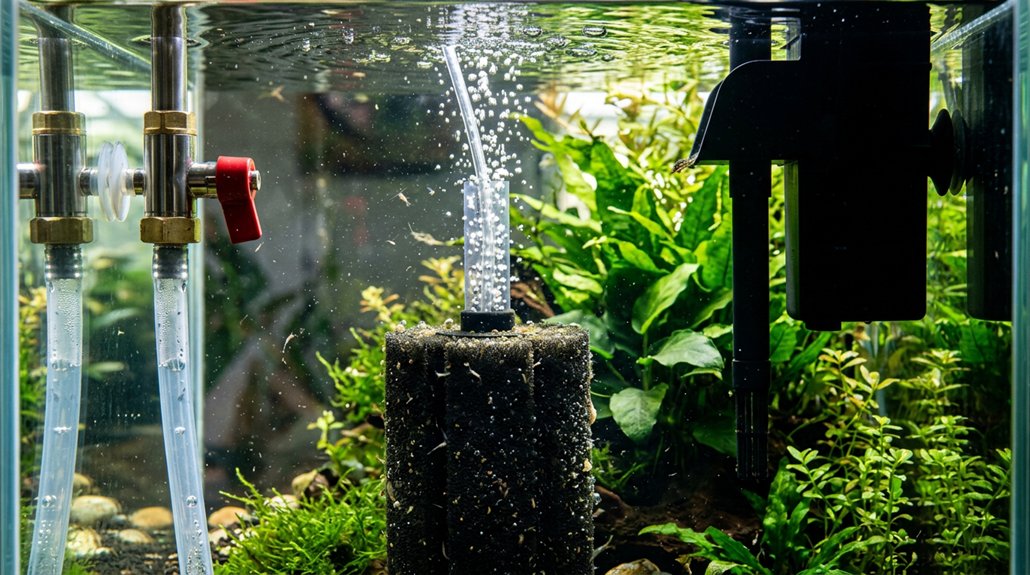
Once you’ve matched flow to your fish, the next step is picking the filter type that delivers it best: sponge, HOB, or canister. Choose a sponge filter when you need very gentle flow for fry, shrimp, or nano tanks; it’s cheap, quiet, and sponge maintenance is simple—just squeeze it in tank water. Pick an HOB when you want convenient, compact filtration for general community tanks, and size it for about 4–6x tank volume per hour; many hobbyist trends favor easy HOB modifications for extra flexibility. Go with a canister when you need maximum media volume, strong flow, and a clean display in larger or heavily stocked setups. Canister tubing keeps the unit outside the tank, which helps planted tanks stay uncluttered.
Compare Mechanical, Biological, and Chemical Media
You’ll usually start with mechanical media like sponges, floss, or pads, since they trap solid waste and should be rinsed in tank water when clogged, ideally about weekly. Biological media such as ceramic rings or bio-balls give nitrifying bacteria a home, so you shouldn’t wash them in chlorinated water or replace them all at once. Chemical media like activated carbon or zeolite remove dissolved organics and medications, but they saturate quickly and often need replacing every 2–6 weeks.
Mechanical Media Basics
Mechanical media does the first cleanup job in a freshwater filter by physically trapping debris like uneaten food, fish waste, and plant matter in sponges, filter floss, or coarse pads before it can break down and raise ammonia.
Keep it clean for clog prevention and to avoid flow restriction.
| Media Type | What You See | What You Do |
|---|---|---|
| Sponge | Brown buildup | Rinse in tank water |
| Floss | Fine debris | Replace when packed |
| Coarse pad | Larger particles | Shake out gently |
When you notice reduced flow, rinse the media in old tank water, not tap water. That protects your filter’s performance and keeps water moving efficiently. In most setups, mechanical media works best when you clean it weekly or monthly, depending on waste load and stocking. Don’t over-replace it; you’re just clearing trapped solids, not starting over.
Biological Media Function
Biological media is where your filter does the real detox work: ceramic rings, bio-balls, porous blocks, or fluidized sand give nitrifying bacteria huge surface area so they can turn toxic ammonia into nitrite and then nitrate. You want that porous surface area protected by upstream mechanical media, since trapped grit can clog it and cut flow. Don’t rinse biological media in tap water or replace it all at once; you’d wipe out colonies that keep your tank stable. In a lightly stocked tank, modest bio-media may be enough, but heavier bioloads need more. Aim for filter layouts that prioritize lots of bio-media volume, especially in canisters or large HOBs, so your nitrifying bacteria stay established and keep processing waste efficiently day after day.
Chemical Media Uses
Chemical media is the third tool in your filtration setup, and it handles the dissolved problems that mechanical and biological media can’t catch. You’ll use activated carbon, Purigen, or ion-exchange resins for tannin removal, odor control, discoloration, medications, and some heavy metals. Carbon usually stays effective for 2–4 weeks in a stocked tank, then it’s saturated and should be replaced. Resins work more selectively: zeolite can target ammonia, while other resins reduce phosphate or nitrate, but they’ll exhaust on schedule, so follow the label. Chemical media doesn’t grow nitrifying bacteria, so don’t rely on it instead of bio-media. Also, don’t overuse it; heavy carbon or resin use can strip trace elements and rush medication adsorption. Use it short-term or for specific water issues, while monitoring your water chemistry closely.
Keep Your Aquarium Filter Quiet and Clean
Keeping your aquarium filter quiet starts with matching its flow to the tank: aim for about 4–6 times your tank volume per hour, since pushing too much water often adds motor hum and surface turbulence. For quiet maintenance, choose sealed motors, rubber mounts, or canister styles, and add vibration isolation with a foam or rubber pad under the unit.
- Rinse sponge or floss in tank water when clogged so the pump isn’t straining.
- Use bio-balls, ceramic rings, or fluidized media to avoid noisy cartridge swaps.
- For bedrooms or planted tanks, try sponge or air-driven filters, or adjust HOB/canister output to soften splash.
Clean media and stable mounting keep noise down and flow steady, so you hear less hum, less rattle, and more calm.
How Filters Support Water Changes
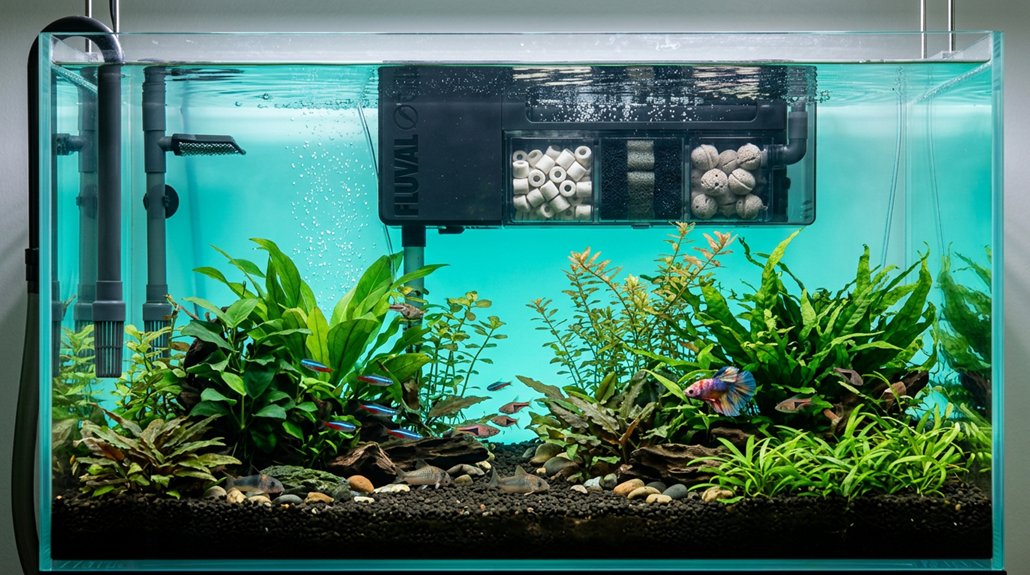
A good filter is your water-change partner, quietly pulling out suspended solids and dissolved wastes between changes so ammonia and nitrite don’t spike as fast. With a flow rate around 4–6× your tank volume per hour, it helps keep debris and organics under control between your weekly 10% changes. During filter maintenance, rinse sponges or floss in removed tank water so trapped waste doesn’t break down and flow stays strong. Leave biological media in place; those bacteria keep converting ammonia to nitrate even while you’re doing partial changes. For easier water change integration, look for HOB or SmartClean-style drains that let you remove up to about 25% of the water while the filter stays attached, reducing stress and protecting beneficial bacteria.
Frequently Asked Questions
How to Choose a Filter for Your Aquarium?
Choose a filter by matching flow to your tank size, checking biological capacity, and planning maintenance schedules. You’ll want multi-stage filtration, the right filter type for your setup, and quiet, easy-access media you’ll actually clean.
Which Filter Is Best for a Fish Tank?
You’ll usually do best with a HOB filter for most tanks; it balances filtration and easy upkeep. For delicate fish, you’d choose a sponge filter. Make sure it’s rated properly, with flow adjustment and simple sponge maintenance.
Is Aqueon or Tetra Filter Better?
You’ll usually pick Aqueon if you want smarter, quieter features and media compatibility; Tetra’s better for budget-conscious, low-noise reliability. Match the filter’s tank rating to your aquarium, and you won’t overwork your fish.
What Is the Best Filter to Keep a Fish Tank Clear?
A canister or strong HOB filter is usually best for keeping your tank clear. You’ll want mechanical maintenance, biological cycling, and chemical media working together, plus the right flow rate, to prevent cloudiness without stressing fish.
Conclusion
Choosing the best filter for your freshwater aquarium comes down to your tank size, fish, and maintenance routine. Pick a filter rated a bit above your tank’s volume, then match the flow to your fish’s comfort. Whether you choose a sponge, HOB, or canister filter, make sure it supports strong mechanical and biological filtration. Keep it clean, quiet, and consistent, and you’ll give your aquarium a steady, healthy foundation worthy of a simpler, more orderly age.