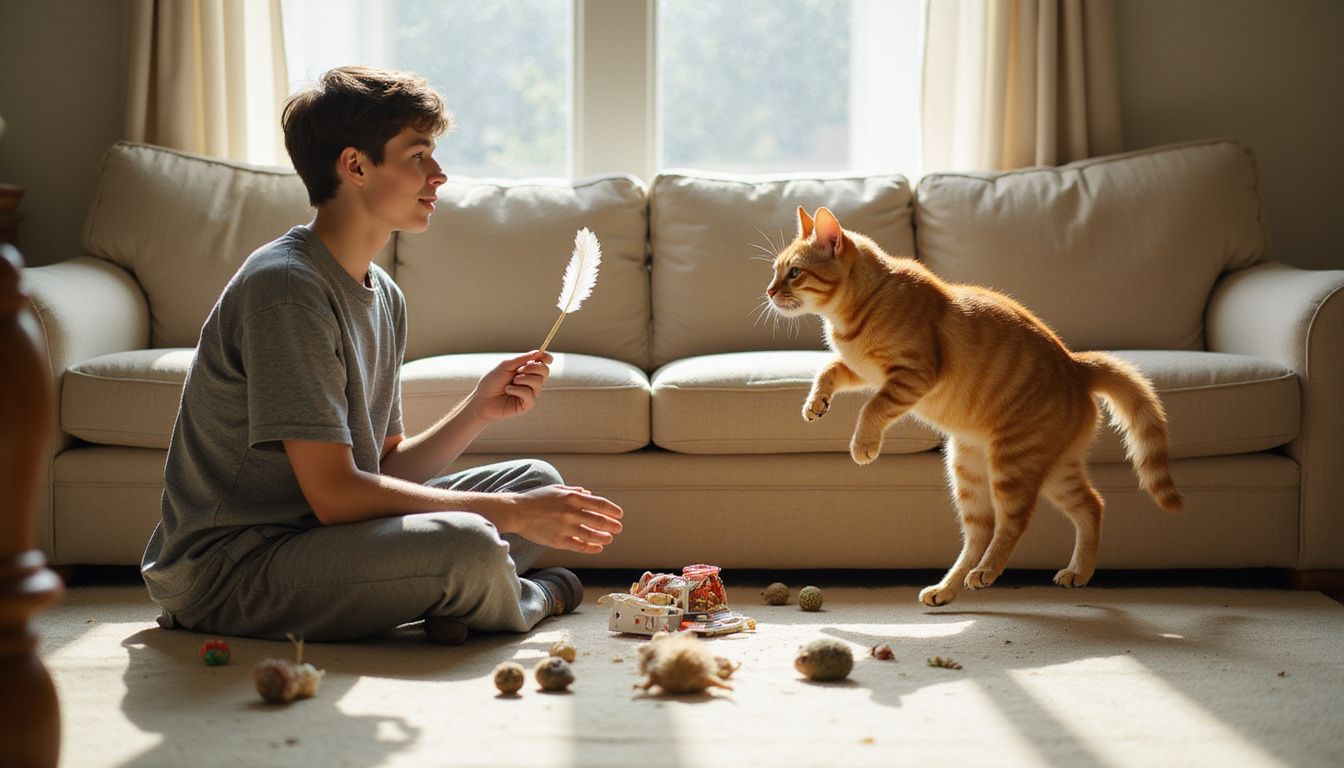
Ever catch your cat just staring at a blank wall for what feels like forever? You start wondering if boredom is quietly taking over their little world.
Here’s the good news. Indoor cats need mental and physical stimulation to stay happy, and enrichment activities tap right into their natural instincts.
If you’re thinking about getting a cat or just adopted one, this is exactly where you want to start. I’m going to walk you through simple, practical ways to keep your cat entertained, mentally sharp, and closely bonded to you.
Grab a cup of coffee, and let’s go through it together. You’ll be surprised how easy this can be, and how much your cat will thank you for it.
Key Takeaways
- Puzzle feeders and food-dispensing toys tap into your cat’s hunting instincts, giving them mental stimulation that fights boredom and destructive behavior.
- Daily play sessions with wand toys and laser pointers, ten to fifteen minutes each, satisfy your cat’s natural hunting needs and build your bond.
- Rotating toys weekly and adding new activities keeps things fresh, since cats lose interest in the same objects fast.
- Cat trees, wall shelves, and window perches give your cat vertical space that feeds their climbing instinct while offering security and exercise.
- Hide-and-seek games, treat hunts, and clicker training build trust between you and your cat while easing stress through positive interaction.
Interactive Play Ideas to Engage Your Cat
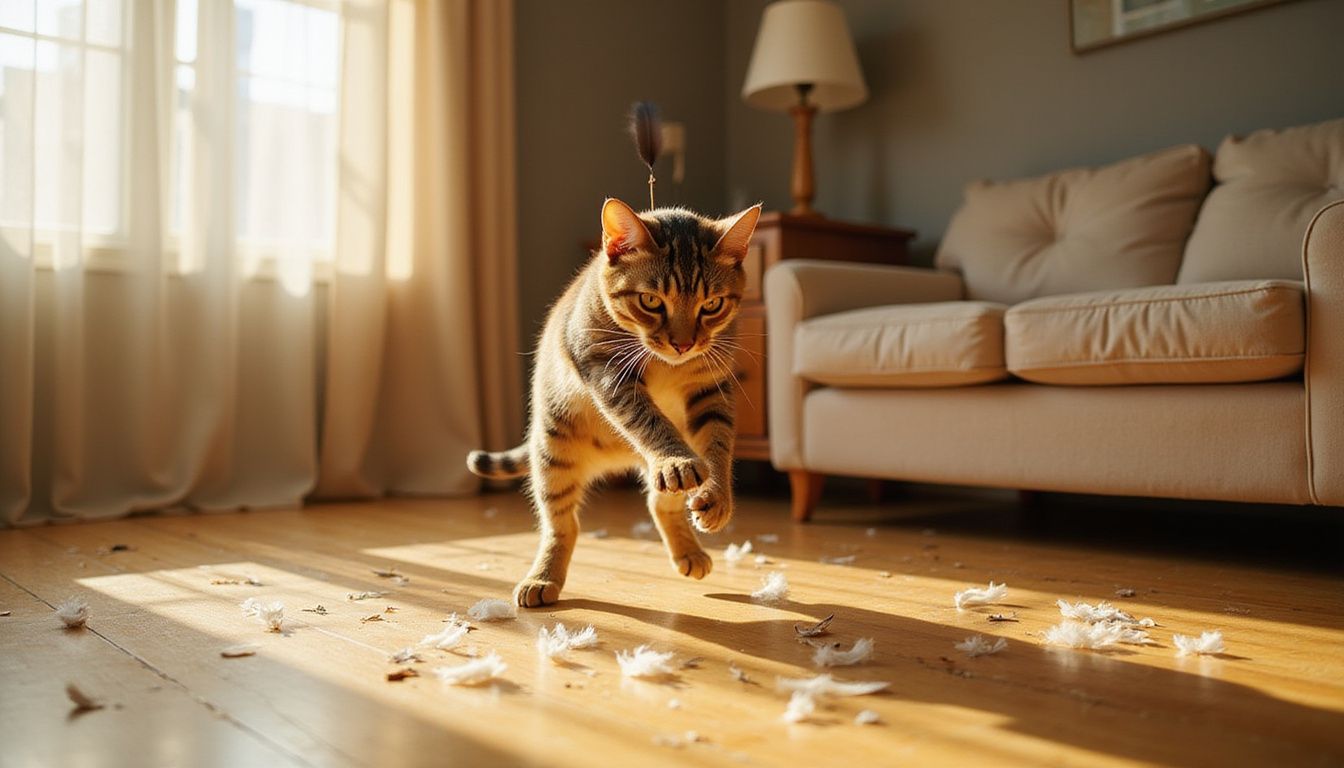
Your cat’s hunting instincts kick into high gear during interactive play. These sessions spark mental stimulation and strengthen your bond with your feline friend.
How can puzzle feeders and food-dispensing toys keep my cat entertained?
Here’s a number that might surprise you. According to 2024 and 2026 survey data from the Association for Pet Obesity Prevention, about 61% of cats in the US are overweight or obese.
That’s not a small problem. It means puzzle feeders aren’t just a fun extra. They’re a real tool for slowing down eating and helping your cat burn a few extra calories every day.
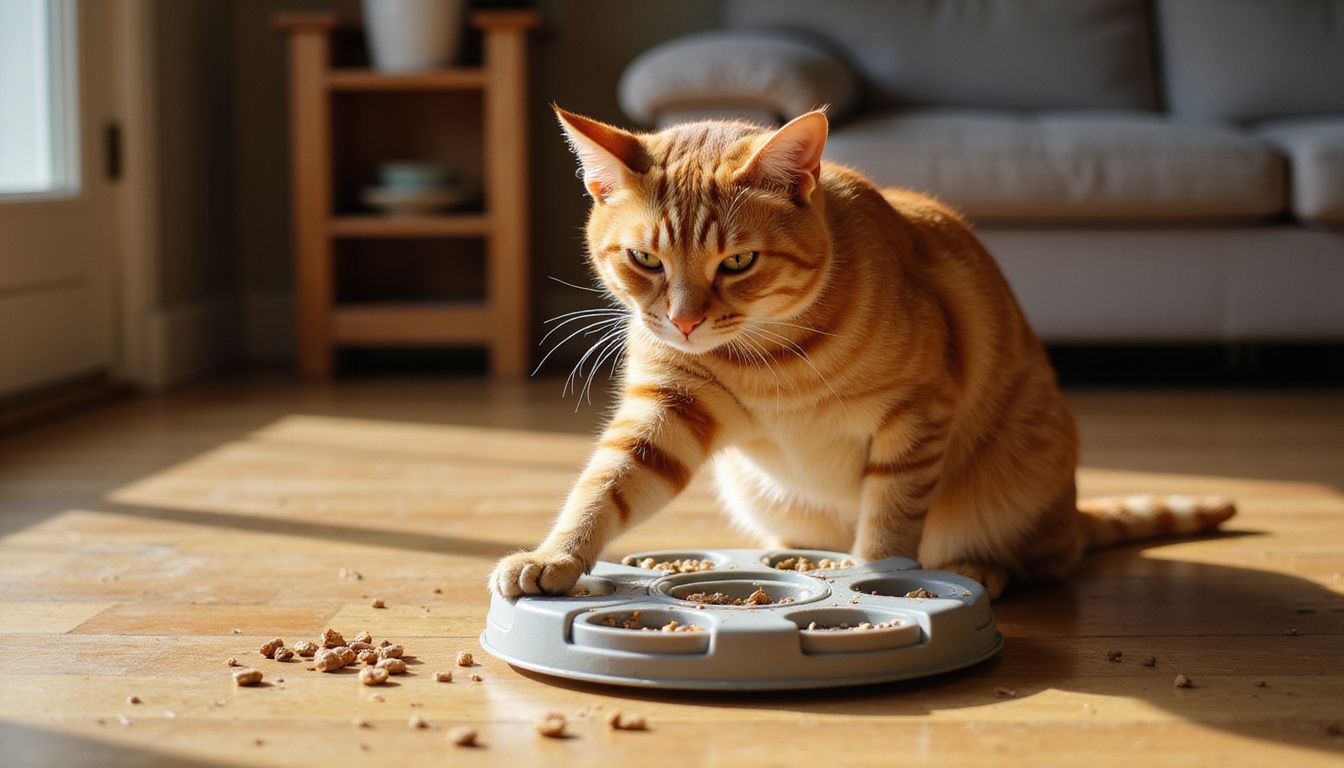
Puzzle feeders turn ordinary mealtime into a hunting adventure. These clever toys only release food when your cat noses or paws them around, which taps right into their natural hunting instincts.
Food puzzles get your cat foraging, turning a simple meal into a mental workout. Your cat has to work for each bite, and that effort keeps their mind sharp.
A cat’s mind is a powerful thing. Give it something to work on, and watch your pet thrive.
Puzzle feeders come in all kinds of styles, from simple designs to more complex contraptions. You don’t need to spend a fortune either.
- An empty toilet paper roll with the ends folded shut
- A cardboard box with a few holes cut into the side
- Kibble scattered across the floor to mimic natural foraging
These homemade options work just as well as store-bought ones. Scattering kibble across your home encourages searching behavior and keeps your cat moving throughout the day.
Food puzzles solve the boredom problem that plagues so many indoor cats. They prevent destructive behavior and keep your cat engaged for hours, while building confidence in shy or anxious cats, which matters a lot if you’re bringing home a rescue.
Rotating different puzzle feeders keeps your cat from losing interest. Each new challenge keeps their brain active and their body moving, which supports better behavioral health and makes daily pet care so much easier.
What are effective daily play sessions with wand toys or laser pointers?
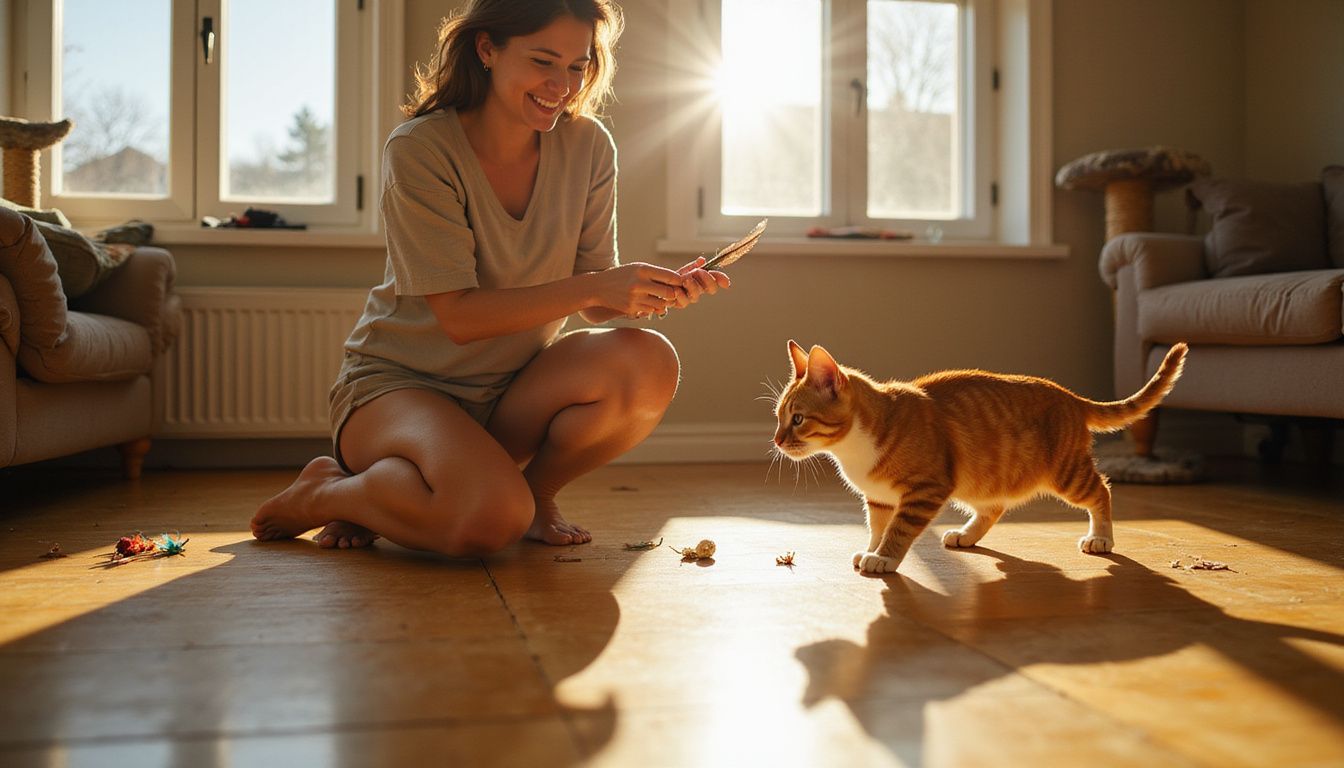
Your cat needs active play to stay healthy and happy. Wand toys and laser pointers are two of the best ways to spark that hunting drive every day.
- Schedule two play sessions daily, ten to fifteen minutes each, based on your cat’s age and energy level.
- Use feather wands or a Da Bird feather teaser to mimic prey movements. Cats respond best to erratic, unpredictable motion.
- Move the wand low to the ground, then high in the air, so your cat jumps, pounces, and chases.
- Switch between wand toys, kicker toys, and crinkle tunnels to keep things exciting.
- Watch your cat’s body language. Tail twitching and a crouched posture mean they’re ready to hunt.
Laser pointers deserve a quick word of caution here. According to a study published in the journal Animals and backed by feline behaviorists, using a laser without ever letting your cat catch something real is linked to Abnormal Repetitive Behaviors, things like obsessive shadow chasing or overgrooming.
That happens because the hunt never gets to finish. Your cat stalks, chases, and pounces, but never actually catches anything, and that incomplete “prey sequence” can build frustration over time.
So always end a laser session by letting your cat pounce on a real toy or grab a small treat. This gives their brain the closure it needs and keeps the whole game satisfying instead of stressful.
| Play Phase | What to Do | Time |
|---|---|---|
| Stalk | Slow, low movements along the ground | 0 to 3 minutes |
| Chase | Faster, erratic motion with occasional leaps | 3 to 7 minutes |
| Catch | Let your cat catch a toy or treat | 7 to 10 minutes |
Taylorsville Veterinary Clinic recommends this exact three-part structure for a ten-minute session. A short, predictable routine with a real finish helps your cat complete the hunt mentally, and stay motivated for the next round.
Repeat this sequence twice daily for most adult indoor cats. Consistent, engaging play like this lets your cat express natural hunting behavior safely indoors, which builds trust between you two over time.
How can I encourage my cat to explore more at home?
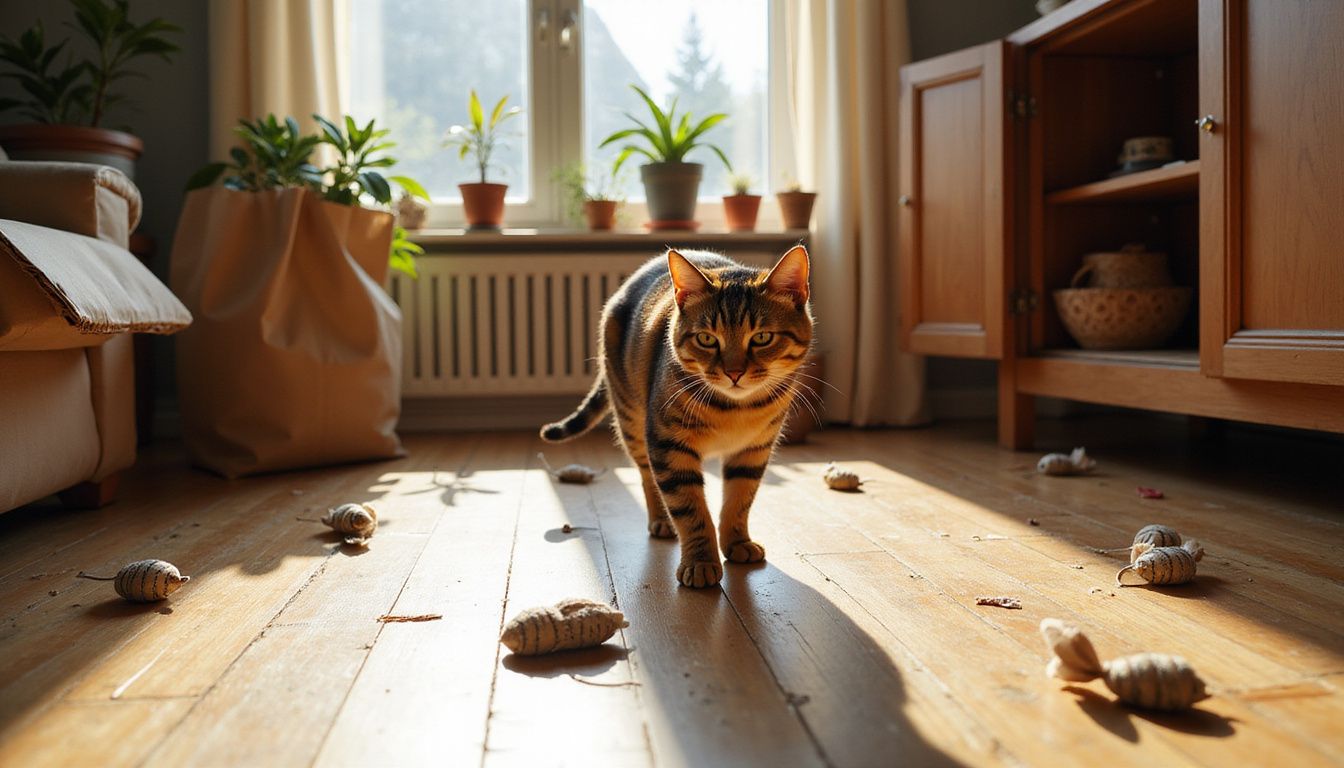
Your cat’s mind needs stimulation, and your home holds endless chances to spark curiosity. Turn your living space into a playground where your cat finds new sights, sounds, and smells around every corner.
How do I create a DIY treat hunt around the house for my cat?
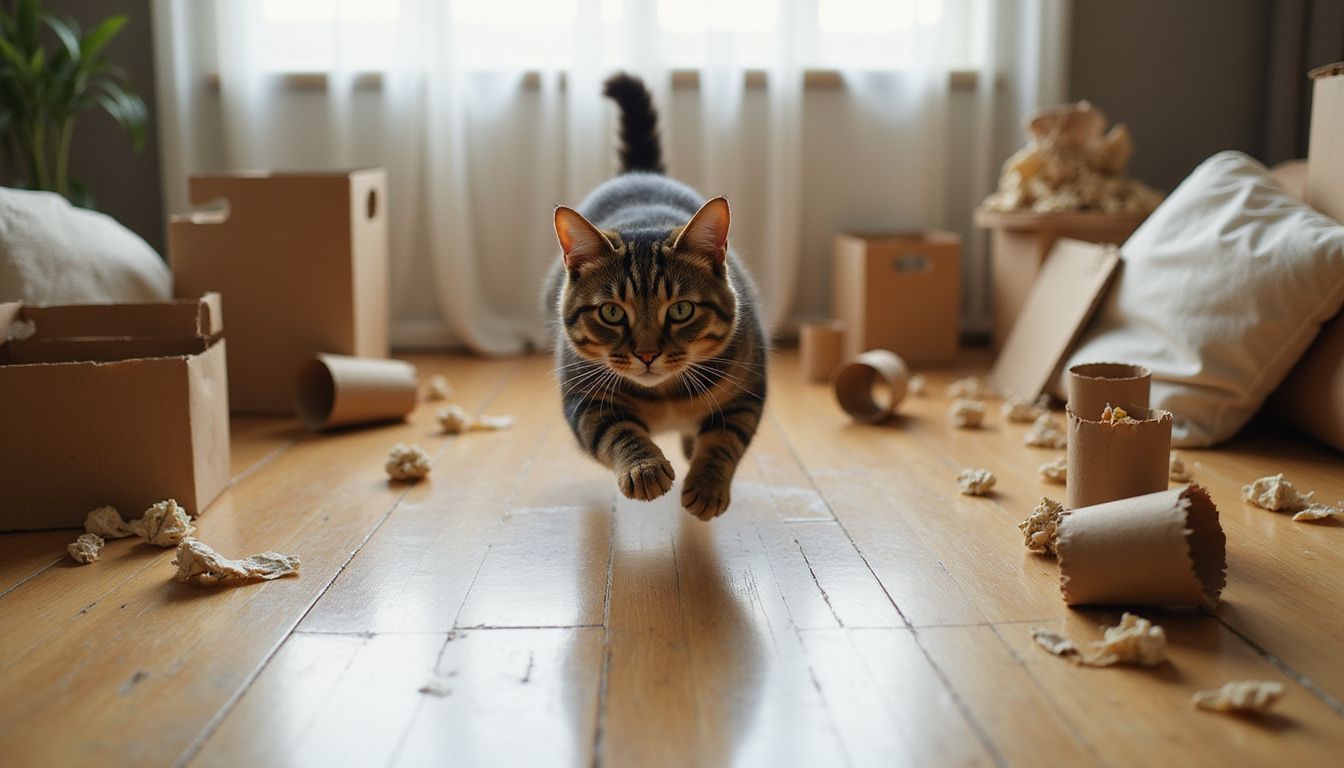
DIY treat hunts tap into your cat’s natural hunting instincts and keep their mind sharp. These simple activities turn your home into a playground that fights off cat boredom.
- Hide small treats inside crumpled paper balls and scatter them through different rooms for your cat to find and pounce on.
- Make toilet paper roll feeders by folding the ends shut and cutting small holes so treats fall out as your cat bats them around.
- Stack cardboard boxes with holes cut between them to build a mini maze for climbing, hiding, and searching.
- Scatter meal portions across multiple spots instead of using one bowl, which sparks curiosity and mental engagement.
- Tuck treats inside paper bags or under cushions so your cat has to search and problem-solve to get the reward.
Rotate hiding spots often so your cat doesn’t just memorize the locations and lose interest. Lickable treats hidden under furniture or inside paper towel tubes work great for keeping things fresh throughout the week.
Here’s a story that shows just how powerful this simple habit can be. A shy adult cat adopted through Second Chance Cats of West Michigan started approaching household members 40% more often over a two-week period, once the new owner started daily five-minute treat hunts with crumpled paper balls and tube feeders.
That’s not a small change for a nervous cat. Short, low-pressure treat hunts let you build a bond without forcing contact, which makes the whole adjustment period so much easier on a new cat.
Why should I rotate toys and introduce new activities regularly?
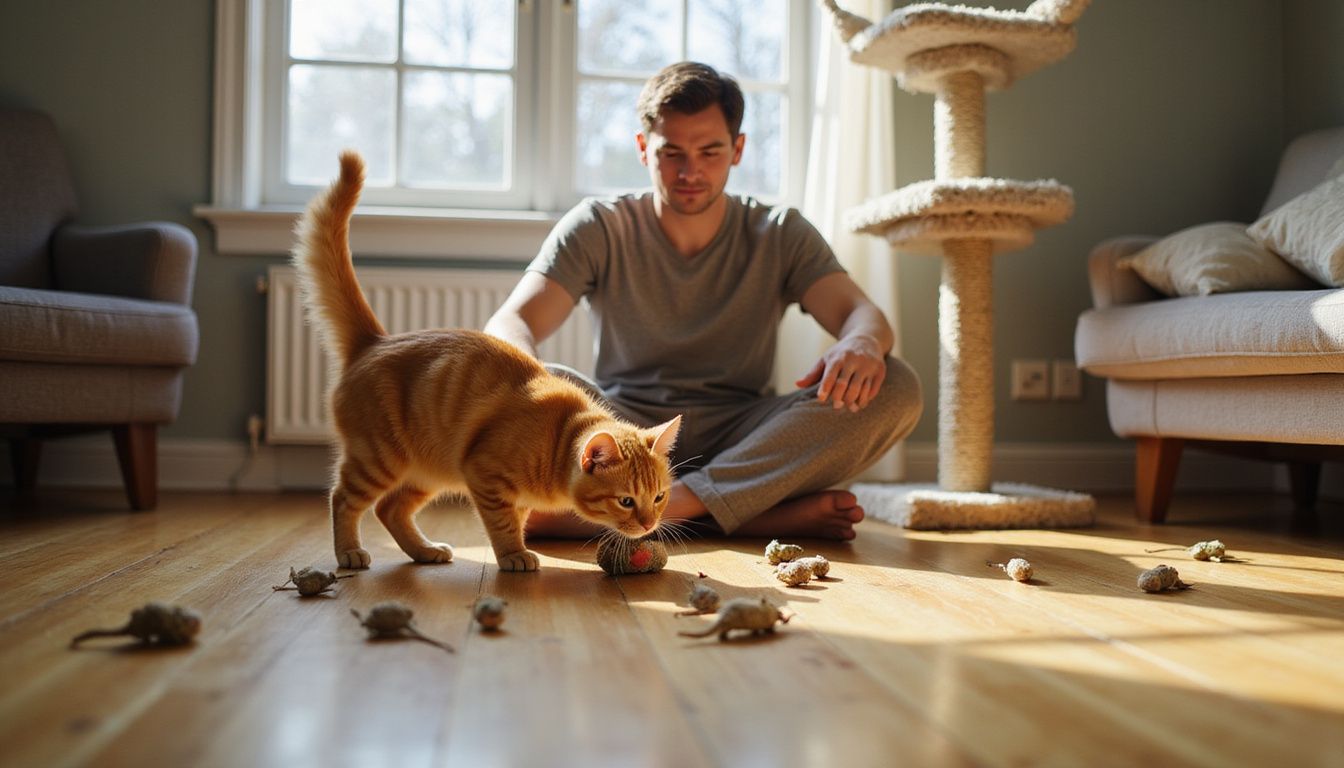
Once you’ve hidden treats around your home, think about your toy collection too. Rotating toys weekly keeps your cat mentally sharp and stops boredom before it starts.
Store half your toys away, then swap them back in every week or two. This simple trick works because cats lose interest in the same objects fast.
In one observation of 30 indoor-only cat households, owners rotated half their toys weekly for four weeks. Of those homes, 22 out of 30 cats spent 30% to 75% more active time playing compared to a week when toys stayed the same. Novelty alone, just from a weekly swap, made the biggest difference in how much cats wanted to play.
Your cat’s brain craves novelty, just like yours does. Different textures, sounds, and movement styles help you figure out what really excites your cat.
Not all cats react to catnip, so experimenting with different toys can reveal your cat’s true preferences. According to feline olfactory research published in BMC Veterinary Research, about 1 in 3 cats simply lack the genetic response to catnip.
But here’s the good part. Roughly 80% of cats respond to silvervine instead, including about 75% of the cats who completely ignore catnip. So if your cat seems unimpressed by catnip toys, don’t give up on scent-based play. Silvervine or valerian root might be the missing piece.
Spotting the Signs of a Bored Cat
Boredom creeps up quietly, but the signs show up loud and clear. Watch for these warning signals:
- Overgrooming or excessive shedding
- Scratching furniture more than usual
- Knocking things off shelves
- Restlessness once toys get stale
A bored cat is a creative cat, and not always in ways you want.
This is exactly where cat trees, window perches, and cat tunnels earn their keep as part of your rotation strategy. Clicker training adds another layer of mental challenge that toys alone just can’t match.
Mix up climbing structures, treat dispensers, and interactive games throughout the month. Variety is your best defense against feline boredom and the behavior problems that come with it.
Vertical Space Options for Cat Climbing and Observation
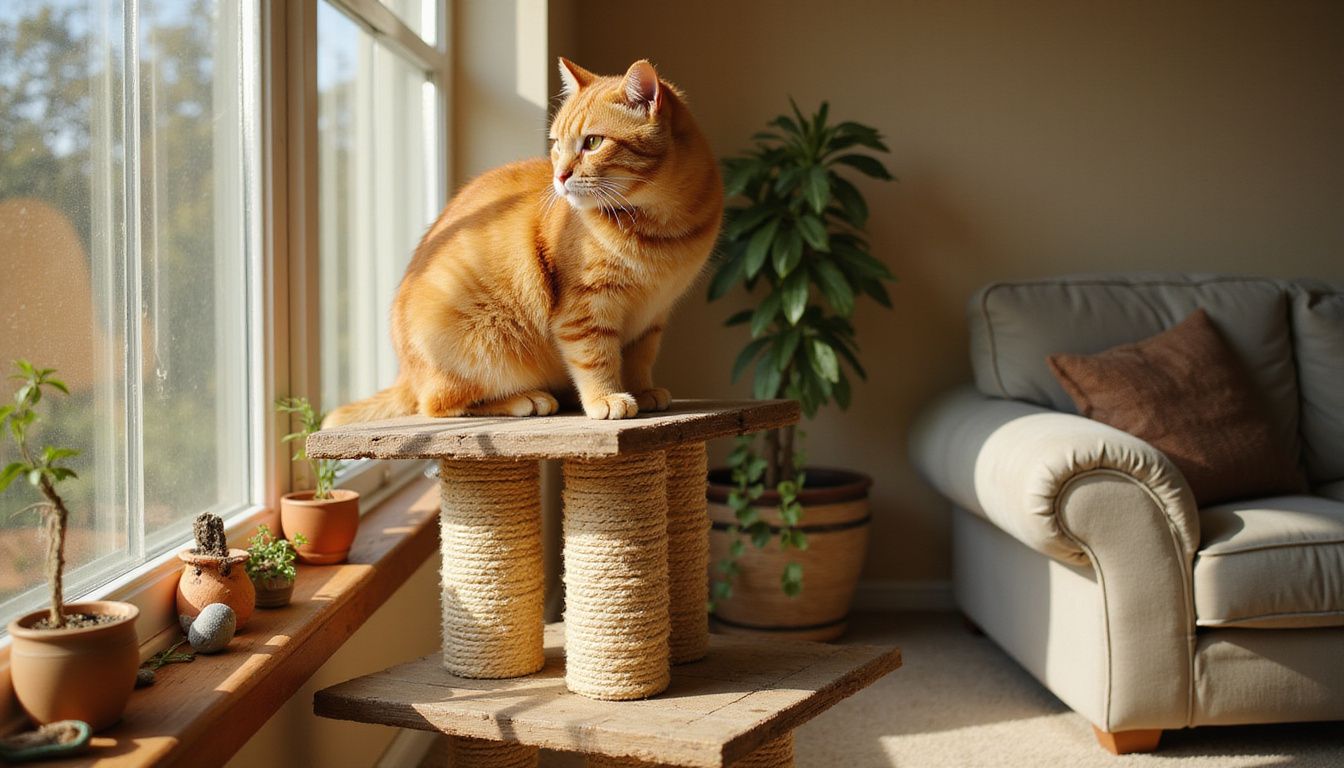
Your cat’s natural instinct drives them to climb high and survey their territory from above. Cat shelves, climbing trees, and window perches turn your home into a vertical playground that keeps your cat sharp and active.
How do cat shelves or climbing trees benefit my cat?
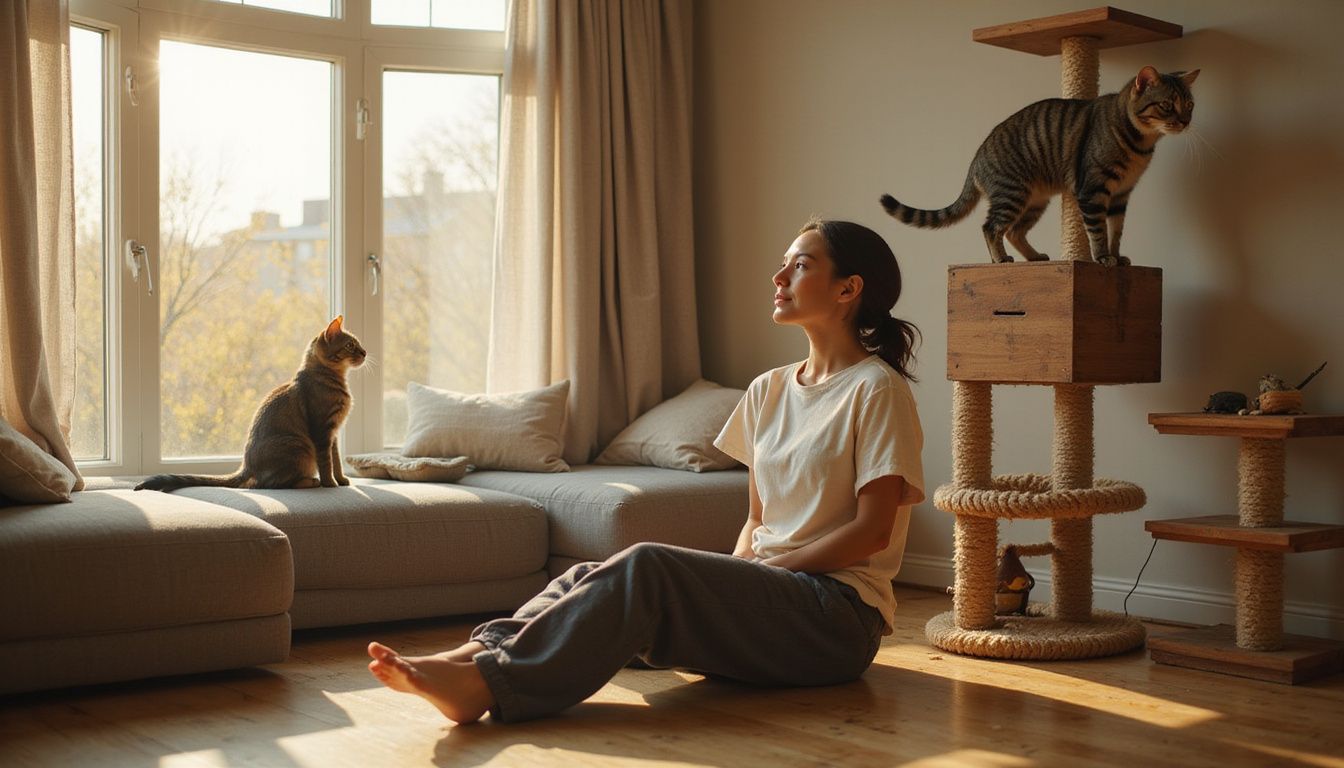
Cat trees and wall-mounted shelves turn your home into a playground that feeds your cat’s natural instincts. Cats crave vertical space to watch their territory from above, and climbing structures deliver exactly that.
Here’s a detail most people miss when shopping for a cat tree. According to guidelines from the American Association of Feline Practitioners, at least one cat tree or shelf in your home should stand five to six feet tall, taller than the tallest person in your household.
Why does height matter this much? A tree that towers over everyone gives your cat a true sense of security and undisputed territory. A short tree just won’t cut it if your goal is real peace of mind for your cat.
These elevated pathways also promote physical activity that helps keep your cat at a healthy weight. Many cat towers include scratching posts built right in, which supports healthy claws and redirects scratching away from your furniture.
Climbing trees near windows give you the best of both worlds, visual stimulation paired with mental enrichment. Some pet owners call this “Cat TV,” where your cat watches birds and outdoor activity from a cozy perch.
Clear pathways between furniture let your cat explore and exercise safely, turning every room into a small adventure. Wall-mounted bridges and shelves create connected routes that keep senior cats active too, no matter their age.
What are the advantages of window perches for bird-watching?
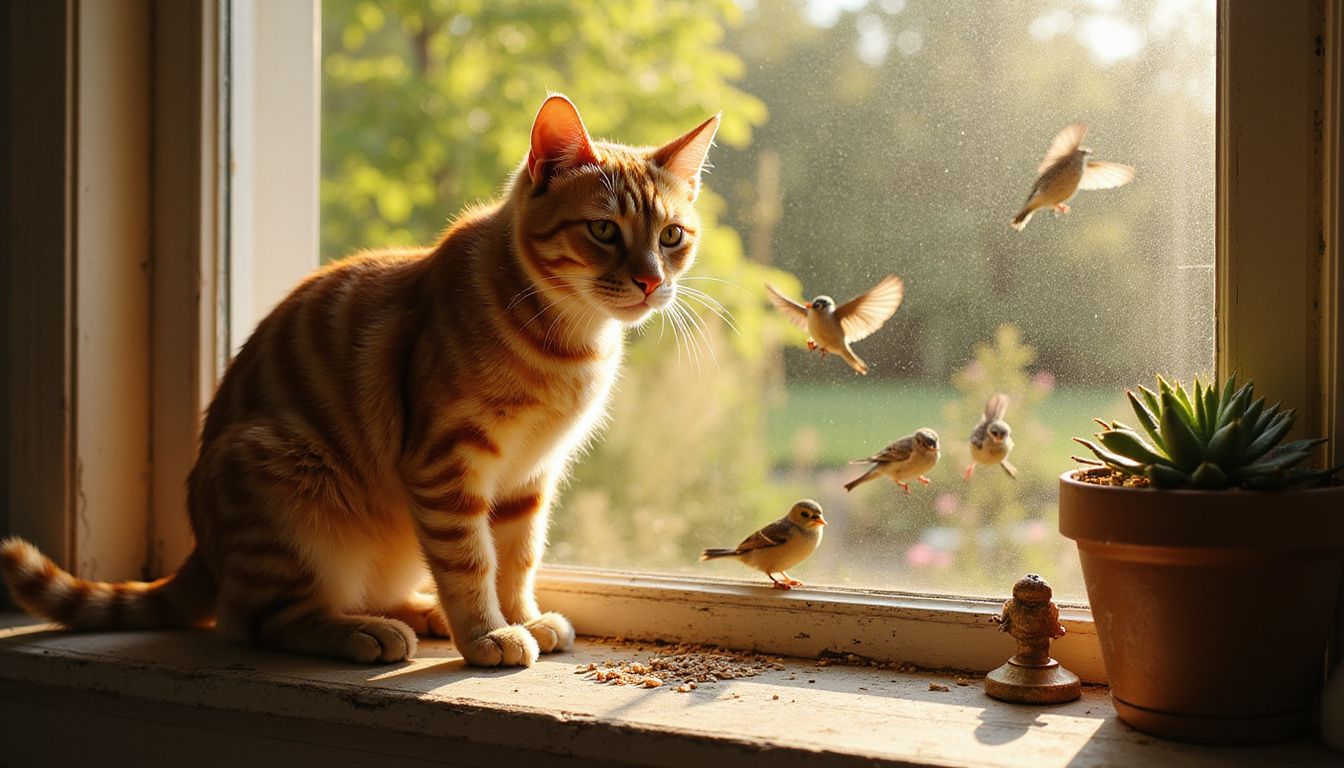
Beyond climbing trees and shelves, your cat craves visual stimulation that brings the outdoor world indoors. Window perches deliver exactly that, turning a simple pane of glass into your cat’s personal entertainment center.
Your cat will spend hours watching birds, squirrels, and other wildlife move across the yard. This bird-watching taps into hunting instincts without you having to organize a single play session.
Indoor cats especially benefit from this passive entertainment. It cuts down on boredom-related behaviors and keeps their minds sharp, without any extra effort on your part.
You can place a cat tree or shelf near a window, or simply clear off existing furniture to make room. Adding a bird feeder outside amplifies the entertainment value even more, and your cat will watch with intense focus, whiskers twitching and tail swishing.
This activity works especially well for senior cats. They get gentle enrichment and natural sunlight without the physical demands of active play, which makes window perches one of the easiest wins in indoor cat enrichment.
How can I build trust through bonding activities with my cat?
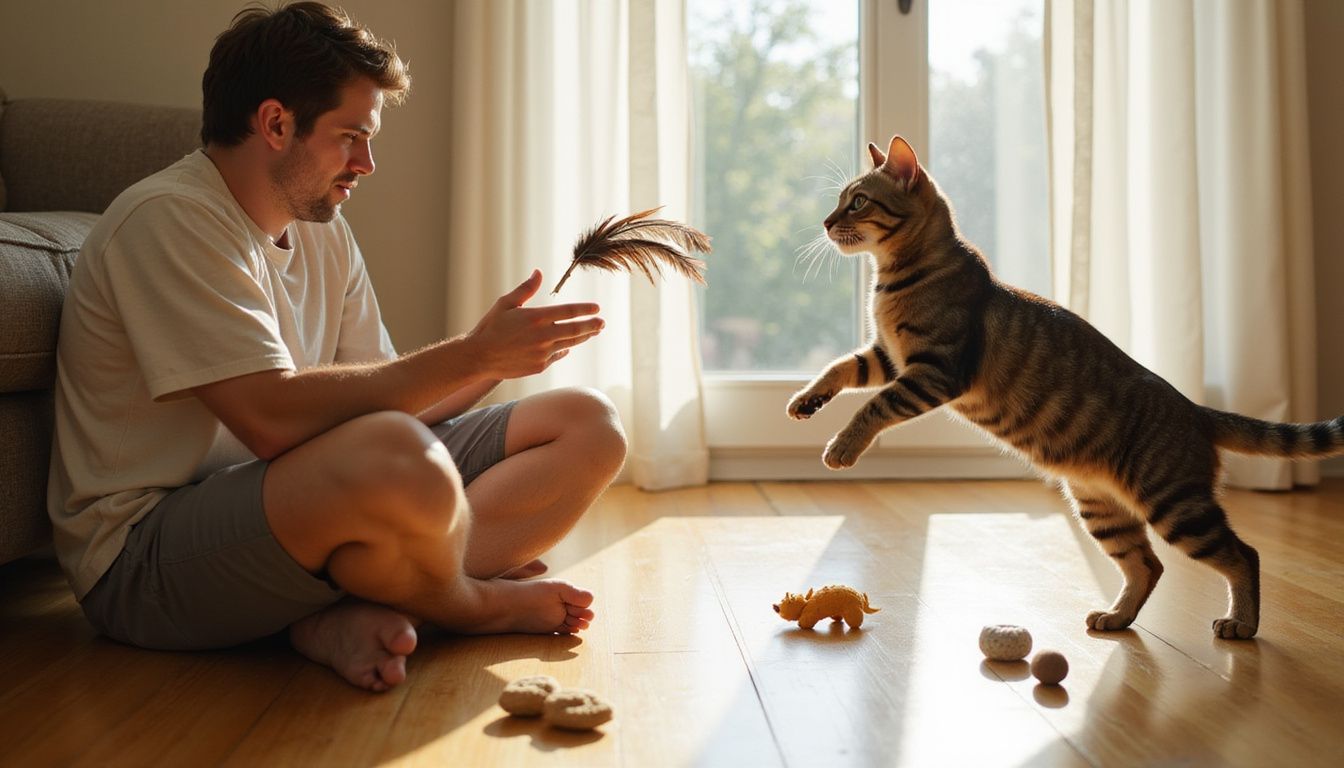
Your cat opens up to you through simple, daily interactions that show you care. Play gentle games, teach tricks with treats, and watch your bond grow stronger every day.
What are gentle hide-and-seek games to play with my cat?
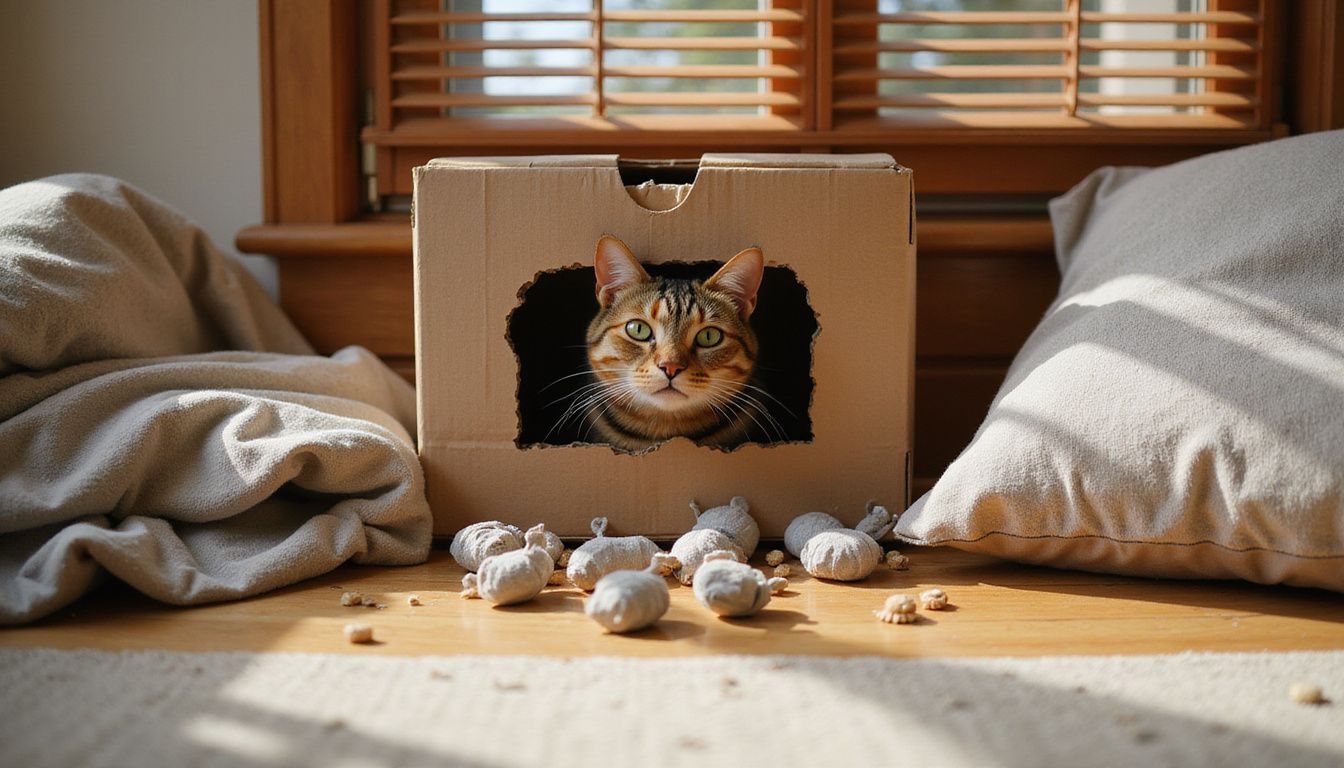
Hide-and-seek games build trust between you and your cat while keeping their mind sharp. These work especially well for shy or older cats since they don’t require much physical effort.
- Toss crumpled paper balls around your living room and let your cat pounce on each one they find.
- Cut small openings into cardboard boxes and hide treats inside for your cat to work out independently.
- Hide small toys or treats under couch cushions to encourage exploring furniture they’d otherwise ignore.
- Set up tunnels from paper bags or fabric, then hide treats inside for your cat to sniff out.
Watch your cat’s body language during these games to gauge their comfort level. Practice this when you’re home to build positive interaction, and even set it up before you leave, so your cat stays entertained while you’re away.
How can I teach my cat simple tricks using treats and positive reinforcement?
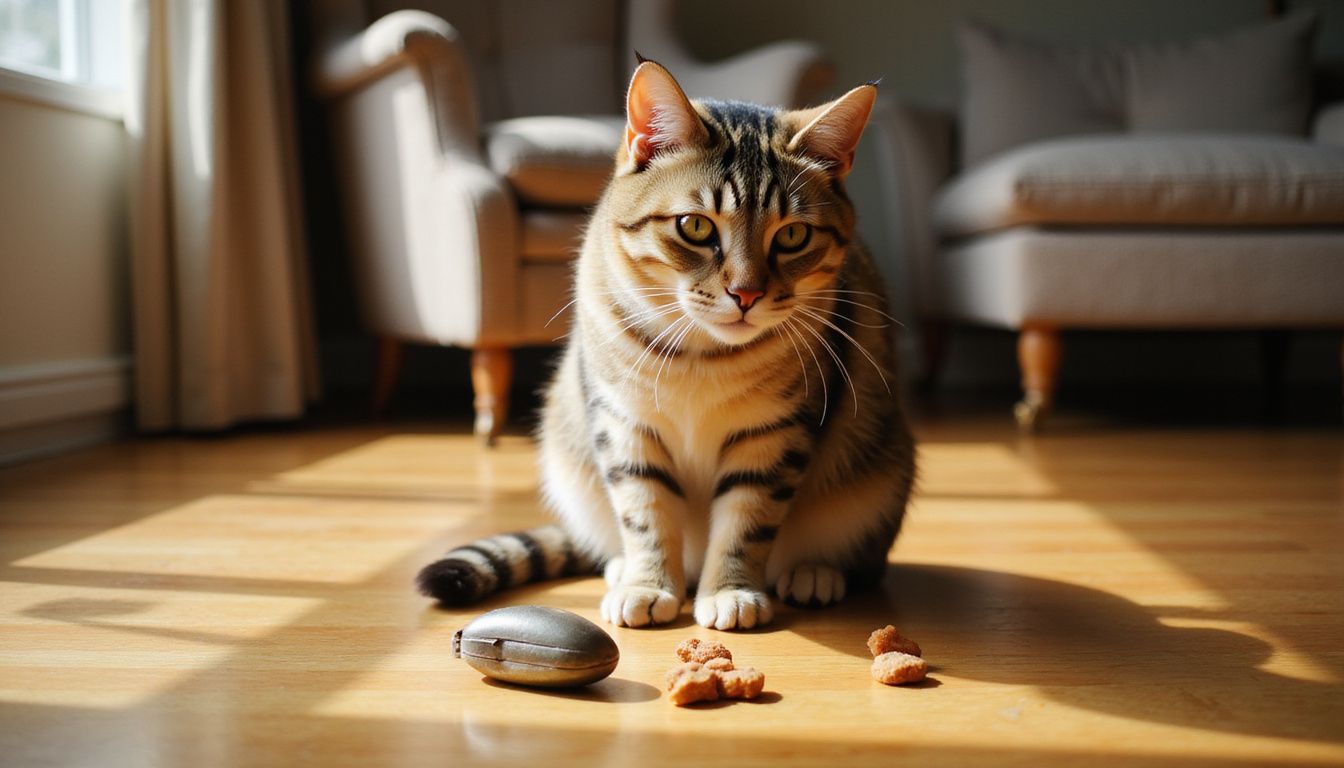
After playing hide-and-seek with your cat, you can take the bond even further with simple trick training. It builds mental stimulation, cuts down on boredom-based behavior, and strengthens your relationship through positive reinforcement.
If you’re skeptical that cats can even be trained, here’s proof. According to a Colorado State University study published in the journal Animals, 79% of cats successfully learned to “target,” meaning touch an object on command, using just 15 short, five-minute sessions.
That’s a strong success rate for such a short time commitment. It shows your cat is far more trainable than most people assume, as long as the sessions stay quick and rewarding.
- Start with one trick, like “sit” or “down,” using short, consistent sessions.
- Use high-value treats such as lickable purée (like Churu) or freeze-dried meat. Trainers recommend these because your cat can eat them fast without breaking focus.
- Try clicker training. Click the moment your cat does the right thing, then offer the treat immediately.
- Keep sessions brief, around two to five minutes, since cats focus best in short bursts.
- Reward instantly after the correct behavior so your cat connects the treat to the action.
Practice at consistent times each day so your cat learns to anticipate the routine. Cats of all ages, including seniors, can learn tricks when sessions match their comfort and health level.
For personalized training ideas, reach out to your veterinarian at Taylorsville Veterinary Clinic or your local animal hospital. They can suggest tricks that fit your cat’s personality, age, and health needs.
Conclusion
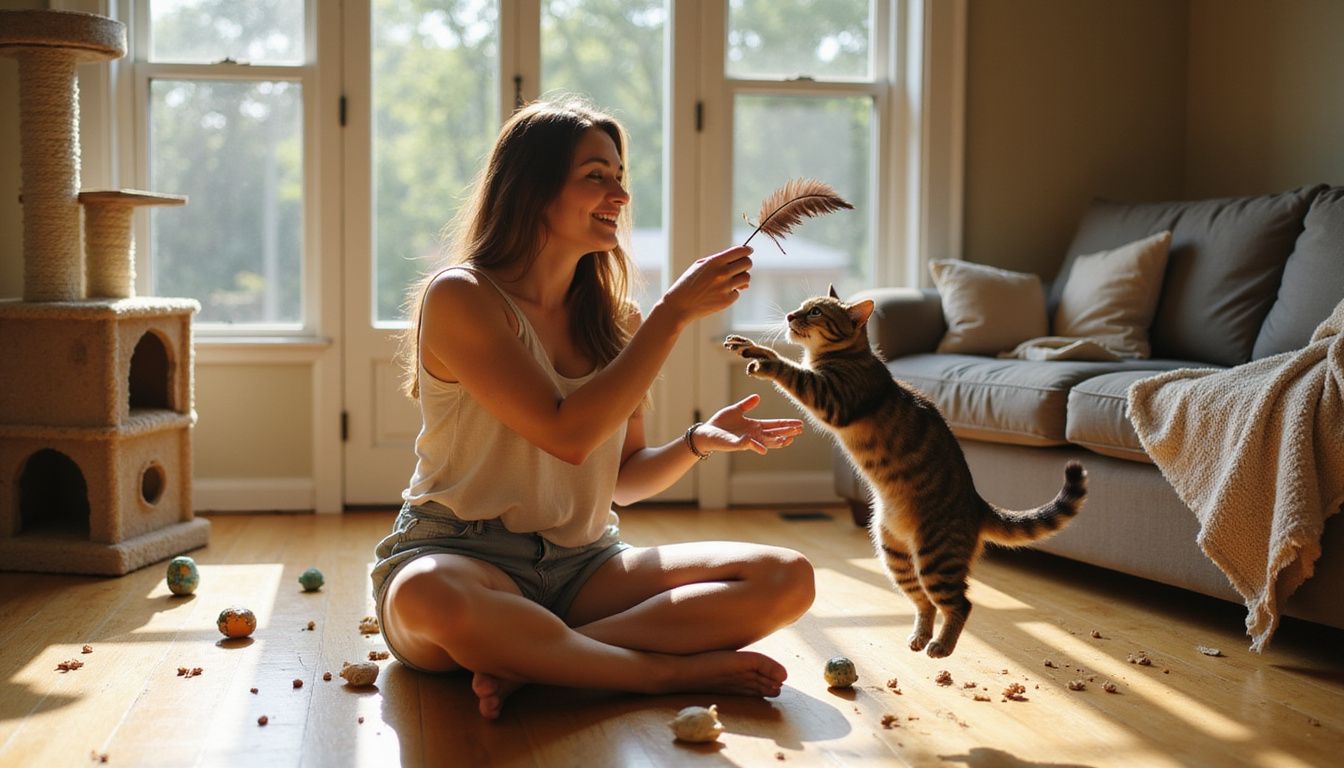
You’ve learned how puzzle feeders, wand toys, and laser pointers turn playtime into mental workouts that satisfy your cat’s hunting instincts. Cat trees and window perches give your feline friend exercise, security, and endless entertainment.
Hide-and-seek games, treat hunts, and trick training build trust while keeping boredom at bay. These activities take just minutes a day, yet they prevent problems like furniture scratching, excessive meowing, and weight gain that so often come with an under-stimulated indoor cat.
Organizations like Second Chance Cats of West Michigan and local veterinarians in Grand Rapids can offer even more guidance. But the real magic happens the moment you start playing today.
A mentally engaged cat becomes a happier, healthier companion. And with a little enrichment and effort, that companion bonds deeply with you through shared joy and discovery.
FAQs
1. What are some easy indoor cat activities to prevent boredom?
Set up a bird watching station by placing a perch near a window. Cats can watch birds for hours, and it satisfies their natural hunting instincts. You can also try puzzle feeders like the Catit Senses 2.0 or make DIY treat dispensers from cardboard boxes.
2. How can I build trust with my cat through play?
Get down on the floor with a feather wand toy and let your cat chase and pounce at their own pace. Short 10-15 minute play sessions help build confidence without overwhelming them.
3. Can wheat grass help with my cat’s mental stimulation?
Yes, wheat grass gives your cat something safe to nibble on and explore with their senses. It also aids digestion and provides a natural alternative to houseplants.
4. Is it safe to take my cat outside in a pet stroller?
A pet stroller keeps your cat safe from traffic, dogs, and other outdoor dangers while letting them enjoy fresh air and new sights. Brands like Pet Gear make strollers with mesh windows for visibility.
5. Where can I find rescue cats in West Michigan if I want to adopt a playful companion?
Second Chance Cats of West Michigan and Grand Rapids municipal shelters are great places to start. You can check their Facebook page for updates on adoptable cats.