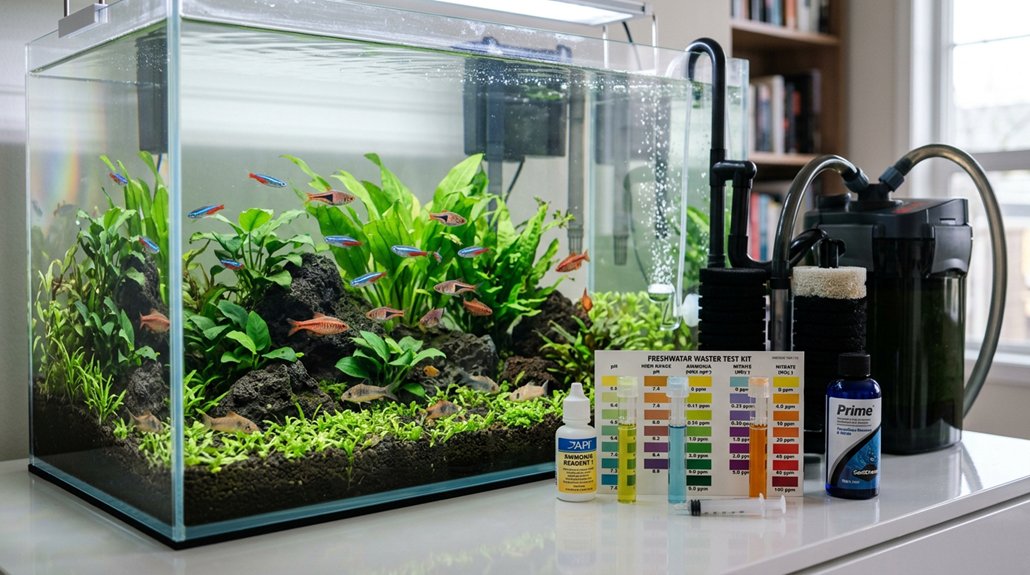
High ammonia is an emergency, so stop feeding now, remove uneaten food and waste, and do a 25–50% water change with dechlorinated, temperature-matched water. Test ammonia, nitrite, and nitrate with a liquid kit, and keep checking daily until ammonia is 0 ppm. If fish are stressed, use an ammonia neutralizer and add temporary adsorption media. Protect your biofilter by never rinsing media in tap water, and you’ll see what usually causes these spikes.
Key Takeaways
- Stop feeding, remove waste, and perform a 25–50% water change with dechlorinated, temperature-matched water.
- Test ammonia, nitrite, and nitrate daily until ammonia and nitrite stay at 0 ppm.
- Use an ammonia neutralizer or short-term zeolite media to reduce toxicity immediately.
- Protect beneficial bacteria by never rinsing filter media in tap water and keeping the biological filter running.
- Prevent future spikes with regular maintenance, light feeding, proper stocking, and routine water changes.
How to Lower Aquarium Ammonia Fast
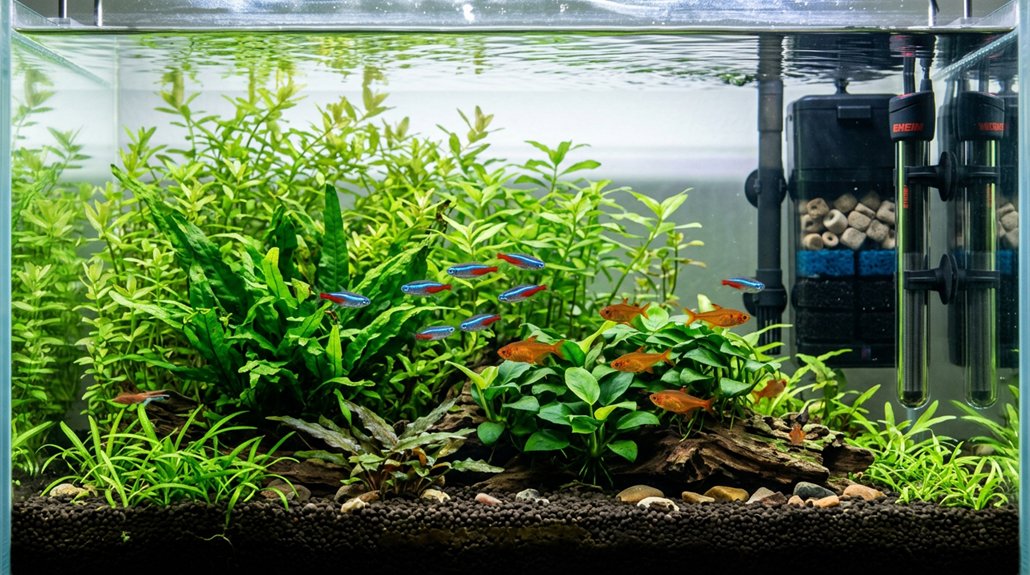
To lower aquarium ammonia fast, stop feeding immediately, remove any uneaten food, and perform a 25–50% partial water change with dechlorinated, temperature-matched water; a 50% change will roughly cut ammonia concentration in half. This rapid dilution reduces exposure while you stabilize the system. Dose a liquid ammonia neutralizer per label instructions to bind ammonia and lower toxicity, but retest afterward because readings may not change. Increase aeration with air stones or powerheads, and move stressed fish to a conditioned hospital tank if you can. In freshwater, add zeolite or an ammonia-absorbing cartridge for short-term removal. Test ammonia, nitrite, and nitrate daily, continue alternate water changes until ammonia is 0 ppm, and verify the biofilter’s bacteria are established. Plant uptake can help, but it isn’t enough alone.
Why Aquarium Ammonia Is So Dangerous
When ammonia is present in your tank, the un-ionized form (NH3) can cross fish gill membranes and disrupt oxygen transport and cellular function even at very low levels. It can also injure gill tissue, causing excess mucus, rapid breathing, gasping, and a higher risk of infection. Because toxicity increases as pH and temperature rise, you need to keep ammonia near 0 ppm to avoid chronic stress, stunting, and sudden death.
Gill Damage And Suffocation
Even low levels of unionized ammonia (NH3) can rapidly injure fish because it diffuses directly across the gill membranes, with concentrations as low as 0.02–0.05 ppm capable of damaging the gill epithelium and reducing oxygen uptake. You’ll often see gasping at the surface, rapid breathing, and bright red or purplish gills as mucus production and gill hyperplasia thicken tissue. This structural change limits gas exchange, lowers effective hemoglobin function, and can progress to suffocation if exposure continues. Damaged gills also weaken the barrier against pathogens, so immune suppression and secondary bacterial infection become more likely. If ammonia stays elevated, prolonged injury can cause irreversible gill scarring. Rapid intervention with large partial water changes, stronger aeration, and an ammonia neutralizer is critical to prevent sudden mortality.
Toxic Nitrogen Waste Effects
Because ammonia is both colorless and odorless, you often won’t notice a problem until fish are already showing stress, yet even low levels of unionized ammonia (NH3) are highly toxic because they diffuse across the gill membranes and disrupt oxygen uptake. In your tank, ammonia shifts between NH4+ and NH3, and higher pH or temperature increases the more dangerous form. Exposure causes gill tissue damage, mucus buildup, and impaired respiration. You may see gasping, lethargy, red or swollen gills, refusal to eat, or sudden deaths. Ongoing exposure can produce chronic immunosuppression and hematologic impairment, reducing oxygen transport and increasing secondary bacterial infections, stunted growth, and mortality. Any detectable ammonia isn’t acceptable; treat it as an emergency with water changes, feeding reduction, and stronger biological filtration.
How to Test Aquarium Ammonia
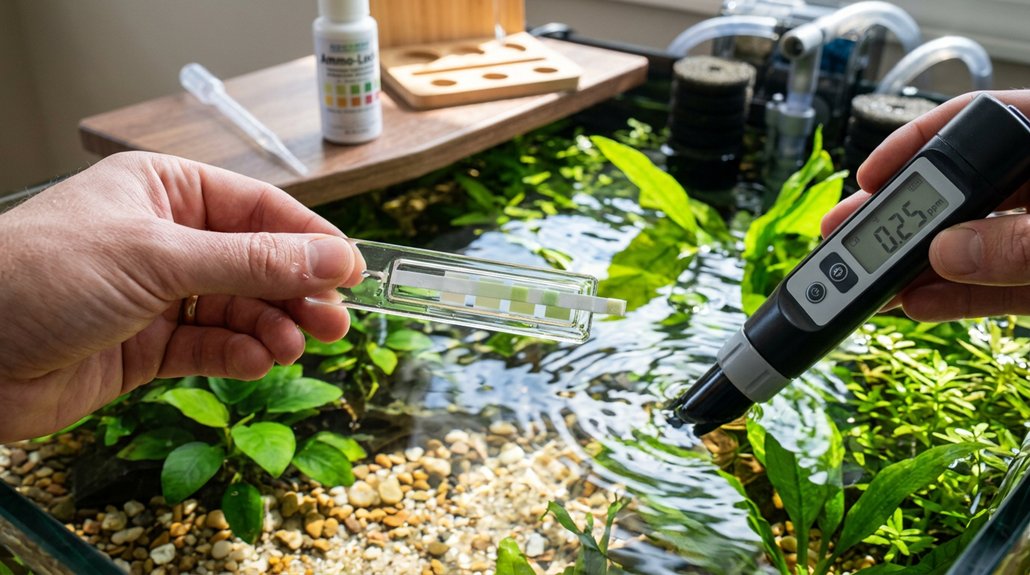
Testing aquarium ammonia starts with a reliable liquid test kit, such as the API Master Test Kit, or quality ammonia test strips so you can measure total ammonia (NH3 + NH4+) accurately. Aim for 0 ppm, because anything above that isn’t safe. Track ammonia with this schedule:
| Tank status | Testing frequency |
|---|---|
| Established | Twice monthly |
| Cycling or after a spike | Daily or every other day |
| After treatment | Retest promptly |
When you record results, note temperature and pH, since ammonia speciation shifts toward toxic NH3 as both rise. The aquarium microbiome also affects readings during stabilization. If results look inconsistent, check expiration dates and run a control with dechlorinated water. Retest after water changes or binders, because some products mask toxicity while kits still detect bound ammonia.
What Causes High Aquarium Ammonia?
High aquarium ammonia usually comes from fish waste and overfeeding, which add ammonia through excretion and the decomposition of uneaten food and debris. It can also result from cycling problems or filter failure when your biofilter doesn’t have enough nitrifying bacteria to convert ammonia to nitrite and then nitrate. In warm, alkaline water, even a given ammonia level can be more toxic because more of it exists as unionized NH3.
Fish Waste And Overfeeding
Fish waste and excess food are the most common direct sources of aquarium ammonia, since fish continually excrete ammonia through their gills and urine, and uneaten feed decomposes into additional waste. When you overstock, you increase bioload and ammonia output; a single large fish can produce far more waste than several small fish. Use portion control and consistent meal schedules: offer only what your fish consume within 1–3 minutes.
- You can feel alarmed when the water clouds.
- You may worry as fish gasp or linger at the surface.
- You can notice stress when waste collects in substrate.
- You may feel frustrated when overfeeding repeats the cycle.
Detritus, feces, and decaying plant matter also release ammonia, so removing them promptly helps reduce risk.
Cycling Problems And Filter Failure
Even with a healthy feeding routine, ammonia can still rise when a tank is undercycled, because a new aquarium often lacks enough nitrifying bacteria to convert waste into nitrite and then nitrate for 2–6 weeks. You can reduce risk by using starter bacteria and avoiding sudden load increases.
| Cause | Effect |
|---|---|
| New tank | Low bacterial conversion |
| Filter outage | Rapid ammonia buildup |
| Overcleaning media | Bacteria loss |
| Zeolite use | Delayed colonization |
If your filter stops, clogs, or you replace too much media, oxygen flow drops and bacteria slow quickly. Poor filter maintenance, chlorinated rinse water, or overuse of chemical media can also destabilize cycling. Match biological capacity to bioload, add fish gradually, and monitor ammonia closely until the system stabilizes.
Stop Feeding and Remove Waste
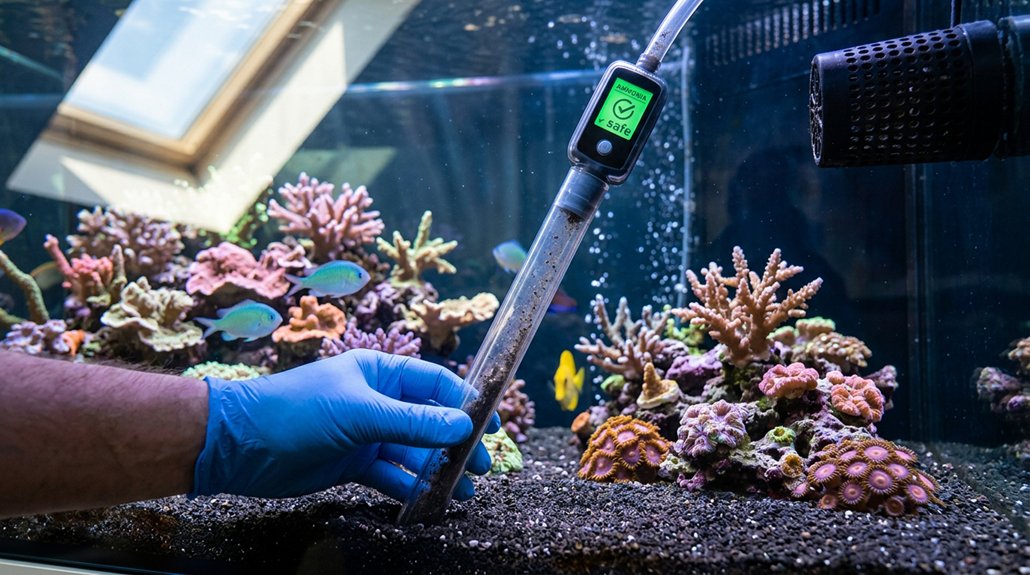
Stop feeding your fish immediately when ammonia is detected, because uneaten food and increased waste will only add to the ammonia load. This feed halt reduces new nitrogen input while you begin waste removal. Use a net and siphon to clear visible food, decaying plants, and other debris. Vacuum the substrate during water changes so buried detritus doesn’t keep breaking down. If you find a dead fish or large decaying item, remove it at once; the immediate ammonia burden can rise fast.
Stop feeding immediately, remove debris, and vacuum the substrate to prevent ammonia from climbing further.
- You’ll prevent avoidable ammonia spikes.
- You’ll remove hidden decay sources.
- You’ll protect fish from additional stress.
- You’ll gain control before damage worsens.
Rinse mechanical filter media in tank water, not tap water, to dislodge trapped solids while preserving beneficial bacteria.
Use Water Changes, Neutralizers, and Filters
A partial water change is the fastest way to reduce acute ammonia exposure: replace 25–50% of the tank volume with dechlorinated, temperature-matched water, and a 50% change can cut ammonia concentration by about half within minutes. For a quick waterchange, keep feeding stopped and remove debris, then repeat 20–30% changes daily until tests read 0 ppm. If levels remain elevated, dose liquid ammonia binders exactly per label; they temporarily detoxify ammonia and nitrite, but they don’t remove them, so retest after dosing. Check filtration next: seed media with established nitrifying bacteria or a commercial supplement, and never rinse media in chlorinated tap water. Freshwater zeolite can adsorb ammonia short term in the filter, but follow recharge guidance and remove it during cycling or when using bacterial starters.
How to Prevent Aquarium Ammonia Spikes
Once ammonia is back under control, keeping it from spiking again comes down to consistent monitoring and routine husbandry. Test ammonia, nitrite, and nitrate at least twice monthly, and daily during cycling or after any system change; your goal is 0 ppm ammonia.
- Feed only what your fish consume in 1–3 minutes, then remove leftovers.
- Maintain appropriate stocking density and avoid overstocking.
- Keep a continuously running biological filter with enough media, and seed it with nitrifying bacteria if needed.
- Add fast-growing plants and perform regular maintenance, including 10–25% weekly water changes and rinsing filter media in tank water.
These controls reduce organic waste, preserve beneficial bacteria, and stabilize water chemistry.
Frequently Asked Questions
How to Lower Ammonia in an Aquarium Quickly?
Stop feeding, remove waste, and change 25–50% of water now; use an ammonia neutralizer, increase aeration, and seed bacteria. During quarantine procedures, don’t rely on activated carbon—it won’t remove ammonia.
Can Fish Recover From High Ammonia Levels?
Yes, you can see recovery if you reduce ammonia fast; isn’t prompt action vital? You’ll often notice behavioral changes improve within days, though long term effects like gill damage, infections, and stunting can persist.
How Long Does It Take for Ammonia Levels to Go Down in a Fish Tank?
Usually, you’ll see ammonia drop within hours after a partial water change, or within 24–48 hours in an established tank. During cycle time, it can take weeks; bacterial boosters may help, but they aren’t instant.
Why Is My Aquarium Ammonia High?
Your aquarium’s ammonia is high because waste is piling up like snow in a storm: fish excretion, uneaten food, decay, overstocking, overfeeding, chloramine, or disrupted biofiltration. You’ll need source identification and possible tank cycling.
Conclusion
If you catch ammonia early, you can usually reverse it fast. In one tank, a simple 50% water change dropped ammonia from 2.0 ppm to near zero within hours, much like opening a window clears a smoky room. You should stop feeding, remove waste, and verify levels with a reliable test kit. Then keep your filter cycled and your stocking reasonable. Prevention isn’t complicated; it’s the most effective treatment you’ve got.