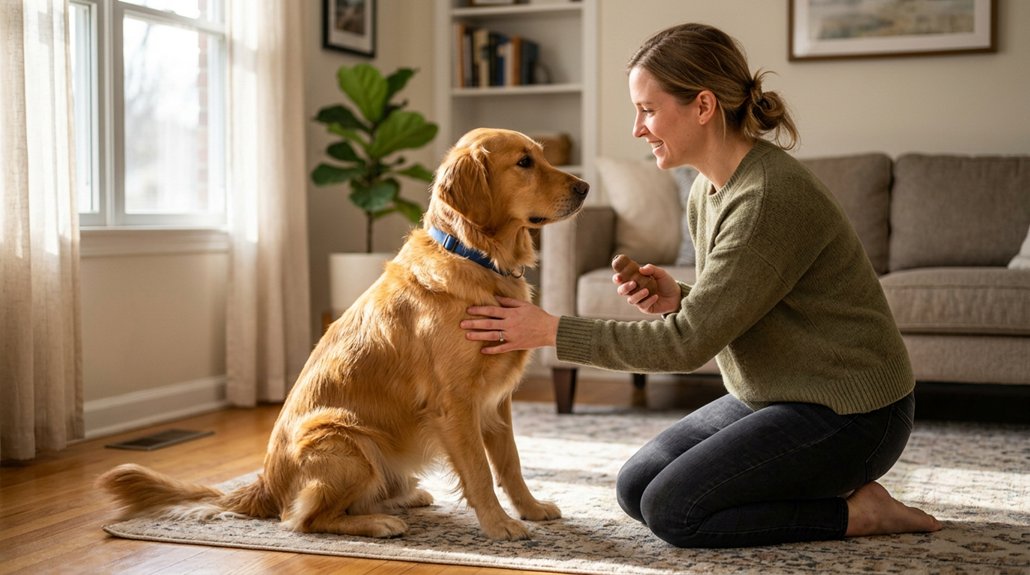
To handle behavior problems in rescue dogs, start with early intervention and a consistent routine to help them feel secure. Use positive reinforcement, like treats and praise, to reward desired behaviors and build trust. Short, structured training sessions focusing on basic commands can minimize confusion. Introduce new environments gradually, ensuring a safe retreat for anxious moments. Monitor their body language closely. If issues persist, professional help may be needed. Discover more ways to foster a supportive environment.
Key Takeaways
- Use positive reinforcement techniques to reward desired behaviors and build trust in rescue dogs.
- Establish a consistent daily routine to enhance security and reduce anxiety in rescue dogs.
- Introduce new environments gradually and at the dog’s pace to boost confidence and reduce fear.
- Recognize stress signals like lip licking or tail tucking for timely interventions in behavior problems.
- Seek professional help for persistent behavior issues or severe anxiety in rescue dogs.
Common Behavior Problems in Rescue Dogs
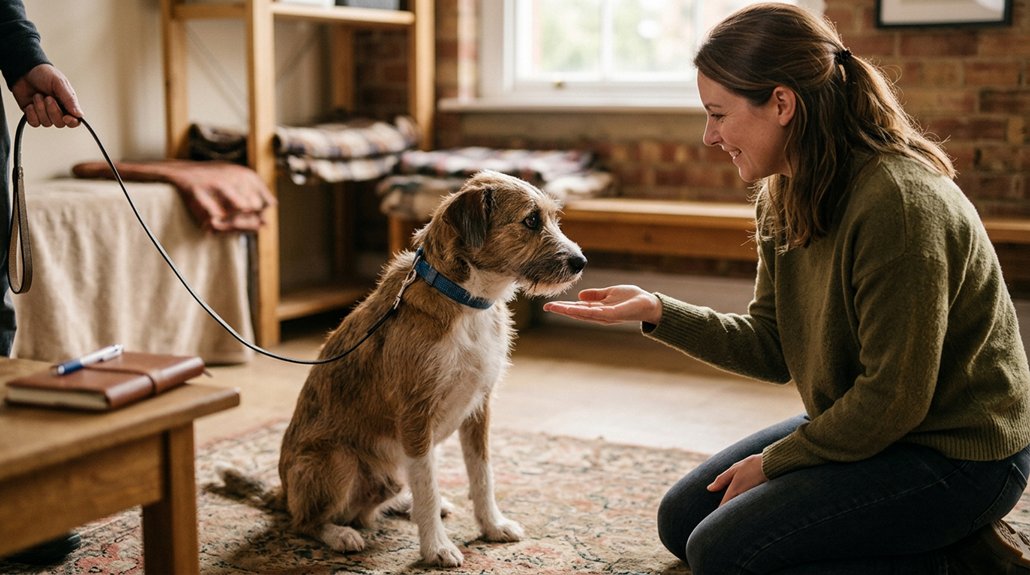
Rescue dogs, often coming from difficult backgrounds, can exhibit various behavior problems that may challenge even experienced dog owners. Fear-based aggression and separation anxiety are especially common. You might notice fear-based aggression manifest as growling, snapping, or lunging. These behaviors usually stem from past neglect or abandonment and highlight the need for early intervention. Similarly, separation anxiety can be particularly distressing, as your dog may engage in destructive behavior or become insecure when you’re not around. Such behaviors often require structured, consistent training to help your dog feel secure and calm. By understanding these common challenges, you can tailor your training techniques to address their unique experiences, providing both expertise and empathy as you guide your rescue through rehabilitation.
Building Trust and Confidence in Your Rescue Dog
While common behavior problems like fear-based aggression and separation anxiety present significant challenges, addressing these issues starts with building trust and confidence in your rescue dog. Establish a consistent routine for feeding, walks, and training to help your dog feel secure. Implement trust building activities through positive reinforcement techniques, rewarding desired behaviors with treats and praise. Gradual exposure to new environments serves as confidence boosting exercises, allowing your dog to explore at their own pace. Create a safe retreat at home, a sanctuary for when they feel anxious. Understand and respect their stress signals—like lip licking or tail tucking—which fosters a trusting relationship. With patience and empathy, these methods encourage your rescue dog to engage and connect with you.
Targeted Training Techniques for Rescue Dogs
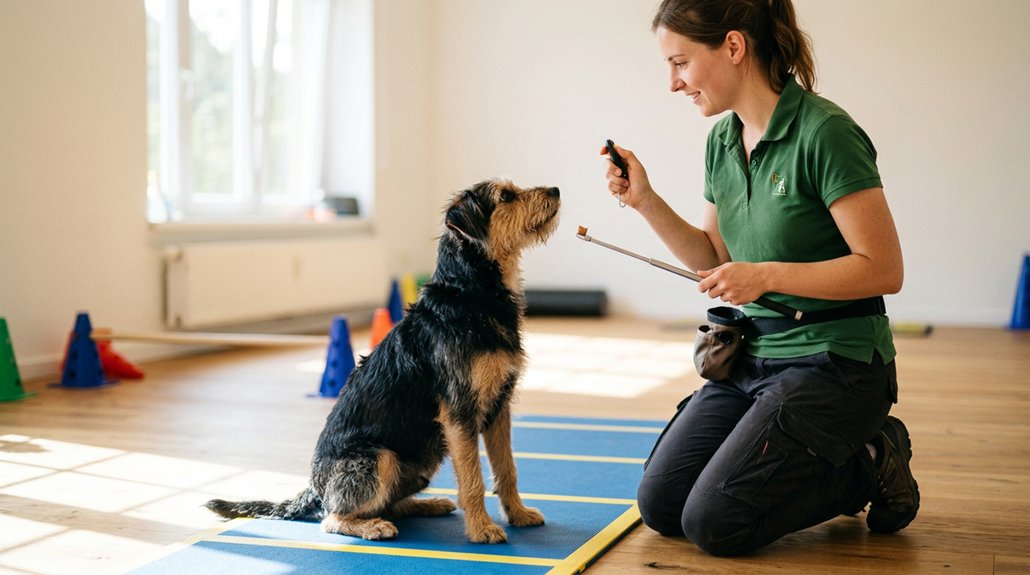
When training rescue dogs, it’s essential to use targeted techniques that cater to their unique behavioral needs and histories. Positive reinforcement is key: use treats and praise to encourage desired behaviors, fostering trust while minimizing fear or anxiety. Implement short, structured sessions lasting 2-4 minutes; this approach keeps dogs engaged and prevents overwhelming them, vital for those prone to anxiety. Focus on basic commands like “sit,” “stay,” and “leave it” to establish a routine—clear communication reduces confusion and anxiety. Gradual exposure to new experiences and environments, alongside controlled playdates, encourages calmness and reduces fear-based reactions. Crate training offers a safe space, helping them manage separation anxiety. These steps transform training into a supportive journey tailored to their unique needs.
Creating a Supportive Environment for Behavioral Adjustments
Creating a supportive environment is essential for the successful behavioral adjustment of rescue dogs. Start by establishing a consistent routine that includes feeding, walks, and playtime. This provides security, helping your dog adapt to their new home more easily. Introduce environment enrichment by gradually exposing your dog to new experiences, people, and settings to build confidence while minimizing fear. It’s also vital to designate a quiet, safe space where your dog can retreat when feeling overwhelmed. This can greatly reduce stress and promote comfort. Utilize positive reinforcement, rewarding desired behaviors with treats and praise to encourage trust. Regularly monitor your dog’s body language, ensuring you catch signs of stress early for timely interventions that foster successful adjustments.
Knowing When to Call in a Pro for Persistent Issues
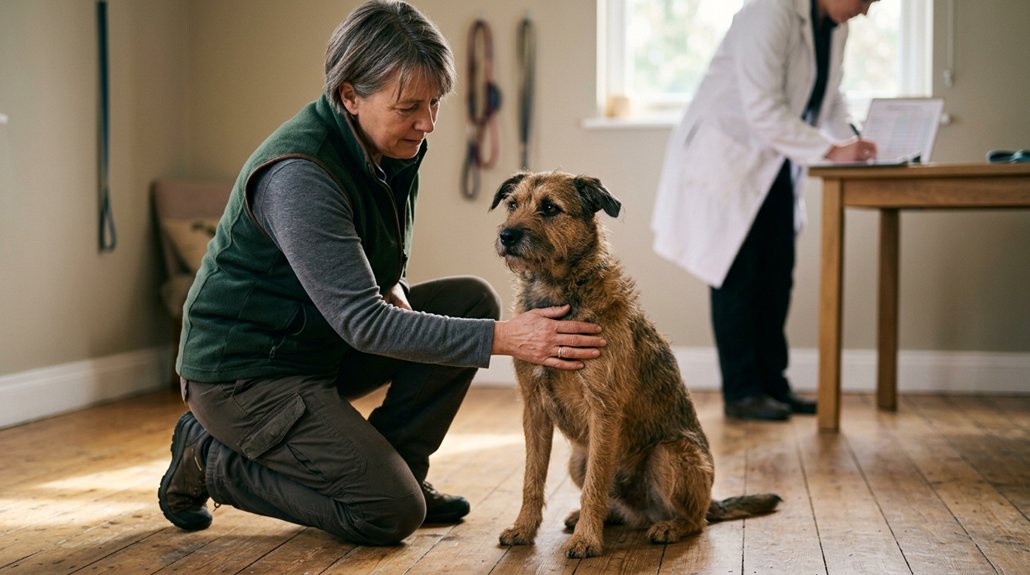
Even with a supportive environment, some rescue dogs may exhibit persistent behavior issues that require more specialized attention. Recognizing signs like severe anxiety or aggression early is essential to preventing these behaviors from becoming ingrained. You should start by consistently using positive reinforcement techniques, but if you’re not evaluating progress, it might be time to consult a professional. Behavioral problems such as growling, snapping, or constant barking often need expert evaluation to understand their root causes. Specialized trainers or behaviorists can devise tailored plans that address your dog’s unique challenges, especially if they have a history of trauma. Be vigilant for distress signs, like excessive pacing or furniture chewing, as they can lead to more complex issues. Acting timely guarantees a happier, healthier companion.
Frequently Asked Questions
What Is the 7 7 7 Rule for Rescue Dogs?
The 7 7 7 rule outlines a dog adjustment period where in the first 7 days, expect anxiety. Within the next 7 weeks, watch for behavioral triggers, and by 7 months, bond as trust and personality flourish.
What to Do Instead of Yelling at a Dog?
Like guiding a ship through a storm, use positive reinforcement instead of yelling to steer your dog toward calm. Engage through calm communication; this beacon of understanding will nurture trust and coax out their best behavior.
How Long Are Dogs Sad After Rehoming?
After rehoming, a dog’s emotions might be impacted for several weeks to a few months. The rehoming effects can vary, but showing them patience and providing a loving, consistent environment helps them gradually adjust and feel secure.
How to Stop Territorial Aggression in Dogs?
Think Pavlov’s dog. To stop territorial aggression, use positive reinforcement when your dog stays calm around territorial triggers. Gradual exposure, setting boundaries, and seeking professional help can transform aggression into confidence and trust over time.
Conclusion
Think of your rescue dog as a garden in bloom. Some flowers may be wilted from past storms, needing a nurturing touch to flourish. With patience, trust-building, and tailored training, these once-fragile plants can blossom beautifully. Yet, don’t hesitate to call in a horticulturist—a professional trainer—if some weeds prove stubborn. Your expertise, compassion, and supportive environment act like sunlight and water, cultivating a thriving garden filled with loyalty, love, and joy.