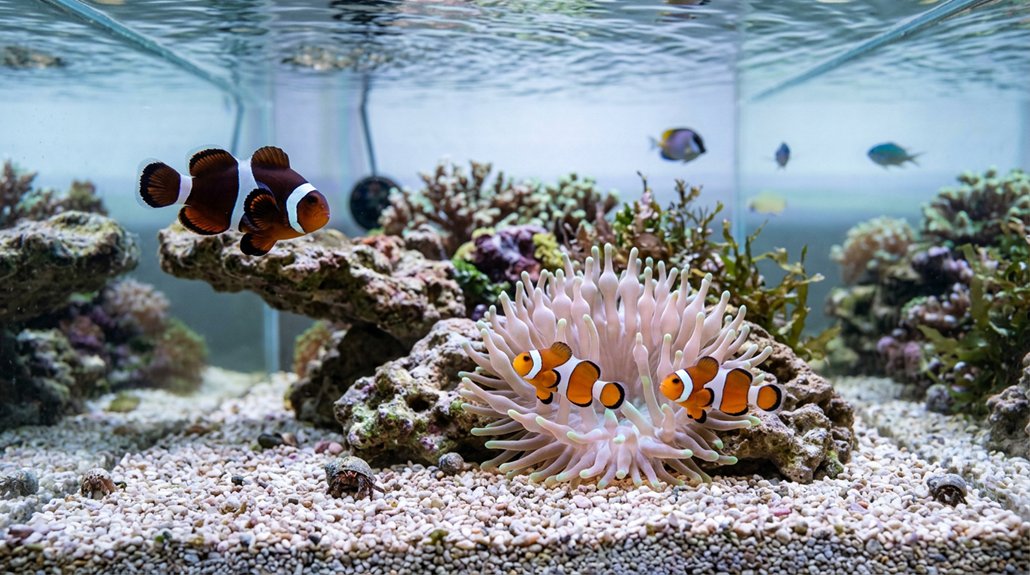
Before you add new fish, make sure your aquarium is fully cycled, with ammonia and nitrite at 0 ppm, stable temperature, pH, and salinity, and enough space for the species you want. Quarantine newcomers for 2–4 weeks when you can. Then float the sealed bag 15–20 minutes, add tank water slowly, and net fish into the tank without pouring in bag water. Keep lights dim and watch for stress as you go; there’s more to get right.
Key Takeaways
- Confirm the aquarium is fully cycled, with ammonia and nitrite at 0 ppm, before adding fish.
- Quarantine new fish for 2–4 weeks, monitoring for disease and keeping quarantine water stable.
- Float the sealed bag 15–20 minutes, then slowly acclimate with tank water while keeping lights off.
- Net fish into the tank and never pour bag water into the aquarium.
- Add fish gradually, starting with peaceful species, and keep stocking within filtration limits.
Check Your Tank Before Adding Fish
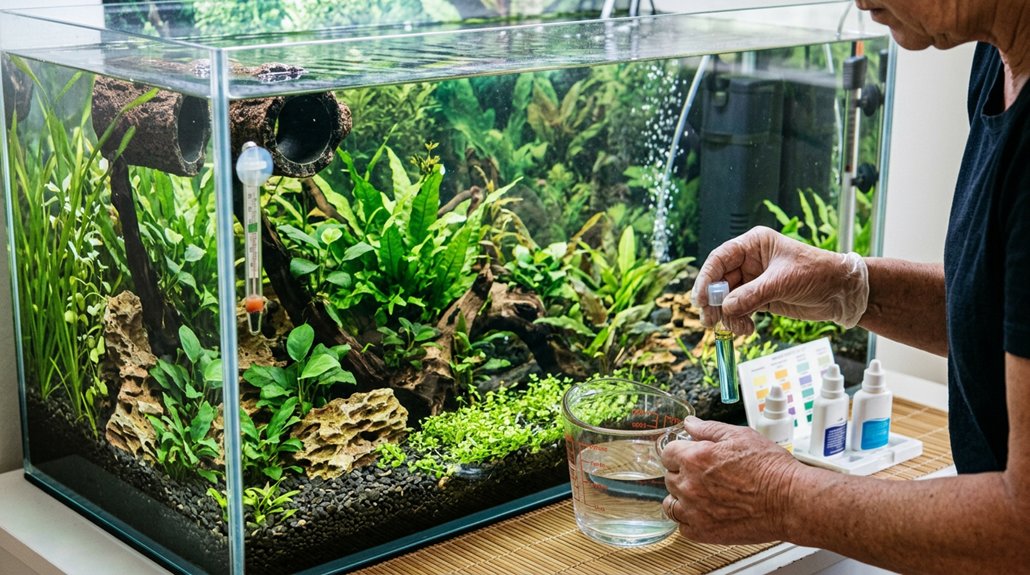
Before you add any new fish, make sure your tank has fully cycled and is holding stable water values. Confirm ammonia and nitrite are 0 ppm, and verify pH, nitrate, and temperature with reliable test kits, not just test strips. Check water clarity too, since unusual cloudiness can indicate instability. Let temperature, pH, and lighting settle for 24–48 hours, or longer if readings keep shifting. Match your aquarium’s conditions as closely as possible to the source water your fish come from to reduce stress. Also confirm the tank has enough space for the species you’re adding and that stocking levels remain appropriate. Use compatibility charts to avoid territorial or environmental conflicts. If you can, keep new arrivals in quarantine for 2–4 weeks first.
How to Acclimate New Fish Safely
You can acclimate new fish with either a float-and-mix method or a drip acclimation, depending on how different the bag water is from your tank. If salinity or pH differs, match the quarantine or display water as closely as you can, and use drip acclimation only when the fish arrived recently enough that shipment water hasn’t degraded. For most fish, keep the lights off, monitor for stress, and move them into the tank only after temperature and water conditions are equalized.
Float Or Drip Methods
When the bag water and aquarium water are already close in temperature, pH, and salinity, the float or drip method can acclimate new fish with minimal shock. For the float method, keep the sealed bag afloat in the tank with the lights off for 15–20 minutes, then roll down the bag and add small amounts of tank water over 15–30 minutes. Net the fish into the aquarium and discard the bag water. For sensitive fish or invertebrates, use the drip method only if they arrived within 3–4 hours: place bag water in a clean bucket, drip tank water at 2–3 drops per second until volume doubles, then discard half and repeat for 1–2 hours. Watch for stress signals and adjust if needed. Limit lighting effects, and don’t feed immediately.
Match Water Conditions
Matching water conditions is the safest first step in acclimation, because even small differences in temperature, pH, salinity, or ammonia can trigger shock in new fish. Test both the bag and tank with reliable kits, and adjust only when key water chemistry values are close. Float the sealed bag 15–30 minutes to equalize temperature, then open it and add small tank-water portions over the next 15 minutes. For sensitive species, use the drip method in a clean bucket until volume doubles, then repeat. This slows change and protects osmotic balance. When you’re done, net the fish into the aquarium and discard bag water. For the lowest disease risk, quarantine new arrivals in matched water before display transfer.
Use the Floating Method for Most Fish
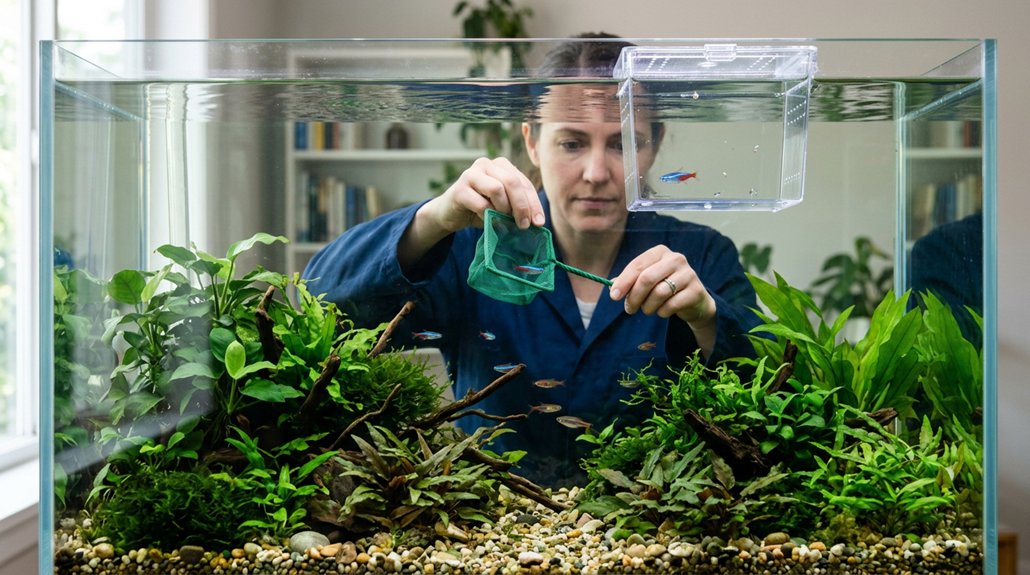
You should float the sealed shop bag in the aquarium for 15–20 minutes so the water temperature equalizes and thermal shock is minimized. Then roll the bag sides down, add small amounts of tank water every 5–10 minutes for 20–30 minutes to match chemistry, and watch for stress signs such as rapid gill movement or clamped fins. When acclimation’s complete, use a net to transfer the fish into the tank and discard the bag water without pouring it into the aquarium.
Float Sealed Bag
Begin by floating the sealed shop bag in the aquarium with the lights off for 15–20 minutes; this lets the water temperature equalize and helps prevent thermal shock. During this period, check bag buoyancy so it stays partially submerged and undisturbed, supporting temperature equilibration.
| Step | Action | Purpose |
|---|---|---|
| 1 | Keep lights off | Reduce stress |
| 2 | Float sealed bag | Equalize temperature |
| 3 | Observe fish | Detect distress |
| 4 | Proceed cautiously | Limit shock |
If the fish show rapid gill movement, color loss, or frantic swimming, stop and reassess. Don’t rush the process; stable conditions matter. After the initial float, you’re ready for controlled chemistry acclimation, but don’t open the bag yet. Maintain quiet surroundings and avoid sudden movement near the tank.
Add Tank Water
Once the bag has floated long enough to equalize temperature, start acclimating the fish to the aquarium’s chemistry by rolling the bag’s top down to trap an air pocket and then adding small amounts of tank water every 5–10 minutes over the next 20–30 minutes. This gradual adjustments process lets you bridge differences in pH, salinity, and dissolved minerals without sudden osmotic stress. Keep the lights off and watch for stress signs such as color loss or rapid gill movement; if they appear, pause the additions. Water testing before introduction helps you match conditions more closely and reduces the need for correction during acclimation. For most fish, the floating method with measured additions is the safest way to prepare them for the tank environment.
Net Transfer Fish
After the temperature and water chemistry have been acclimated, gently net the fish from the bag into the aquarium and never pour the bag water into the tank, since it can carry pathogens or excess nutrients. Use hand sized netting that matches the fish’s body width so you can guide it smoothly without abrasion. Keep the lights off during transfer, and work with deliberate stress minimization techniques: move slowly, avoid chasing, and support the fish’s orientation in the water column. If you notice rapid gill movement, color loss, or clamped fins, pause immediately; severe signs mean you should move the fish to quarantine. Once released, leave the tank dim for a few hours, feed residents at the opposite end, and wait about two weeks before adding more fish.
Try Drip Acclimation for Sensitive Fish
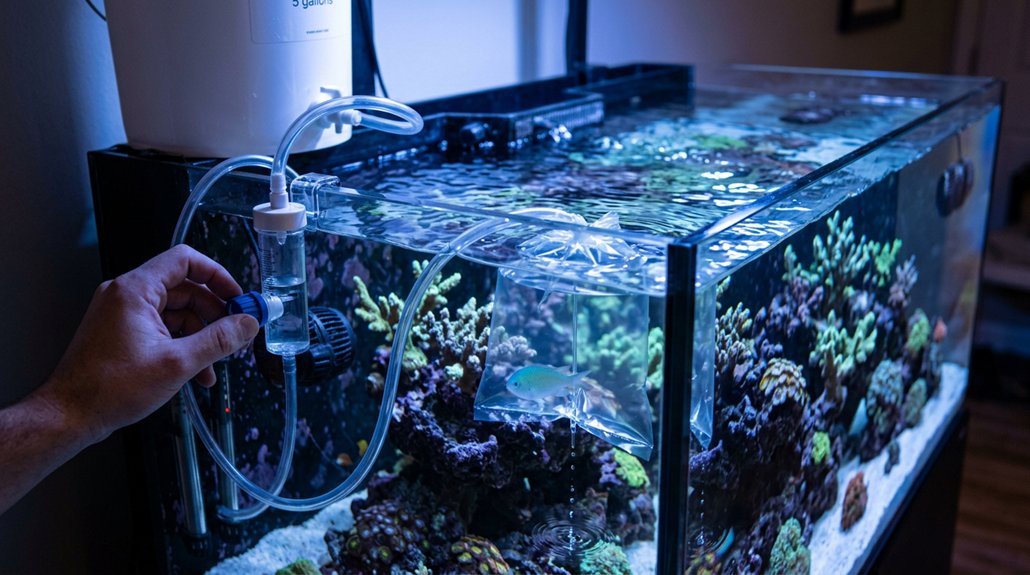
For sensitive or freshly shipped fish, drip acclimation is often the safest way to reduce stress from sudden water changes, provided the shipment is still within roughly 3–4 hours and dissolved oxygen and CO2 levels are likely acceptable. Pour the bag contents into a clean 12–20 L bucket beside the tank, then run a clean airline hose from the tank and restrict flow with a knot or valve to about 2–3 drops per second. This gradual dilution reduces abrupt pH, hardness, and temperature shifts. Use oxygen monitoring by watching for rapid gill movement, colour loss, or erratic swimming. When the bucket doubles, remove about half the water and continue for 30–60 minutes, repeating until parameters closely match. If distress appears, slow or stop the drip and let the fish recover first.
Add New Fish to an Established Tank
Before you add new fish, confirm the established tank is stable with test kits: ammonia and nitrite should be at or near zero, and pH and temperature should be steady. Add only a few fish at once; for population control, wait about 2 weeks between batches so you can watch for disease and stress. Use this sequence:
Confirm tank stability first, then add only a few fish at a time and monitor closely.
- Quarantine new arrivals in a separate QT tank for about 30 days when possible.
- Acclimate them with the float method, or use drip acclimation for sensitive species; never add store water.
- Reduce aggression by rearranging decor, dimming lights, and placing fish away from feeding areas.
Match water parameters before transfer, then continue long term monitoring after release.
Match Fish Compatibility and Tankmates
Once the tank is stable and new fish have been quarantined and acclimated, matching species and tankmates becomes the next key step. Use compatibility charts as a baseline, then verify temperature, pH, salinity, diet, and temperament. Species compatibility matters most: don’t mix marine and freshwater fish, and keep saltwater mates within 0.005 specific gravity. Favor temperament matching by pairing peaceful community fish with similar origin and behavior.
| Tankmate match | Result |
|---|---|
| Tetras + peaceful swimmers | Low stress |
| Corydoras + bottom-dwellers | Reduced competition |
| Marine + freshwater | Incompatible |
| Peaceful + territorial | Higher aggression |
| Similar salinity | Stable physiology |
Add smaller, peaceful fish first, then larger or territorial species later. Provide adequate space and hiding places, and stage additions about two weeks apart so you don’t overwhelm the established social structure.
Avoid Common Fish Introduction Mistakes
To avoid common introduction mistakes, add new fish gradually rather than all at once, since a two-week interval between additions helps you monitor for disease and prevents sudden bioload spikes that can trigger ammonia and pH instability. Use overcrowding prevention to keep stocking within filtration limits, and keep your feeding schedule conservative while the tank stabilizes. 1. Acclimate each fish with lights off, floating 15–30 minutes or drip acclimating sensitive species. 2. Match temperature, pH, and salinity before transfer; verify with test kits. 3. Move fish with a net only, and never pour bag water into the aquarium. These steps reduce shock, limit pathogen transfer, and help you maintain stable water chemistry during each introduction.
Quarantine New Fish Before Release
Even with careful acclimation and controlled stocking, newly acquired fish shouldn’t go straight into the display tank; quarantine them in a separate 10–20 L or larger tank for at least 2–4 weeks so you can watch for disease, parasite load, and delayed stress responses before release. Match temperature, pH, and salinity to the source water to reduce shock, and provide hiding places plus gentle filtration. During quarantine duration, test ammonia, nitrite, and nitrate often, and do frequent small water changes to keep conditions stable. Use medication protocols only when symptoms justify them: parasite dips, praziquantel, metronidazole, or a saltwater freshwater dip. Keep records, and wait two weeks after treatment with no symptoms before moving the fish. Add newcomers gradually, not all at once.
Frequently Asked Questions
How Long Does It Take for a Fish to Get Used to a New Aquarium?
Usually, you’ll see an acclimation period of 24–48 hours, but full settling can take 1–2 weeks. Watch stress signs for up to 7 days, and some sensitive fish may need several weeks.
How Long Should You Let a New Fish Tank Run Before Adding Fish?
You should let your tank run 2–6 weeks, until cycle time is complete and water stability is confirmed by tests showing zero ammonia and nitrite. If you’ve rushed it, you’ll risk stressing or killing fish.
How Long After Introducing Fish to a Tank Should I Feed Them?
You should wait 1–2 hours before feeding, or wait 24 hours for sensitive fish, while you monitor water quality. Then offer only a small amount, and resume normal feeding after 24–48 hours if they’re stable.
What Is the First Fish to Add to a New Aquarium?
You’d usually add a hardy, peaceful species like zebra danios, guppies, or platies first; they’re beginner favorites because they’re small, low-bioload fish that won’t overwhelm your cycle while you monitor water parameters carefully.
Conclusion
Before you add new fish, make sure your tank is fully cycled, stable, and matched to the species’ needs. Proper acclimation matters: about 1 in 3 new fish losses are linked to stress from sudden changes in temperature or water chemistry. Use floating acclimation for hardy fish and drip acclimation for sensitive species. Quarantine newcomers first, and you’ll reduce disease risk, protect established fish, and improve long-term survival in your aquarium.