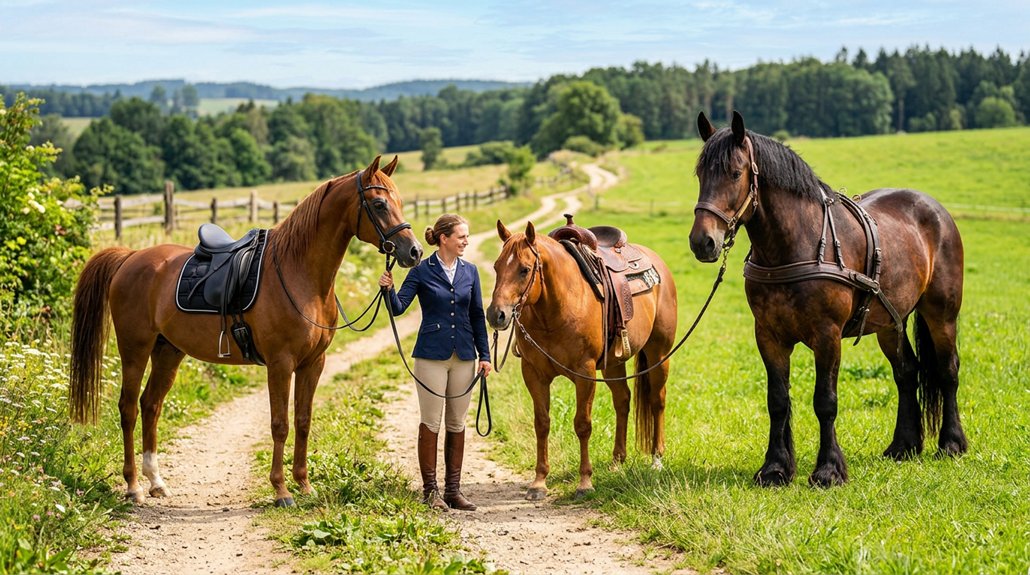
To match a horse breed to your riding goals, assess your experience level and preferred riding style like Western or English. Identify goals such as jumping or leisure, and select breeds accordingly—Thoroughbreds for jumping, Arabians for endurance. Evaluate temperament; calm breeds suit beginners, while energetic breeds fit seasoned riders. Collaborate with a trainer for expert insights and to build a strong horse-rider bond. Understanding these elements will greatly enhance your equestrian journey.
Key Takeaways
- Determine if your aim is jumping, leisure, or hobby riding to guide breed selection.
- Choose Thoroughbreds for speed and agility or Arabians for endurance-driven activities.
- Match your experience level with the horse’s temperament; novices benefit from calm breeds like American Quarter Horses.
- Align your preferred riding style, Western or English, with suitable breeds such as Quarter Horses or Warmbloods.
- Seek professional advice to ensure compatibility between rider goals and horse breed characteristics.
Identifying Your Riding Goals and Experience
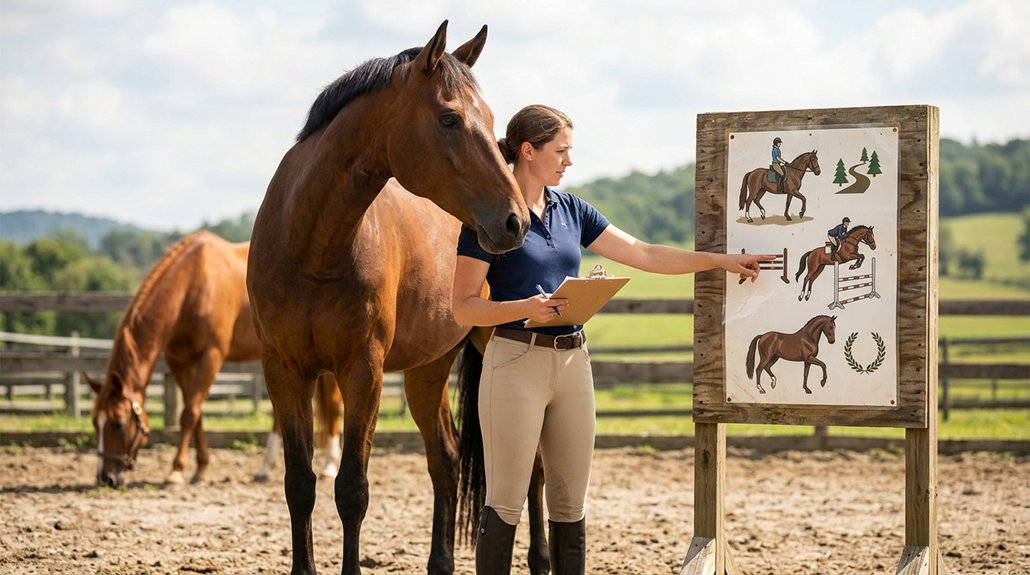
How do you precisely define your riding goals and assess your experience level for ideal horse breed selection? Begin by clearly delineating your competition preferences and analyzing leisure activities. Are you drawn to the thrill of jumping, like local show circuits, or perhaps the calm allure of hobby riding? A meticulous evaluation of riding disciplines—such as dressage or ranch work—serves as the foundation for breed suitability. Experienced riders might benefit from high-energy breeds like Thoroughbreds, yet novices may favor the steadiness of Morgans or Quarter Horses. Continual self-assessment of skill level is paramount; adaptability enhances decision-making. Be sure to also integrate your preferred riding style, such as Western or English, to align breed characteristics with your personal equestrian ambitions.
Choosing the Right Horse Breed for Your Riding Style
Selecting the ideal horse breed for your riding style involves analyzing specific breed characteristics that align with your objectives and practices. A concise breeds overview reveals that Thoroughbreds excel in speed and athleticism, making them premier choices for jumping and eventing disciplines. In contrast, the Arabian’s endurance is unmatched for trail riding. For Western riding disciplines, Quarter Horses are preferred for their calm demeanor and versatility, especially for neck reining. English riders may opt for Warmbloods or Thoroughbreds due to their elegance in dressage and jumping. Evaluating the training level is crucial; for instance, an Appaloosa is well-suited for beginners thanks to its skill set, while seasoned riders might demand a breed with higher energy. Understanding these breed traits guarantees a harmonious match.
Evaluating Temperament for a Comfortable Match
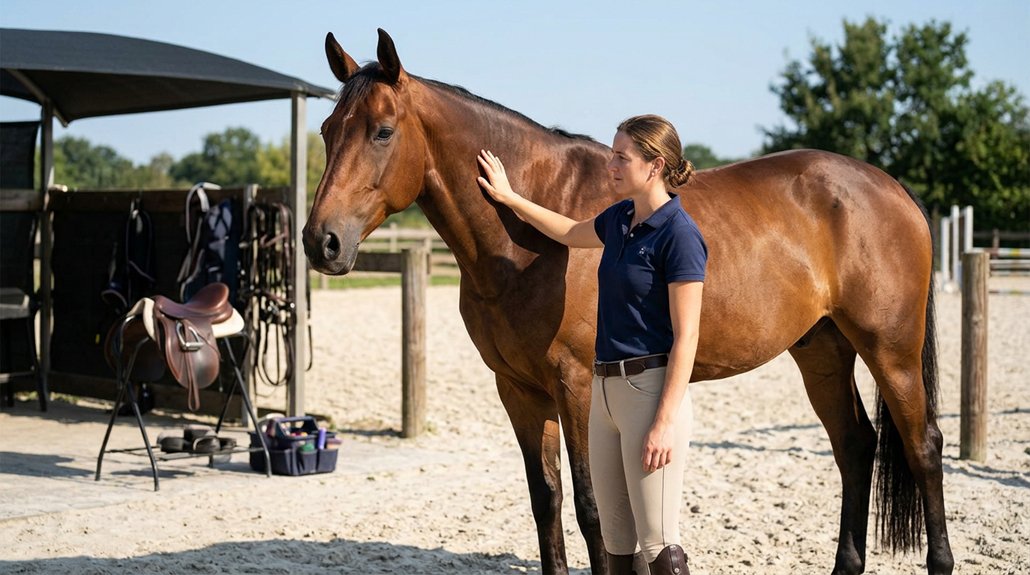
It could be contended that a horse’s temperament is as significant to the riding experience as its physical capabilities. In-depth temperament assessment allows you to ascertain a horse’s patience and adaptability, fundamental for rider compatibility. Calm and forgiving horses can manage beginner mistakes, vital for fostering confidence and security in riders of varying skill levels. Despite some breeds boasting generally calm dispositions, individual temperament variations necessitate evaluating each horse specifically. Ideal matches consider both the rider’s confidence and energy levels, promoting a balanced and harmonious interaction. Particularly in environments like ranches, where safety and ease are paramount, a proven gentle disposition mitigates risks. Ultimately, aligning a horse’s temperament with rider needs enriches the overall riding partnership’s productivity and satisfaction.
Practical Tips for Selecting a Horse Breed
One critical step in choosing the right horse breed involves aligning your riding goals with the breed’s inherent characteristics. Start by evaluating the breed characteristics that complement your intended activities. For dressage, the grace of Warmbloods shines, while Thoroughbreds’ leaping prowess suits jumping. Your experience level dictates selection too; novice riders should consider the placid nature of American Quarter Horses, whereas seasoned riders may opt for the spirited Arabians. Understanding maintenance needs is vital—Warmbloods demand meticulous care, contrasting with the easy upkeep of Welsh Ponies. Assess the personality traits of breeds; horses with sociable, enthusiastic temperaments guarantee a pleasant riding journey. Finally, factor in your lifestyle and environment, balancing demands with your capacity to provide appropriate care.
Getting Professional Help and Building Bonds
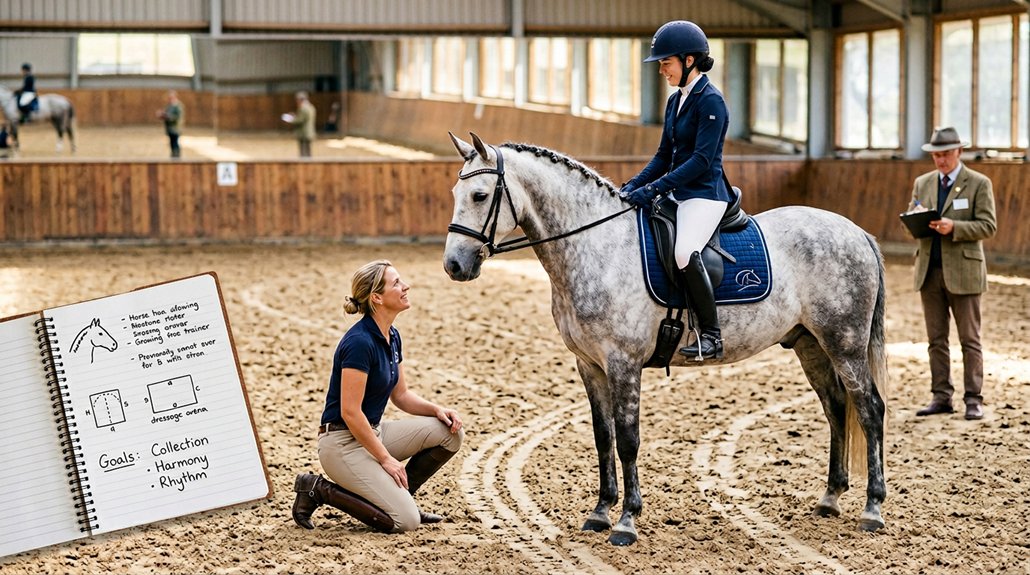
Aligning horse breed characteristics with your riding ambitions only forms the foundation for selecting the right equine partner. Trainer collaboration is indispensable, exposing nuances about a horse’s capabilities and aligning them with your skills. Professional insight helps in bridging the gap, putting emphasis on temperament compatibility with rider. It’s key to nurture an emotional connection, as the synergy between human and horse elevates training effectiveness. Prioritizing patience cultivates mutual respect and deepens bonds.
| Elements | Importance Level | Outcome |
|---|---|---|
| Trainer Collaboration | High | Enhanced assessment, alignment |
| Emotional Connection | Critical | Stronger partnership |
| Consistent Training | Crucial | Lasting respect, better performance |
Engage in diverse settings pre-selection to interpret personality traits, ensuring compatibility for your equestrian objectives.
Frequently Asked Questions
What Is the 1/2/3 Rule for Horses?
The 1/2/3 rule categorizes horses based on temperament and rider experience. Consider breeding and temperament when selecting horses: level 1 suits beginners, level 2 fits intermediates, and level 3 challenges advanced riders with specific care requirements.
What Is “I Love You” in Horse Language?
In equine communication, “I love you” is conveyed through body language, including nuzzling, soft eye contact, and relaxed ears. Your horse might also express affection by vocalizing or positioning its body close to you, demonstrating trust.
What Is the 20% Rule in Horseback Riding?
The 20% Rule advises devoting just 20% of your saddle time to skill sharpening, ensuring your riding experience isn’t all work and no play. Prioritize proper saddle fitting, optimizing comfort, and balance, while boosting your expertise.
How to Choose the Right Horse Breed?
Evaluate breed characteristics against your chosen riding disciplines. Analyze temperament and maintenance demand; from calm, beginner-friendly breeds to high-performing, expert-level horses. Match your lifestyle and climate conditions with the breed’s ideal environment for a satisfactory equestrian experience.
Conclusion
In summary, matching a horse breed to your riding ambitions, akin to finding the perfect vinyl record for your soul, requires technical understanding and astute analysis. Assess your riding goals, explore breed-specific characteristics, and prioritize temperament for a harmonious partnership. Leverage expert insights to refine your selection, and remember that professional guidance can enhance your journey. Ultimately, forming a bond with your equine partner is an invaluable process, enriching both horse and rider’s shared experience.