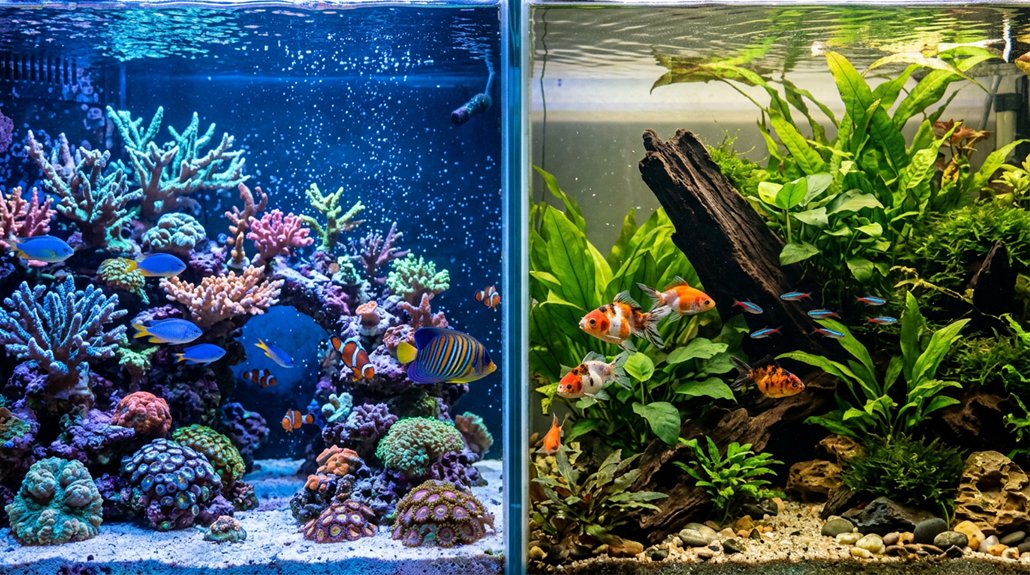
If you want the easier, cheaper, and more forgiving setup, freshwater is usually the better choice for you, especially if you’re new to aquariums. You can start smaller, use treated tap water, and rely on simpler filtration and weekly water changes to keep it stable. Saltwater tanks look amazing, but they need RO/DI water, marine salt, stronger equipment, salinity testing, and more maintenance. If you keep going, you’ll see which setup fits your budget and goals.
Key Takeaways
- Freshwater tanks are usually better for beginners because they cost less, need simpler equipment, and are easier to maintain.
- Saltwater tanks offer more colorful, diverse livestock but require larger setups, stricter water control, and more expensive equipment.
- Freshwater systems tolerate parameter swings better, making them more forgiving for new aquarists.
- Saltwater aquariums need RO/DI water, marine salt, salinity testing, strong lighting, and often protein skimmers.
- Choose freshwater for affordability and simplicity, or saltwater if you want reef fish and can handle higher maintenance.
Saltwater vs. Freshwater Tanks: What’s the Difference?
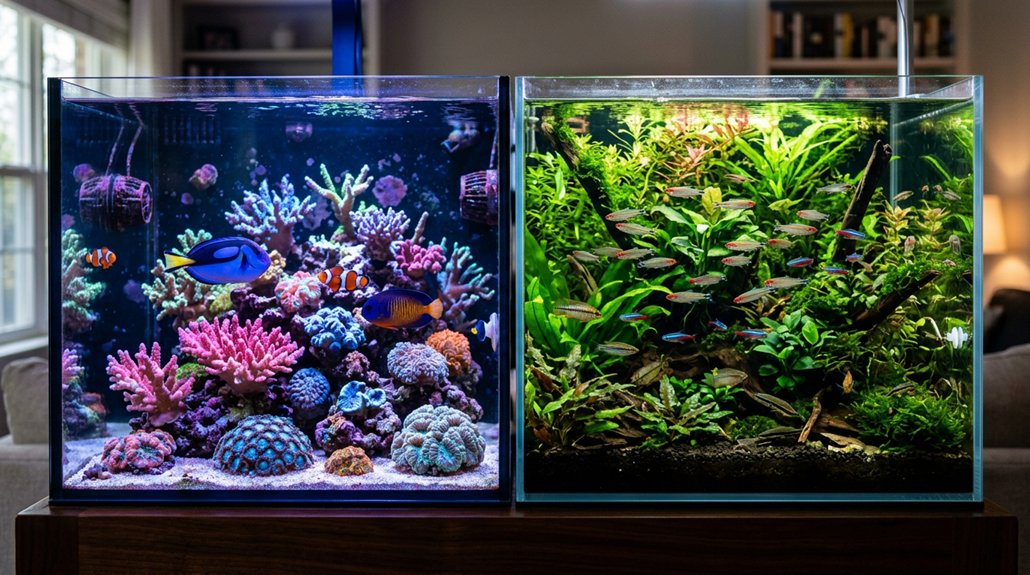
Saltwater and freshwater tanks differ in more than just the water they hold: saltwater systems usually need a larger footprint, often around 300 L or more for a stable setup, and they’re mixed with marine salt and RO/DI water to maintain a specific gravity near 1.020–1.025, while freshwater tanks can start much smaller and are often filled with treated tap water. In a marine setup, you’ll also rely on protein skimmers, stronger lighting, circulation pumps, and a refractometer or hydrometer to keep salinity accurate. You’ll monitor calcium, alkalinity, and magnesium for corals, and top off evaporated water with fresh water, not saltwater. This extra control supports marine biodiversity, but it also raises maintenance frequency compared with freshwater systems, which typically need simpler equipment and less chemistry management.
Why Freshwater Tanks Cost Less and Stay Easier
For most beginners, freshwater tanks are the more affordable and manageable option because the core equipment is straightforward and widely available: a standard glass tank, a basic filter, a heater if needed, and common livestock like tetras or guppies usually cost far less than marine gear and reef animals. You’ll also spend less on routine operation, since you typically won’t need RO/DI water, marine salt mixes, protein skimmers, or constant dosing of calcium, alkalinity, and magnesium. That means lower maintenance and fewer correction cycles. Freshwater fish also tolerate wider parameter swings, so weekly 10–25% water changes and basic filter care often keep the system stable. Even planted tanks can stay relatively economical, despite added lighting or CO2, and larger tanks are more forgiving, reducing troubleshooting time.
What a Saltwater Tank Needs to Run
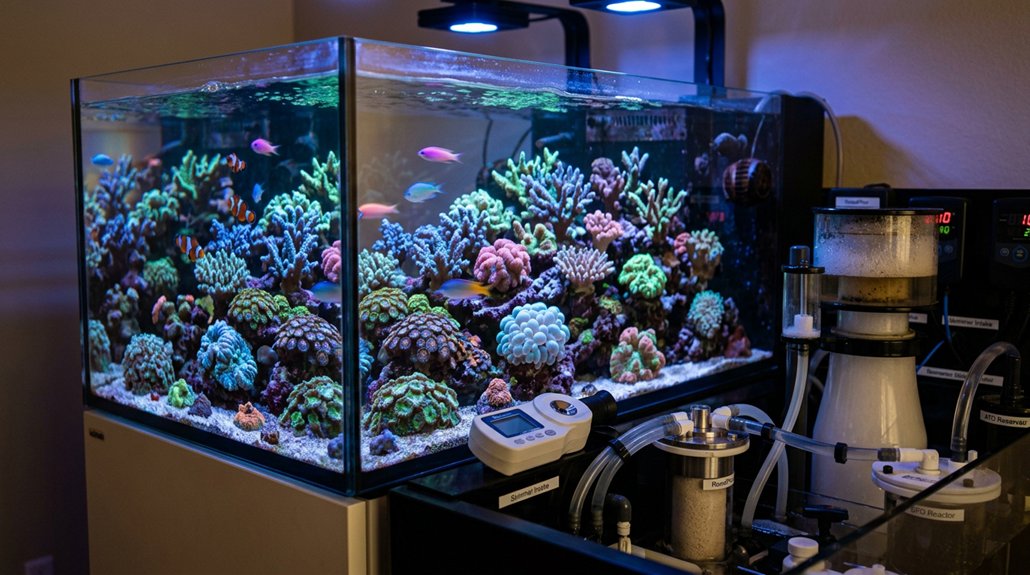
To keep a saltwater tank stable, you’ll need to start with purified RO/DI water mixed with marine salt to the correct specific gravity, usually around 1.025 for reef systems or 1.020–1.025 for fish-only setups, and verify it with a refractometer or hydrometer. You’ll also need a protein skimmer to strip dissolved organics, plus circulation pumps or powerheads that keep oxygen and nutrients moving. A reliable heater, or chiller if your room runs warm, helps you hold tropical temperatures steady. Live rock forms a live rock ecosystem that filters biologically, hosts microfauna, and supports the nitrogen cycle. If you keep corals or anemones, you’ll need spectrum-appropriate lighting and calcium, alkalinity, and magnesium dosing. Expect regular testing, top-offs, and 10–20% water changes with pre-mixed saltwater.
How to Choose the Right Tank for Your Budget and Skill Level
Once you’ve seen what a saltwater tank needs to run, the next step is matching the setup to your budget and experience level. If you’re cost-conscious, a freshwater aquarium is usually the smarter entry point: basic heater, filter, and weekly 10–25% water changes keep expenses low. For beginners, a community or planted tank builds cycling and maintenance skills without the overhead of marine equipment. Saltwater becomes practical when you’re ready for regular testing, dosing, and higher consumable costs for salt mix, RO/DI water, and skimmers. Evaluate community compatibility in freshwater, or fish-only marine stability first. Consider long term scalability too: automation, travel tolerance, and future reef goals can justify higher upfront investment, but only if your current budget and routine can support it.
What Tank Size and Setup Should You Start With?
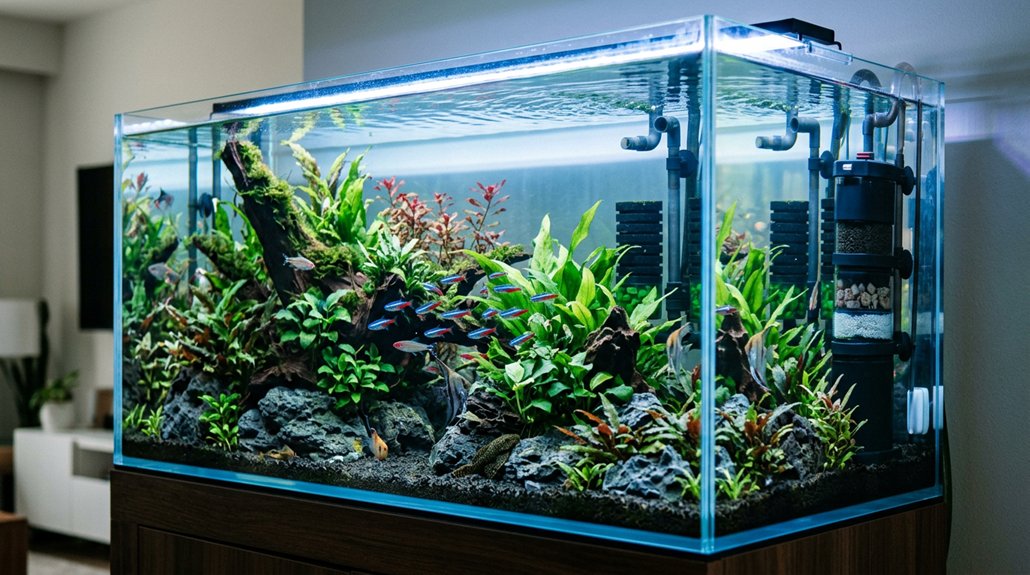
A sensible starter tank is usually bigger than beginners expect, because extra water volume makes the system more stable; for freshwater, aim for at least 40 litres (10 gallons), with 75–150 litres (20–40 gallons) being far more forgiving for cycling, stocking, and parameter swings. For saltwater, you should start at 114 litres (30 gallons) or more, and larger reef systems are easier to manage. Choose aquarium placement away from direct sun and vibration, then match equipment to the species: filter, heater, test kit, and suitable lighting choices for freshwater; skimmer, refractometer, RO/DI water, and marine salt for saltwater. Plan your maintenance schedule before buying fish. Use a fishless cycle, add cleanup crew first, then stock slowly. Your plant selection and substrate should fit the biotope: nutrient soil for planted freshwater, aragonite for marine.
Frequently Asked Questions
Is It Better to Have a Freshwater or Saltwater Tank?
You’ll usually do better with a freshwater tank: it’s cheaper, more forgiving, and easier to maintain. Saltwater’s better only if you’re ready for tighter species compatibility, precise habitat simulation, and higher equipment costs.
What Type of Aquarium Is Easiest to Maintain?
Freshwater aquariums are generally easiest to maintain for you; with beginner setups, you’ll need fewer specialized gear and simpler weekly changes. Choose low maintenance species, keep tanks larger, and you’ll buffer swings more effectively.
Do Salt Water Tanks Need to Be Cleaned?
Yes, you’ll need a cleaning schedule for saltwater tanks: skim, scrape algae, and do substrate vacuuming regularly. You’ll also change water, test salinity, and service filters to control waste, organics, and nutrient buildup.
What Is the Best Type of Water to Use in a Fish Tank?
For your tank, you’d use conditioned, dechlorinated water matched to species needs; for example, a guppy tank can use treated tap water, while sensitive fish need RO/DI. This supports fish health and plant compatibility.
Conclusion
Ultimately, you’ll find that the “better” tank depends on your budget, skill, and patience. Freshwater setups are cheaper, simpler, and far less likely to ambush you with expensive surprises. Saltwater tanks, by contrast, are wildly more demanding, requiring precise salinity, stronger filtration, and constant monitoring. If you’re just starting out, a modest freshwater tank is the smartest move. If you’re ready for a high-maintenance, high-reward challenge, saltwater can be spectacular.