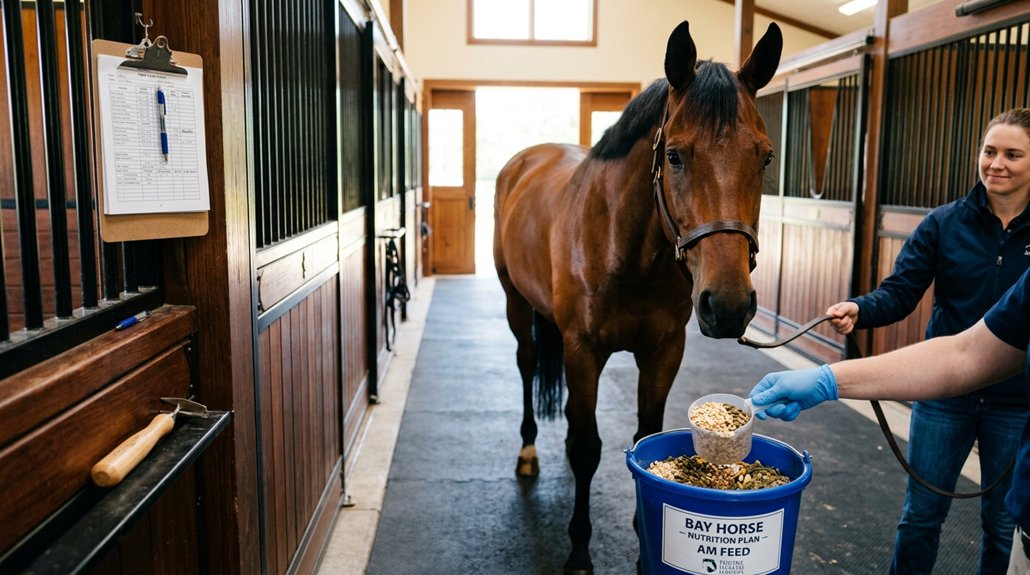
To guarantee your horse’s health, provide 1.5-2% of their body weight in forage daily, choosing types like alfalfa or grass hay for balanced nutrients. Maintain a 2:1 calcium to phosphorus ratio and include 8% protein from high-quality sources for muscle health. Carbohydrates and fats are essential energy sources. Regularly check forage quality, avoiding mold and debris. Pay attention to vitamins and minerals for overall well-being. Discover more about customizing their diet for peak performance.
Key Takeaways
- Horses need 1.5-2% of their body weight in forages daily for optimal fiber and nutrient balance.
- The ideal calcium to phosphorus ratio for horses is 2:1 to support bone health and metabolic functions.
- Carbohydrates and fats are crucial energy sources; balancing these prevents obesity and related health issues.
- High-quality protein from sources like soybean meal supports muscle development and immune function.
- Regularly assess forage quality for nutritional content, ensuring it is free from mold and debris.
How to Meet Your Horse’s Basic Nutrient Needs
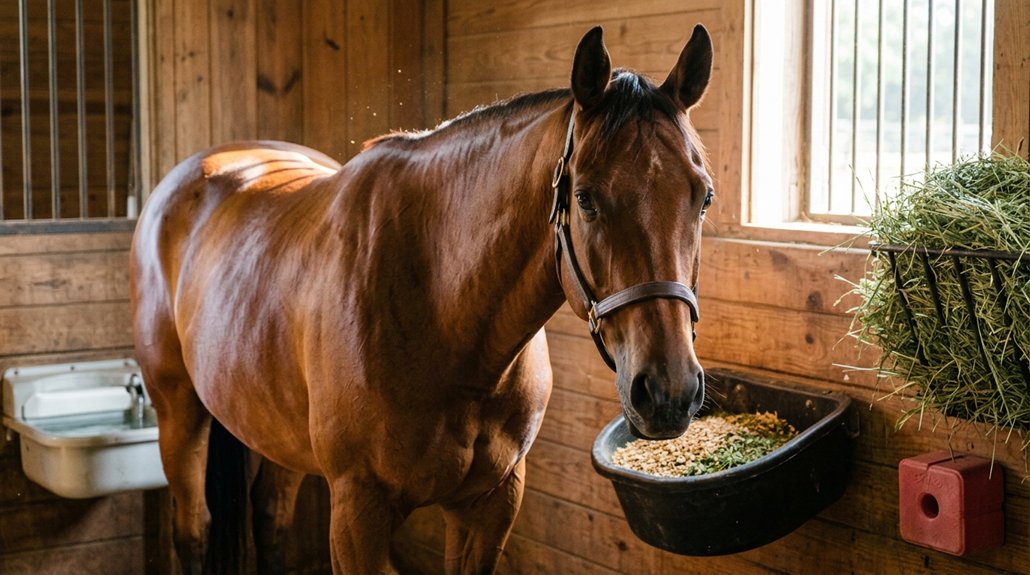
Meeting a horse’s basic nutrient needs is vital for maintaining its health and vigor. You’ll need to provide at least 1.5-2% of their body weight in forages daily, indispensable for fiber and nutrient balance. Different forage types like alfalfa, grass hay, and legumes offer variable nutrient profiles, so it’s essential to select appropriately. For muscle development, the diet should include at least 8% protein from high-quality sources like soybean meal. Don’t overlook the importance of balancing the calcium to phosphorus ratio at an ideal 2:1, critical for bone health and metabolic functions. Regularly monitor and test forage to ascertain its nutritional value and check for mold or debris, making sure it meets your horse’s fundamental dietary needs.
Keeping Your Horse Hydrated: Why Water Matters
Ensuring your horse has access to clean, fresh water is fundamental since they require 5 to 15 gallons daily for ideal health. Proper hydration facilitates digestion, nutrient absorption, and temperature regulation, all vital for maintaining energy levels and preventing colic. Be vigilant in monitoring water intake as even mild dehydration can lead to decreased feed consumption, lethargy, and other health complications.
Importance of Clean Water
While often overlooked, the role of clean and fresh water is essential in sustaining your horse’s health and overall performance. Ensuring consistent water access directly supports important metabolic processes. Horses need 5 to 15 gallons of water daily for ideal hydration, which is critical for digestion and nutrient absorption. Recognizing hydration signs, such as a dull coat or lethargy, helps you gauge if your horse is adequately hydrated.
Inadequate water intake can lead to decreased feed consumption and lowered activity levels, compromising the horse’s functioning. Additionally, water regulates body temperature, significant during exercise or hot weather, helping to prevent heat stress. You must always provide access to uncontaminated water, as this forms the foundation of thorough horse care.
Hydration Impacts Horse Health
A horse’s hydration level is a cornerstone of its overall health and performance, with daily water needs ranging from 5 to 15 gallons depending on factors like activity, climate, and diet. Adequate hydration is essential for digestion and nutrient absorption and helps prevent dehydration symptoms such as dry gums and lethargy. It’s important to implement hydration strategies to promote your horse’s well-being. Water also plays a key role in thermoregulation, particularly during exercise or in hot weather, preventing heat stress.
| Importance | Dehydration Symptoms | Hydration Strategies |
|---|---|---|
| Essential for health | Dry gums | Constant water access |
| Supports digestion | Lethargy | Clean water supply |
| Temperature control | Reduced feed intake | Monitor activity level |
Ensure your horse always has access to clean, fresh water to maintain optimum health.
Carbohydrates and Fats: Powering Your Horse’s Energy
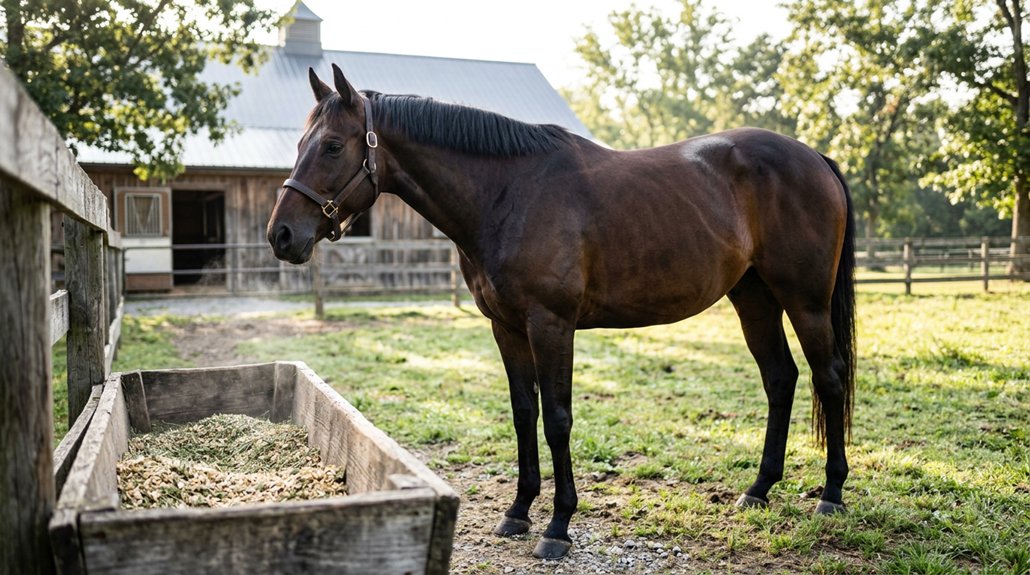
Understanding your horse’s energy needs requires a focus on both carbohydrates and fats, as these macronutrients play vital roles in energy provision. Carbohydrates, whether soluble or insoluble, supply glucose and volatile fatty acids, supporting different energy demands, while fats, contributing 2 to 6% of the total diet, can be increased to meet heightened energy requirements, particularly in performance horses. Carefully balancing these nutrients is essential to avoid health issues like obesity and laminitis, ensuring ideal digestion and overall well-being.
Energy Sources Explained
Given the significant role of energy in a horse’s performance and overall health, it is important to understand the primary energy sources: carbohydrates and fats. These nutrients play crucial roles in energy balance and nutrient absorption, ensuring your horse performs at its best.
- Carbohydrates: They’re the primary energy source. Soluble carbohydrates supply glucose for immediate energy, while insoluble carbohydrates are fermented into volatile fatty acids, fundamental in energy metabolism.
- Fats: Incorporating dietary fats increases energy density. While standard fat intake is 2 to 6%, horses can adapt to diets with up to 20% after several weeks.
- Energy Intake: Balanced energy intake prevents obesity, colic, and laminitis.
- Monitoring: Essential for horses with high energy demands—exercise, growth, lactation.
Balancing Carbohydrates and Fats
While energy is essential for a horse’s health and performance, balancing carbohydrates and fats in their diet is key for peak energy management. Carbohydrate sources provide the primary fuel, with soluble carbohydrates yielding glucose and insoluble carbohydrates fermenting to provide volatile fatty acids, which are important for maintaining energy levels. Fat supplementation should be approached carefully, as horses can adapt to diets with up to 20% fat but require a gradual shift over 3 to 4 weeks. Monitoring carbohydrate and fat ratios is important, as excess fat might lead to obesity and associated health issues like colic and laminitis. Ideally, total dietary fat content should range from 2 to 6% to meet energy needs while considering the horse’s activity level.
Digestive Considerations
When managing your horse’s energy through carbohydrates and fats, it’s important to take into account the digestive system’s unique functions and needs. Key considerations include:
- Digestive Health: Horses rely on a complex gut flora to assist in the fermentation process, which breaks down insoluble carbohydrates into volatile fatty acids.
- Fiber Importance: At least 50% of the diet should come from forage types to aid nutrient absorption and guarantee proper grain digestion.
- Feeding Frequency: Due to their small stomach capacity, horses are best fed several small meals throughout the day to maintain consistent enzyme activity.
- Fat Integration: Although horses can adapt to a diet with up to 20% fat, it should be introduced gradually to prevent disruption of digestive equilibrium.
Protein Sources for Building Strong Muscles
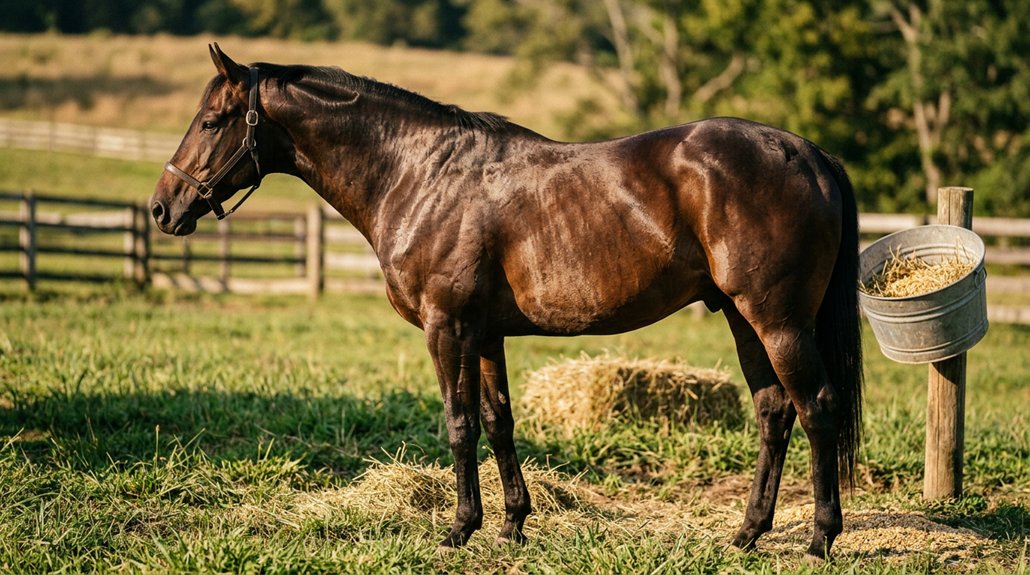
Understanding the importance of protein sources is vital for building strong muscles in horses. You’ll find soybean benefits in its high crude protein content, up to 44%, which supports recovery and performance. Consider alfalfa advantages, too; it’s not only rich in protein but also boasts superior calcium levels, essential for muscle function. While legumes like clover provide excellent protein, exercise legume precautions as excessive intake can pose health risks. Focusing on amino acid profiles in these feeds guarantees your equine companion receives all necessary nutrients. Maintaining protein balance between 8-18% depends on age and growth stage, thereby supporting muscle growth, immune function, and overall athletic performance. Proper supplementation enhances development and speeds up muscle recovery.
Ensuring Your Horse Gets Enough Vitamins and Minerals
Ensuring your horse gets enough vitamins and minerals is crucial for maintaining ideal health and performance. Proper vitamin sources and mineral balance influence equine metabolism considerably. Young horses in their growth stages require extra attention to their calcium, phosphorus, copper, and zinc intake. Consider these key strategies:
- Conduct regular forage analysis to detect nutrient deficiencies in hay, as soil content directly impacts mineral levels.
- Assess supplementation needs, especially for water-soluble vitamins in high-grain diets or during stress, affecting overall metabolic functions.
- Maintain the calcium to phosphorus ratio of 2:1 to promote bone health and support metabolic processes.
- Supplement essential minerals lost through sweating, such as sodium, potassium, and chloride, crucial for working horses under physical stress.
Forage: The Backbone of Your Horse’s Diet
After securing your horse’s intake of vitamins and minerals, it’s important to reflect on the essential role that forage plays in equine nutrition. Forage should form at least 50% of your horse’s daily diet, equal to 1.5-2% of their body weight—roughly 15 pounds for a 1,000-pound horse. You need to take into account the forage types available: Alfalfa offers higher protein and calories but must be limited, while grass hays are generally suitable for free access. Verify hay quality via regular testing; look for low moisture (12-18%), a vibrant green color, and a soft, leafy texture. Seasonal changes can alter grazing patterns by increasing sugar in pastures, affecting horses with metabolic sensitivities. Choose forage wisely to maintain peak health.
How and When to Use Grains and Concentrates
Integrating grains and concentrates into your horse’s diet requires a thoughtful approach to balance energy needs while preventing digestive issues. Here’s what you should know:
- Grain Types: Choose wisely—oats provide high fiber with lower energy, whereas corn offers more digestible energy but can raise obesity risks if not controlled.
- Feeding Frequency: Serve concentrates in multiple smaller meals for ideal digestive health, considering horses’ small stomach capacity.
- Gradual Introduction: Start with small amounts of grains to prevent colic; horses require adjustments for energy balance.
- Nutrient Assessment: Regularly evaluate grain content, adjusting portions according to your horse’s activity level, age, and health requirements to prevent imbalances.
Checking If Your Hay Is Nutritious Enough
When evaluating hay quality for your horse, look for several key attributes that indicate high nutritional value. First, hay color should be green, suggesting robust nutrient content. The hay texture needs to be soft and leafy, ensuring it was harvested at the ideal time—early bloom for legumes and pre-seed head for grasses. Check hay aroma; it should be pleasant and fresh. For hay moisture, inspect several bales for dryness to confirm they’re free of mold or debris, which could cause respiratory diseases. Regular hay inspection and analysis are advised to determine specific protein, fiber, and mineral levels, guiding your purchase. Limit purchases to what can be consumed within a year to avoid spoilage and maintain the nutritional integrity of your horse’s feed.
How to Customize Your Horse’s Diet
To effectively customize your horse’s diet, consider its specific needs based on size, weight, and activity level. Guarantee an intake of 1.5-2% of its body weight in forage daily. For a 1,000-pound horse, that’s 15-20 pounds of hay. Here are key steps:
Ensure your horse consumes 1.5-2% of its body weight in forage daily, tailored to its specific needs.
- Monitor energy needs: Adjust carbohydrates and fats considering exercise, growth, and lactation. Avoid obesity through careful dietary adjustments.
- Evaluate forage quality: Choose high-protein legumes like alfalfa for active or growing horses, and balance with grass for lower-energy requirements.
- Nutrient balance: Regularly assess the nutritional content of hay and forages. Supplement with vitamins and minerals if deficiencies are identified.
- Introduce changes gradually: Prevent digestive upset by slowly implementing any dietary shifts and maintaining a consistent feeding schedule.
Frequently Asked Questions
How Do I Transition My Horse to a New Diet Safely?
To safely shift your horse to a new diet, gradually change fiber sources, meal timing, and feeding routine over 7-10 days. Introduce dietary supplements slowly, supporting weight management. Monitor closely for any digestive issues or behavioral changes.
What Are the Signs of Overfeeding or Underfeeding a Horse?
You’ll notice weight management issues when a horse’s body condition changes drastically. With improper feeding frequency or nutrient balance, common misconceptions can lead to overfeeding or underfeeding, causing potential health problems like colic or poor coat quality.
How Do Weather Changes Affect a Horse’s Dietary Needs?
Weather’s dance impacts your horse’s dietary needs. Seasonal adjustments can sway forage availability, nutrient fluctuation, and hydration needs, consequently requiring vigilant weight management to guarantee their diet harmonizes with nature’s ever-changing rhythm. Stay observant and adapt.
Are There Specific Diets for Different Horse Breeds?
Yes, different horse breeds have unique dietary requirements due to their size, metabolism, and activity level. You should implement customized feeding plans, considering specific nutritional needs, to guarantee ideal health and performance for each individual horse.
How Can Diet Impact a Horse’s Behavior and Temperament?
Just like a finely tuned instrument impacts music, a horse’s diet affects behavior and temperament. Dietary deficiencies and feed quality influence nutrient balance, digestive health, and feeding schedule, potentially triggering behavioral changes when deficiencies alter their mood.
Conclusion
In managing your horse’s nutrition, it’s essential to remember that a horse typically consumes 1.5-2.5% of its body weight in forage daily. This highlights the critical role of roughage in a balanced diet. Each nutrient category you’ve explored—from water and carbohydrates to proteins and minerals—has its unique role in supporting overall health. By customizing their diet, you’re not just feeding a horse; you’re optimizing performance and wellbeing, rooted in scientifically-backed nutrition principles.