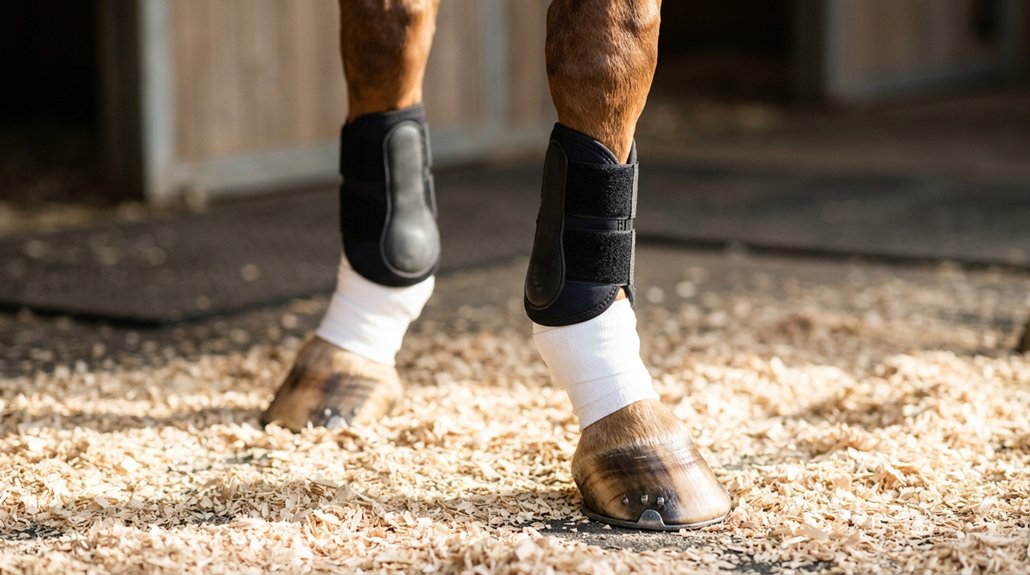
Preventing lameness in horses involves meticulous daily hoof and leg care, including regular hoof inspections and debris removal. Assess the breed’s suitability and conformation for specific disciplines to minimize injury risk. Guarantee proper tack fit and monitor for signs of discomfort. Maintain safe arena and stall conditions with cushioned surfaces. Implement effective warm-up and cool-down routines, and use protective leg gear during activities. Collaborate with a health team for extensive care. Discover additional insights on optimizing equine health.
Key Takeaways
- Conduct regular hoof inspections and farrier trims to maintain hoof health and support soundness.
- Ensure proper leg protection and bandaging during activities to reduce injury risk.
- Evaluate and adjust tack fit regularly to prevent discomfort and lameness.
- Maintain cushioned and even surfaces in arenas and stalls to minimize injury risk.
- Establish consistent veterinary check-ups for early detection of potential lameness issues.
Daily Hoof Care: The Foundation of Soundness
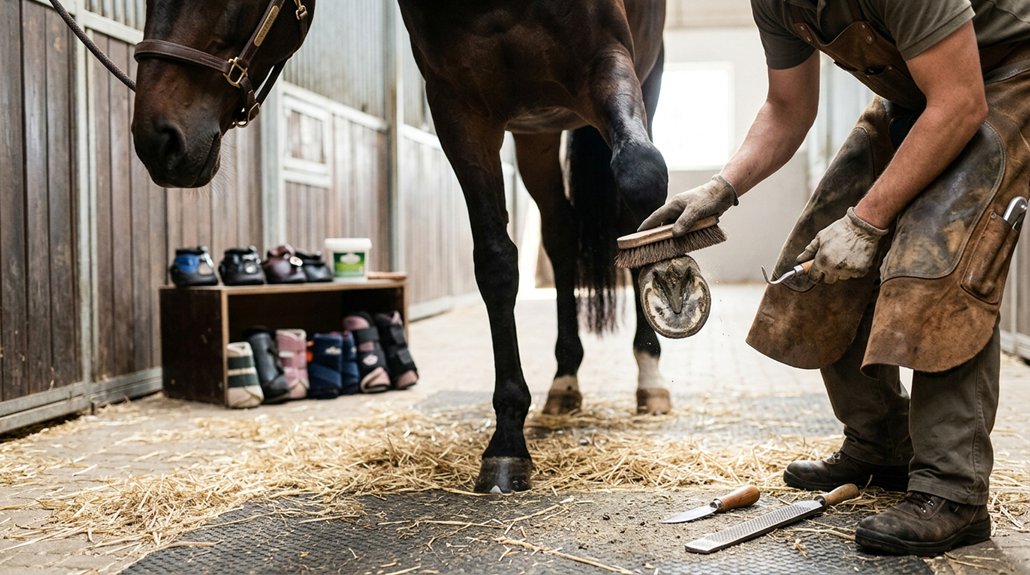
While lameness in horses can stem from various factors, daily hoof care stands as a fundamental defense mechanism against such issues. Begin with a thorough hoof inspection, checking for any signs of cracks or infections. These early indicators, if addressed promptly, can prevent severe problems and guarantee long-term soundness. Debris removal is vital—pick out the hooves daily to eliminate stones and dirt that might cause pressure or abrasions. Regularly inspect horseshoes for wear or damage, as they can hint at underlying hoof issues. Schedule farrier trims every six to eight weeks to maintain ideal hoof angles. This routine reduces the risk of strain and injury, ensuring healthy hooves that contribute to your horse’s overall well-being and mobility.
Breed and Conformation: Matching Horse to Discipline
When evaluating a horse’s suitability for a specific discipline, it’s important to take into account both breed characteristics and conformation, as mismatches can increase the risk of lameness. Different breeds possess distinct physical attributes that can either support or undermine performance in various sports, so aligning these traits to the demands of the discipline is vital. Horses with appropriate structural attributes—such as sturdy legs and a strong build—are less prone to injuries, making this evaluation a key preventative measure against lameness.
Evaluating Horse Suitability
How do you guarantee peak performance and longevity in your horse while minimizing the risk of lameness? Start with a thorough conformation assessment to verify your horse’s structure aligns with your chosen discipline. Athletic suitability plays an essential role; match your horse’s natural strengths, such as agility or stamina, to the sport’s demands. Include movement analysis to identify any potential biomechanical issues, focusing on strong, sturdy legs critical for supporting the horse’s weight. Breeding considerations are significant as well; select breeds with proven success in the desired discipline while avoiding known predispositions to lameness, such as certain Quarter Horses. This strategic evaluation minimizes stress on joints and ligaments, ultimately supporting your horse’s long-term soundness and performance excellence.
Aligning Breed Characteristics
Achieving ideal performance and minimizing lameness in horses involves carefully aligning breed characteristics with the demands of specific equestrian disciplines. Breed selection is essential, as certain breeds possess inherent traits that suit them for particular activities, such as Thoroughbreds excelling in racing. Conformation assessment plays a significant role in this process. Evaluating a horse’s leg structure and overall balance is vital, as these factors directly influence movement and structural integrity. A mare or stallion that’s poorly conformed can develop conditions like osteoarthritis, increasing the risk of lameness. When you misalign a horse’s physical attributes with a discipline, overuse injuries become a concern. Prioritizing well-bred horses that meet conformation standards guarantees long-term health and effectiveness in their equestrian pursuits.
Ensuring Proper Tack Fit for Comfort and Safety
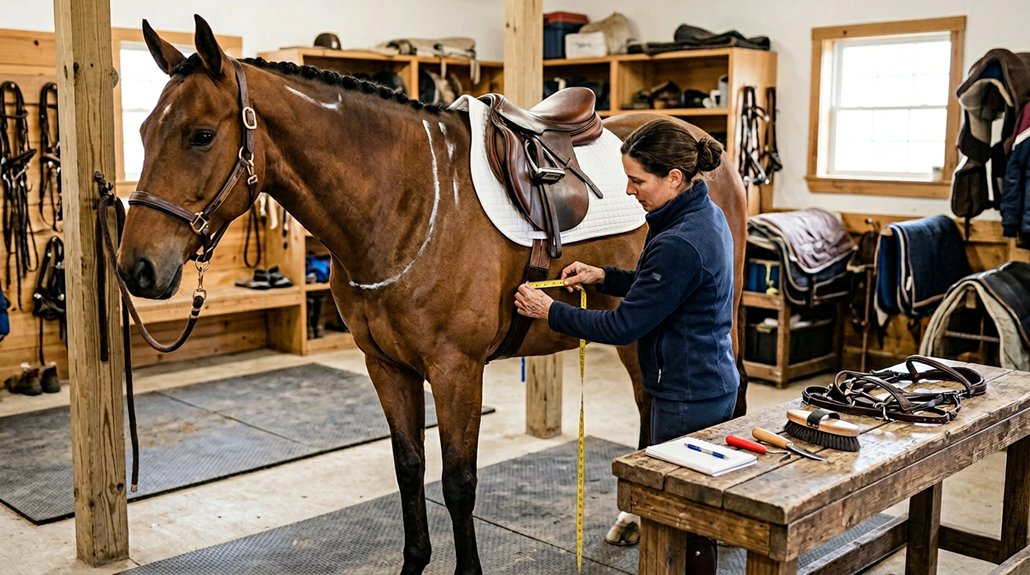
To guarantee your horse’s comfort and prevent lameness, it’s crucial to regularly assess the saddle for proper fit. This involves checking for pressure spots and guaranteeing the saddle allows even weight distribution, as changes in your horse’s body can result in an improper fit over time. Collaborate with experienced trainers or saddle fitters to make necessary adjustments, and keep an eye out for behavioral cues that might indicate discomfort and potential lameness risks.
Saddle Assessment Techniques
While evaluating saddle fit, you should guarantee even pressure distribution along the horse’s back to prevent pinching or rubbing, which can lead to discomfort or injury. Effective saddle fitting involves examining whether the saddle remains stable during rides. A saddle shifting forward or backward indicates a fit problem. Utilize a saddle pad or shims to tweak fit and adapt to the horse’s shape or muscle changes. Consulting with experienced trainers or professional saddle fitters can provide insights tailored to your horse’s specific conformation and riding discipline. Recording observations, including changes in behavior or saddle positioning, can help identify issues early. Detailed records support diagnostics, ensuring you catch pressure-related problems before they cause lameness. Always use diagnostic approaches for precise fitting.
Importance of Regular Adjustments
Frequent adjustments to tack, including saddles and bridles, are fundamental in maintaining a horse’s comfort and safety while minimizing the risk of lameness. Proper saddle maintenance guarantees ideal pressure distribution, essential for avoiding pressure sores. Here’s why regular adjustments are important:
- Prevent Discomfort: Ill-fitting tack can create painful pressure points, leading to sores and lameness over time.
- Enhance Performance: Proper tack fit allows for better range of motion and energy efficiency, directly affecting performance.
- Adaptability: Horses’ bodies change due to factors like training and weight fluctuations, necessitating periodic adjustments to their equipment.
- Professional Insight: Consulting trainers and saddle fitting professionals can provide significant insights for addressing fitting issues, safeguarding your horse’s well-being.
Prioritize these adjustments to guarantee your horse remains healthy and sound.
Arena and Stall Management for Injury-Free Environments
Considering the integral role of substrates in preventing equine lameness, it’s essential to implement effective arena and stall management strategies. Start by ensuring the arena surface is cushioned and even, reducing risk of injuries during training. Regular maintenance preserves these ideal conditions. Implementing appropriate stall bedding, like rubber mats over concrete or deep straw, provides necessary joint cushioning and comfort. This reduces strain on joints and hooves, promoting overall hoof health. Monitor ground conditions during turnout, as wet surfaces heighten injury risk through slips. Regularly assess and adjust both arena and stall layouts to optimize safety and comfort, supporting safer movement patterns. These approaches collectively minimize the chance of lameness, ensuring horses benefit from injury-free environments.
Effective Warm-Up and Cool Down Practices
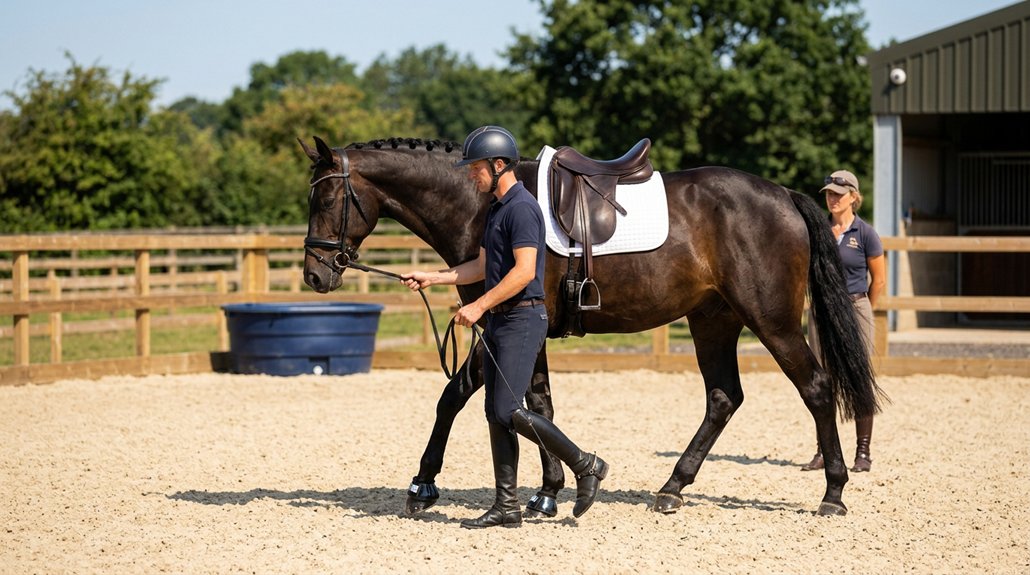
Because warming up and cooling down are pivotal components in preventing equine lameness, understanding their physiological benefits is essential. A precise warm-up begins with a gentle 10-15 minute walk, promoting dynamic stretching as blood flow enhances muscle flexibility. Gradual changes between gaits—walking, trotting, cantering—are critical in preparing joints and muscles for intense activity. Conversely, cooling down requires a reversed 10-minute routine, ending with a slow walk to regulate heart rate and avert stiffness. Here’s what you should focus on:
- Dynamic Stretching: Encourage gradual muscle engagement.
- Gradual Changes: Adapt the horse to increased activity smoothly.
- Monitor Behavior: Assess readiness and recovery capability.
- Consistency: Regular routines reduce injury risk.
Carefully implement these techniques for best equine health.
Utilizing Leg Protection During Activities
While effective warm-up and cool down practices lay the groundwork for equine joint and muscle health, the strategic use of leg protection during activities further safeguards your horse from potential lameness. Bandage techniques for snug wraps prevent slipping, reducing the risk of injury. Protective materials like polos or splint boots guard against blows during training and competition, while shipping boots protect during trailering. Consider these options for different activities:
“`markdown
| Activity Type | Recommended Leg Protection |
|---|---|
| Trailering | Shipping Boots/Wraps |
| Training & Competition | Polos/Splint Boots |
| Turnout | Protective Wraps |
| Active Play | Environmental Protection Materials |
“`
Consult with trainers to determine which protective gear suits your horse’s needs best, factoring in activity-specific risks. Proper leg protection is pivotal in maintaining your horse’s robust health and preventing debilitating lameness.
Work With Your Horse’s Health Team
A well-coordinated health team is essential for the effective prevention of lameness in horses. Consistent communication strategies among veterinarians, farriers, and trainers guarantee that proactive measures are taken. Collaborative care enables regular veterinary check-ups, farrier assessments, and tailored treatment plans. Here’s how you can build such a team:
- Schedule routine veterinary visits to detect early signs of lameness and manage them effectively.
- Integrate farrier assessments into your care routine to maintain ideal hoof health and reduce lameness risk.
- Cultivate open communication among team members to share observations on your horse’s behavior and performance changes.
- Develop customized care plans with the team to address your horse’s specific needs, avoiding generic, ineffective approaches.
Frequently Asked Questions
How Do You Prevent Lameness in Horses?
You prevent lameness by ensuring hoof care and proper shoe fitting, maintaining exercise routines, and managing terrain. Regular check-ups identify issues early, while nutrition balance supports joint health. These strategies work collectively to minimize lameness risks effectively.
What Is the 1/2/3 Rule in Horses?
The 1/2/3 Rule is like a dance with rhythm—one day off balances two days of hard work. It helps curb lameness causes through structured exercise, with hoof care essential in maintaining soundness and health.
What Should You Not Say to a Farrier?
Don’t undermine the farrier’s expertise by saying you don’t need a trim or reference online research. Prioritize health over looks and understand customization is required. Respect their skill; good communication and farrier etiquette foster effective care.
Can Horses Stop Being Lame?
Yes, horses can stop being lame. Using rehabilitation strategies tailored to specific lameness causes, including anti-inflammatories, joint injections, and exercise regimens, along with early detection and veterinary intervention, greatly improves recovery chances and prevents recurrence.
Conclusion
To safeguard your horse’s health, remember this: 60% of lameness cases are traceable to hoof-related issues—underscoring the critical importance of daily hoof care. Ensuring proper tack fit, optimizing arena conditions, and implementing effective warm-up and cool-down routines are essential preventive strategies. Don’t overlook leg protection during activities and always collaborate with your horse’s health team for thorough care. Your proactive approach can make a significant difference in preventing lameness and ensuring your horse’s longevity and performance.