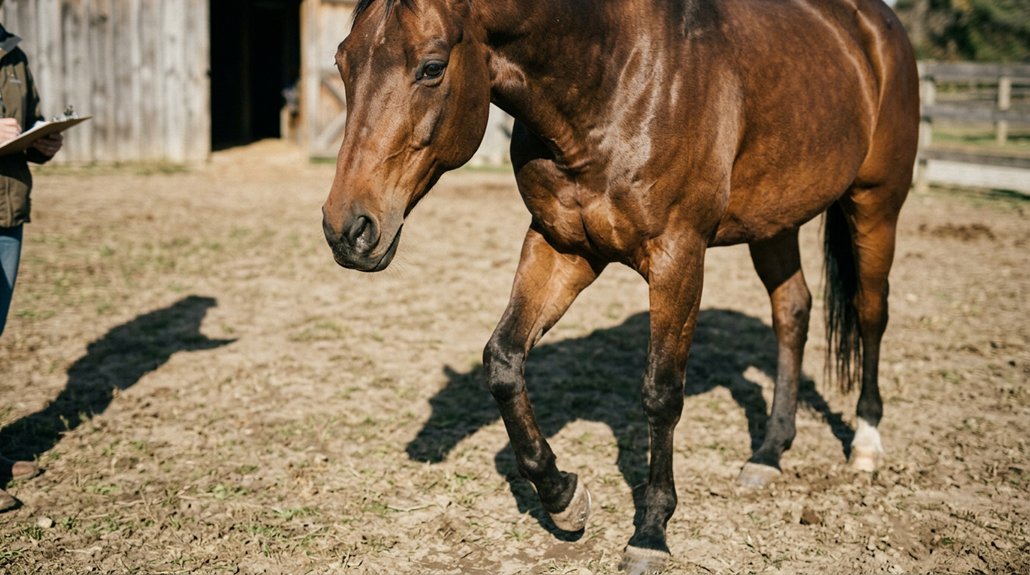
If your horse is limping, it may be due to conditions like hoof abscesses, injuries, laminitis, or osteoarthritis. Look for signs such as changes in stride, reluctance to move, or uneven gait patterns. Early detection is key—regular monitoring helps spot subtle lameness originating from hooves or joints. Prompt diagnosis via gait analysis, hoof exams, or imaging can guide effective treatment. Pay attention to these signs and discover more about early intervention techniques and preventive care.
Key Takeaways
- Hoof abscesses can cause severe pain, leading to non-weight-bearing behavior and limping.
- Gait asymmetry and head bobbing are indicators of possible lameness and require attention.
- Laminitis can cause a horse to shift weight to the heels, showcasing a laminitic stance.
- Osteoarthritis causes chronic pain and should be addressed if limping is persistent.
- Immediate concern is warranted if changes in stride length or movement resistance are observed.
Spotting Early Lameness in Horses
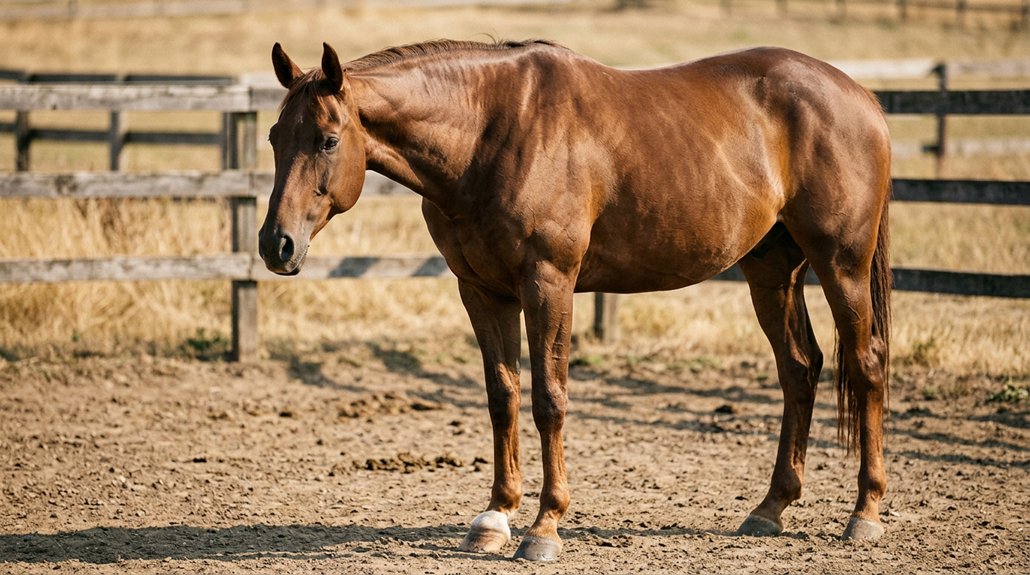
How can you discern the early signs of lameness in your horse before they become apparent? Begin by paying close attention to subtle signs and behavioral changes. A minor alteration in stride length or an unwillingness to move may indicate underlying discomfort. Bilateral lameness can present as an evenly abnormal movement pattern, reflecting pain in both limbs, complicating early detection. Observing resistance during changes or difficulties with lead changes provides valuable insight into possible pain sources. Regular monitoring on different surfaces is critical, as certain lameness symptoms may emerge only under specific conditions. Utilize video recordings to track and compare changes in your horse’s gait over time, facilitating early identification of subtle forms of lameness for prompt intervention.
Top Causes of Horse Limping
Although limping in horses can manifest in various ways, identifying the root cause is essential for effective treatment. Hoof abscesses, a primary cause, often induce severe pain, resulting in non-weight-bearing on the affected limb. Prompt veterinary care is vital. Injuries—such as sprains, fractures, or tendon damage—frequently cause noticeable limping, heat, and swelling. These should be seen as primary lameness risk factors. Laminitis presents another significant concern, identified by a laminitic stance where horses shift weight to their heels. Osteoarthritis affects up to 60% of cases, leading to chronic pain and altered gait. Subtle lameness, potentially linked to back or neck issues, manifests in uneven movement and compensatory behavior. Each underlying cause necessitates timely and appropriate intervention.
Diagnose Lameness in Horses Easily
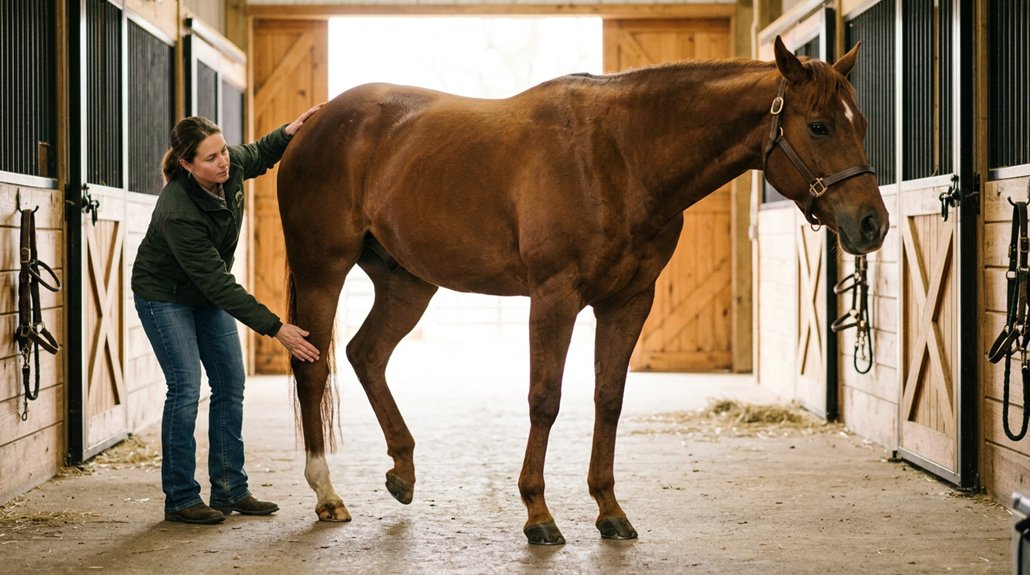
Diagnosing lameness in horses requires a methodical approach that focuses on accurate observation and specialized techniques. Start with gait analysis methods: observe head bobbing, hip movement, or any asymmetry in stride that might indicate lameness. Next, utilize hoof examination techniques, checking for stones, abscesses, and abnormal heat or swelling. Identifying these can reveal obvious sources of discomfort. Employ flexion tests to pinpoint joint-related issues, as these reveal subtle lameness. Advanced diagnostic imaging, such as X-rays and MRIs, is essential for uncovering hidden bone or soft tissue problems that aren’t visible externally. Consistently document changes in movement, behavior, and performance over time. This documentation aids in identifying early-stage lameness before it escalates, ensuring prompt attention and accurate diagnosis.
Effective Treatments for Horse Lameness
Once you’ve accurately diagnosed the cause of lameness in your horse, implementing the right treatment plan is vital to restoring health and mobility. Depending on the underlying issue, effective treatments vary. Soft tissue injuries often benefit from rest and targeted rehabilitation techniques such as physical therapy exercises to regain strength and flexibility. In cases involving conditions like arthritis or tendinitis, medication options, including anti-inflammatory drugs, are effective for alleviating pain and improving movement. Proper hoof care, involving regular trimming and corrective shoeing, is essential for managing hoof-related issues. Severe cases might necessitate surgical intervention. Early diagnosis and swift treatment considerably enhance recovery chances, mitigating chronic pain and complications. Adhering to a consistent treatment approach will optimize your horse’s return to full health.
How to Prevent Horse Lameness
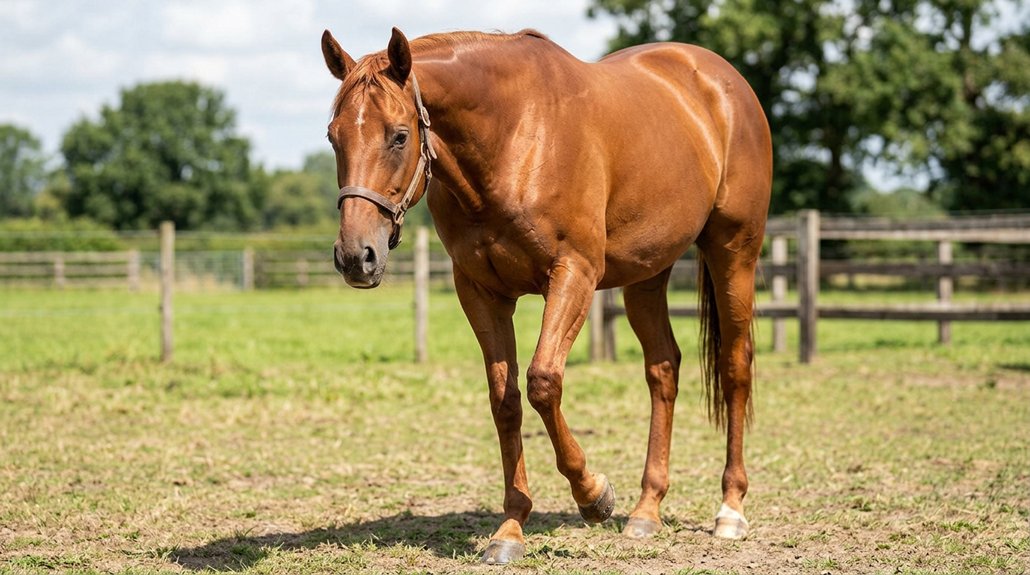
Preventing horse lameness requires a thorough approach that covers several key areas of care. Regular hoof care, including trimming and corrective shoeing, guarantees proper weight distribution, reducing lameness risk. Exercise management is essential; gradually increase workout intensity to prevent overuse injuries. Providing a balanced diet rich in minerals and vitamins is critical for strong hoof health, combating issues like laminitis. Keep an eye on early signs of discomfort, such as altered movement or behavior, to intervene before lameness escalates. Making sure safe turnout and pasture management can prevent injuries.
| Key Area | Importance | Tips |
|---|---|---|
| Hoof Care | Prevents weight imbalance | Regular trimming & corrective shoeing |
| Exercise Management | Avoid overuse injuries | Gradual intensity increase |
| Nutrition | Supports hoof strength | Mineral & vitamin-rich diet |
| Monitoring | Early detection | Observe for discomfort |
Frequently Asked Questions
How to Treat a Limping Horse?
Start by cleaning your horse’s hooves and observing for injury. Consult a vet for evaluation and consider rehabilitation techniques like rest or physical therapy. For pain management, a vet might prescribe anti-inflammatory medications. Guarantee proper hoof care is maintained.
What Are the First Signs of Kidney Failure in Horses?
Imagine your horse’s thirst and urination spiking like a dry desert craving rain; these are initial kidney symptoms. In equine care, watch for weight loss, dull coat, behavioral shifts, and colic-like discomfort as warning signs.
What Is the 1/2/3 Rule for Horses?
The 1/2/3 Rule assesses lameness severity: Level 1 is minor but permits movement; Level 2 is noticeable at a walk, warranting vet evaluation; Level 3 prevents weight-bearing, needing immediate intervention, essential for hoof health and lameness diagnosis.
What Are the 4 Stages of Laminitis?
You’re walking through a storm, so to speak, with laminitis. The four stages—developmental, acute, chronic, remission—bring various symptoms and treatment options. Early treatment during the developmental stage can greatly improve the prognosis for your horse.
Conclusion
When your horse’s stride stumbles like a clock’s gears slipping out of sync, it’s a sign to pause and assess. Timely intervention, symbolized by the keystone in an arch, guarantees stability and prevents further deterioration. Just as a craftsman tunes an instrument, understanding lameness helps you restore harmony. By combining preventative care and effective treatments, you safeguard not just the horse’s health, but the strength of your partnership, guaranteeing it beats steadily like a reliable metronome.