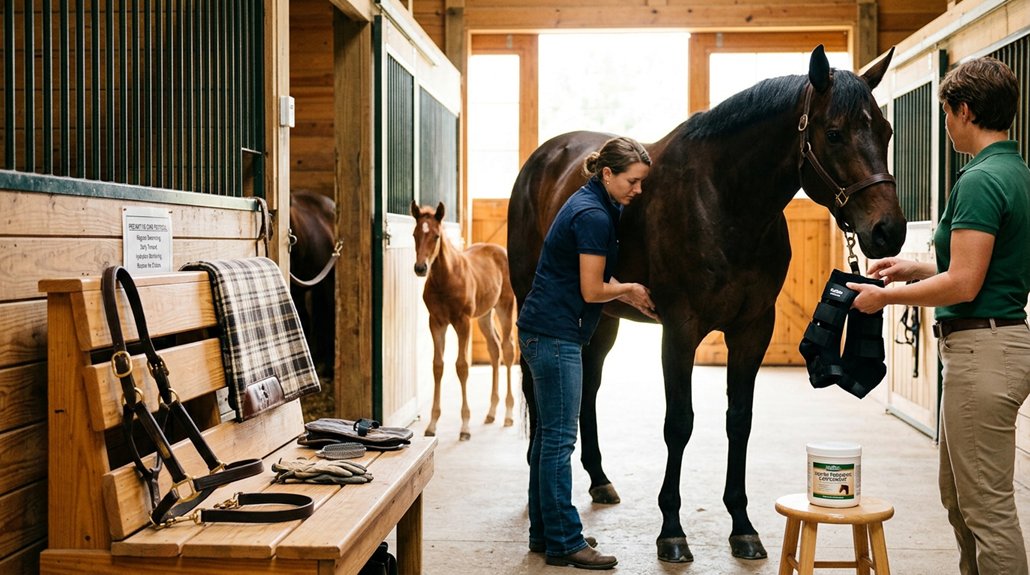
Colic in horses stems from digestive disturbances such as abdominal pain and behavioral changes like flank-watching. Risk factors include extended stall confinement, high-grain diets, and insufficient water intake. Prevent colic by providing high-quality forage, introducing feed changes gradually over 7-10 days, and ensuring regular deworming. Monitor hydration and encourage turnout to promote gut health. Recognizing symptoms early and consulting a vet promptly is crucial. There are further strategies to safeguard your horse’s health effectively.
Key Takeaways
- Colic in horses can be caused by abrupt dietary changes, leading to gut microbial imbalance.
- Insufficient water intake may result in impaction colic due to dehydration.
- Regular deworming practices are essential to prevent parasite-induced colic.
- Stall confinement restricts natural movement, increasing risk of digestive motility issues.
- Providing high-quality forage and gradual feed changes can prevent colic by maintaining gut health.
Recognizing Colic in Your Horse and Taking Immediate Action
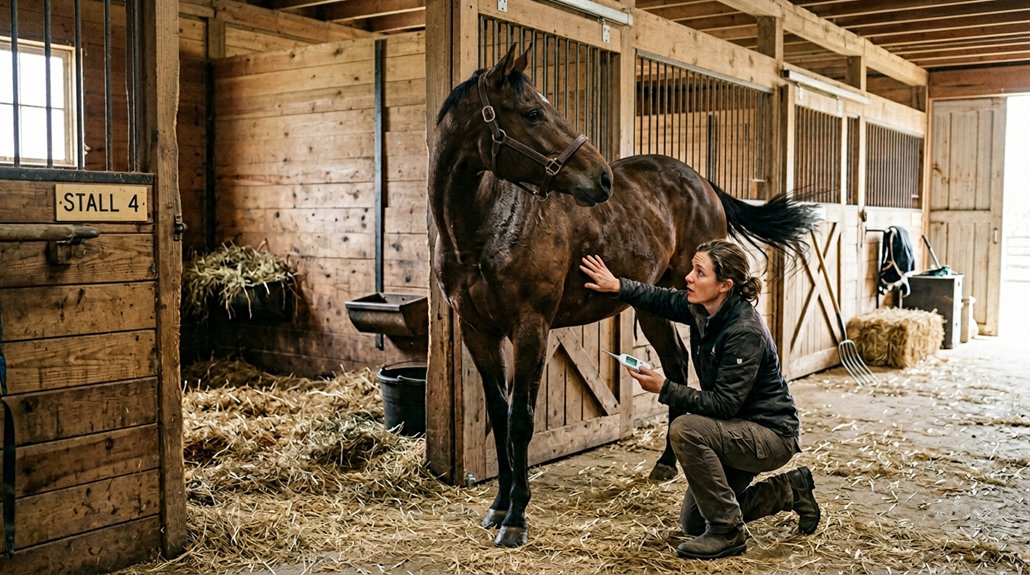
Despite the challenge of recognizing colic due to its varied presentation, promptly identifying the signs can expedite intervention and improve your horse’s prognosis. Effective symptom monitoring includes observing for abdominal pain, pawing, and flank-watching. Early intervention hinges on detecting these changes alongside understanding the horse’s normal behavior—essential for highlighting deviations like decreased manure output or appetite. Immediate veterinary contact is non-negotiable; they’ll assess crucial signs, abdominal auscultation, and if necessary, nasogastric intubation to evaluate reflux presence. While awaiting specialist input, calmly walking your horse in short intervals may alleviate symptoms without causing dehydration. However, any delay in professional diagnosis can compromise treatment efficiency, so prioritize swift action for the best possible outcome.
Common Risk Factors for Colic in Horses
Recognizing the common risk factors for colic in horses is imperative for prevention and effective management. Stall confinement beyond 50% of their time compromises colonic motility and natural foraging behaviors, raising colic risks. Dietary changes, particularly abrupt shifts to high-grain diets, disrupt gut microbial balance, intensifying colic probabilities. Regular and appropriate deworming practices are essential to mitigate parasite-induced colic. High parasite burdens, from inadequate deworming, can cause significant gastrointestinal disturbances. Sandy grazing conditions expose horses to the risk of sand colic, as they ingest sand leading to colonic accumulation. Ensuring feed areas are not sandy can reduce this risk. Coupled with these factors, insufficient water intake is critical; monitoring and providing adequate hydration is necessary to avert impaction colic.
Dietary and Exercise Strategies to Prevent Colic
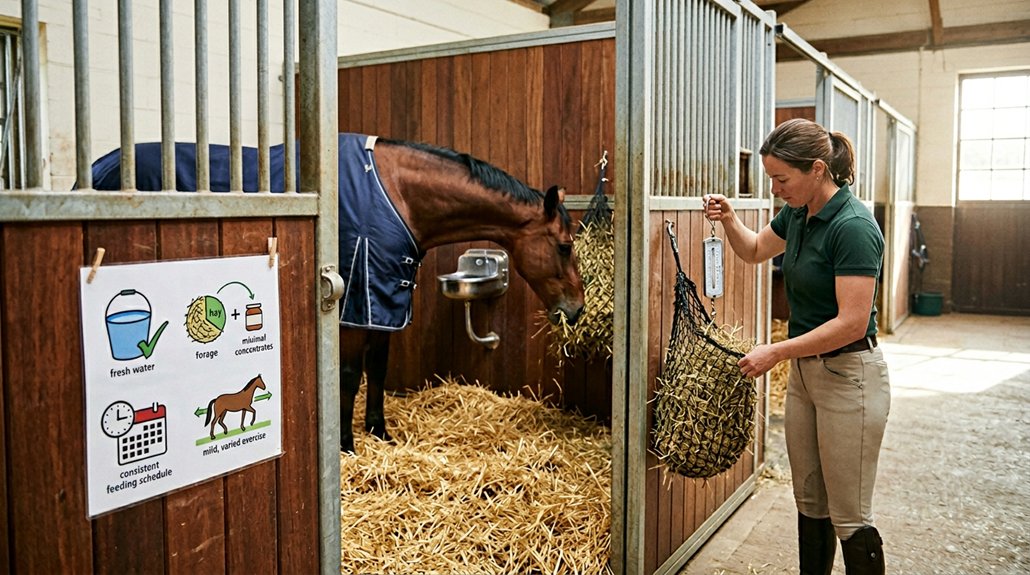
Implementing a holistic approach to dietary and exercise strategies is essential to minimize the risk of colic in horses. Ensuring high-quality forage is paramount; provide at least 1-2% of your horse’s body weight in forage daily to support digestion. Implement gradual introduction of new feeds over 7-10 days to maintain gut microbial balance. Focus on meal frequency by offering small, frequent grain meals to prevent hindgut dysfunction.
Witness the turnout benefits: horses need ample turnout time to engage in natural behaviors that boost digestive health.
Here’s a strategy plan:
- Prioritize high-quality forage intake.
- Introduce dietary changes gradually.
- Feed small, frequent grain meals.
- Maximize turnout periods for movement.
Consider exercise timing and allow 2-3 hours post-feeding before exercise, ensuring hydration importance throughout their regimen.
Practices for Immediate Colic Management
When your horse exhibits signs of colic, immediate intervention is essential for their well-being. Begin emergency care by removing food to prevent further digestion complications while still providing access to fresh water. Consistently monitor colic symptoms, paying close attention to changes in manure output. A brief walk of 5-10 minutes can help reduce discomfort; however, avoid strenuous exercise, as this could exacerbate stress and lead to dehydration. Rapidly contact a veterinarian, as prompt diagnosis and treatment are critical. Diagnostic procedures like nasogastric tubing and rectal palpation can determine the colic’s cause. On-site treatments might involve non-steroidal anti-inflammatory drugs such as Banamine®, along with fluids and laxatives. Severe cases could necessitate hospitalization or surgical intervention.
Ongoing Care to Prevent Future Colic
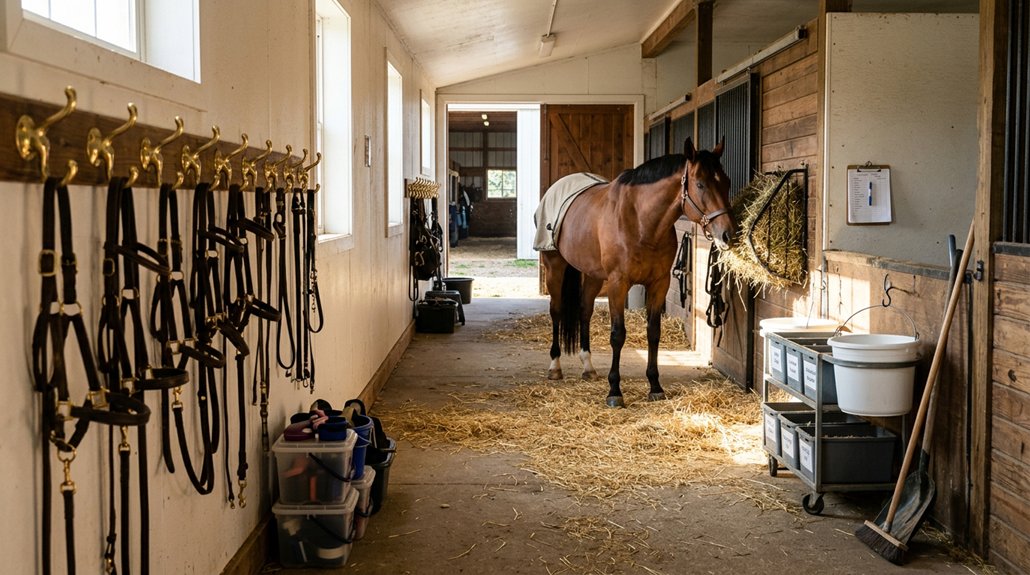
Ensuring your horse’s health involves a proactive approach to prevent future colic episodes. Ongoing maintenance is essential. Utilize technical evidence-based practices for ideal care. Here are key proactive measures:
- Regular Dental Check-ups: Address dental issues to avoid maldigestion, a common pathway to colic. Proper chewing improves digestion efficiency.
- Deworming Schedule: Implement consistent deworming alongside fecal analyses. This diagnostic approach curtails parasitic colic risks.
- Hydration Management: Always provide access to clean water, ensuring they drink 5-10 gallons daily. This prevents dehydration-associated impaction colic.
- Gradual Feed Changes: Alter feeds over 7-10 days to sustain microbial gut balance, minimizing digestive disturbances.
Integrate ample pasture turnout to encourage natural behaviors that enhance digestive motility. These measures safeguard your horse’s well-being against colic threats.
Frequently Asked Questions
What Is the Number One Cause of Colic in Horses?
You’re looking at dietary issues as the primary cause of colic in horses. Abrupt food changes disrupt gut flora, increasing colic risk. Maintain consistent hydration levels and forage-based diets to mitigate gastrointestinal disturbances and promote ideal equine health.
What Can I Give My Horse to Prevent Colic?
Start by knowing 90% of colic cases relate to management factors. Implement diet adjustments with gradual feed changes. Guarantee hydration strategies by maintaining access to clean water. These evidence-based practices help optimize gut health, reducing colic risk.
Can a Horse Survive Colic Without a Vet?
A horse might survive mild colic cases using home remedies and careful observation, but severe symptoms demand immediate veterinary care. Focus on diet management and prevention strategies to avoid complications, but never substitute vet expertise for serious issues.
Can Colic Go Away in Horses?
Oh sure, colic just magically disappears! In reality, horses with mild colic symptoms can improve with colic treatment like hydration and analgesics. Monitor closely; veterinary diagnostics guarantee recovery and prevent complications, disproving spontaneous resolution myths.
Conclusion
Imagine your horse’s digestive system as a finely tuned engine; it requires careful maintenance to run smoothly. Recognizing colic symptoms quickly is like keeping an eye on the warning lights, allowing you to take immediate action. By understanding risk factors, optimizing diet and exercise, and adhering to best practices for management, you’re armed with evidence-based strategies against colic. Consistent, proactive care is key, ensuring your horse remains robust and resilient, minimizing the risk of future colic episodes.