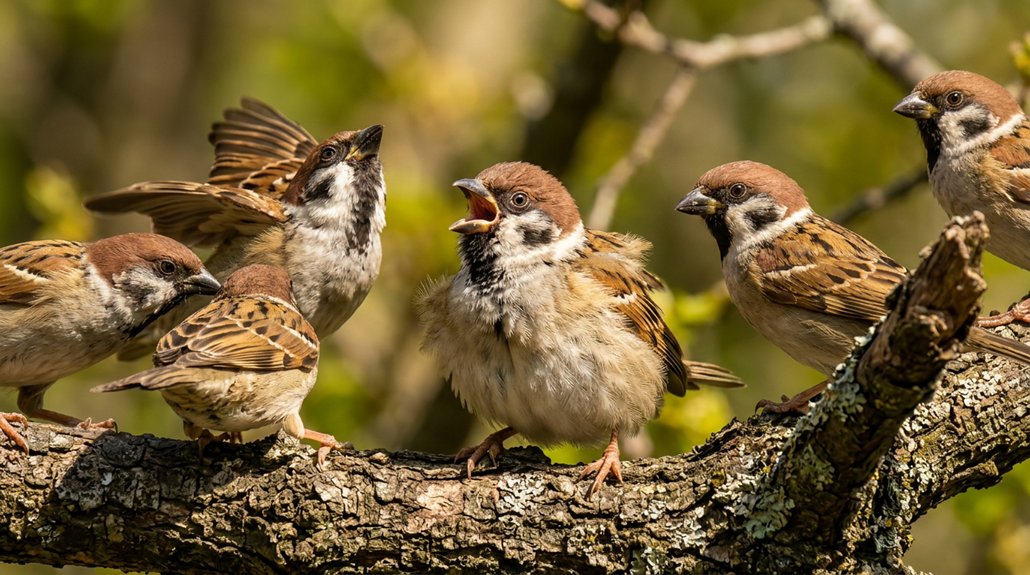
Birds often get loud when they are communicating, seeking attention, or reacting to stress. You may hear more calling at dawn, dusk, or during breeding season, when hormones can raise vocal activity. Boredom, weak enrichment, hunger, discomfort, and household changes can also trigger noise. Sometimes loud behavior points to illness, pain, or injury, especially if it’s sudden or paired with lethargy, appetite loss, or abnormal droppings. The causes become clearer as you examine the patterns.
Key Takeaways
- Birds often get loud at dawn and dusk for flock contact, especially during seasonal and breeding-related changes.
- Loud calling can increase during breeding season as hormones trigger territorial, mating, and courtship behaviors.
- Birds may scream for attention or when separated from a caregiver, especially if that behavior has been reinforced.
- Boredom, lack of enrichment, and environmental monotony can lead to repetitive, self-rewarding loudness.
- Sudden loud vocalizations can also signal stress, fear, or illness, so persistent changes should be checked by a vet.
Why Birds Scream
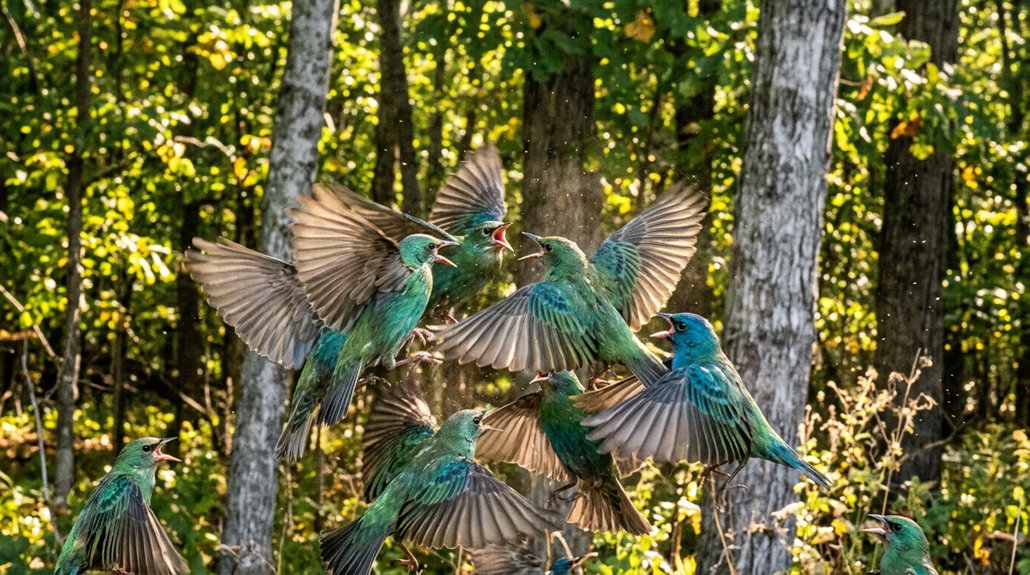
Birds scream for several distinct reasons, and the behavior is often a normal part of communication rather than a sign of distress. You may hear it during flock contact, especially at dawn or dusk, when pet birds re-establish social proximity. In wild parrots, vocalizing occupies only 2%–5% of activity, so loud bursts can seem unusual in captivity. Attention seeking is common: if you rush over, you can reinforce screaming quickly. Limited enrichment also matters; boredom, poor foraging options, and few toys can make screaming self-rewarding. During breeding season, hormonal shifts and changes in light can increase intensity. Screaming can also support vocal development and predator alerts. If onset is sudden, persistent, or paired with discomfort, hunger, or cage-soiling, you should have an avian veterinarian rule out disease.
Normal Bird Vocalization
Normal vocalization in parrots often peaks at dawn and dusk, when many species naturally call to maintain flock cohesion and locate one another. You should expect some loudness then, because wild birds spend only about 2%–5% of time calling. In captivity, your bird may use these calls to “check in” when the environment seems quiet. Species differences matter: some parrots are inherently more talkative, and vocal learning shapes how strongly they use contact calls. Breeding-season hormones can temporarily raise call rate and intensity. Short, intermittent calling with pauses is usually normal communication. Before judging behavior, you should rule out illness, pain, or nutritional deficiency with an avian veterinarian, since health problems can change normal calling patterns.
Attention-Seeking Screaming
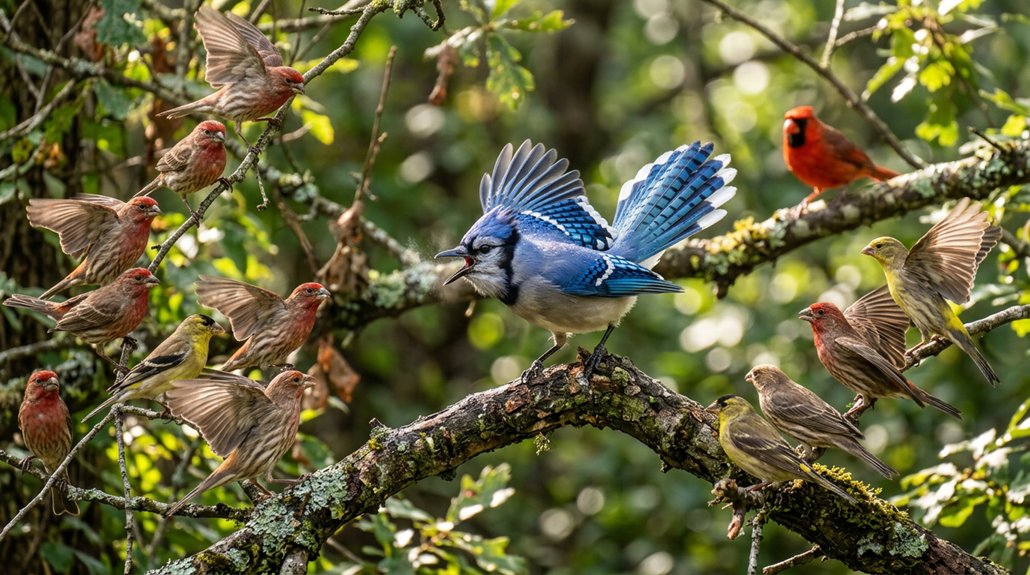
When your bird screams for attention, it’s often because loud calls have been unintentionally reinforced by your response, not because vocalizing is inherently normal all day. You can reduce this behavior by ignoring screams and immediately rewarding brief quiet periods with small, consistent social reinforcement. If boredom, weak enrichment, or separation-related stress are driving the problem, you’ll need to redirect attention seeking with foraging tasks, rotating toys, and predictable routines.
Why Birds Scream
Attention-seeking screaming is the most common reason a pet bird develops excessive vocalization, and it often persists because the behavior is reinforced when you respond with attention, food, or the removal of a perceived threat. You may see it after social cues, such as when you leave a room or move around the house, because the bird’s call has learned to predict reunion, play, or treats. In the wild, parrots vocalize only 2%–5% of their day, so prolonged screaming usually reflects social learning rather than normal flock contact; vocal mimicry can further shape these requests. Boredom and poor enrichment make this more likely. Before assuming it’s behavioral, have a veterinarian rule out illness, especially if you notice lethargy, feather loss, appetite change, or a sudden increase in noise.
Reinforce Quiet Moments
Because screaming is often maintained by reinforcement, the most effective response is to withhold attention during the noise and reward quiet moments instead. You should use planned ignoring during episodes of attention-seeking screaming, because even scolding can function as attention. Then, the instant your bird is quiet, deliver positive reinforcement with a high-value treat or calm praise. This catch-and-reward approach teaches that silence, not noise, produces access to you. Keep your responses consistent across everyone in the household, since mixed reactions can strengthen the behavior. Wild parrots vocalize only 2%–5% of the day, so persistent screaming usually reflects learned patterns, not normal rhythm. Track screams, antecedents, and your responses in a behavior log, and confirm that an avian veterinarian has ruled out medical causes before training.
Redirect Attention Seeking
Another effective way to reduce excessive vocalization is to redirect attention-seeking screaming by changing what your bird learns will earn a response. In companion parrots, this behavior often persists because you’ve reinforced it with talking, feeding, or approaching after screams.
- Ignore screams consistently.
- Reinforce brief quiet immediately.
- Teach a “quiet” cue.
- Provide toys and daily interaction.
Wild parrots vocalize only 2%–5% of the day, so repeated daytime screaming usually signals a learned bid for contact. Use behavioral redirection and cue substitution: wait for short silence, then deliver praise, petting, or treats. Short, frequent sessions work best. Predictable enrichment and scheduled social time reduce motivation to call. If you respond inconsistently, even yelling can maintain the pattern.
Hunger, Discomfort, and Stress
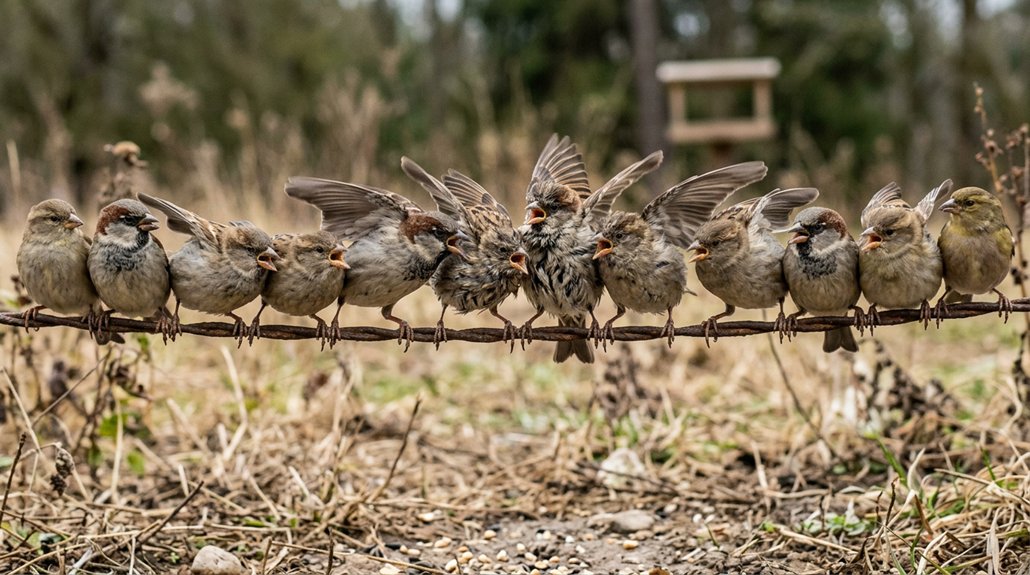
Hunger, physical discomfort, and stress can all trigger loud vocalization in birds. If your bird screams before meals or when the food bowl’s empty, it may be signaling a basic need. A diet adjustment can reduce noise when nutrition is inappropriate or deficient, and maintaining a consistent sleep schedule can help stabilize routine-related stress. You should also check for discomfort: a dirty cage, poorly placed perches, overheating, or drafts may provoke persistent calls. Pain or illness often causes increased or unusual vocalization, especially when paired with lethargy, feather loss, or appetite changes. Sudden environmental changes, loud activity, unfamiliar people, or new pets can also drive sustained screaming through anxiety or alarm. Prompt avian veterinary evaluation is appropriate when these signs persist.
Boredom and Lack of Enrichment
You may notice boredom-related screaming when your bird has too few toys, little foraging opportunity, or limited variation in perches and textures, especially during morning and late afternoon activity peaks. In captive settings, your bird can overproduce vocalizations because its natural time budget is no longer occupied by foraging and social behavior. Rotating toys, adding puzzle feeders, and providing destructible items can reduce monotony and often lower excessive noise.
Signs Of Boredom
Bored birds often vocalize excessively during the day, and prolonged screaming in captivity usually points to insufficient mental stimulation rather than simple “talkativeness.” Wild parrots spend only about 2%–5% of their time vocalizing, so frequent loud calls in a home setting can signal boredom, especially when foraging opportunities are limited or the environment is repetitive. You may notice noise during long, unstructured periods, novelty fatigue, environmental monotony, and attention-seeking after ignored cues.
- Repeated screaming in daylight
- Noise after toy loss
- Calls during empty feeding times
- Outbursts when routines change
These signs usually cluster with low activity, few social interactions, and unchallenging surroundings. If your bird stays loud despite basic needs being met, boredom is a likely driver, not an isolated temperament issue.
Enrichment Reduces Screaming
Enrichment can markedly reduce screaming when boredom and environmental monotony are the underlying causes. You’re addressing a species that vocalizes only about 2%–5% of its time in the wild, so persistent screaming often indicates insufficient stimulation. Increase foraging complexity by hiding food and using puzzle feeders; this shifts energy into species-typical behavior.
| Intervention | Expected effect |
|---|---|
| Puzzle feeders | Less daytime screaming |
| Scattered food | More foraging time |
| Rotational novelty | Lower habituation |
| Desensitization | Reduced fear |
| Daily training | Less attention-seeking |
Rotate toys and add destructible items to maintain rotational novelty and prevent frustration. If your bird ignores a new object, demonstrate use and move it closer gradually. Short, daily clicker sessions provide predictable interaction and mental load, decreasing understimulation.
Separation Anxiety in Pet Birds
Separation anxiety in pet birds often presents as excessive screaming when the primary caregiver leaves or is out of sight, reflecting the species’ strong social dependence and tendency to view owners as flock members. If you’ve got a hand raised bonding history, or lone bird syndrome, your bird may call persistently beyond normal dawn/dusk vocalizations.
- Keep departures predictable.
- Maintain fixed meal, play, and sleep times.
- Use foraging toys, puzzle feeders, and rotated toys.
- Provide radio or a pet camera during absences.
These measures lower attention-seeking noise by reducing uncertainty and supplying mental stimulation. Before assuming anxiety, have an avian veterinarian rule out pain or illness, since medical problems can also increase loud behavior.
Hormones and Breeding Season
During breeding season, your bird’s sex hormones can rise and trigger louder calls, territorial displays, and mate-attraction behaviors. You may notice sharper vocal activity at dawn and dusk, when light cues align with these seasonal changes. These vocal spikes are often temporary, though they can be pronounced until the hormonal state subsides.
Breeding Season Hormones
Breeding season can trigger pronounced changes in vocal behavior because rising sex hormone levels often increase arousal, territoriality, and mate-attraction calling. In your bird, this seasonal physiology can intensify screaming, guarding, and courtship displays, especially when daylight lengthens. Pair bonding may also become more vocal as you see repeated contact calls and loud bursts that persist for weeks or months.
- Tail fanning and wing spreading may accompany calls
- Cage guarding and aggression can increase
- Regurgitation or exuberant displays can appear
- Enrichment, foraging, and stable routines can reduce escalation
Don’t reinforce loud calls with attention. If vocal changes are sudden, severe, or paired with lethargy, appetite loss, or feather damage, you should seek an avian veterinarian to exclude medical causes.
Dawn And Dusk Calls
Many parrot species naturally produce intense dawn and dusk calls as part of flock-communication rhythms, and hormonal shifts during the breeding season can make these vocal bursts louder, longer, and more frequent. You’ll usually hear them at sunrise and sunset, when wild birds use brief, concentrated vocalizing for flock coordination and foraging. During breeding, rising sex steroids can increase call rate and intensity, and you may notice prolonged daytime calling or territorial screaming. Seasonal lighting, including household light that mimics longer days, can trigger these cycles and extend the pattern. Because parrots vocalize only about 2%–5% of the day, management should protect sleep with dark, quiet nights and limit early light. Morning and evening enrichment can redirect this instinctual behavior.
Temporary Vocalization Spikes
As hormone levels rise in spring or with shifts in day length, parrots may show temporary spikes in loud vocalization that serve mate attraction, territorial defense, and nest guarding. You’ll often see seasonal hormones drive this brief increase, which can last weeks to months before subsiding.
- Increased calling may coincide with aggression or broodiness.
- You may notice shredding, cavity seeking, regurgitation, or other nesting behaviors.
- Longer daylight, warmth, or nest-like spaces can intensify temporary nesting and vocal outbursts.
- Reducing breeding cues, adding foraging enrichment, and consulting an avian veterinarian can help.
This pattern isn’t usually permanent; it’s a hormonally mediated reproductive state. By limiting mirrors, nesting materials, and extended light exposure, you can lower stimulation and reduce loud behavior objectively.
Environmental Triggers
Environmental triggers often drive loud bird vocalizations when the bird perceives a need to alert its flock or respond to stress. You may notice this after sudden household changes, such as new people, loud music, vacuuming, or unfamiliar pets, because these stimuli can heighten vigilance and fear. Cage placement also matters: high-traffic spots, drafty windows, window reflections, and temperature fluctuations can increase stress, while restricted views can leave you isolated; a secure view with a hiding area is preferable. Longer daylight and breeding-season lighting can amplify dawn and dusk calling through hormonal pathways. If your bird lacks enrichment, boredom and weak foraging opportunities can produce repetitive screaming. External cues, including neighboring birds, screened-open windows, or visible wildlife, may also sustain loud flock-calling behavior.
Health Problems Behind Bird Screaming
Not every increase in bird screaming is behavioral; sudden or persistent vocalizations can signal an underlying medical problem. If you notice this pattern, you should consider pain, infection, injury, or digestive disease, because birds often mask illness until signs become obvious. You may also see lethargy, reduced appetite, or altered droppings.
- Nutritional deficiency can increase restlessness and calling.
- Respiratory disease, overheating, or toxic fumes can trigger distress vocalizations.
- Neurologic events may cause atypical sounds and sudden behavior changes.
- Dental, beak, or parasitic disorders can produce chronic pain and vocal strain.
Because these causes are medical, you shouldn’t assume the screaming is normal. An avian veterinary exam is appropriate whenever the change is abrupt, persistent, or paired with other clinical signs.
How to Stop Bird Screaming
Stopping bird screaming starts with identifying whether the vocalization is medically driven, because sudden or persistent screaming paired with lethargy, appetite loss, or feather damage warrants an avian veterinary exam. If illness isn’t present, don’t reinforce screams; you should ignore them and reward brief quiet with treats or praise. Increase enrichment with rotating chew toys, foraging puzzles, and supervised exercise, especially during morning activity. Keep schedules predictable, provide 10–12+ hours of dark sleep, and reduce drafts, loud music, and traffic near the cage. These controls can also limit noise pollution for neighbor parrots. For persistent cases, use short positive-reinforcement sessions, teach a quiet cue, and catch-and-reward silence. If behavior remains complex, consult a certified avian behaviorist for desensitization and owner coaching.
Frequently Asked Questions
How to Get a Bird to Stop Squawking?
Get your bird checked by an avian vet, then ignore squawks, reward quiet, and use training schedules plus environmental enrichment. Keep routines stable, reduce triggers, and consult a behaviorist if the behavior persists.
What Is the 3 3 3 Rule for Birds?
The 3-3-3 rule means you’ll expect 3 days of stress, 3 weeks of adjustment, and 3 months of settling. You should use training schedules and environmental enrichment; then, you’ll know when behaviors’re normal or concerning.
How to Make Noisy Birds Go Away?
You can reduce noisy birds through behavior modification: ignore screaming, reward quiet, and add environmental enrichment. Move them from traffic, keep routines consistent, and consult an avian vet if the vocalizing’s sudden, persistent, or abnormal.
What Does It Mean if Birds Are Loud?
You’ll usually find that loud birds are communicating needs, alarm, territorial signaling, or social bonding. They may also be bored, hungry, stressed, or hormonally active. If it’s sudden or persistent, you should seek veterinary evaluation.
Conclusion
To summarize, loud bird behavior often reflects a specific cause rather than random noise. You should consider attention-seeking, hunger, stress, boredom, hormonal changes, environmental triggers, and illness when your bird screams. For example, if your cockatiel becomes loud each morning and calms after breakfast and enrichment, you’re likely seeing unmet needs, not misbehavior. By identifying the trigger and responding consistently, you can reduce screaming and support healthier, more predictable vocalization.