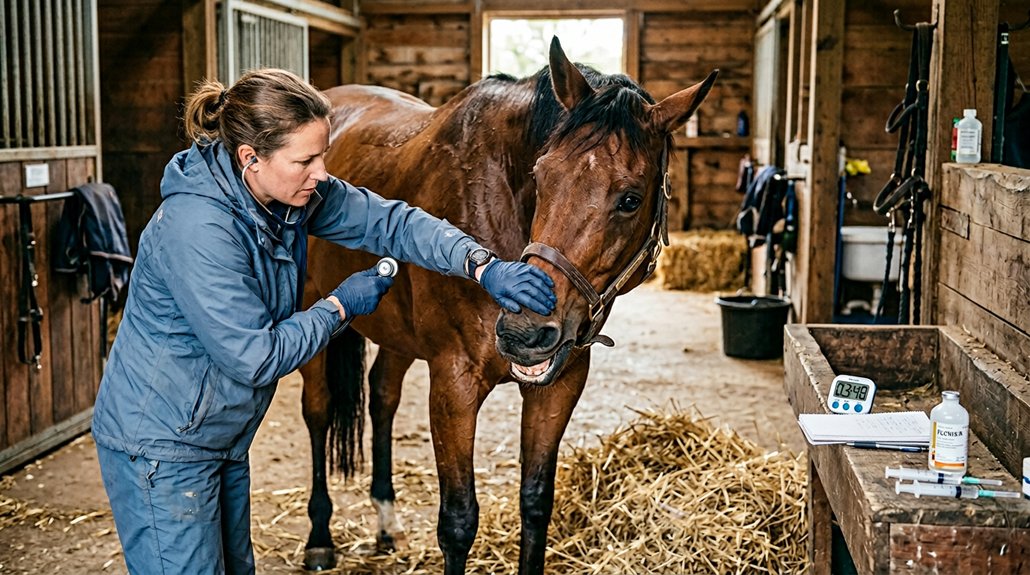
If your horse has colic, first check their heart rate (30-40 bpm) and rectal temperature (99.5-101.5°F). Look for signs like excessive rolling or pawing. Withhold food and water, and monitor behavior every 15-20 minutes. Contact your veterinarian immediately with detailed observations of symptoms and changes. Keep your horse calm in a quiet area, using gentle reassurance. These initial steps are critical, and there’s more to uncover about managing and preventing colic effectively.
Key Takeaways
- Check the horse’s heart rate, respiratory rate, and rectal temperature for signs of colic distress.
- Withhold food and water until a veterinarian evaluates your horse.
- Monitor your horse every 15-20 minutes for changes in behavior or condition.
- Contact a veterinarian immediately with detailed vital signs and symptoms.
- Keep your horse calm by placing it in a quiet area and offering gentle reassurance.
Immediate Steps to Take When Your Horse Shows Colic Signs
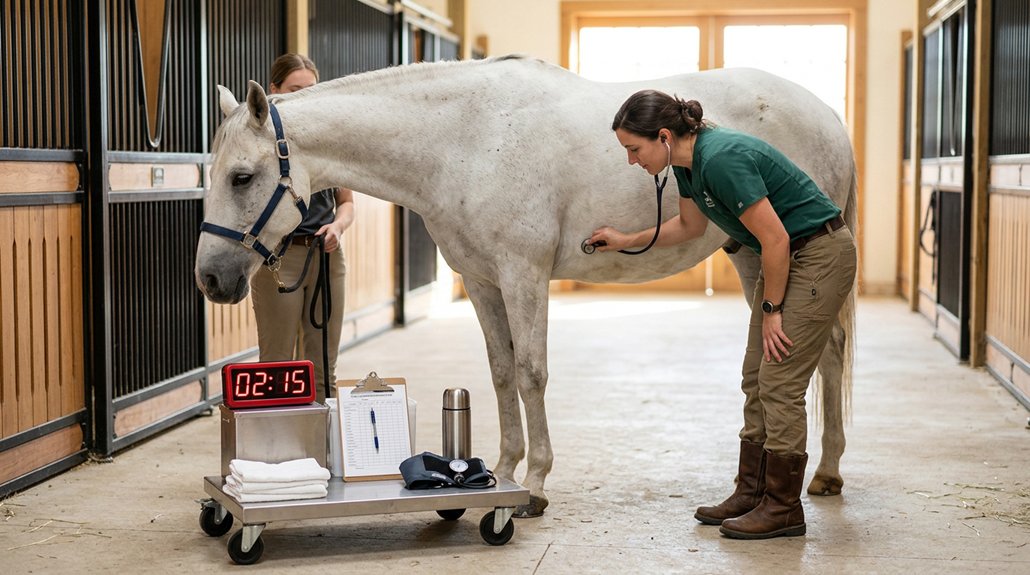
When your horse shows signs of colic, it’s essential to act swiftly and methodically. Begin by checking the horse’s critical signs: a heart rate between 30-40 bpm and rectal temperature of 99.5-101.5°F. Look for distress indicators like pawing or rolling. Withhold food and water until a veterinarian evaluates, to prevent no worsening of the condition. In the interim, monitor the horse every 15-20 minutes for changes like attempts to roll or excessive sweating. Contact your veterinarian right away, as prompt intervention is key. While awaiting professional guidance, consider discussing alternative therapies and future nutritional management as preventive measures, but avoid administering any medication yourself. Make sure all observation notes are precise to aid in veterinary assessment.
Identifying Red-Flag Symptoms of Colic
Recognizing red-flag symptoms in a horse with colic is essential for ensuring timely intervention. Understanding symptom recognition is key for colic prevention. Start by observing if your horse is excessively rolling or pawing the ground, signs of severe discomfort. Watch for behavioral cues like continuously glancing at or biting their sides. Restlessness, indicated by frequent lying down and rising, along with a disinterest in food or water, should raise alarms. The absence of fecal output for over 24 hours is a significant warning. Monitor for elevated heart rates above 48 beats per minute and respiration exceeding 20 breaths per minute, as these suggest distress. Look out for sweating, lethargy, depression, and sudden behavioral changes—all vital symptoms demanding immediate attention.
How to Check Your Horse’s Vital Signs
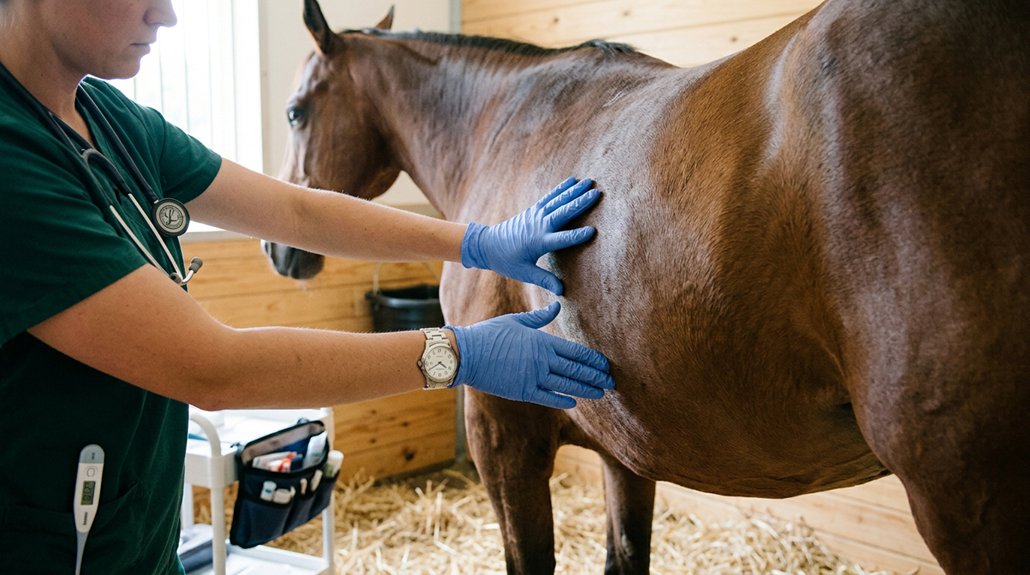
To accurately check your horse’s essential signs, begin by measuring the heart rate through palpation, looking for a normal span of 30-40 beats per minute. Utilize a stopwatch to count beats in a precise 60-second interval. Next, conduct a temperature measurement using a digital thermometer rectally; maintain a careful approach and expect a typical range between 99.5°F and 101.5°F. Respiratory rate requires observation of the flank or nostrils, counting breaths within the standard 12-20 breaths per minute. Inspect mucous membranes for gum color, ensuring they’re a healthy pink; deviations like pale or blue suggest distress. Finally, assess gut sounds with a stethoscope; you should detect consistent, normal sounds, as a silent abdomen may indicate urgent concerns.
Contacting the Veterinarian Promptly
Prompt veterinary contact is essential when detecting symptoms of colic in your horse. Immediate communication with a veterinarian enables a timely urgency assessment and intervention, critical for the horse’s prognosis. Don’t adopt a “wait and see” approach; delays can escalate complications. When contacting your vet, provide precise details like symptom duration, intensity, recent dietary changes, and behavioral observations. These insights enhance veterinary communication, aiding in an accurate urgency assessment.
Prepare by noting key signs, including heart rate, respiratory rate, and temperature. Conveying these helps the vet evaluate the severity. Maintain open communication, updating the vet on any condition shifts while waiting. This proactive approach guarantees you and your veterinarian can collaborate effectively, minimizing risks and optimizing your horse’s care.
Keeping Your Horse Calm While Awaiting the Vet
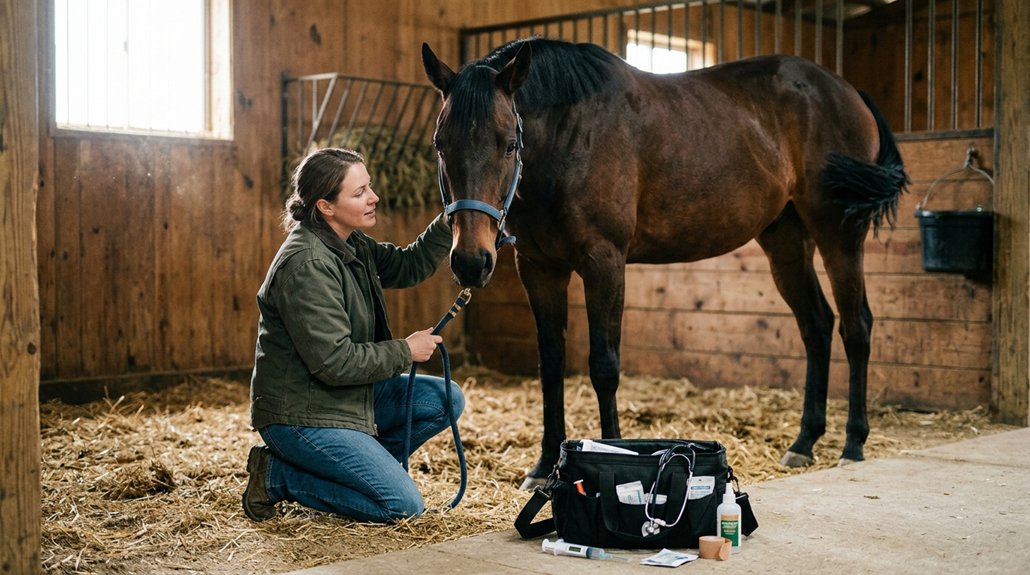
To guarantee your horse remains calm while waiting for the veterinarian, place them in a safe, quiet area, minimizing stress and preventing injury. Avoid aggressive handling; instead, offer gentle reassurance with a calm voice and comforting touch. Maintain vigilant supervision, monitoring essential signs and behavior changes to relay accurate information to the vet upon arrival.
Implement Calming Techniques
When your horse is experiencing a colic episode, your calm and composed presence becomes essential, as your demeanor directly affects your horse’s anxiety levels. Implement calming techniques to guarantee a peaceful environment while awaiting veterinary assistance. Practice deep breathing to influence your horse positively and maintain a low-stress atmosphere. Use a comforting touch, applying gentle, reassuring strokes along your horse’s neck.
- Speak softly and offer gentle reassurance.
- Move slowly and deliberately to avoid startling the horse.
- If safe, walk the horse to promote gut motility.
- Minimize noise and distractions by keeping the area quiet.
- Limit the presence of other animals that may cause agitation.
Focus on these strategies to alleviate tension and provide support to your horse during this critical phase.
Maintain Gentle Supervision
Keep a watchful eye on your horse during a colic episode to guarantee its safety and well-being until the vet arrives. Maintain a calm presence, as this reduces stress and encourages relaxation. Observe the horse every 15-20 minutes for changes in behavior. Employ gentle grooming techniques to soothe the horse, and play calming music to create a serene environment. Walking can alleviate gas and prevent injury, but proceed gently. Abstain from feeding or watering until after veterinary assessment. Preserve a quiet setting to minimize external distractions, ensuring your horse remains at ease.
| Observation Interval | Calming Method | Environment Focus |
|---|---|---|
| Every 15-20 minutes | Grooming techniques | Minimize noise |
| Behavior monitoring | Calming music | Safe and quiet |
Ensure precise relay of symptoms to the vet.
What to Prepare for the Vet’s Examination
Prepare for the vet’s examination by guaranteeing you have accurate records of your horse’s essential signs, such as heart rate, respiratory rate, and rectal temperature. Continuously monitor and document any behavioral changes or symptoms that could provide pivotal information to the veterinarian. Additionally, set up a safe and well-lit area with access to clean water, and make certain all necessary equipment and transport options are ready for potential further intervention.
Vital Sign Monitoring
Effectively monitoring your horse’s essential signs is critical for gauging the severity of colic and preparing detailed information for the veterinarian’s examination. Begin by accurately evaluating the heart rate, which ideally should range from 30 to 40 beats per minute. A significant increase may indicate distress. Implement respiratory monitoring to guarantee the rate falls between 12 to 20 breaths per minute; rapid breathing could imply pain or anxiety.
Keep an eye on the following:
- Rectal Temperature: Should remain between 99.5°F and 101.5°F; higher could mean infection.
- Gut Sounds: Absence may suggest obstruction or serious complications.
- Fecal Output and Consistency: Note any variations and urine changes for vet’s context.
Collecting this data guarantees an informed veterinary examination.
Observation of Behaviors
When dealing with colic, an understanding of a horse’s behavior provides invaluable insights into its condition. Observing behavioral indicators and distress signals is essential. Monitor if your horse is looking at or biting its sides, pawing the ground, or excessively rolling—classic signs of colic. Record any noticeable changes in diet or management. Keep track of abnormal gut sounds, fecal output, and lethargy. This data aids the vet’s assessment. Preparing these precise observations helps diagnose potential underlying issues efficiently.
| Behavior | Normal Range | Abnormal Indications |
|---|---|---|
| Heart Rate | 30-40 bpm | Increased or erratic |
| Rectal Temperature | 99.5-101.5°F | Elevated or low |
| Respiratory Rate | 12-20 breaths/minute | Rapid breathing |
| Fecal Output | Regular droppings | Absence of droppings |
| Gut Sounds | Moderate, regular sounds | Increased or absence |
Preparation of Examination Area
Evaluating a horse’s behavior is essential in identifying signs of colic, and it closely ties into preparing the examination area for the vet. An ideal examination setup guarantees safety and efficiency. Follow these guidelines:
- Confirm the area is well-lit and easily accessible for efficient examination.
- Have clean, fresh water on hand for potential stomach tubing procedures.
- Provide power supply access in case ultrasound equipment is needed.
- Keep a transport plan ready, including a trailer, for possible hospital transfer.
- Gather essential information on the horse’s critical signs, behavior changes, and prior treatments for the vet’s reference.
Implementing these safety measures streamlines the vet’s ability to assess and manage the situation effectively, safeguarding your horse’s well-being.
Essential Steps for Horse Colic Emergencies
In addressing horse colic emergencies, several critical steps demand immediate attention to safeguard the horse’s health. First, identify colic triggers by evaluating essential signs—heart rate should be 30-40 beats per minute, respiratory rate 12-20 breaths per minute, temperature 99.5-101.5°F. Observe closely for distress signs like pawing or rolling. Immediately contact your veterinarian; timely intervention is imperative. Avoid feeding your horse, as dietary considerations are essential—food can worsen symptoms. If safe, walk your horse gently to ease gas and prevent injury, but monitor every 15-20 minutes. Prepare a well-lit examination area and have a transport plan ready if advanced care becomes necessary. These steps can greatly mitigate colic’s impact on your horse’s well-being.
Proven Prevention Measures for Horse Colic
To effectively prevent horse colic, it’s vital to prioritize hydration, nutrition, and routine veterinary care. Begin by guaranteeing your horse always has access to clean, fresh water, reducing dehydration risk. Implement dietary adjustments, emphasizing a high-fiber diet with small, frequent meals. This supports gut health and minimizes impaction colic. Regular exercise is significant to maintain gut motility; don’t forget adequate cool-down periods post-activity. In addition, conduct regular dental check-ups and consider these environmental considerations:
- Implement a targeted worming program to control parasitic risks.
- Monitor and improve pasture conditions, avoiding sandy soils prone to sand colic.
- Ensure proper dental care to promote effective feed chewing.
- Optimize shelter and barn conditions to reduce stress.
- Educate caregivers on the signs of colic for early intervention.
Frequently Asked Questions
How to Help a Horse With Colic at Home?
You’re observing colic symptoms at home, so don’t rely solely on home remedies; they’re not a substitute for professional care. Monitor essential signs, avoid food and water, and prepare detailed notes for the vet’s urgent evaluation.
What Is Immediate Response for Colic Horses?
Upon noticing colic symptoms, immediately check essential signs and contact your vet. Timely emergency care is critical. Monitor behavior changes every 15-20 minutes, withholding food and water, ensuring you’re ready for professional assessment upon their arrival.
Can a Horse Survive Colic Without a Vet?
A horse’s survival from colic without a vet is unlikely. Home remedies alone won’t secure recovery because serious underlying issues can be masked. Prioritize colic prevention, but contact a vet for any symptoms to verify proper care.
What Not to Do When Your Horse Is Colicing?
When your horse is colicking, don’t wait—act. Avoid feeding them, giving unapproved meds, and using nasogastric tubes. Prevent them from rolling excessively; instead, walk gently. Contact a vet promptly for assessment. Prevention tips can save lives.
Conclusion
When facing your horse’s colic, think of Odysseus steering through turbulent seas. Swiftly assess crucial signs and stay vigilant for red-flag symptoms. Contacting your vet promptly is your Achilles’ heel—essential yet often overlooked. Keep your horse calm, preparing for the vet’s thorough examination. Remember, each detail you note could be the key to maneuvering through this storm. Ultimately, prevention is your bowstring; draw it taut with time-tested measures to keep your equine companion safe and sound.