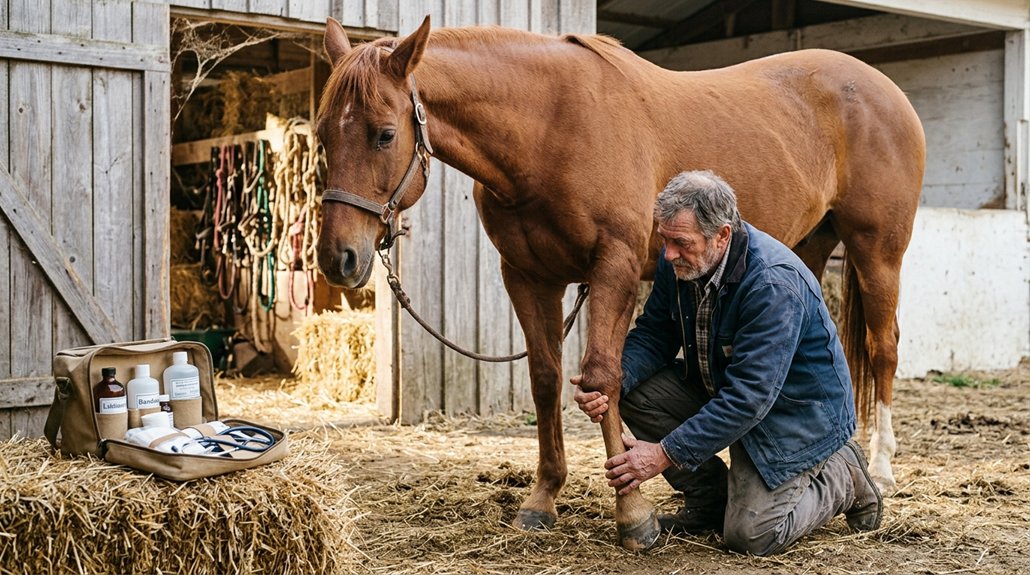
When deciding to rest a horse or consult a vet, consider the severity of symptoms. Mild distress like slight lameness may just need rest, but severe issues like colic, excessive lacerations, or very high heart rates require urgent veterinary care. Monitor behavioral changes and appetite closely, as refusal to eat or drink signals serious concerns. Always assess if injuries worsen, especially if the horse can’t bear weight. Explore further to understand critical symptoms and emergency preparedness.
Key Takeaways
- Rest for mild distress like slight lameness but consult a vet for severe symptoms like colic or high heart rate.
- Low-grade fever under 102°F typically warrants rest; consult a vet if the fever exceeds 101.5°F.
- Inability to bear weight or significant lacerations require immediate veterinary attention.
- Persistent lameness despite rest indicates the need for veterinary evaluation.
- Monitor marked refusal to eat or drink; it suggests serious health issues needing vet consultation.
Understanding When to Rest or Consult a Vet
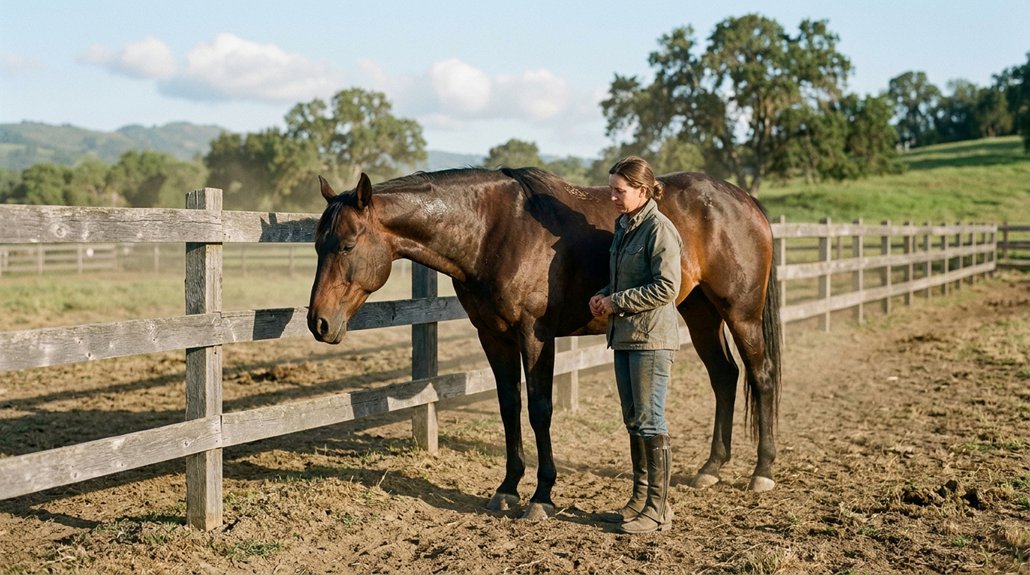
When you’re trying to determine whether to rest your horse or call a vet, it’s vital to evaluate the symptoms with clinical insight. Understanding rest guidelines and vet protocols is fundamental. Mild distress, like slight lameness, often calls for rest while you monitor the horse for any deteriorating signs. However, severe symptoms, including colic with rolling and thrashing or a heart rate above 50 beats per minute, necessitate immediate veterinary intervention. Conditions such as excessive swelling, inability to stand, and significant bleeding demand urgent vet care. For low-grade fevers under 102°F, resting is typically safe, but any fever over 101.5°F requires a vet consultation. Recognizing symptom severity and acting accordingly guarantees your horse receives appropriate care promptly.
Monitoring Behavioral and Appetite Changes
How do changes in your horse’s behavior and appetite signal underlying health issues? Pay close attention to appetite patterns and behavioral observations as they are key diagnostic indicators. Identifying these changes early can be crucial in ensuring your horse’s well-being.
- A marked refusal to eat or drink may indicate serious concerns; this warrants vigilant monitoring and potential vet consultation.
- Behavioral shifts, such as excessive pawing, rolling, or thrashing, often point to discomfort or pain.
- Unusual lethargy or reduced interaction can signify deeper issues and require you to closely observe for accompanying symptoms.
- Isolation or altered social behavior with the herd signals distress and necessitates further investigation.
- Always document changes, including timeframes and symptoms, to facilitate effective communication with a veterinarian.
Spotting Critical Symptoms Prompting Immediate Vets
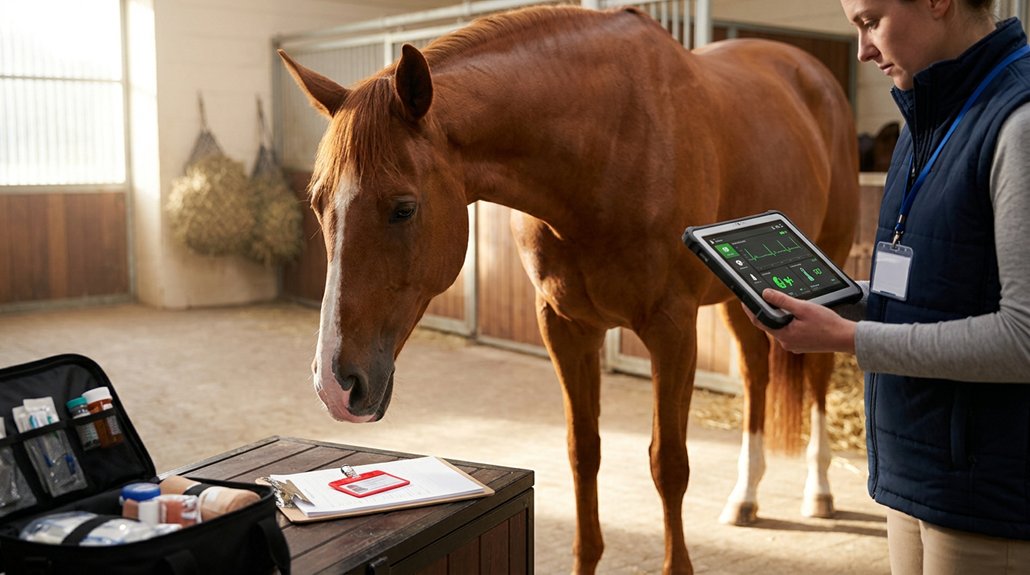
Recognizing critical symptoms in your horse that warrant immediate veterinary intervention can make a significant difference in outcomes. If you notice colic symptoms like excessive pawing or rolling, particularly with a heart rate over 50 beats per minute and pale or injected gums, it’s time for urgent care. Evaluate any significant lacerations—over 1.5 gallons of blood loss near joints or crucial areas require a vet. For mares, prolonged labor exceeding 20 minutes, or a red bag delivery, demands quick action. Sick foal indicators—lethargy, nursing changes, or abnormal gum color—necessitate prompt assistance due to rapid deterioration risk. Additionally, signs like excessive lying down, inability to stand, or irregular eating/drinking patterns should prompt an immediate veterinary response.
Assessing Injuries: Rest or Veterinary Aid?
After understanding the symptoms requiring immediate veterinary attention, it’s important to discern when a horse’s injury warrants resting versus professional intervention. Proper lameness evaluation is vital, especially if lameness persists beyond a few minutes of rest. Remember, even minor lameness can hide deeper injuries. Keep an eye out for swelling signs, as any unusual swelling or heat, especially coupled with lameness, indicates the need for veterinary aid.
Minor lameness and swelling can mask serious injuries; prompt veterinary evaluation is crucial.
Consider the following situations:
- Persistent lameness despite rest: indicates the need for evaluation.
- Unusual swelling or heat: requires immediate examination.
- Inability to bear weight: demands prompt attention.
- Deep or severe wounds: especially near joints, need immediate intervention.
- Colic symptoms: prompt veterinary contact is vital.
In these cases, professional intervention offers the best course of action.
Emergency Preparedness and Readiness in Horse Care
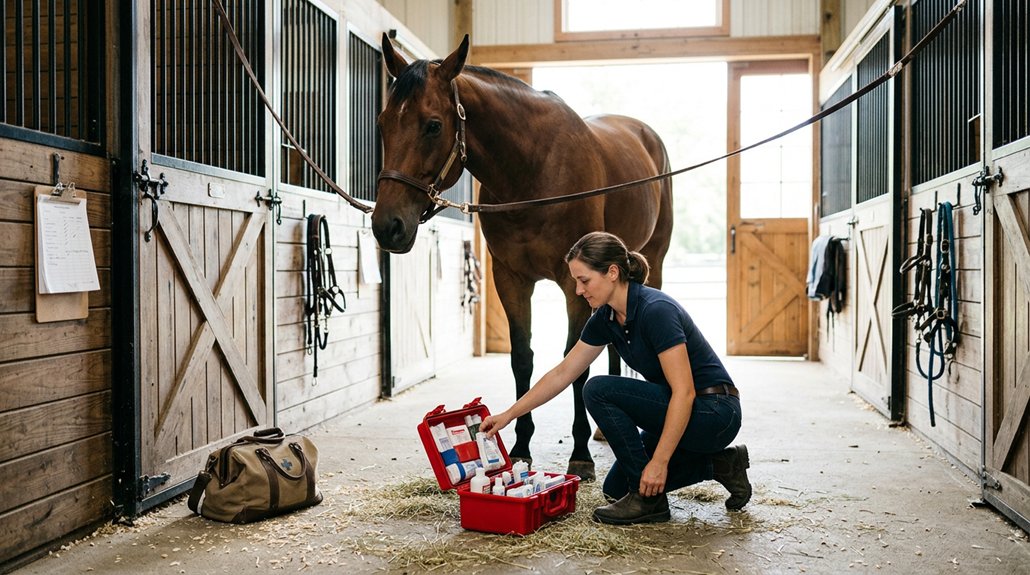
Even with the best preventative measures, emergencies can arise in horse care, demanding quick and effective responses. It’s vital to maintain a well-stocked first aid kit with emergency supplies like bandages, antiseptics, and medications, such as Flunixin meglumine and Phenylbutazone, to promptly address injuries. Recognizing common signs of distress—like excessive rolling or prolonged laying down—can help determine if rest suffices or if urgent veterinary attention is needed. Effective transportation planning involves knowing the nearest veterinary hospital’s location and having contact details readily accessible. Keep an updated list of veterinary phone numbers, including after-hours contacts, for swift communication. Discuss emergency protocols with your vet to distinguish when immediate intervention is imperative and to guarantee preparedness at all times.
Frequently Asked Questions
What Is the 1/2/3 Rule in Horses?
The 1/2/3 rule helps you assess a newborn foal’s early milestones. Watch for rest signs indicating delay in standing, nursing, or placenta passing. If timings aren’t met, reassess for injury or call a vet immediately.
What Should You Not Say to a Farrier?
Picture a well-oiled machine; words like “just trim” disrupt its harmony. Good farrier communication is vital for effective hoof care. Avoid undermining expertise or rushing appointments—this collaboration guarantees your horse’s hoof health is expertly maintained.
What Is “I Love You” in Horse Language?
In equine communication, “I love you” manifests through horse behavior like nuzzling, gentle nudging, and soft nickers. Recognizing these actions, along with mutual grooming, illustrates your bond, revealing the horse’s trust and affection toward you.
When to Call the Vet for a Horse?
Think of your horse as a finely tuned instrument; call the vet when emergency signs like colic or severe injuries play notes of alarm. Common ailments masked by lethargy or fever also warrant immediate professional diagnostic insights.
Conclusion
In discerning between resting a horse and seeking veterinary care, always remain vigilant. Note that 25% of equine emergencies stem from colic, underscoring the importance of recognizing critical symptoms. Monitor changes in behavior, appetite, and injuries closely. Erring on the side of caution can make a pivotal difference in your horse’s health. Remember, swift action and readiness are key components in efficient equine care, enabling you to responsibly manage and maintain your horse’s well-being.