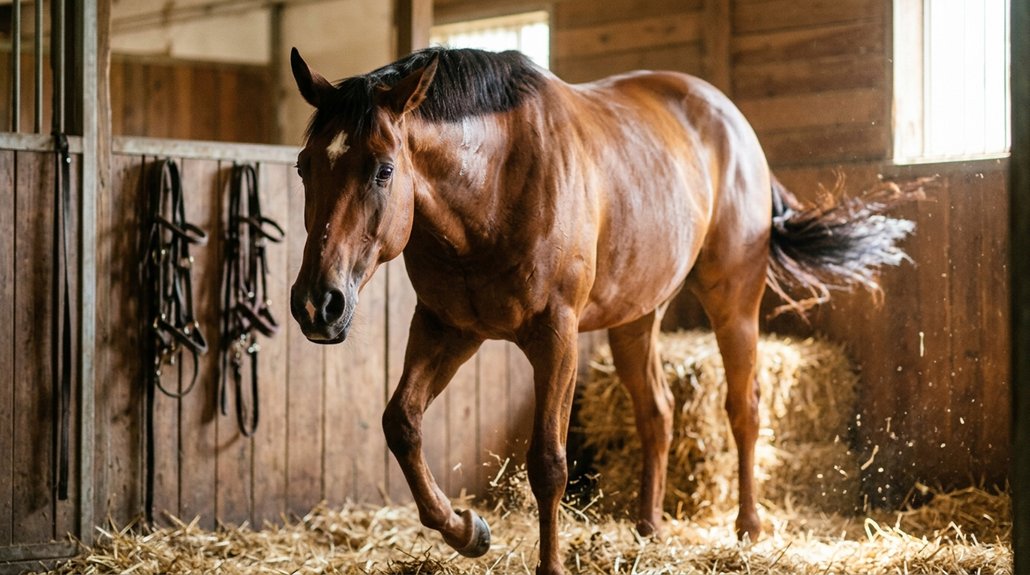
To recognize early signs of colic in horses, observe behavioral changes like restlessness, flank watching, pawing, and unusual postures. Monitor physical symptoms such as abdominal distension, profuse sweating, altered gut sounds, and elevated breathing or heart rates. Check gum color for pallor or bluish tones, indicating distress. These signs suggest abdominal discomfort needing prompt attention. Staying alert to these indicators can help mitigate severe colic risks, and there’s still more to discover about preventative measures and interventions.
Key Takeaways
- Horses showing restlessness, such as frequent weight shifting or pacing, may be experiencing colic discomfort.
- Flank watching, where horses turn their head toward their abdomen, can be a sign of abdominal pain.
- Pawing the ground and adopting unusual postures suggests attempts to relieve abdominal pressure, indicating possible colic.
- Reduced or absent gut sounds are abnormal; healthy horses should have 2-4 gut sounds per minute.
- Profuse sweating combined with elevated breathing rates is a critical symptom of severe abdominal pain in colic.
Behavioral Changes Signaling Colic
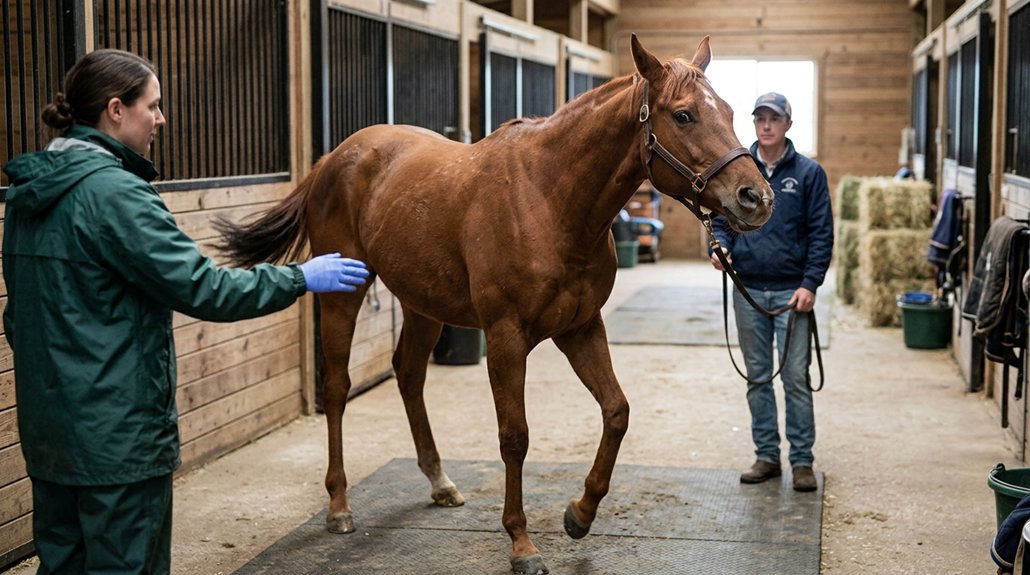
When it comes to identifying colic in horses, recognizing behavioral changes is essential for prompt intervention. Colic behaviors such as restlessness are key indicators. If a horse can’t find a comfortable position and frequently shifts weight or paces, it’s signaling discomfort. Flank watching, where the horse turns its head to look at its flanks, is a behavior associated with abdominal pain, acting as a clear discomfort signal. Additionally, behaviors like pawing at the ground or attempting to roll reveal distress and a potential need for immediate attention. Unusual postures such as standing stretched out or lying oddly may indicate attempts to relieve abdominal pressure. Finally, teeth grinding, or bruxism, suggests moderate to severe discomfort, necessitating swift evaluation.
Physical Symptoms of Colic
Recognizing physical symptoms of colic is essential for timely intervention and care. Abdominal distension is a critical indicator, as bloating can suggest severe colic types requiring urgent veterinary assistance. Profuse sweating response signals distress due to severe abdominal pain, often apparent during periods of restlessness or rolling. It’s crucial to observe gut sounds; a healthy horse typically has 2-4 per minute post-feeding, while reduced or absent sounds may indicate an obstruction. Monitor the horse’s breathing rate—exceeding 30 breaths per minute is alarming and linked to lower survival chances. Elevated heart rates and abnormal gum coloration are further signs of colic, urgently warranting professional evaluation. Each physical symptom serves as a warning and demands immediate attention to safeguard your horse’s health.
Monitoring Vital Signs for Early Colic Detection
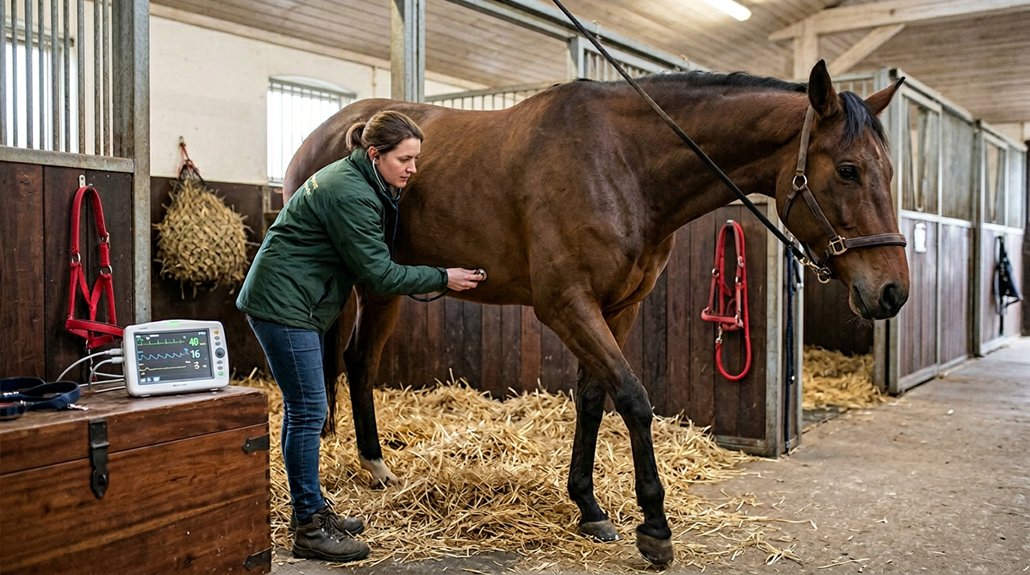
Understanding the physical symptoms of colic sets the foundation for effectively monitoring essential signs, which enhance early detection strategies. Key significant signs like respiratory rates and heart rate are critical. Normally, a horse breathes 8-12 times per minute; an increase to 30 or more signals distress, often correlating with worse colic outcomes. Similarly, a heart rate surpassing 48 beats per minute could indicate severe pain, necessitating quick attention. Monitoring gut sounds—which should occur 2-4 times per minute post-meal—is imperative, as reduced sounds suggest gastrointestinal trouble. Check gum color; pale or blue gums could mean poor circulation or shock. Finally, note any excessive sweating, as it’s a common response to intense abdominal pain in colic scenarios.
When to Call the Vet
How do you determine the right moment to call the vet when suspecting your horse might be suffering from colic? Immediate action is vital for colic prevention. Contact your veterinarian if your horse exhibits signs such as pawing, excessive rolling, or changes in appetite. An urgent response is important, as early intervention can greatly enhance treatment outcomes and minimize severe complications. Note rapid breathing, sweating, or unusual postures—these symptoms necessitate immediate veterinary attention. Prepare to provide essential information, like the duration and severity of symptoms, recent dietary changes, and fecal output. Don’t wait to see if symptoms improve; colic can quickly escalate from mild to life-threatening. Timely intervention can make a significant difference in your horse’s health.
What Is Colic? Causes & Implications for Horses
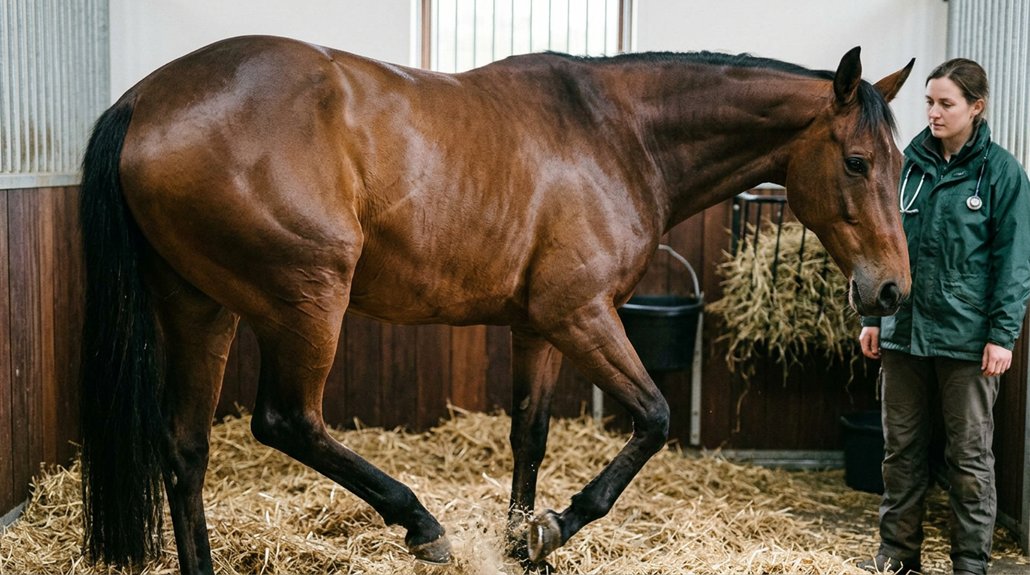
Colic, a distressing condition in horses, manifests as abdominal pain due to various gastrointestinal disturbances. These can involve impacted or twisted intestines, contributing to a heightened colic risk. Common causes include abrupt dietary changes, stress, and health issues such as gastrointestinal infections or intestinal displacement. Being vigilant about your horse’s digestive health is imperative; signs of colic range from restlessness and flank watching to sweating, bloating, and altered gut sounds, indicating a possible emergency. Immediate veterinary evaluation is essential since untreated colic can lead to severe complications, including mortality. Prompt diagnosis greatly enhances treatment outcomes, keeping colic risk low. By understanding contributing factors, like feeding practices, you can effectively manage and prevent colic, ensuring your horse’s well-being.
How Your Horse’s Diet and Routine Affect Colic Risk
Your horse’s diet and routine play a critical role in minimizing colic risk, as sudden dietary changes can upset the digestive system, leading to issues. Maintaining a consistent feeding schedule helps promote gastrointestinal stability, while ensuring access to ample forage and hydration supports overall gut health. Managing stress through a stable environment and routine also contributes to reducing colic risk, emphasizing the importance of balanced management practices.
Dietary Changes and Colic
Dietary modifications play a significant role in the risk factors for colic in horses, making it essential to implement gradual changes when altering feed types or amounts. A sudden feed change can disrupt your horse’s digestive health, leading to increased colic risk. To minimize these risks, adjust feed over a 10-14 day period, allowing gut microbes to adapt. Concentrates should never exceed 0.5% of body weight per feeding to prevent digestive overload. Ensuring your horse’s diet is rich in fiber with ample hay and pasture access promotes gut motility and aids in preventing impaction colic.
Here’s a quick guide:
| Factor | Recommended Practice |
|---|---|
| Feed Change | Gradual shift over 10-14 days |
| Concentrates Limit | Max 0.5% of body weight per feeding |
| Hydration and Fiber | Ample hay, pasture, and fresh water |
Routine Stability Benefits
Routine stability plays a significant role in managing colic risk in horses. Establishing a consistent feeding schedule is vital, as it regulates the horse’s digestive system and minimizes intestinal disturbances, key routine benefits reducing colic likelihood. A diet rich in fiber from hay and pasture guarantees peak gut motility, decreasing impaction colic risks. Stability importance is underscored by the need to avoid sudden dietary changes, which can disrupt gastrointestinal flora, leading to increased susceptibility to gas and spasmodic colic. Gradual dietary shifts over 10-14 days are advisable. In addition, maintaining a stable environment and routine can prevent stress-induced colic. Regular monitoring, including dental care and deworming, is essential for preventing colic and supporting overall digestive health.
Managing Stress in Horses
Understanding how stress contributes to colic risk is another important aspect of horse management. Seamless stress management hinges on a balanced diet and consistent routine. Sudden dietary changes disrupt gastrointestinal balance, increasing stress and colic risk. Guarantee stable feeding by maintaining regular meal times and altering feeds gradually over 10-14 days. Stress alleviation is enhanced by allowing ample turnout time, encouraging natural horse behavior, and providing a high-fiber diet rich in hay and pasture to reduce impaction colic risks. Don’t overlook regular dental care as it’s integral for ideal chewing and digestion. Here’s a quick reference guide to promote stability:
| Factor | Benefit |
|---|---|
| Consistent Routine | Reduced Stress |
| Ample Turnout | Natural Behaviors |
| High-Fiber Diet | Improved Digestion |
Environmental Factors Contributing to Colic
When considering environmental factors, sudden dietary changes or lack of adequate forage can profoundly affect your horse’s digestive health, increasing colic risk. Additionally, stress-inducing changes like transportation or shifts in daily routines can disrupt gut motility, leading to colic. Managing these elements effectively can help mitigate potential gastrointestinal complications.
Diet and Feeding Practices
Diet and feeding practices play a critical role in managing the risk of colic in horses. You should monitor your horse’s grazing habits and incorporate nutritional supplements cautiously to support digestive health. Avoid sudden dietary changes, such as new feed or treats, as they can disrupt the digestive system. Make certain grain and pelleted feeds don’t exceed 0.5% of the horse’s body weight per meal, preventing digestive disturbances. A diet rich in fiber—primarily hay and grass—promotes healthy digestion and minimizes impaction colic risks. Always provide access to fresh water to prevent dehydration-related colic, especially in warm weather. Finally, avoid feeding on the ground in sandy areas to prevent sand ingestion, which can lead to sand colic.
Stress-Inducing Changes
While diet and feeding practices are essential for maintaining equine digestive health, environmental factors also play a significant role in colic prevention. Environmental changes, like relocating or introducing new horses, can induce stress and contribute to colic risk. Routine consistency is vital; significant alterations in feeding times or exercise schedules stress the digestive system, potentially leading to colic episodes. High stress levels occur due to isolation, inadequate social interaction, or changing companions, impacting health and increasing colic risk. Additionally, extreme weather or poor shelter conditions can cause stress and discomfort, affecting gastrointestinal stability. Managing diet modifications, especially new feeds or forage types, along with maintaining environmental stability, plays a pivotal role in effective stress management and colic prevention.
Preparatory Steps Before the Vet Arrives
Observing clear symptoms of colic in your horse requires immediate and precise action to stabilize the situation before the veterinarian arrives. Start with emergency preparation by removing all food sources to prevent further gastrointestinal irritation, but always retain access to water. Monitoring your horse’s essential signs is critical; note the rectal temperature and guarantee heart and respiratory rates remain within normal limits (28-44 beats per minute for heart rate, 8-12 breaths per minute for respiratory rate). Maintain veterinary communication by documenting any behavioral changes like restlessness or rolling. Prepare a detailed account of recent dietary and management changes, along with any fecal output variations. Keeping your horse calm and comfortable, providing significant insights, aids the vet’s assessment and timely intervention.
Long-term Prevention Strategies for Colic
A thorough approach to long-term colic prevention involves maintaining consistent access to fresh water and allowing ample pasture turnout to encourage natural eating behaviors. Hydration methods are vital; guarantee your horse has easy access to clean water at all times to support ideal digestion. Effective pasture management is also key. Provide ample turnout space to promote grazing, supporting a high-fiber diet necessary for digestive health. Aim for a minimum of 1.5% of the horse’s body weight in forage daily. Introduce any dietary changes gradually over a 10-14 day period to prevent digestive upset. Regular dental care and deworming schedules are important to reduce colic risks. Additionally, managing environmental stressors can further lessen the incidence of colic.
Final Thoughts: Protecting Your Horse From Colic
To protect your horse from colic, prioritize regular health checks, focusing on routine dental care and deworming. Implement a balanced diet plan, ensuring access to fresh water and a fiber-rich diet to maintain peak digestive health. Observing consistent feeding and monitoring your horse’s behavior will aid in early detection and management of potential issues.
Encourage Routine Health Checks
Regularly schedule health checks for your horse, as these are instrumental in early detection and prevention of colic. Important components of these checks include dental health evaluations and fecal assessments. Dental exams guarantee your horse efficiently processes feed, reducing colic risk from undigested material. Fecal assessments help manage parasite loads that could disrupt the gut and trigger colic.
| Check Type | Purpose |
|---|---|
| Dental Health | Guarantees proper feed digestion |
| Fecal Assessments | Monitors and manages parasitic infestations |
| Behavior Monitoring | Detects changes indicating potential colic |
Moreover, consider annual veterinary consultations to identify predispositions. Observing your horse’s behavior, appetite, and manure output offers insight into their gastrointestinal health. Maintaining a record of dietary changes aids in identifying and mitigating any colic triggers. These practices collectively safeguard your horse’s wellbeing.
Prioritize Balanced Diet Planning
When considering diet planning for your horse, ensuring a balanced intake rich in fiber is paramount to maintaining digestive health and thwarting colic. Prioritize dietary diversity and nutrient balance by incorporating varied fiber sources like hay and pasture. To effectively manage your horse’s diet:
- Forage Selection: Focus on high-quality hay and pasture as primary fiber sources to support digestive function.
- Portion Control: Limit concentrates to no more than 0.5% of body weight per meal, preventing overloads.
- Feeding Schedules: Implement consistent feeding times to maintain stable digestion, adjusting diets gradually over 10-14 days.
- Hydration Importance: Provide constant access to fresh water, critical for preventing dehydration-related colic.
Consider grain alternatives to avoid excessive concentrated feeds, supporting a balanced and diverse diet.
Frequently Asked Questions
What Is Commonly the First Symptom of Colic in Horses?
You’ll often notice abdominal pain manifesting through restlessness; the horse might repeatedly shift its weight, pace, or demonstrate behavioral changes, like biting its sides and pawing the ground. These actions indicate discomfort linked to potential colic symptoms.
Can a Horse Survive Colic on Its Own?
75% of colic cases can be managed without surgery, but survival depends on colic types and treatment options. Gas colic might resolve itself, but strangulation requires immediate intervention. Always engage veterinary care for best outcomes.
How Long Can a Horse Show Signs of Colic?
A horse can display colic signs for just a few minutes or several hours. Early detection’s essential—if signs persist beyond two hours, consult a vet. Prolonged colic duration can escalate into serious, life-threatening complications.
What Can Be Mistaken for Colic in Horses?
Imagine noticing your horse restlessly pawing after a sudden change in feeding habits. Stress factors or gas colic due to rapid diet shifts can mimic colic, while dehydration signs and environmental triggers might highlight behavioral changes.
Conclusion
Protecting your horse from colic is like steering through a stormy sea—keep your eyes sharp and your senses attuned. Recognize those early signs, like a chess master anticipating the opponent’s next move. Swift action can be the lifeline your horse needs. Whether it’s adjusting their diet or making environmental tweaks, each decision is a strategic move in safeguarding your equine companion’s health. Remember, vigilance and prevention are your best allies in this ongoing battle against colic.