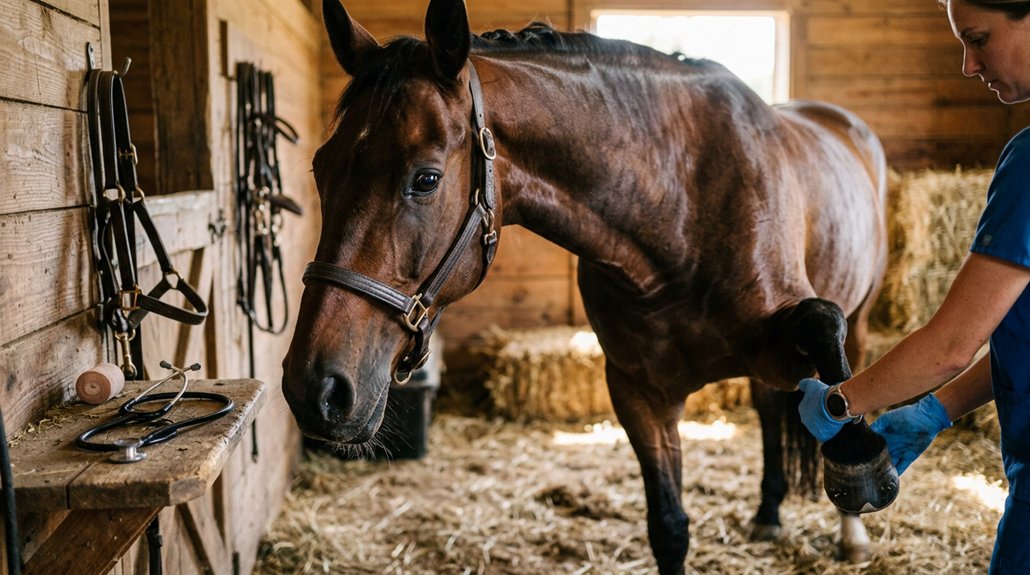
You should call a vet for your horse when you notice signs of distress or abnormal behavior like gastric distress symptoms, lethargy, fever over 101.5°F, or significant bleeding. Eye problems such as redness or cloudiness, or a heart rate exceeding 50 bpm also warrant immediate contact. Quick reaction to these indicators can prevent serious health issues. Early intervention is essential, and there’s more to explore about keeping your horse healthy and safe.
Key Takeaways
- Contact a vet if your horse shows signs of gastric distress, like rolling or a heart rate over 50 bpm.
- Call the vet immediately for eye injuries or symptoms like redness, swelling, or discharge.
- Promptly consult a vet for significant wounds with severe bleeding, especially near joints or eyes.
- Seek veterinary help if your horse has a fever above 102°F or a low-grade fever lasting over 24 hours.
- Reach out to a vet for abnormal behaviors such as lethargy, lack of appetite, or excessive pawing indicative of colic.
Recognizing Critical Signs: When to Call the Vet?
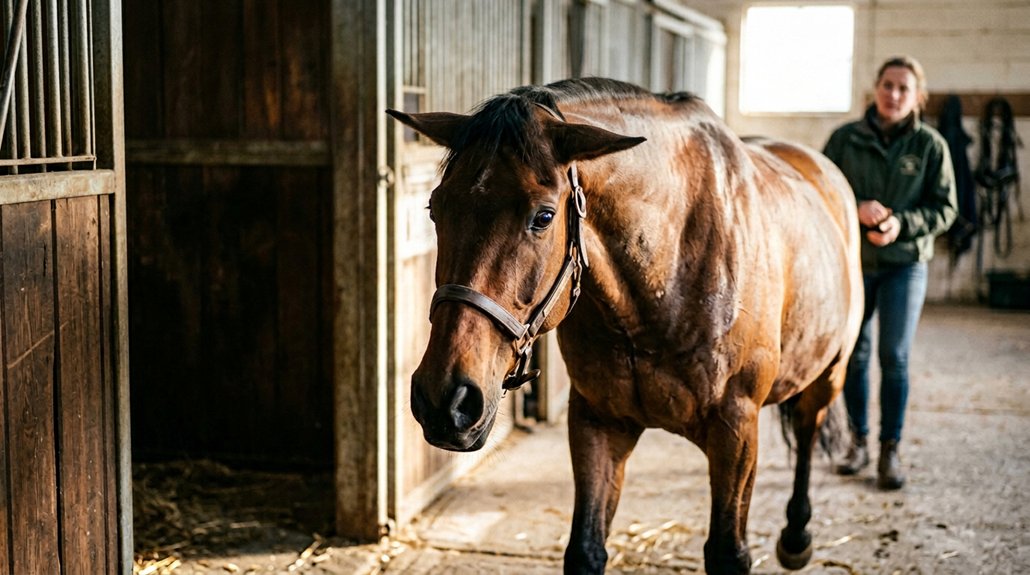
Recognizing the moment when it’s crucial to call the vet for your horse can make all the difference in their health, and sometimes, their life. Pay close attention to signs of gastric distress, like pawing, rolling, or when your horse’s heart rate suddenly spikes above 50 beats per minute. These indicate possible colic, an emergency that requires immediate veterinary intervention. Watch for abnormal behavior such as lethargy or a lack of appetite, combined with a persistent fever over 101.5°F. These are red flags that shouldn’t be ignored. If you notice any wounds with significant bleeding, especially near joints or eyes, contact your vet promptly. Reacting quickly to these symptoms could be pivotal in preventing serious health issues.
Managing Colic: Early Signs and Solutions
While some health issues in horses require immediate veterinary action, understanding and managing colic effectively can sometimes be just as urgent. Colic is abdominal pain and can range from mild to severe. Recognizing the early signs like pawing, flank-watching, and rolling is essential. Mild colic warrants withholding feed and careful monitoring. Severe colic, marked by heart rates over 50 beats per minute or extreme behaviors, needs immediate veterinary intervention. Always stay calm, assess the situation, and prepare to relay important information to your vet.
| Colic Symptoms | Immediate Actions |
|---|---|
| Mild Colic | Withhold feed, monitor |
| Severe Colic | Contact vet immediately |
| Pawing | Observe closely |
| Heart Rate > 50 bpm | Seek vet assistance |
| Rolling/Thrashing | Prepare for vet arrival |
Early intervention is critical.
Treating Wounds: Immediate Steps for Recovery
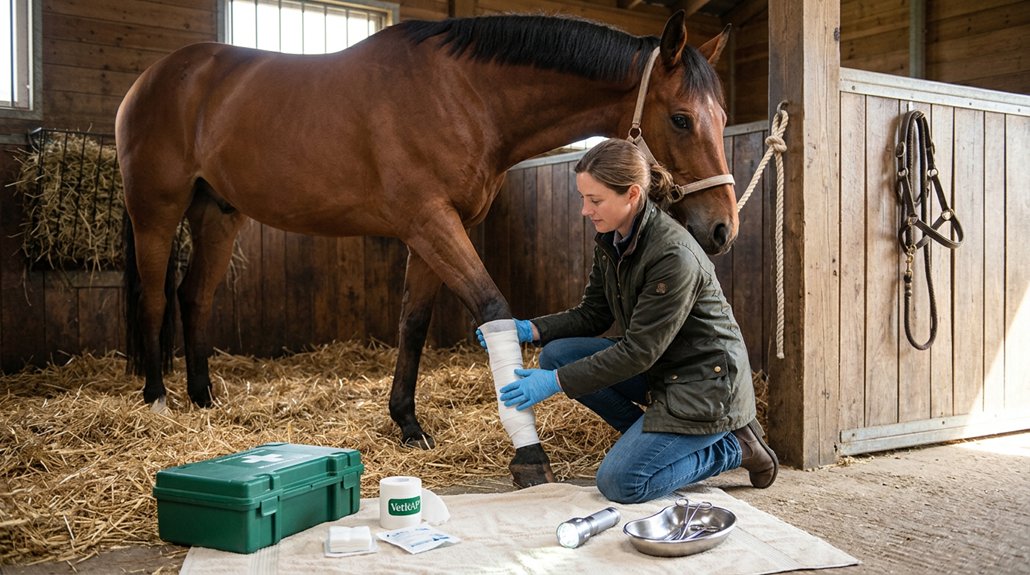
When treating wounds in horses, it’s crucial to promptly assess the severity of the injury. Begin with wound assessment, focusing on depth and location. Significant injuries around joints or excessive bleeding, over 1.5 gallons, demand immediate veterinary attention. Keep your horse calm in a clean, quiet area to minimize contamination risk. For bleeding control, apply pressure to the wound with clean cloths or bandages. If blood soaks through, don’t remove the bandage; instead, add layers to maintain pressure until professional guidance is available. Clean wounds with soap and water but avoid applying ointments or sprays as they might hinder treatments like suturing. Always contact your vet to guarantee the wound receives appropriate care, preventing infection and promoting healing.
Fever in Horses: Understanding When to Seek Help
If you observe your horse exhibiting signs of lethargy, reduced appetite, or an increased respiratory rate, it’s wise to check their temperature, as these can be early indicators of fever. Temperature monitoring is essential, as a rectal temperature over 101.5°F indicates fever symptoms that might hint at infection or illness. A low-grade fever lasting beyond 24 hours or a reading above 102°F requires immediate veterinary attention. During this time, provide comfort measures:
- Wet the horse down or use a fan to help regulate their temperature.
- Avoid administering medications like Banamine or Bute without veterinary consultation.
- Contact your vet promptly for further guidance.
Never overlook persistent fever symptoms, as early intervention can prevent complications or worsening of your horse’s condition.
Foaling Challenges: Spotting Dystocia Early
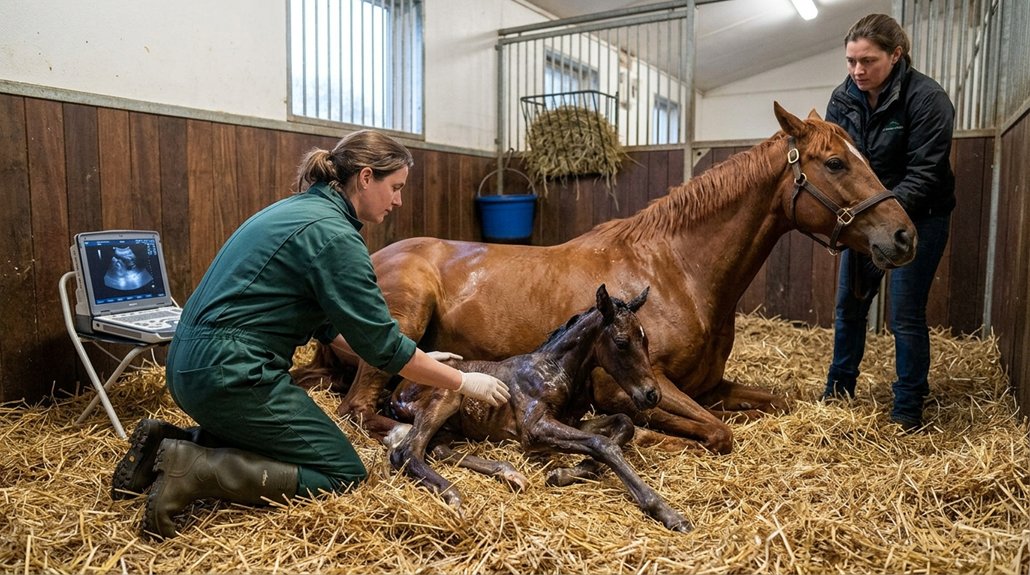
As any seasoned horse owner knows, foaling can sometimes present challenges that require immediate attention. Spotting foaling signs early is essential, especially in cases of dystocia, or abnormal birthing. If labor exceeds 15-20 minutes without progress, or if you notice unusual presentations like a red bag delivery, consider these red flags as labor complications. It’s important to call a veterinarian immediately if your mare shows prolonged labor or incorrect foal positioning. Walking the mare might alleviate some straining while waiting for the vet, but don’t attempt to manipulate the foal or give any medications. Symptoms like strong contractions without visible progress and significant distress require quick intervention to prevent life-threatening risks to both mare and foal.
Sick Foals: Prioritizing Early Intervention
Although your foal might seem resilient, its immature immune system makes it particularly susceptible to illness, necessitating immediate attention. Being observant is key. A change in foal behavior, like altered nursing habits or sluggishness, signals it’s time to call the vet promptly.
- Common Symptoms: Look out for coughing, diarrhea, lameness, or lethargy.
- Emergency Response: Quick action can prevent rapid deterioration in health.
- Sensitive Care: Avoid giving medications without veterinary guidance due to sensitivity to dosages.
Foals are vulnerable to infections, so don’t wait. Noticing early signs and ensuring they receive enough colostrum shortly after birth can greatly boost immune defenses. Facilitate a speedy veterinary consultation to pave the way for recovery and maintain your foal’s wellbeing.
Eye Care in Horses: Identifying Emergencies
Why is eye care so essential for your horse’s health? Eye injuries in horses can escalate quickly, and immediate veterinary evaluation is vital. Look for signs like redness, swelling, or discharge. Corneal ulcers, seen as a cloudy eye, need urgent care to avoid complications. Indicators such as squinting, sensitivity to light, or excessive blinking signal serious issues. Don’t ignore injuries from objects or eyelid cuts even if minor—they can threaten sight.
| Eye Condition | Action Needed |
|---|---|
| Redness or Swelling | Call vet immediately |
| Excessive Tearing | Seek urgent evaluation |
| Cloudy Eye | Suspect corneal ulcers, call vet |
| Pain or Squinting | Indicates possible serious issue |
| Penetrating Injury | Immediate professional assessment |
Sudden vision changes or odd behaviors should also prompt an urgent call to your vet.
Emergency Preparedness: Steps Every Horse Owner Should Take
Making certain you’re prepared for an equine emergency is vital for every horse owner. Planning ahead can make all the difference when timing is critical. Start by maintaining a well-stocked first aid kit, tailored specifically for horses. Include necessities like bandages, antiseptics, and pain relief to handle common emergencies efficiently. Keep a list of emergency contacts readily available. Confirm you have your vet’s number along with any after-hours services that may be necessary. Consider backup options if your primary vet is unavailable.
Ensure your horse’s safety by having a tailored first aid kit and emergency contacts ready.
- Familiarize yourself with common equine emergencies and their symptoms.
- Prepare a transportation plan for urgent trips to the nearest clinic.
- Know the best route and have a reliable trailer ready.
Your proactive approach guarantees swift and effective care for your horse.
Frequently Asked Questions
What Is the 1/2/3 Rule for Horses?
The 1/2/3 rule for horse health guides you in evaluating foal essentiality: stand within 1 hour, nurse by 2 hours, mare passes placenta by 3 hours. Failure in any step demands immediate veterinary care for survival.
Can Horses Help Lower Blood Pressure?
Absolutely, horses can lower blood pressure. Imagine stress melting away like butter on a warm day through equestrian therapy. Regular horse companionship decreases cortisol, promoting relaxation and improved cardiovascular health. It’s not just therapy; it’s transformative heart care.
What Is “I Love You” in Horse Language?
In horse language, “I love you” is shown through horse communication and equine emotions. Look for relaxed eyes, lowered head, forward ears, and gentle nickers. Mutual grooming and seeking your attention reflect trust and emotional connection.
What Are the First Signs of Hindgut Ulcers in Horses?
Imagine your horse’s whispers of discomfort; those are the first signs. You’ll notice ulcer symptoms through altered equine behavior such as appetite reduction, weight loss, irritability, reluctance to exercise, pawing, and soft manure—signals demanding your attention.
Conclusion
As a horse owner, it’s essential to keep your eyes open and remember that “an ounce of prevention is worth a pound of cure.” Being vigilant about recognizing critical signs and knowing when to call the vet can make all the difference. From managing colic and wounds to watching for fever and foaling issues, prompt attention guarantees your horse’s well-being. Always be prepared—your quick action could be lifesaving. Trust your instincts and prioritize your horse’s health.