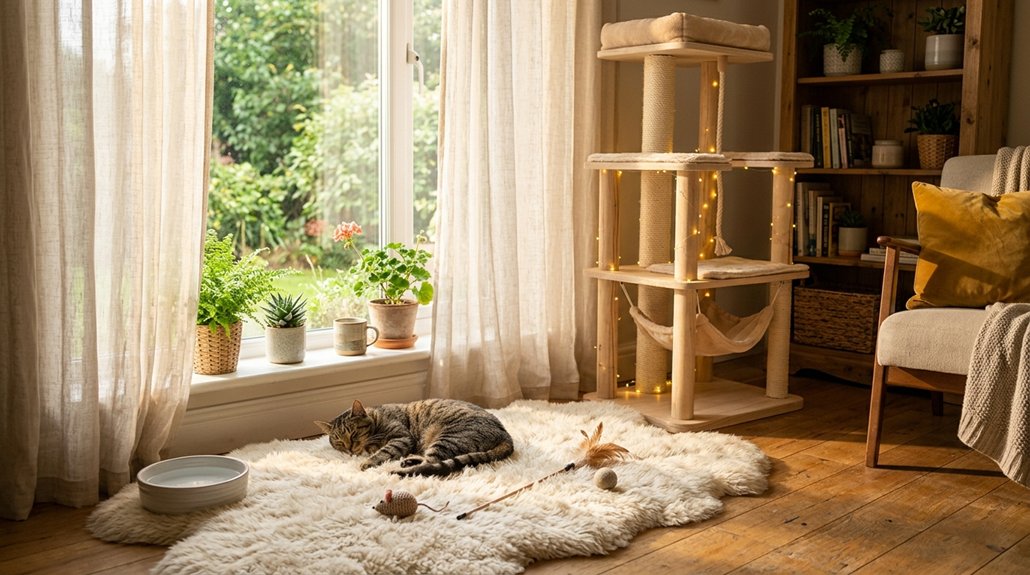
To create a positive environment for your cat, engage their natural instincts with interactive play and feeding puzzles. Provide various elevated spaces, cozy hideaways, and scratch-friendly surfaces for comfort and security. Guarantee safe indoor and outdoor adventures with secure spaces like catios. Regular maintenance of litter boxes and equipping your cat with ID enhances their safety. Embrace these strategies to enrich your cat’s life, offering further insights into harmonious living with your feline companion.
Key Takeaways
- Install cat trees and shelves to optimize vertical space for exploration and comfort.
- Use interactive toys to engage cats in daily play, satisfying natural hunting instincts.
- Provide multiple cozy hideaways and resting spots for stress reduction and security.
- Regularly rotate toys and scratching surfaces to maintain interest and prevent boredom.
- Ensure a safe environment by securing windows, doors, and providing ID methods.
Foster a Natural Feeding Experience
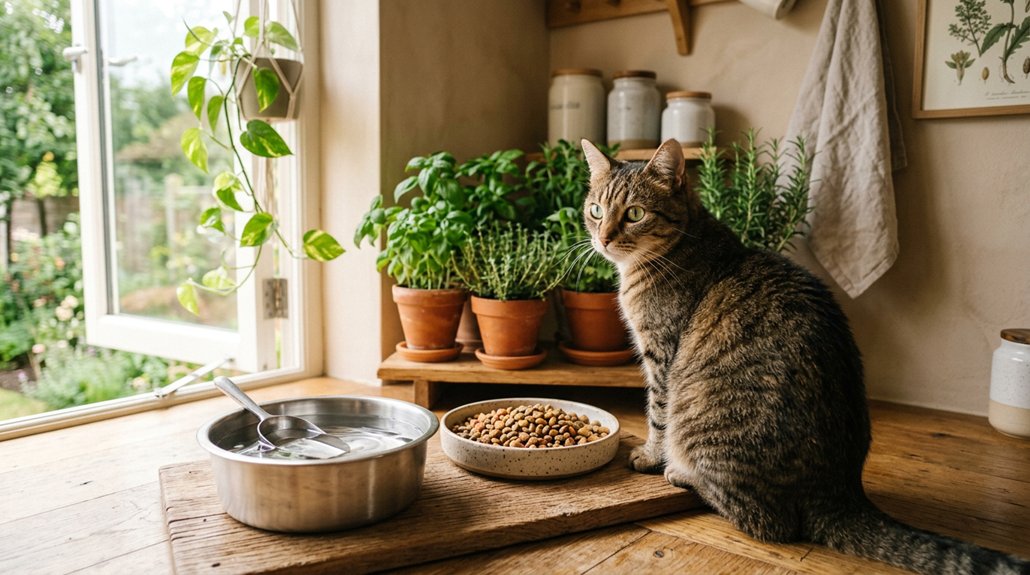
While fostering a natural feeding experience for your cat, it’s essential to incorporate strategies that engage their instincts effectively. Feeding puzzles are an excellent way to stimulate their hunting instincts during mealtime. You can create these using everyday materials like cardboard boxes or plastic bottles with holes. This setup encourages foraging activities by mimicking natural hunting behaviors. Divide meals into smaller servings and hide them around the house to spur exploration and curiosity, transforming feeding time into an engaging pursuit. Pair meal activities with grazing opportunities by planting cat grass indoors, offering a varied and instinctual diet. Maintain a routine of hiding treats daily to motivate your cat, making their feeding routine dynamic and rewarding.
Provide Restful and Secure Spaces
To guarantee your cat feels safe and reduces stress, it’s crucial to provide restful and secure spaces like cozy hideaways and enclosed areas. You can create these with cardboard boxes or cat condos, which offer a retreat from household noise and activity. Incorporating various resting spots, especially elevated options such as cat trees or shelves, caters to your cat’s natural instincts while promoting a tranquil environment.
Safe Retreat Spots
Cats naturally desire secure and private areas where they can escape and feel comfortable, making it vital to create several safe retreat spots in your home. Cater to their hiding preferences by designating safe zones that allow them to relax and de-stress. Consider incorporating high perches, like cat trees or shelves, which satisfy their climbing instincts and provide secluded observation points. Create quiet zones away from household traffic for a peaceful resting environment. Add cozy bedding or familiar scents to enhance comfort. Regularly monitor and refresh these areas to maintain their inviting appeal. By evaluating your cat’s specific needs and preferences, you’ll establish an environment that promotes well-being and security, essential for a harmonious feline-friendly household.
Enclosed Hiding Areas
Beyond offering safe retreat spots, it’s equally important to provide enclosed hiding areas, ensuring restful and secure spaces for your cat. This addresses cat behavior and their hiding preferences, offering privacy akin to their wild counterparts. Enclosed spots like cardboard boxes or condos fulfill their instinctual need to avoid predators and rest peacefully.
- Opt for variety: Use different types like boxes and tunnels.
- Ensure accessibility: Place hiding areas in various places within your home.
- Enhance comfort: Add soft bedding and familiar scents.
- Respect territory: Provide individual spots in multi-cat homes to prevent disputes.
- Keep it dynamic: Regularly rotate and change the placement of these spaces to maintain interest.
Meeting these needs supports relaxation and promotes your cat’s well-being.
Stress Reduction Techniques
Creating a stress-free environment for your cat begins with thoughtful planning and arrangement of spaces that mirror their natural instincts. Private retreats, like boxes or cat condos, cater to your cat’s need for secluded hideaways, reducing stress by providing safe havens. Elevated perches and shelves let them observe from a vantage point, a natural behavior enhancing cat communication and reducing anxiety. Guarantee cleanliness by keeping litter boxes tidy and in low-traffic areas, minimizing stressors like noise. Soft bedding and warm blankets further environmental enrichment, promoting relaxation with soothing textures. Maintain your cat’s scent profile by avoiding scented products and respecting marked areas, fortifying their comfort. Such considerate arrangements enrich your cat’s environment, aligning with their instinctual preferences for security.
Enhance Your Cat’s World With Vertical Explorations
Although many underestimate the significance of vertical spaces in feline environments, integrating elevated areas can greatly enhance your cat’s quality of life. Cat climbing structures and vertical space enrichment provide comfort, security, and a great vantage point for observing surroundings. Incorporating an array of options will stimulate your cat’s natural instincts.
- Carpeted trees, condos, and shelves: Encourage physical activity and engagement.
- Window perches: Offer mental stimulation and satisfy a cat’s curiosity.
- Dynamic setup: Regularly change the location of beds and perches to maintain interest.
- Treat motivation: Use treats to motivate exploration and climbing, ideal for sedentary cats.
- Promote natural behaviors: Vertical spaces bolster well-being by mimicking environments cats naturally enjoy.
These strategies help create a more enriched and satisfying environment for your feline.
Engage in Daily Interactive Play
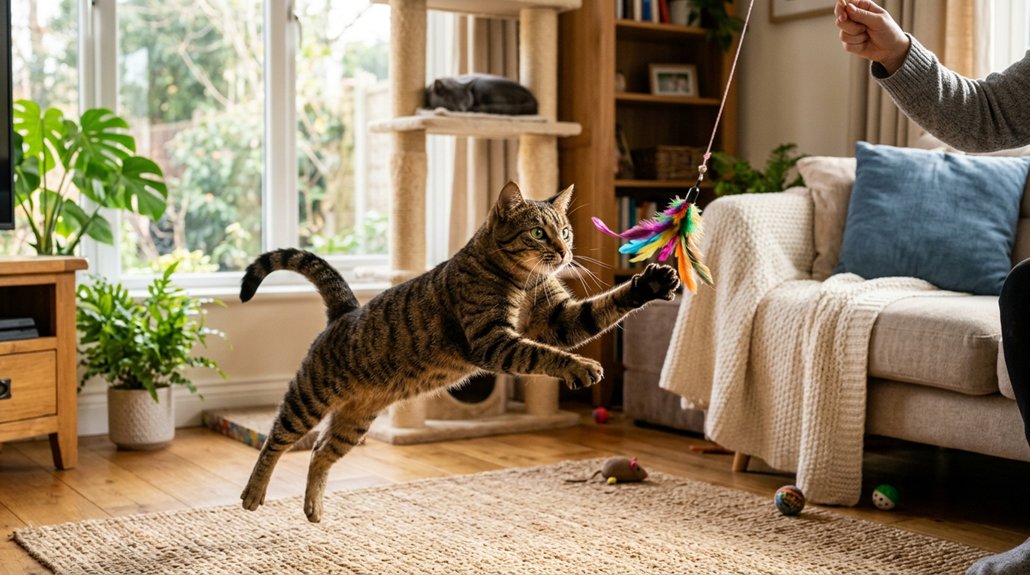
Engaging in daily interactive play with your cat is essential for their physical and mental well-being. Spending 15-20 minutes a day with interactive toys, like wand and sound-making toys, satisfies your cat’s natural hunting instincts and provides necessary exercise. Establishing consistent play routines not only reduces stress but also strengthens the bond between you and your feline friend. To sustain engagement, rotate toys every week or two, preventing boredom and ensuring that playtime remains exhilarating. Supervised play is vital; ensuring toys are safe from hazards helps prevent injuries, making sessions more enjoyable. By prioritizing these daily interactions, you create a stimulating environment that promotes trust, enriches your cat’s life, and yields a healthy, happy companion.
Craft DIY Toys to Captivate Your Cat
When constructing an enriching environment for your cat, crafting DIY toys using common household items can be both cost-effective and engaging for your feline friend. Various cat toy types can provide essential sensory stimulation and satisfy your cat’s natural instincts. Here are some ideas:
- Toilet paper roll puzzle: Fill with treats and cut holes to let kibble fall out during play.
- Shoebox feeder: Place treats inside to turn mealtime into a fun challenge.
- Cardboard maze: Cut varying shapes to create interactive pathways for exploration.
- Sound-makers: Add crumpled paper or bells to intrigue and captivate your cat.
- Q-tip chasers: Attach Q-tips to strings for irresistible play.
Rotate these toys regularly to maintain interest, observing your cat’s preferences for future creations.
Encourage Natural Scratching Behavior
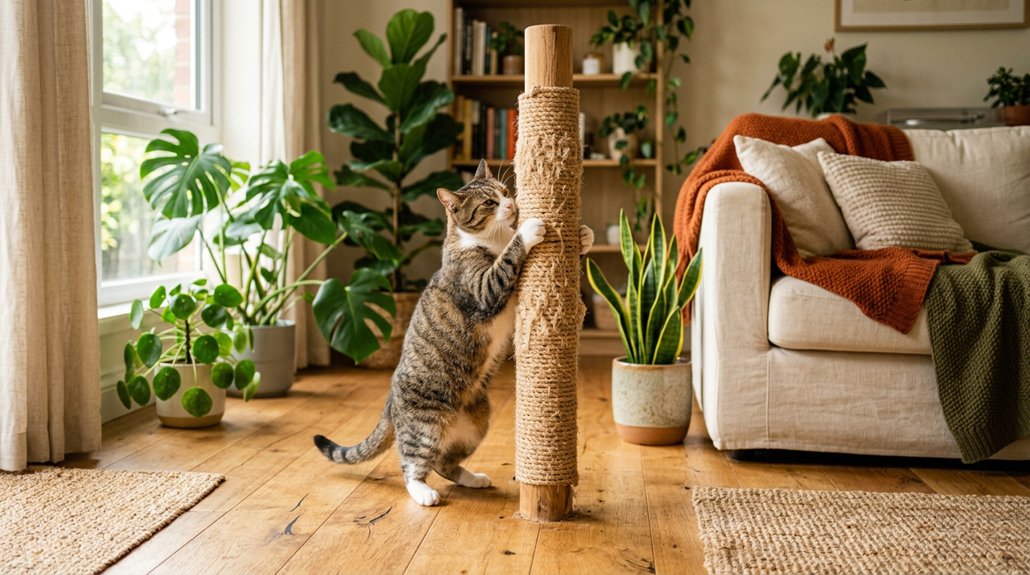
To effectively promote natural scratching behaviors in your cat, consider the diverse range of scratching surfaces available. Offer carpeted posts, sisal-wrapped posts, and cardboard planks to cater to their scratching preferences. Position these scratching posts in your cat’s favorite spots, like near windows or sleeping areas, encouraging frequent use. Reward your cat with treats and praise when they use preferred scratching items, leveraging positive reinforcement to strengthen desired behaviors.
It’s vital to rotate the location and type of scratching materials regularly to prevent boredom and maintain interest. Make certain there’s at least one scratching surface per cat, plus one extra. This approach reduces competition and supports natural behaviors, creating a harmonious environment where your cat can express itself healthily.
Ensure Safe Indoor and Outdoor Adventures
To guarantee your cat enjoys safe adventures both indoors and outdoors, start by securing an outdoor exploration space through a catio or supervised walks with leash training. Indoors, enhance their environment with vertical spaces like padded perches or cat trees near windows, offering them opportunities for exploration and relaxation. Always keep windows and doors secure with screens and make certain your cat is equipped with a breakaway collar and microchip for identification.
Secure Outdoor Exploration Spaces
Although cats are naturally curious creatures that benefit from exploring their surroundings, ensuring their safety in both indoor and outdoor environments is essential. Offering secure outdoor spaces like a catio provides numerous catio benefits, allowing your pet to enjoy fresh air and sunshine safely. Here’s how to enhance outdoor safety:
- Install a catio: Gives your cat safe access while reducing escape and danger from other animals.
- Use screened porches: Experience the outdoors without risks.
- Create a cat-proof yard: Remove toxic plants and block escape routes.
- Train with a harness and leash: Supervised exploration through early training.
- Regular risk assessments: Check for wildlife or loose dogs in outdoor areas.
Implement these strategies for enriching and secure cat adventures.
Indoor Adventure Enhancements
Having established a secure outdoor environment, enriching your cat’s indoor experiences becomes equally important for their overall well-being. Start by installing padded window perches, giving them sunny spots for bird watching and mental stimulation. Next, transform your home into an indoor jungle by maximizing vertical space with cat trees and shelves. This not only caters to their climbing instincts but adds dynamic exploration options at varying heights.
Consider creating a catio or screened porch for a secure outdoor experience, combining the benefits of fresh air while preventing escape. Regularly rotate toys and initiate daily play sessions to mimic hunting behaviors, promoting physical and mental enrichment. Provide hiding spots like boxes and condos, simulating natural retreats to enhance security and reduce stress indoors.
Keep the Litter Box Fresh and Inviting
Making certain that your cat’s litter box is fresh and inviting is essential for both their comfort and hygiene. Litter box hygiene is vital for preventing odors and encouraging consistent use. Start by scooping daily and changing the litter weekly. Cats are finicky creatures; understanding their cat litter preferences can make all the difference. Try different litters, like clumping or unscented, to see what suits your cat’s sensitive paws and nose.
- Place the litter box in a quiet, low-traffic area to reduce stress.
- Confirm the box is large enough—about one and a half times your cat’s length.
- Provide one litter box per cat, plus one extra, to avoid competition.
- Stay attentive to your cat’s behavior and adjust their litter situations accordingly.
Keep Your Cat Safe and Identifiable
While keeping your cat’s litter box fresh is important for their well-being, ensuring their safety and identification is equally essential. Equip your cat with a breakaway collar adorned with an ID tag displaying your contact details. This simple step helps in swiftly identifying your feline if they venture outside. Microchip identification offers a robust, permanent method that shelters and vets commonly check.
| Action | Benefits | Recommendations |
|---|---|---|
| Breakaway collar | Quick identification | Include current contact info on ID tag |
| Microchip identification | Permanent ID method | Regularly update contact details |
| Secure exits | Prevents accidental escapes | Keep windows and doors screened or closed |
Stay informed with local pet rescue resources to be prepared for any emergencies.
Frequently Asked Questions
What Is the 3-3-3 Rule for Cats?
The 3-3-3 rule helps you understand feline adjustments. Initially, cats exhibit stress. After three weeks, their behavior becomes bold. In three months, they’re fully acclimated, displaying true cat behavior. Your patience encourages their adaptation process.
How to Make a Good Environment for a Cat?
Sure, just like a five-star hotel for cats! Start with scratching posts and climbing trees. Then, throw in cozy hiding spots and safe zones. They’re not world travelers; just make their home their best staycation.
What Is “I Love You” in Cat Language?
In cat language, “I love you” is expressed through cat communication such as slow blinking, purring, and kneading. These displays of feline affection indicate they’re comfortable and trust you, enhancing a strong bond between you both.
What Is the 3:2:1 Rule in Cats?
The 3:2:1 rule guarantees cat behavior stability by offering three vertical spaces, two food/water spots, and one litter box per cat. This approach increases feline comfort, promoting well-being and reducing competition-induced stress by 60%. Test it yourself!
Conclusion
Creating a haven for your cat is like hitting the nail on the head when aiming for a happy, healthy feline companion. By fostering natural feeding, providing secure resting spaces, and encouraging vertical explorations, you’re laying the groundwork for a fulfilling environment. Remember to incorporate daily play, DIY toys, and natural scratching outlets. Maintain a clean litter box and guarantee safe adventures. With these expert tips, you’ll have a content, engaged cat that’s as snug as a bug in a rug.