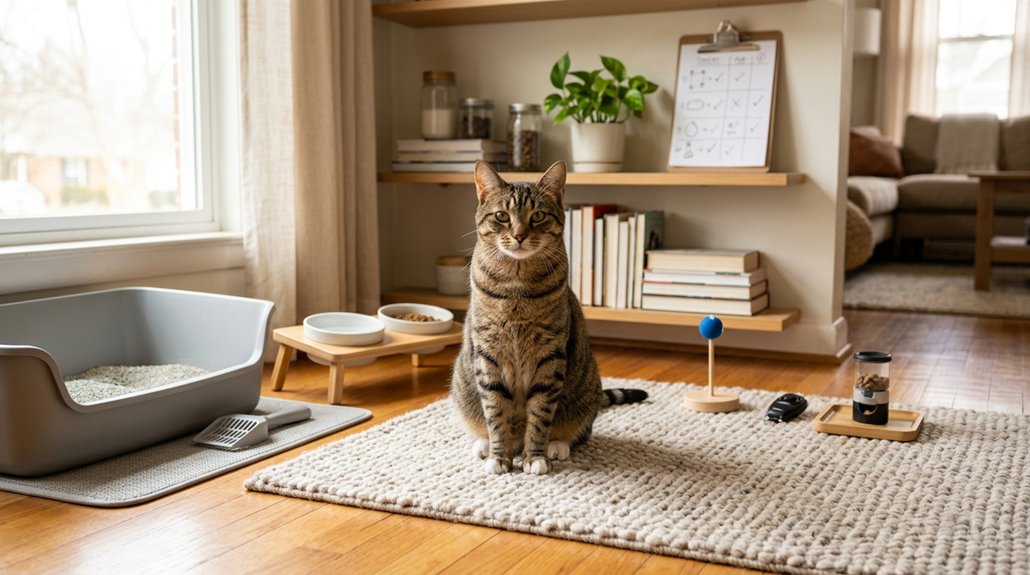
To create structure for a well-behaved cat, focus on early socialization during the critical 2 to 9-week period and build bonds through playful interactions. Establish consistent routines for feeding and playtime to reduce anxiety and promote well-being. Provide a stimulating environment with vertical spaces and interactive toys. Encourage proper behavior by using toys instead of hands for play and reinforce good habits with positive feedback. Explore further to discover more insights on nurturing your cat’s well-being.
Key Takeaways
- Implement a consistent feeding schedule to reduce anxiety and promote predictable routines.
- Schedule daily play sessions to fulfill hunting instincts and provide mental and physical stimulation.
- Use positive reinforcement training to encourage good behaviors with high-value treats and brief sessions.
- Introduce a stimulating environment with vertical spaces and varied interactive toys for exploration.
- Conduct regular veterinary visits for preventative care, ensuring your cat’s long-term health and well-being.
Kickstart Early Socialization: Why It’s Crucial
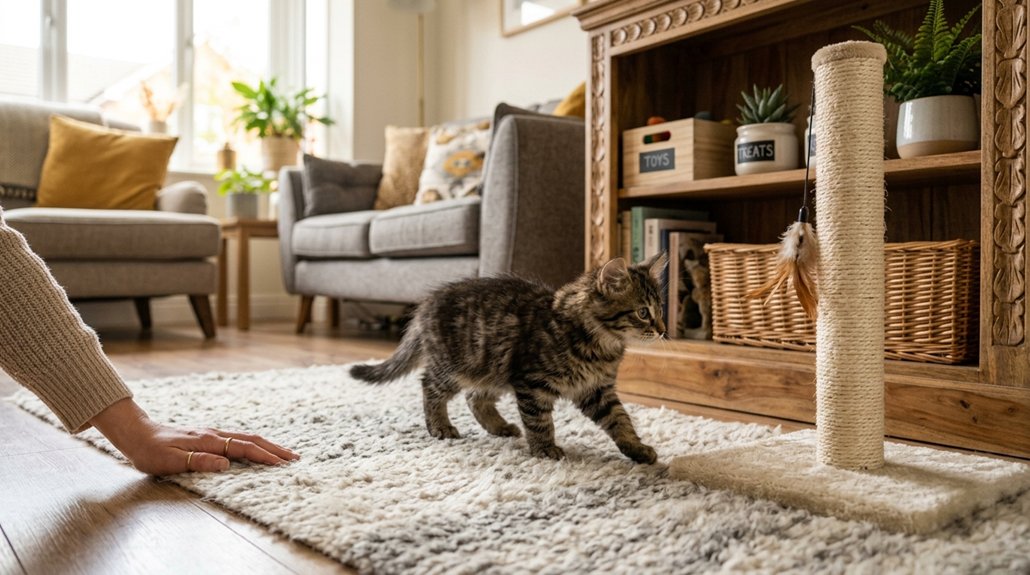
How can you guarantee your kitten grows up to be a well-adjusted and confident cat? Early socialization is key. During the critical period of 2 to 9 weeks, exposing your kitten to a variety of people, environments, and experiences helps foster socialization benefits. This exposure variety is essential in building confidence and friendly behavior. Gentle handling techniques and positive interactions promote trust development, which is important for preventing anxiety. By gradually introducing your kitten to new experiences, you’re setting the stage for effective anxiety prevention and future adult adaptability. Remember, a well-socialized kitten is more likely to face new situations calmly, reducing the risk of aggression. Establishing this trust guarantees a harmonious and happy life together.
Create Routine With Meals and Play
To nurture a well-behaved cat, establishing a structured feeding schedule and consistent playtime routine becomes essential. Regular meal times provide predictability, reducing anxiety and promoting healthy eating habits, while daily play sessions satisfy their natural hunting instincts and boost physical health. Remember, maintaining consistency by feeding and playing with your cat at the same times each day not only reinforces security but also strengthens your bond as you adjust routines based on their engagement levels.
Structured Feeding Schedule
While it might seem trivial, establishing a structured feeding schedule is essential for maintaining your cat’s well-being. Consistent meal timing directly influences your cat’s feeding habits, aiding digestion and stabilizing energy levels. Cats thrive on predictability, so aim to feed them twice daily at the same times. Here’s how to enhance their routine:
- Incorporate play sessions before or after meals to engage them physically and mentally.
- Practice portion control to guarantee they maintain a healthy weight.
- Adjust meal sizes based on activity level and age to suit their nutritional needs.
- Stick to a schedule to create a sense of security and comfort.
- Observe their behavior to refine feeding and play routines for even better results.
Consistent Playtime Routine
Establishing a consistent playtime routine alongside their meals doesn’t just add structure to your cat’s day; it creates a harmonious blend of predictability and involvement that cats naturally crave. By scheduling play sessions before and after meals, you offer balanced stimulation that enhances both physical and mental well-being. Interactive toys that mimic hunting behaviors facilitate enhanced engagement, helping reduce potential behavioral issues. Keeping the play brief but enthralling—around 5-10 minutes—respects your cat’s short attention span while keeping their enthusiasm alive. In addition, regularly rotating toys and introducing playful variety guarantees your cat remains mentally stimulated, contributing to their well-behaved nature. As you observe their reactions, you’ll understand which activities nurture their curiosity and joy, creating a routine they’ll look forward to.
Design a Stimulating Environment for Cats
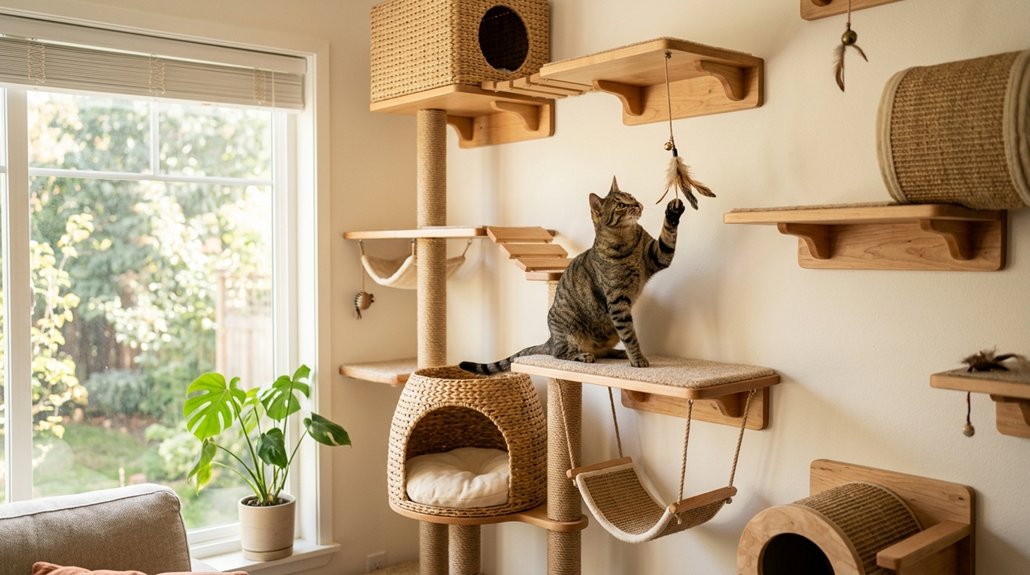
Although cats are known for their independence, providing a stimulating environment is essential for their well-being and behavior. By enriching your cat’s surroundings, you cater to their natural instincts while promoting healthy habits. Here’s how you can offer environment enrichment to your feline friend:
- Vertical spaces: Install shelves or cat trees to encourage climbing opportunities and sensory exploration.
- Interactive toys: Provide puzzle feeders and playthings for both mental stimulation and physical activity.
- Cozy retreats: Create hiding spots with cat caves or boxes, ensuring comforting areas to retreat and relax.
- Scratching alternatives: Offer diverse options beyond traditional posts to satisfy scratching urges.
- Engaging surroundings: Rotate toys and introduce new elements to maintain interest and prevent boredom.
Encourage Proper Scratching With Posts
In addition to creating a stimulating environment, it’s important to address your cat’s natural urge to scratch. Providing scratching posts made from sisal or cardboard is a fantastic way to offer scratching alternatives, helping redirect your cat’s instinctive behavior from your furniture to designated areas. Place these posts in high-traffic zones and near spots your cat already scratches. This strategic placement encourages regular use and reinforces positive reinforcement through familiarity.
Guide your cat gently toward the scratching post when they show signs of scratching elsewhere and appreciate their cooperation with treats or affection. Remember to regularly rotate or introduce new scratching surfaces to maintain their interest. Fulfilling their need to scratch not only preserves your home but also guarantees your cat’s happiness and well-being.
Discourage Rough Play: Use Toys Instead
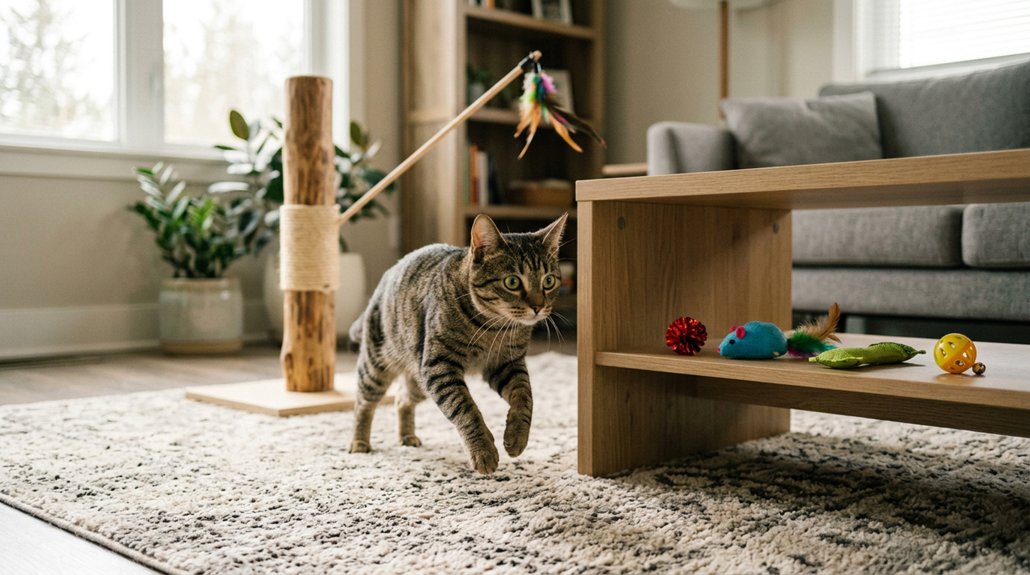
When it comes to nurturing a well-behaved cat, redirecting their playful energy to toys is essential for promoting safe interactions. Establishing boundaries early with a firm “No” can guide your kitten away from rough play with hands or feet, while offering a variety of engaging toys satisfies their hunting instincts. Rewarding them with treats or praise when they choose toys over human skin reinforces positive play habits, ensuring a harmonious home environment.
Redirect Energy to Toys
A myriad of engaging toys can transform your cat’s rough play into a constructive outlet for their energy. By introducing playtime variety, you effectively redirect your cat’s instincts away from hands and feet toward fun, interactive alternatives. Guarantee your selection includes toys that mimic prey movements, as they encourage your cat to pounce and chase, helping channel their playful energy constructively. Regular play sessions, using toys like feather wands or interactive balls, are essential for both physical exercise and mental stimulation.
Remember these tips:
- Use toys with enticing movements to attract interest.
- Engage in play sessions twice a day to maintain focus.
- Utilize a firm “No” and redirect their attention.
- Reward positive interactions with treats or praise.
- Foster a positive bond through structured activities.
Establish Boundaries Early
From the earliest days with your kitten, setting boundaries is essential to nurture a well-mannered feline companion. Understanding kitten behavior, you’ll notice they’re naturally playful, but establishing play boundaries early on helps prevent future issues. Discouraging rough play—such as pouncing on hands or feet—guards against unwanted biting and scratching as they mature.
Redirect your kitten’s energetic instincts towards appropriate toys. When rough play occurs, use a firm “No” and immediately offer a fun toy, making your disapproval clear. In situations where they insist on attacking your hands or feet, calmly walk away and ignore them, signaling the consequence of ending play. These early lessons help your kitten learn “petiquette” and guarantees a harmonious relationship as they grow.
Promote Safe Playtime
Although kittens are naturally playful creatures, promoting safe playtime with them is essential to prevent rough and aggressive behavior. Providing interactive toys is key to channeling your kitten’s productive energy. Here’s how you can do it:
- Offer a variety of interactive toys like feather wands and laser pointers to mimic hunting.
- Redirect rough play to appropriate toys, using a firm “No” to set boundaries.
- Set a regular play routine, aiming for at least two sessions daily to keep them stimulated.
- Avoid using hands or feet as playthings to
Make Training Fun With Praise
Training your cat can be a delightful and rewarding experience, especially when you make it enjoyable with praise. By incorporating positive feedback and training rewards, you’re showing your cat that good behavior leads to great outcomes. Use high-value treats to entice your feline friend and reinforce successful actions. Remember, celebration of small victories is key. Even the tiniest achievement deserves acknowledgment, boosting your cat’s confidence and enthusiasm to learn more.
Keep training sessions brief—just 5-10 minutes—to suit their attention span. It’s important to intertwine these short, rewarding sessions with play, ensuring it remains a playful adventure rather than a chore. Establish regular routines where training and fun coexist, solidifying desirable behaviors through consistency and joy-filled learning moments.
Set Furniture and Space Boundaries Early
To cultivate a harmonious environment with your feline companion, it’s important to establish furniture and space boundaries early on. This prevents unwanted jumping and climbing behaviors, ensuring a peaceful home for both of you. Strategically configuring furniture placement helps define clear areas where your cat is allowed or prohibited. Consistency in boundary reinforcement across all household members is critical to avoid confusion.
Establishing early boundaries curbs unwanted cat behaviors for a peaceful home.
- Designate specific no-go furniture areas, like countertops.
- Use positive reinforcement to reward good behavior.
- Introduce alternatives, such as scratching posts or cozy beds, in acceptable spots.
- Develop a routine together by consistently maintaining these boundaries.
- Prevent habits by setting boundaries when your cat is young.
Secure Health Through Regular Vet Visits
Regular veterinary visits are vital for maintaining your cat’s overall health and well-being. Scheduling regular check-ups, ideally at least once a year for healthy adult cats, guarantees that preventative health measures are consistently in place. These visits, especially important for kittens and senior cats, allow your vet to monitor for signs of illness, parasites, and general well-being. Early detection can improve your cat’s behavior and quality of life. Wellness examinations typically include vaccinations, dental checks, and weight and nutrition assessments, maintaining peak health. Developing a consistent relationship with your vet helps tailor specific health plans for your cat, creating an all-encompassing medical history. Preventative care through routine visits can reduce long-term healthcare costs and promote a longer, happier life for your feline friend.
Build Bond Through Playful Interaction
Ensuring your cat’s health is just part of the equation in nurturing a well-behaved pet; another significant factor is the bond you share, and playful interaction serves as a cornerstone for this relationship. Engaging in daily play sessions fulfills your cat’s hunting instincts while offering mental stimulation. Worthy bonding activities involve understanding their play preferences, utilizing interactive toys for varied experiences. By observing your cat’s unique style, you can personalize interactions and strengthen your connection. Here are some tips:
- Schedule play twice a day to maintain routine.
- Use interactive toys to simulate hunting instincts.
- Personalize play according to your cat’s preferences.
- Reinforce positive interactions with treats or praise.
- Cultivate bonding activities that build trust and affection.
These steps promote harmony and reduce behavioral issues.
Frequently Asked Questions
What Is the 3-3-3 Rule for Cats?
The 3-3-3 rule illustrates cat adaptation phases: three days hiding, three weeks exploring, and three months settling fully. Understand feline anxiety needs patience and observation to help your cat feel secure and show true personality.
How Do I Make My Cat Well Behaved?
Create a well-behaved cat by using positive reinforcement to reward good behavior. Also, provide environment enrichment with toys and scratching posts. Be consistent with house rules, and offer plenty of attention to nurture a trusting bond.
What Is “I Love You” in Cat Language?
When your cat gazes with slow blinks or purrs contently near you, it’s their heartstrings playing the “I love you” tune. Feline body language and cat vocalizations express immense affection through these silent yet powerful gestures.
What Is the #1 Cause of Death in Cats?
The #1 cause of death in cats, especially those over 7, is chronic kidney disease. You’re wise to contemplate feline health by acknowledging this common illness and prioritizing regular check-ups for early detection and management.
Conclusion
Creating structure for your cat is like laying the foundation for a strong, harmonious relationship. By incorporating early socialization, consistent routines, and a stimulating environment, you set a positive tone that resonates throughout your cat’s life. Encourage good habits and forge a bond through playful interactions and regular vet check-ups. Remember, every effort you make is an investment in your cat’s well-being, transforming your home into a sanctuary where both of you thrive.