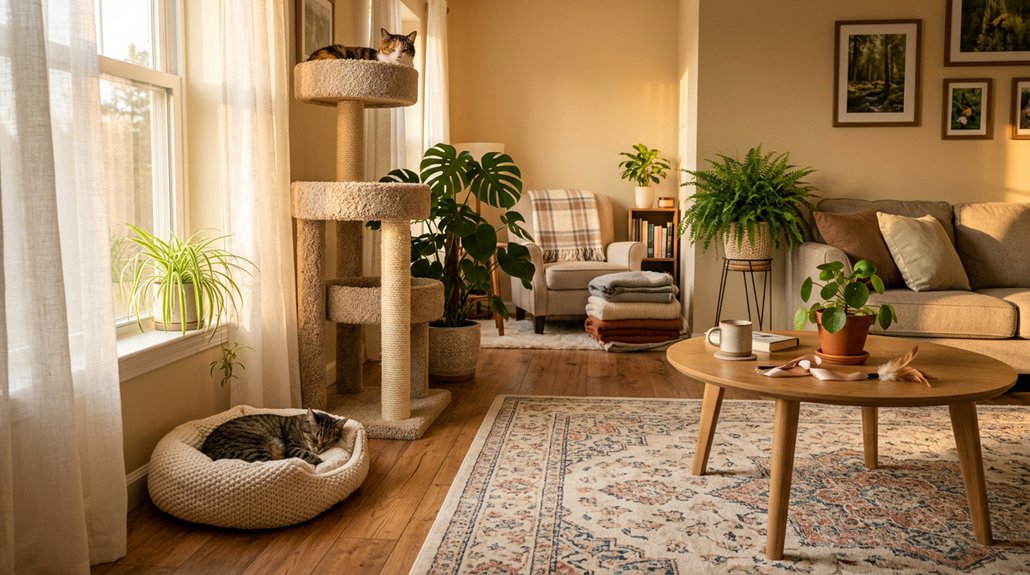
To create a cat-friendly space at home, guarantee your feline’s environment caters to their needs by incorporating vertical elements like shelves and cat trees for exploration and vantage points. Provide scratching surfaces and varied resting spots to promote health and relaxation. Designate safe dining and hygienic litter areas to minimize stress and maintain cleanliness. Use interactive toys to engage hunting instincts and enrich with calming sounds. Your cat’s well-being will thrive, and there’s much more to explore.
Key Takeaways
- Incorporate vertical elements and cat trees for exploration and safe vantage points.
- Design cozy hiding spots to reduce stress and encourage natural curiosity.
- Provide elevated sleeping quarters and diverse resting locations for relaxation and comfort.
- Create a stress-free dining area with separate food and water stations, avoiding whisker fatigue.
- Use interactive toys and puzzles to stimulate hunting instincts and prevent boredom.
Embrace Catification: Steps to a Happy Cat Home
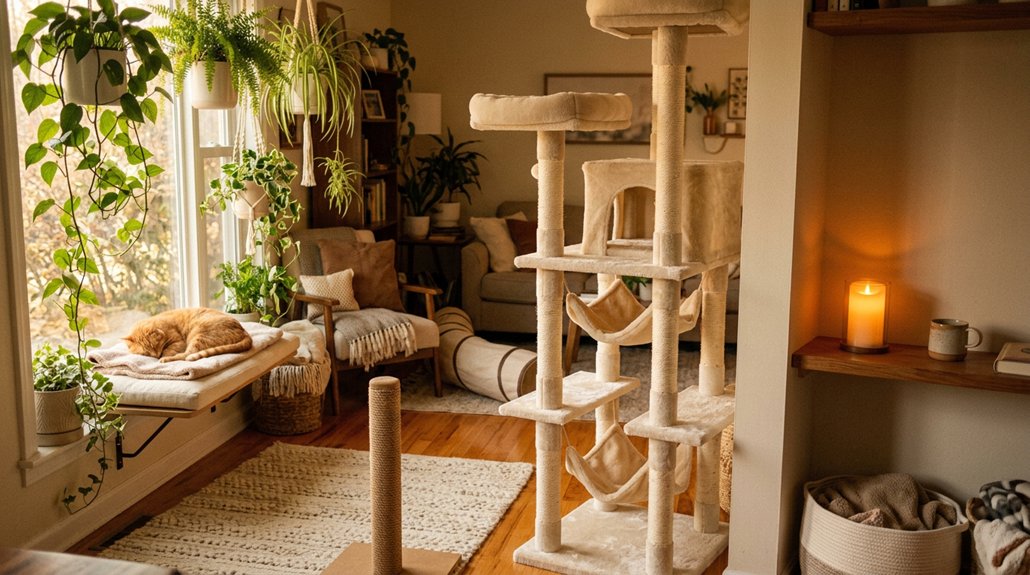
Creating a cat-friendly environment through catification isn’t just about adding accessories—it’s a thoughtful transformation of your home to support your feline’s physical and emotional needs. Incorporate cat-friendly furniture that extends into your cat’s indoor territories, catering to their instinctive behaviors. Vertical elements like cat trees and shelves offer essential vantage points for exploration and security, satisfying their need for safe observation spots. Diversifying scratching surfaces with materials such as carpet, cardboard, and wood not only keeps their claws healthy but also enriches their scent-marking rituals, decreasing destructive tendencies. Provide various cozy resting locations, ensuring elevated perches and hideaways for your cat’s relaxation and retreat. Strategically place food, water, and litter boxes to promote accessibility, ensuring a relaxed, harmonious living space.
Design Play Areas With Safe Exploration and Hiding Spots
When designing play areas for your cat, it’s vital to take into account their intrinsic need for safe exploration and the comfort of secret hideaways. Cats thrive on intelligent exploration techniques and clever hiding strategies, which can be achieved through thoughtful modifications to your home environment. Incorporate elements like cat trees and shelves to offer safe vantage points, encouraging natural exploratory behaviors. Promote dynamic exploration by maintaining slight disorder in furniture layout to create unexpected routes and novel hiding spots. Integrate cozy nooks under beds, within cupboards, or behind sofas, providing essential retreats for stress relief. By cleverly using clutter as both hiding spaces and interest points, you’ll enrich their environment, keeping your cat curious and mentally stimulated.
Set Up Awesome Perches for Your Cat to Chill and Watch
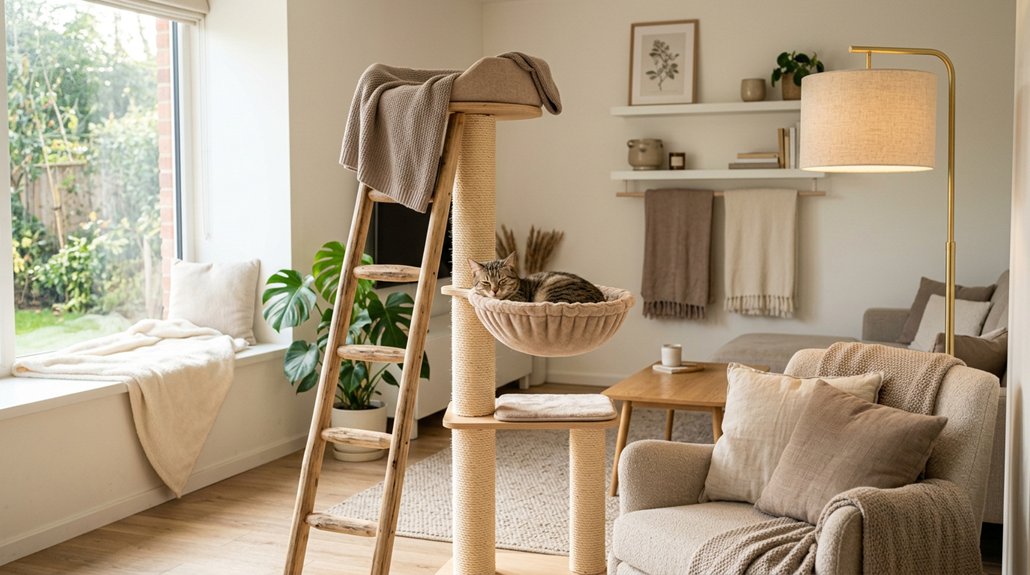
Creating elevated spaces is essential for your cat’s wellbeing, as these spots provide both observation areas and relaxation nooks that satisfy their need for safety and mental stimulation. You’ll want to guarantee these perches are sturdy and fit seamlessly into your home decor, prioritizing materials that are easy to clean and maintain. Strategically placing these elevated areas near windows can enrich your cat’s experience by offering views of the outdoors, enhancing their happiness and mental health.
High-Altitude Observation Spots
While cats are naturally drawn to high places, providing them with well-designed high-altitude observation spots is vital for their overall well-being. Installing cat trees or shelves, around 5-6 feet off the ground, is important for catering to their innate climbing and perching instincts. Consider diverse cat tree styles to suit your space and your cat’s personality. Window perch designs transform windows into engaging lookout stations, offering fresh air access and intriguing views.
A variety of elevated surfaces meet different climbing preferences and maintain territorial richness. Continuous access to high perches not only supports exploration but greatly reduces stress by providing a secure vantage point.
| Cat Tree Styles | Window Perch Designs |
|---|---|
| Multi-level towers | Suction-cup mounts |
| Wall-mounted shelves | Hammock-style attachments |
| Modern minimalist | Clear, unobtrusive platforms |
| Traditional climbing | Convertible sill exteriors |
Elevated Relaxation Nooks
Although cats are naturally drawn to heights, setting up elevated relaxation nooks is essential to provide them with safe and satisfying observation points. These nooks, like cat trees and wall-mounted shelves, meet your cat’s instinctual need for height while ensuring perch safety. Position them near windows to enhance their view of birds and other wildlife, which keeps their environment enriching.
To optimize safety and enjoyment:
- Use sturdy materials to prevent accidents during playful jumps.
- Add ramps or low perches for senior cats or those with mobility issues.
- Rotate perch locations to maintain interest and cognitive stimulation.
- Introduce texture variety like carpet, wood, or sisal, offering sensory engagement.
Implementing these scientific principles enriches your cat’s life, ensuring security and delight.
Create a Stress-Free Dining Environment for Cats
To create a stress-free dining environment for your cat, start by selecting wide, shallow ceramic or glass bowls that help prevent whisker fatigue and improve meal comfort. Strategically place these feeding stations in calm areas away from litter boxes and high-traffic zones to guarantee your cat enjoys a peaceful mealtime. Additionally, consider incorporating raised feeders and puzzle feeders to maintain hygiene, reduce competition, and provide mental stimulation.
Optimal Bowl Selection
Selecting the best bowls for your cat’s meals can greatly contribute to a stress-free dining environment, enhancing their overall well-being. The right bowl materials and design cater to your cat’s feeding habits and physiological needs. Opt for wide, shallow ceramic or glass bowls to prevent whisker fatigue; these materials are durable and less prone to harbor bacteria. To support their natural feeding habits:
- Choose separate food and water bowls to promote hydration and prevent cross-contamination.
- Elevate bowls to simplify access, reduce spillage, and improve posture during meals.
- Integrate puzzle feeders to stimulate mental engagement and mimic hunting behaviors.
- Guarantee bowls are cleaned regularly to maintain hygiene, preventing bacterial growth.
This thoughtful approach helps your feline companion enjoy safe and comfortable dining experiences.
Strategic Feeding Placement
When crafting a stress-free dining environment for your cat, paying attention to strategic feeding placement is paramount. Position food and water bowls away from litter boxes and high-traffic zones to mimic natural habits, reducing stress. Opting for wide, shallow ceramic or glass bowls prevents whisker fatigue and maintains comfort during meals. Elevate these bowls to guarantee food safety from contaminants and minimize interference by other pets. In multi-cat households, provide one bowl per cat plus an extra to alleviate stress over resources. Bowl maintenance is critical to prevent bacterial growth—clean them regularly. For mental engagement, introduce puzzle feeders that align with your cat’s instinctual hunting behavior. This holistic approach supports both physical and psychological well-being, enhancing your cat’s dining experience.
Ensure Hygiene and Privacy With Smart Litter Solutions
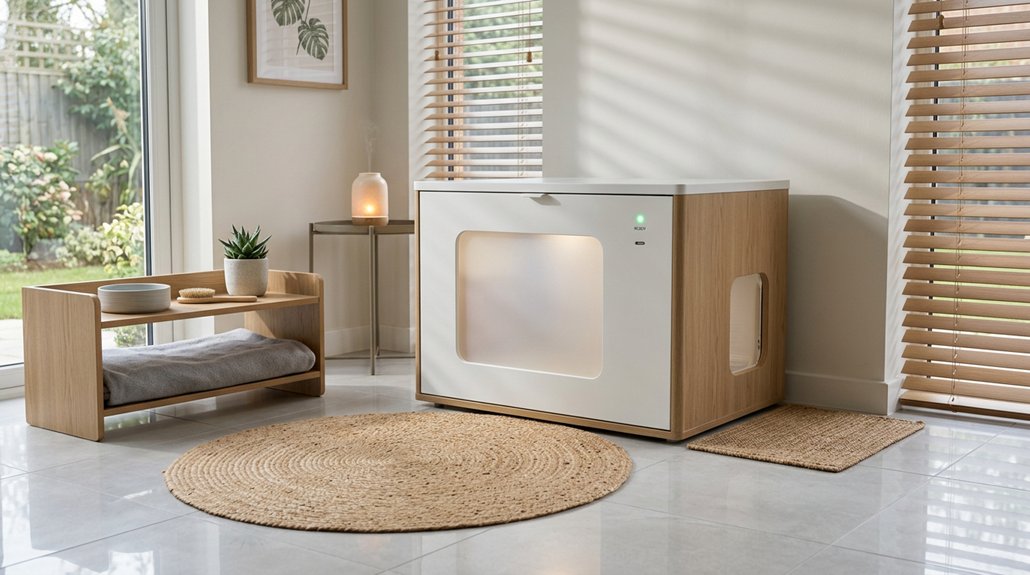
Creating a cat-friendly home involves more than just providing the essentials; it’s about guaranteeing hygiene and privacy through smart litter solutions. Start by considering litter box placement. Strategically position boxes away from food, water, and high-traffic areas to give your cats a private experience. Opt for eco-friendly options, such as biodegradable litters, which are beneficial for both the planet and your feline’s health.
Here are additional tips:
- Plan for one litter box per cat, plus an extra: This prevents territorial conflicts and guarantees accessibility.
- Integrate discreet designs: Furniture-like boxes blend with your décor while providing functionality.
- Adopt a regular cleaning routine: Scoop daily, deep clean weekly to keep odors at bay.
- Choose sustainable materials: Eco-friendly litters minimize environmental impact while maintaining comfort.
Promote Natural Play and Hunting Instincts With Interactive Toys
Engage your cat’s natural instincts with interactive toys designed to mimic the thrill of the hunt. Utilizing feather wands and mechanical mice not only enhances cat engagement but also provides essential sensory stimulation. These toys replicate prey movements, tapping into the primal hunting drive that keeps your cat active and mentally alert. Food puzzles offer additional enrichment, encouraging your cat to ‘hunt’ for food and transforming mealtime into a satisfying challenge. Regularly rotate toys to sustain your cat’s interest and prevent boredom. Choose safe materials that resemble natural prey for prime sensory activation. By sharing interactive play sessions, you not only fulfill your cat’s predatory instincts but also nurture the emotional bond between you both, ensuring a happier, healthier companionship.
Optimize Resources for a Cat-Friendly Multi-Cat Home
Balancing the energetic play of your feline friend with a thoughtfully structured environment takes on added importance in homes with multiple cats. Effective resource allocation is critical in minimizing competition and promoting peace. Each cat should have access to essential items—supplying one food bowl, water source, scratching post, and litter tray per cat with a spare. Space these resources well apart to ease access and reduce conflict. Regularly observe individual preferences for tailored solutions, ensuring ideal comfort and well-being. Here are some key strategies:
- Utilize elevated feeding stations to encourage interaction and enhance comfort.
- Implement multiple play areas to cater to diverse personalities.
- Prioritize cleanliness to maintain a stress-free, healthy area.
- Regularly replenish food and water to prevent potential stress points.
Create Cozy Sleeping Quarters and Quiet Retreats
When designing a sanctuary for your feline companions, acknowledging their individual sleeping preferences is key to fostering a harmonious environment. Tailor your bed design to include diverse options, like mat beds for those who like to sprawl and cozy cocoons for cats that prefer curling up. Place these beds in warm, sunny spots, elevated areas, or near vents, aligning with their natural napping habits. Use natural materials such as cotton and wool for comfort and ease of cleaning.
In terms of creating retreat locations, provide spaces under furniture or inside closets where your cats can retreat, ensuring they feel secure. For senior cats, prioritize soft, warm bedding with easy access to minimize discomfort and promote restful sleep, ensuring their comfort above all.
Honor Your Cat’s Senses: Tailor Smell and Sound Environments
Creating cozy sleeping quarters is only part of fostering a nurturing environment for your feline friends—attending to their sensory needs also plays a significant role. Cats rely on scent enrichment to feel secure in their territory. Preserve their familiar scent marks to prevent stress and use mild, non-toxic cleaners to keep them relaxed. Introduce new aromas through cat-friendly herbs or catnip, stimulating their instincts and providing a rich olfactory experience.
Equally important is crafting soundscapes for their well-being. Reduce loud noises and add soft music or nature sounds to create a soothing environment. Here’s how to enrich your cat’s sensory landscape:
- Maintain their scent marks.
- Use mild cleaning products.
- Offer diverse, safe herb scents.
- Provide calming background sounds.
Frequently Asked Questions
What Is the 3-3-3 Rule for Cats?
The 3-3-3 rule guides you through a cat’s adjustment process: three days to settle, three weeks to adapt routines, and three months for full integration. This timeline aids understanding cat behavior and fostering feline comfort.
What Is “I Love You” in Cat Language?
In cat communication, “I love you” is expressed through feline behavior like slow blinks signaling comfort, purring for contentment, offering you “gifts,” or gentle head-butts that mark you as theirs—each revealing their affectionate side.
What Is the #1 Cause of Death in Cats?
Chronic kidney disease is the leading cause of cat mortality, affecting senior felines most. To enhance cat health and feline safety, prioritize regular vet visits for early detection and management, ensuring longer, happier lives for your furry friends.
How Do I Make My House More Cat Friendly?
A cat’s happiness is a home’s heart. Add diverse cat furniture options like trees and shelves for climbing, and create dedicated feline play zones. Guarantee safety, stimulation, and comfort by blending expertise with empathy in your playful designs.
Conclusion
Creating a cat-friendly space at home is essential for your furry friend’s happiness and health. Did you know cats spend up to 70% of their lives asleep? By setting up cozy sleeping quarters and quiet retreats, you’re honoring their natural habits. Embrace catification by considering their senses, providing interactive toys, and ensuring hygiene. A well-designed space reduces stress and promotes healthy behavior, so take these expert tips to heart and transform your home into a cat haven.