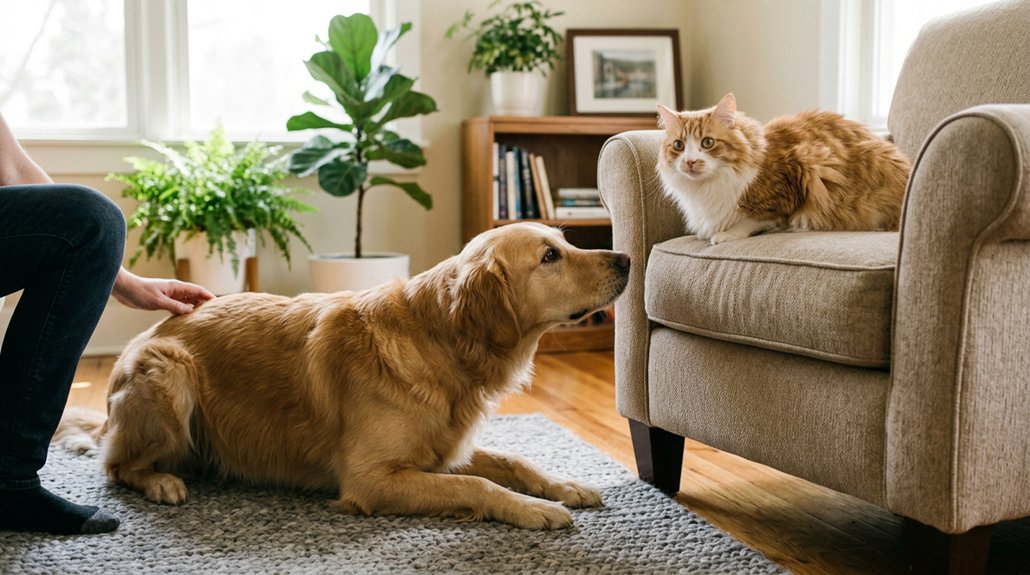
To safely introduce a cat to a dog, begin by creating a secure environment with a sanctuary for the cat. Initially, keep them separated, gradually acclimating them to each other’s scents. Use barriers like baby gates for initial introductions, while ensuring the dog is leashed and the cat is free to explore. Monitor body language for stress cues and be ready to adjust strategies. Considerations for age and energy levels are vital. Explore approaches for a peaceful coexistence.
Key Takeaways
- Establish separate spaces with essentials for each pet to ensure a safe starting environment.
- Gradually introduce pets by swapping scents with bedding or toys to build familiarity.
- Use a barrier like a baby gate during initial meetings to reduce anxiety and ensure safety.
- Monitor body language closely to identify stress signals or aggression for adjustments.
- Utilize positive reinforcement for calm behaviors to encourage peaceful coexistence between the pets.
Start With Creating a Safe, Controlled Environment
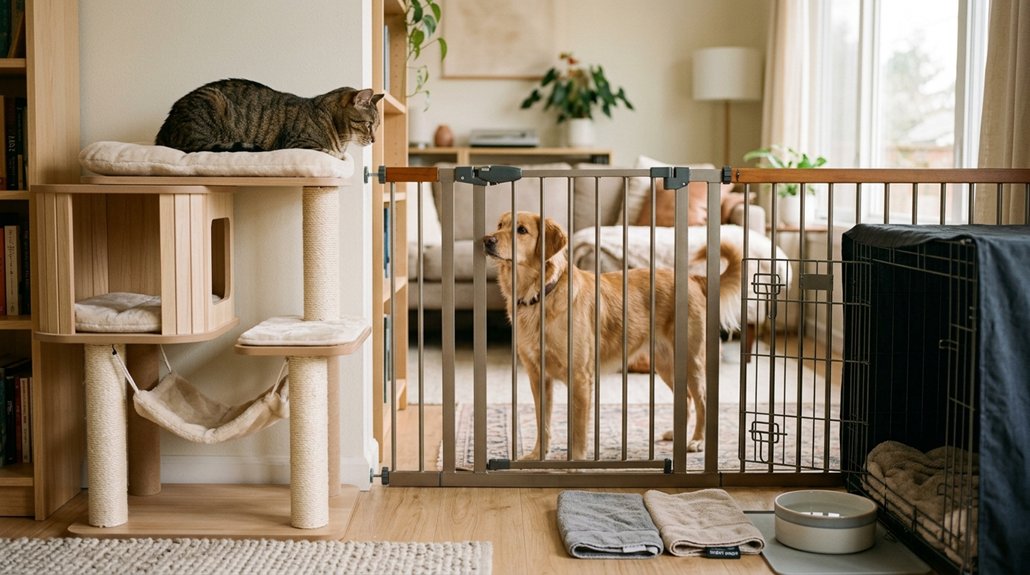
Creating a safe, controlled environment is essential when introducing a cat to a dog, ensuring both animals feel secure and minimizing any potential stress. Begin by setting up a dedicated sanctuary for the cat, equipped with sanctuary essentials like a secure door, litter box, scratching post, food, water, and toys. This space should serve as a safe retreat. Cat-proof the sanctuary by removing poisonous plants, medicines, and securing cords. Include hiding places or tunnels so your cat can retreat when feeling threatened. Maintain physical separation for the initial 3-4 days, allowing acclimation to each other’s scent and sound, reducing anxiety. Regularly inspect the sanctuary for hazards, ensuring your cat can always retreat to this safe haven throughout the introduction process.
Make a Positive First Impression
A successful introduction between a cat and a dog hinges on the small details that contribute to a positive first impression. Start with scent exploration by swapping their bedding or toys, building familiarity through positive associations. In the first meeting, use a controlled environment, keeping the dog leashed, and allow the cat to explore freely. Positive reinforcement is key—reward both pets with treats for exhibiting calm behavior. Monitor them closely and be alert for any stress signals like pinned ears or tail swishing in the cat. This approach gently acclimates them to each other’s presence.
| Step | Action | Purpose |
|---|---|---|
| Scent Exploration | Swap bedding or toys | Build positive associations |
| Controlled Meeting | Leash dog, free cat exploration | Provide safety and comfort |
| Positive Reinforcement | Reward calm behavior | Encourage desirable reactions |
| Monitor Interaction | Watch for stress signals | Ensure a stress-free meeting |
Use Barriers for Initial Viewing

When introducing your cat and dog for the first time, strategically using a tall, sturdy baby gate as a barrier is vital for reducing anxiety and making certain safety. Verify the barrier is not only secure but also adequately tall to prevent any jumping attempts, effectively managing excitement and mitigating aggression. Supervise these brief viewing sessions closely, monitoring body language to assess comfort levels, and gradually extend the duration while rewarding calm behavior to establish positive associations.
Visual Contact Precautions
How can you guarantee a smooth introduction when letting a cat and dog see each other for the first time? Implementing effective visual perception strategies with safe observation techniques is essential. Begin by using a baby gate or similar barrier; this guarantees the dog can observe the cat without direct contact. Such measures allow both pets to safely become familiar with each other’s presence. Confirm the cat’s environment includes hiding spots to promote a sense of security. Keep initial visual exposure brief, carefully monitoring body language for stress or aggression. Gradually increase their exposure time as both pets show signs of comfort. Reinforce positive behavior by rewarding the dog with treats when it remains calm, fostering a harmonious visual introduction.
Barrier Setup Guidance
Introducing a barrier during initial viewing sessions between a cat and a dog is a strategic method to guarantee safety and comfort for both animals. Start by selecting sturdy barrier materials, such as a tall baby gate, to make certain that neither pet can push through or leap over. This setup lets them see and smell each other without risk, which is essential for a smooth introduction. Confirm you place the barrier in a neutral home area to avoid triggering territorial instincts. Introduction timing is key; begin with short sessions and observe each pet’s body language—looking for stress indicators. Gradually extend session duration, rewarding calm behavior with treats. This approach helps foster positive interactions, promoting a harmonious future relationship.
Watch for Body Language Cues
Guiding the introduction of a cat and dog requires careful observation of their body language cues to prevent conflicts. Monitor the cat closely; body language signs like pinned-back ears or a swishing tail suggest pet stress signals, indicating discomfort or anxiety. For dogs, watch for body language that signals a strong prey drive—stiffening, staring, barking, or whining—as these behaviors can indicate fixation on the cat. A relaxed dog displays loose body language, including wagging tails and soft eyes, signaling it’s safer to allow closer interaction. Continuously observe both pets to catch early signs of escalating tension or aggression. Understanding and interpreting these cues scientifically can prevent conflicts and guarantee a safer environment during their initial interactions.
Gradual, Controlled Meetings on Neutral Ground

Start your cat and dog introductions in a neutral area to reduce territorial behavior, which helps both animals feel more at ease. Keep the dog on a loose leash while letting the cat explore freely, and attentively observe their body language for any signs of stress, like stiffening or ear flattening. To facilitate positive associations, reward calm and relaxed interactions with treats, incrementally extending the duration of their meetings to build a foundation of trust.
Managing Animal Body Language
Effective management of animal body language is crucial when introducing a cat to a dog, ensuring both pets communicate peacefully. It’s essential to observe body language signs meticulously; a cat shows stress signals through swishing tails or pinned back ears, while a stiff dog indicates potential prey drive. To facilitate a smooth introduction:
- Conduct meetings in neutral territory to minimize territorial behavior and alleviate stress.
- Keep the dog on a leash to prevent sudden chasing, allowing quick intervention if needed.
- Use rewards to reinforce calm behavior, providing treats to build positive associations.
- Adjust meeting duration gradually, permitting the cat to engage at their pace to enhance comfort.
Neutral Zone Observations
When you’re introducing a cat to a dog, ensuring the encounters happen in a neutral zone can make a significant difference in their initial interactions. The neutral zone advantages include reducing territorial behaviors that often arise in familiar environments. This setting allows for sensory exploration without the pressure of defending personal space. Keep the dog on a short, loose leash to maintain control while allowing the cat freedom to approach at its own pace. Watch for subtle cues during these controlled meetings—monitor body language closely for signs of stress or discomfort. Initial sessions should be brief to prevent overwhelming either pet, gradually increasing as they grow comfortable. This approach facilitates smoother introductions and sets the foundation for positive future interactions.
Rewarding Positive Behavior
Introducing positive reinforcement strategies is essential for fostering harmonious relationships between a cat and a dog during their initial meetings on neutral ground. Applying treat reward strategies can effectively reinforce calm behavior and promote positive associations. Here’s how you can implement these methods:
- Reward Calmness: Immediately offer a treat when your pets display serene behavior, supplemented by a clicker or verbal marker to reinforce desired actions.
- Gradual Meetings: Start with brief interactions, gradually extending the duration as comfort levels rise, and always reward calmness.
- Distract with Toys: Use engaging distractions to redirect focus, aiding in maintaining a positive and relaxed environment.
- Observe Body Language: Close monitoring allows you to identify and reward calming cues, like sitting or lying down, facilitating a tension-free atmosphere.
Overcome Common Introduction Hurdles
Understanding the dynamics between a cat and a dog during their initial meeting is essential, particularly when the dog’s prey drive could surface, leading to potentially dangerous chasing or aggressive behaviors. Mitigate these risks by creating a calm environment. Provide both pets with clear escape routes, letting your cat explore without being cornered. Use baby gates to establish visual barriers, facilitating a safe space where each animal can see and sniff one another without risk. Gradually introduce feeding sessions near these barriers, using rewards for calmness. This positive reinforcement encourages favorable associations. Regular supervision is important; monitor their interactions carefully. Adjust your strategies based on their reactions, keeping in mind that patience and consistency are key to maneuvering these challenges.
Adapt Introductions Based on Pet Age and Energy Levels
Successful introductions require taking into account the unique dynamics of each pet’s age and energy level. Kittens, with their fearless nature and playful movements, might entice dogs with strong prey drives. Adult cats, especially those well-socialized, usually tolerate puppies, yet they’ll need supervision to prevent stress. Here’s how to approach these varied scenarios:
- Kitten Dynamics: Monitor diligent supervision to protect playful kittens from intrigued dogs due to their size.
- Energy Comparison: Evaluate and tailor introductions based on the pets’ energy levels; calm dogs need fewer constraints.
- Puppy Management: Use leashes and muzzles to control exuberant puppies around adult cats to avoid stress.
- Gradual Approach: Introduce high-energy dogs to elderly or timid cats gradually, focusing on controlled environments and comfort.
When to Call in Professional Help
While many introductions between pets proceed smoothly, there are cases when expert intervention is necessary to guarantee safety and harmony. If your dog exhibits aggressive behavior or persistent prey drive, initiating professional training is essential to manage potential dangers. Specialist intervention allows for a detailed behavioral assessment, identifying stressors and triggers affecting both cat and dog. If interactions remain tense or fearful despite gradual introductions, a seasoned behavior consultant can devise tailored strategies for improvement, ensuring effective management and modification of both pets’ behaviors. Engaging professional help early helps prevent long-term behavioral complications. With targeted expertise, you can facilitate a smoother integration and understand the nuances required for successful pet interplay. Don’t hesitate to involve professionals for a safer coexistence.
Cultivate a Harmonious Coexistence Post-Introduction
To guarantee a harmonious coexistence between your cat and dog post-introduction, prioritize creating distinct territories where each pet can retreat safely. Monitoring their interactions with close attention to body language is essential, as you should adjust the dynamics to maintain a comfort zone for both animals. By consistently using positive reinforcement techniques, like rewarding calm behavior and providing individual attention, you’ll support a balanced relationship and reduce potential tensions.
Foster Positive Pet Interactions
Effective strategies for fostering positive interactions between a cat and a dog rely on understanding and addressing their unique communication styles and social cues. Begin by identifying key playtime strategies that align with both pets’ comfort zones, acknowledging their interaction milestones. Here’s how to promote harmonious coexistence:
- Monitor Body Language: Continually observe both animals’ signals to gauge stress or discomfort.
- Positive Reinforcement: Reward relaxed behavior with treats or praise to nurture calm interactions.
- Safe Retreat Spaces: Guarantee each pet has a designated area to retreat, maintaining control over their comfort levels.
- Gradual Interaction Increase: Slowly increase the duration and frequency of interactions, allowing them to adjust at their own pace while evaluating their responses.
These practices enhance the pets’ bond, contributing to a peaceful living environment.
Maintain Safe Living Spaces
Establishing a foundation of positive interactions paves the way for a successfully integrated home where both cat and dog can thrive. Critical to this harmony is ensuring your cat has a secure sanctuary space. Equip it with essentials like a litter box, food, water, and hiding spots, fostering a refuge during times of stress. Monitor interactions closely, deciphering body language for signs of tension. Separate feeding areas bolster positive associations, gradually narrowing the gap as comfort grows. Encourage independent play by providing toys and spaces where each pet can retreat, easing overstimulation risks. Regularly assess your home for hazards like unsecured cords, ensuring both pets have safe spaces for retreat if threatened, maintaining a peaceful living environment.
Safety Measures for Long-Term Pet Peace
- Create Safe Spaces: Establish separate areas with essentials like food and a litter box for the cat to retreat safely, minimizing stress.
- Monitor Interactions: Keep a close eye on body language during encounters, looking for signs of stress or aggression. Be ready to step in when necessary.
- Controlled Meetings: Use a leash for the dog during initial meetings. Reward calm behavior to build positive associations with the cat.
- Provide Retreat Options: Offer both pets the ability to retreat to their own spaces to prevent overstimulation and sustain long-term peaceful coexistence.
Frequently Asked Questions
How Long Does It Take for a Cat to Get Used to a Dog?
The time varies considerably; it could range from a few days to several months. Gradual exposure is key in adjusting behavior. Monitor interactions, prioritize their comfort, and guarantee positive experiences to foster acceptance effectively.
What Is the 7 7 7 Rule for Dogs?
The 7-7-7 rule for dogs focuses on an adjustment timetable: seven days for settling, seven weeks for pet training and bonding, and seven months for stabilizing dog behavior. It promotes patience as your dog acclimates.
What Is the 3-3-3 Rule of Cats?
Imagine a cat’s 3-3-3 adjustment period like a slow bloom. It’s three days hiding, three weeks gaining confidence, and three months for full comfort. Understanding their temperament and using gentle introduction techniques fosters a happy, balanced environment.
What Should You Not Do When Introducing a Cat to a Dog?
Don’t rush the process or allow direct interactions initially; these common mistakes can trigger signs of aggression. Monitor each pet’s body language closely. An untrained dog or territorial issues can lead to conflict during introductions.
Conclusion
Successfully introducing a cat to a dog is akin to orchestrating a delicate dance, where patience and observation lead the way. By fostering a secure environment and understanding their unique rhythms, you’ll create a symphony of coexistence. Never overlook subtle body language cues, as they’re your pets’ way of communicating comfort or anxiety. If rough seas arise, don’t hesitate to seek professional guidance to guarantee long-term peace. With care and consistency, your household will flourish in harmony.