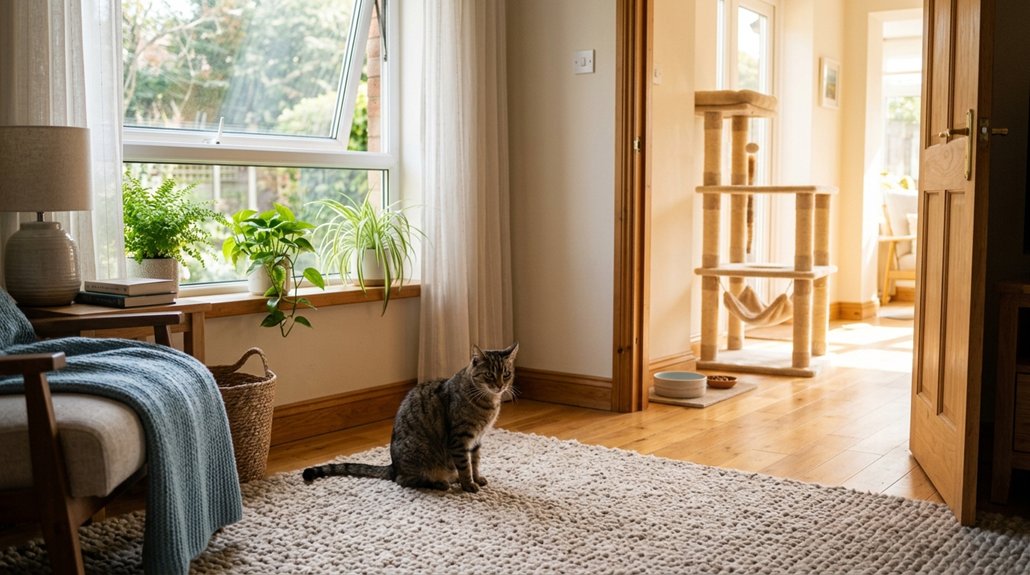
Helping your cat adjust to a new environment involves setting up a safe space with essential amenities like food, water, and a litter box. Gradually expose them to your presence, and monitor for stress indicators such as decreased appetite. Use sturdy carriers for transport and introduce other pets carefully. Create a calming environment with pheromone diffusers and interactive play zones to encourage exploration. This method minimizes stress and fosters a smoother change—more tips await beyond this introduction.
Key Takeaways
- Provide a designated safe room with essentials like food, water, and a litter box to ensure comfort and security.
- Gradually introduce the cat to new spaces at its own pace, using treats and toys to encourage exploration.
- Utilize pheromone diffusers to create a calming environment, minimizing stress and promoting relaxation.
- Observe stress indicators such as changes in appetite or behavior to address potential adjustment issues promptly.
- Introduce other pets slowly, utilizing scent exchange techniques to foster familiarity and reduce stress.
Managing the First 24 Hours With Your New Cat
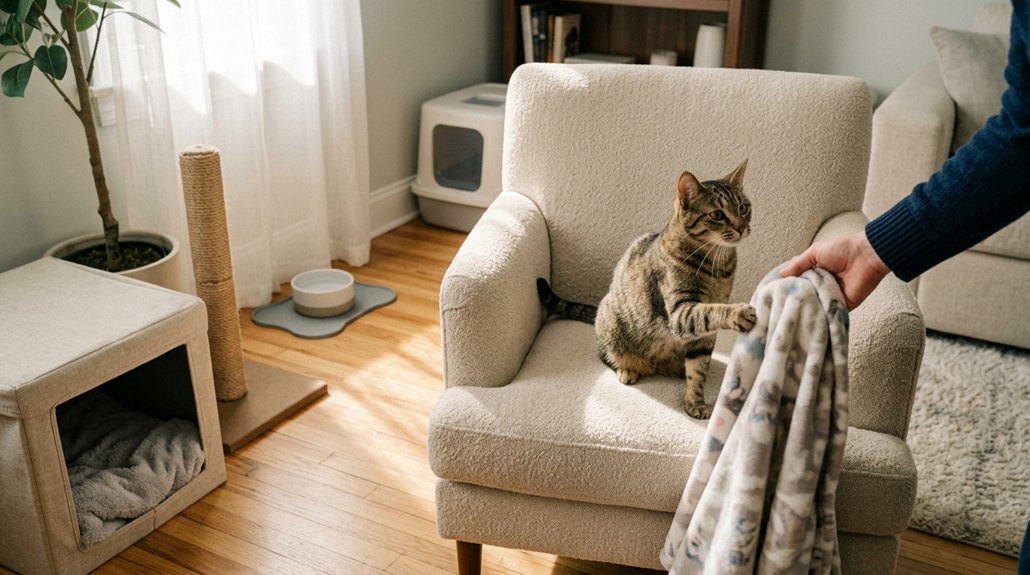
When introducing a new cat to your home, it’s crucial to manage the initial 24 hours with care to guarantee a smooth shift. Start by confining your cat in a designated safe space, equipped with essentials like food, water, a litter box, and a comfortable bed. Allow it to exit its carrier at its own pace, providing a calm environment to minimize stress. Gradual exposure to your presence helps your cat acclimate; spend several hours in the room, offering gentle companionship without forcing interaction. Immediately show your cat the litter box to establish familiarity with its surroundings. Monitor the cat for signs of stress or health issues such as changes in appetite or excessive hiding, and allocate ample adjustment time.
Setting Up an Ideal Safe Room for Your Cat’s Comfort
Supporting your cat’s adaptation process involves arranging a safe and comfortable sanctuary. First, create a cozy safe space furnished with cat essentials like food, water, a litter box, a scratching post, and soft bedding. These elements guarantee your cat’s basic needs are easily met during this critical adjustment period. Remove large furniture to allow for free movement and eliminate hiding traps. Provide multiple hiding spots, such as cardboard boxes or covered beds, giving your cat the autonomy to retreat and acclimate at its own pace. Verify the space is cat-proofed by eliminating hazards—secure cords, close windows, and remove small objects. Maintain low lighting to mitigate stress, fostering a calm, secure environment conducive to gradual exploration.
Transporting Your Cat: Dos and Don’ts
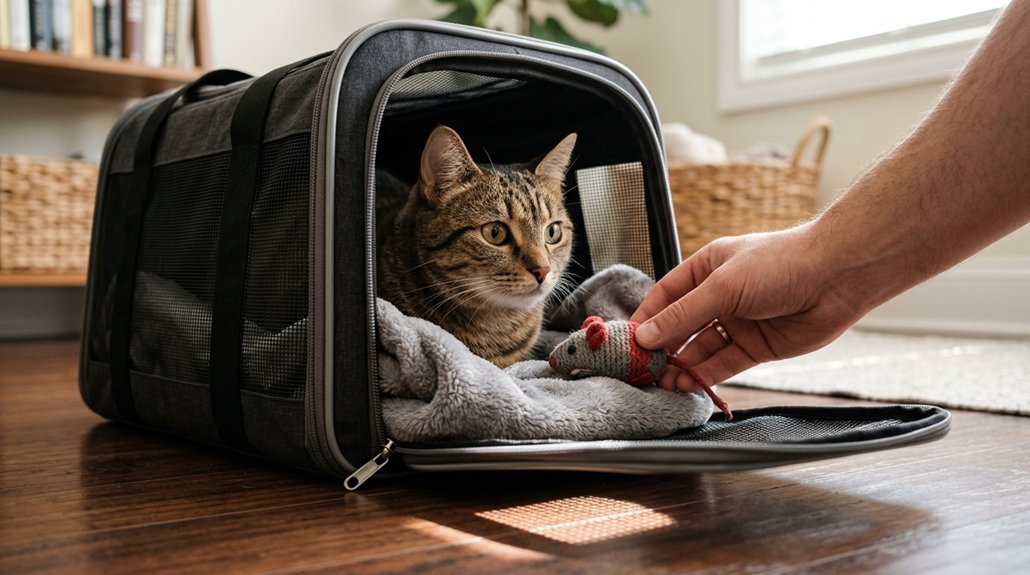
Transporting your cat requires careful planning and adherence to some essential dos and don’ts to guarantee a smooth journey. Ascertain carrier comfort by selecting a sturdy, well-ventilated carrier which allows your cat to feel secure. Keeping your cat confined inside this carrier is crucial for secure transport, preventing accidents during travel. Avoid letting the cat roam freely in the car or leaving it unattended, as this will lead to stress, overheating, or potential escape. During transit, if your cat becomes vocal, resist the temptation to respond to yowling since it could intensify stress-related behavior. Upon arrival at your new home, only release your cat in the designated “safe room” to limit its exposure to unfamiliar and overwhelming environments.
Monitoring Stress: Is Your Cat Adjusting?
To guarantee your cat is adapting well, monitoring signs of stress is essential, with decreased appetite and inappropriate elimination among the primary indicators. It’s important to observe behavioral changes; while some initial withdrawal is normal, persistent hiding or lack of grooming might suggest anxiety. If your cat exhibits prolonged stress or unusual behaviors beyond the initial adjustment period, seeking advice from a veterinary behaviorist can provide effective solutions.
Signs of Stress
When a cat is introduced to a new environment, stress indicators can emerge, signaling it’s having difficulty adjusting. Anxiety behaviors such as increased vocalization (yowling or crying), excessive hiding, and avoidance of people or other pets are early warning signs. A loss of appetite lasting more than 48 hours and changes in litter box usage, including accidents, further underscore potential stress.
| Stress Indicator | Description |
|---|---|
| Increased Vocalization | Yowling or crying due to anxiety |
| Excessive Hiding | Avoidance of interaction or social spaces |
| Appetite Loss | Not eating for over 48 hours |
Empathize with your cat’s experience, and remember, if stress persists beyond 2-4 weeks, consulting with a veterinarian or animal behaviorist is recommended.
Behavioral Changes
Though it’s natural for cats to exhibit behavioral changes when adjusting to a new environment, understanding and monitoring these changes can be essential for helping them acclimate. Recognize that hiding behavior, appetite changes, and social withdrawal are common stress responses during relocation. Cats often rely on comfort zones, such as familiar scents and multiple hiding spots, to ease their adjustment. An essential component of anxiety management is vigilance in observing these behaviors. Look out for territory marking or a persistent refusal to use the litter box after a week, as these could indicate heightened stress requiring professional advice. Environmental enrichment through interactive play and exploration encourages acclimation. Remember, cats typically need between 2 to 8 weeks to fully adapt to new surroundings.
Encouraging Exploration of Your Home
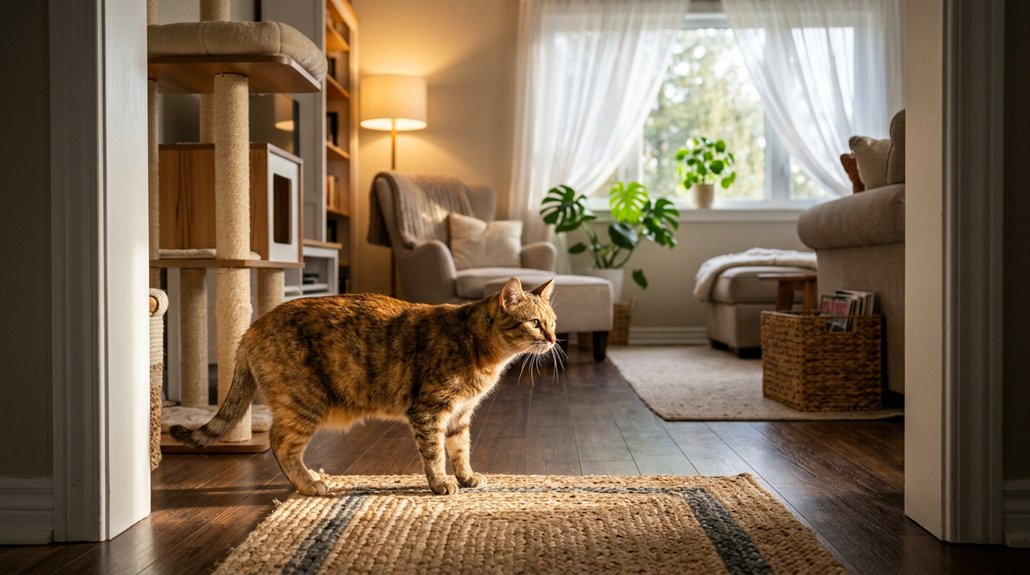
Many cats need time to adjust to new environments, and a gradual approach will help them feel comfortable exploring their new home. Exploration tips include gradually opening the door to the safe room, allowing your cat to venture out at its own pace. Place food, water, and litter boxes in various locations to provide easy access and to encourage exploration of different areas, thereby fostering confidence building. Utilize treats or interactive toys to create positive associations with new spaces, promoting natural curiosity. Limit initial exploration to prevent overwhelming your cat, gradually increasing exposure as comfort levels rise. Visual barriers like baby gates can also assist timid cats in feeling secure as they navigate new surroundings. This method supports a smooth change.
Introducing Other Pets Gradually
Exploration within the home sets a solid foundation for your cat, and effectively introducing it to other pets extends this acclimatization process. Pet introductions require gradual exposure to minimize stress and potential aggression. First, control existing pets during initial meetings to manage their behavior. Second, supervise interactions between your cat and resident pets, maintaining a calm, non-threatening atmosphere. Third, facilitate a safe retreat with elevated spaces, allowing your cat to be at ease as it observes other animals. Fourth, employ scent exchange techniques by rubbing cloths on each pet; the familiar scents encourage comfort. Remember, this process takes time; some cats require weeks to adjust. Empathy and patience are essential in fostering harmonious cohabitation for your new feline family member.
Creating a Cat Paradise at Home
Creating a cat paradise at home means providing cozy sleeping spots, interactive play areas, and safe exploration zones, utilizing evidence-based strategies to support your cat’s well-being. Designate multiple comfortable resting places, free from drafts, to accommodate their need for security and restful sleep. Incorporate interactive elements like toys and scratching posts into dedicated spaces to stimulate their instincts and curiosity, gradually enabling shy cats to explore securely with visual boundaries.
Cozy Sleeping Spots
When designing cozy sleeping spots for your cat, providing multiple options is vital for their comfort and security. Positioning cat bedding in cozy corners away from drafts and disturbances helps foster a sense of safe spaces. Utilize soft, washable bedding to maintain cleanliness and encourage the use of familiar scents, offering both comfort and familiarity. Consider incorporating elevated perches, like cat trees or shelves, to allow your feline friend to observe their surroundings with a heightened feeling of security. These elevated resting places can greatly enhance their sense of comfort.
- Place cat bedding in secluded, quiet areas.
- Utilize elevated perches for observant resting.
- Verify bedding material is soft and washable.
- Use calming solutions like pheromone diffusers for tranquility.
Creating privacy is essential for their well-being and stress reduction.
Interactive Play Areas
While welcoming a cat into a new home, it’s crucial to design interactive play areas to support their adjustment and well-being. Cats thrive in environments that allow for natural behaviors like climbing, pouncing, and exploring. Integrate interactive climbing structures and engaging scratching posts to stimulate both physical and mental exercise, addressing their innate activity needs. These elements can greatly alleviate stress, promoting a smoother change. Include cozy perches and hiding spots for security, as cats appreciate elevated spaces for safe observation. Rotate toys, introducing new items periodically to maintain your cat’s interest and prevent boredom, ensuring a dynamic play area. Scheduled interactive playtimes with toys, like feather wands, can enhance bonding, reinforcing their confidence and comfort.
Safe Exploration Zones
To facilitate a smooth shift for your new feline companion, consider establishing safe exploration zones that promote confidence and curiosity. Start with a small, quiet environment where your cat can engage in exploration techniques supported by environmental enrichment. Here’s how:
- Designate a Room: Begin with a secure room equipped with food, water, and a litter box, minimizing overwhelming stimuli.
- Incorporate Vertical Spaces: Install cat trees or shelves, offering safe perches for climbing and boosting confidence.
- Create Hiding Spots: Add boxes or cozy beds, enabling your cat to retreat as needed and feel secure.
- Utilize Calming Aids: Use Feliway diffusers to maintain a tranquil atmosphere and alleviate stress.
Gradually expand exploration areas, ensuring your cat adjusts at its own pace.
Solving Common Cat Adjustment Problems
Adjusting to a new environment can be challenging for many cats, but understanding a few key strategies can ease their adjustment. Monitor your cat’s eating and litter box habits, as cat anxiety can manifest through irregular patterns. If your cat experiences a lack of appetite for over 48 hours, consult a veterinarian. Provide multiple hiding spots and quiet areas, which are pivotal adjustment tips. After the first week, excessive hiding might indicate persistent stress. Gradually expand your cat’s territory as comfort indicators, like regular eating and exploration beyond the safe room, emerge. For issues like inappropriate elimination, guarantee a clean litter box positioned favorably. Implement calming aids, such as pheromone products, before and during the shift to promote a smoother acclimation process.
Frequently Asked Questions
What Is the 3-3-3 Rule for Cats?
The 3-3-3 rule for cats refers to an adjustment period with three phases: 3 days of initial stress reactions, 3 weeks of exploratory cat behavior, and 3 months for full acclimatization. It’s essential for setting realistic expectations.
How Long Does It Take for a Cat to Adjust to a New Environment?
You’ll find that cats commonly need 2-4 weeks for adjustment, though environmental factors could extend this to 8 weeks. Evidence suggests signs of progress include increased appetite and exploration beyond their initial safe space.
What Is “I Love You” in Cat Language?
Coincidentally, “I love you” in cat language involves cat communication through slow blinks, purring, and head-butting. Feline body language, like a straight-up tail or kneading, also signifies affection. Understanding these cues deepens your bond with them.
What to Do When a Cat Is Stressed in a New Environment?
When you notice stress signals due to environment changes, create safe spaces with familiar items. Make gradual introductions to new areas while using calming aids. Consistent routines and patience are essential for helping your cat adapt effectively.
Conclusion
Guiding your cat through a new environment is like helping a delicate flower bloom in unfamiliar soil. With patience and empathy, you’ll nurture their roots to grow deep and strong. Evidence suggests gradual integration eases stress, so observe their cues and adjust accordingly. Your bond acts as a comforting blanket, transforming the unknown into a warm, inviting sanctuary. Remember, your home should become their haven, cultivating a harmonious environment for shared growth. You’ve got this!