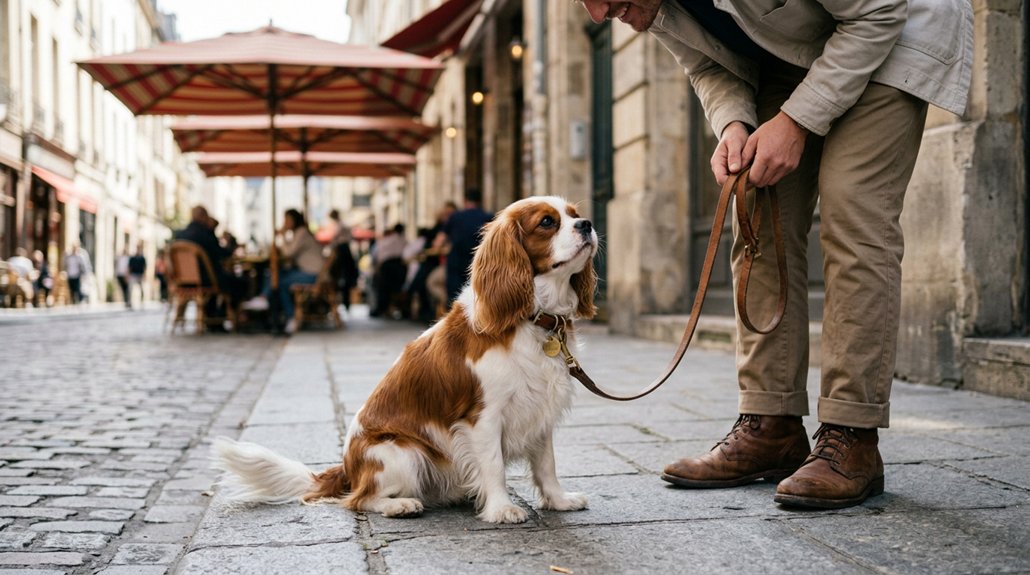
When searching for dog breeds easy to take anywhere, consider small, adaptable breeds like Toy Poodles, Chihuahuas, and Yorkshire Terriers. Their compact size allows seamless transport in carriers, while minimal exercise needs make them manageable during trips. These breeds’ temperament often offers calmness and adaptability, reducing travel stress. Selecting low-shedding, low-grooming breeds guarantees cleanliness on the go. Opt for these portable companions, and you’ll discover more about making travel with dogs a breeze.
Key Takeaways
- Toy Poodles and Yorkshire Terriers are easily portable and fit conveniently into compact carriers for travel.
- Chihuahuas and Miniature Pinschers offer compact size and minimal exercise needs, ideal for effortless transportation.
- Cavalier King Charles Spaniels and French Bulldogs have calm temperaments, enhancing travel harmony and adaptability.
- Poodles and Bichon Frises are low-shedding, maintaining cleanliness and comfort during trips.
- Effective crate training ensures dogs feel secure, facilitating smoother travel experiences.
Understanding Dog Travel Essentials: Breed Traits to Consider
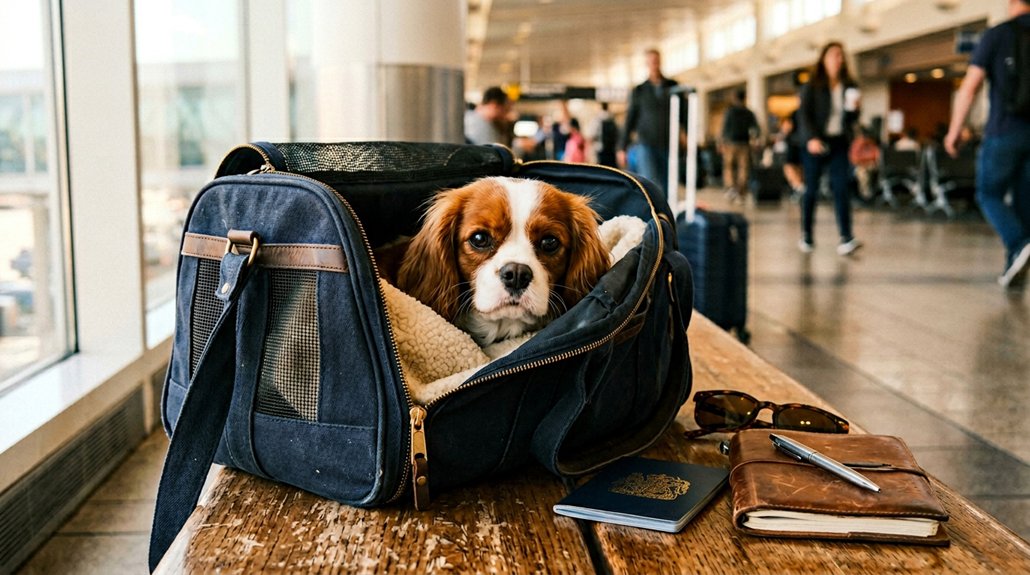
Several factors must be considered to identify dog breeds that excel as travel companions. Understanding dog friendly transportation options and pet travel requirements is essential. Toy and Miniature Poodles are ideal due to their small size, adaptability, and ease of carrier transport. Similarly, Cavalier King Charles Spaniels’ compact stature and minimal exercise needs check important boxes for travel accommodation compatibility. Exploring adventurous locales with a Yorkshire Terrier is a favorable experience since they fit comfortably in pet carriers and thrive on companionship. Breeds like Miniature Pinschers and Chihuahuas are both energetic and compact, perfect for road trips or flights—though they demand leash supervision due to their propensity for bolting. Low-energy breeds such as French Bulldogs suit relaxed travel environments, simplifying your journey.
Consider Size: Why It Matters in Dog Travel
When planning to travel with your dog, understanding the significance of size can make a substantial difference in overall convenience and cost. Smaller breeds such as Toy Poodles and Chihuahuas excel in portability, fitting comfortably into compact carriers during travel. Their lightweight nature facilitates cabin travel in airplanes, sidestepping the stress of cargo holds. For urban excursions, these breeds’ minimal exercise requirements are advantageous where long walks aren’t feasible. Additionally, their adaptability allows for seamless changes across travel environments—from cars to public transport—with ease. Economically, smaller dogs often incur lower costs as their size aligns with carrier and hotel limitations favoring petite breeds. Prioritizing size guarantees you optimize travel comfort, simplify transportation logistics, and streamline expenses during your journeys.
Small Breeds Perfect for Travel Adventures
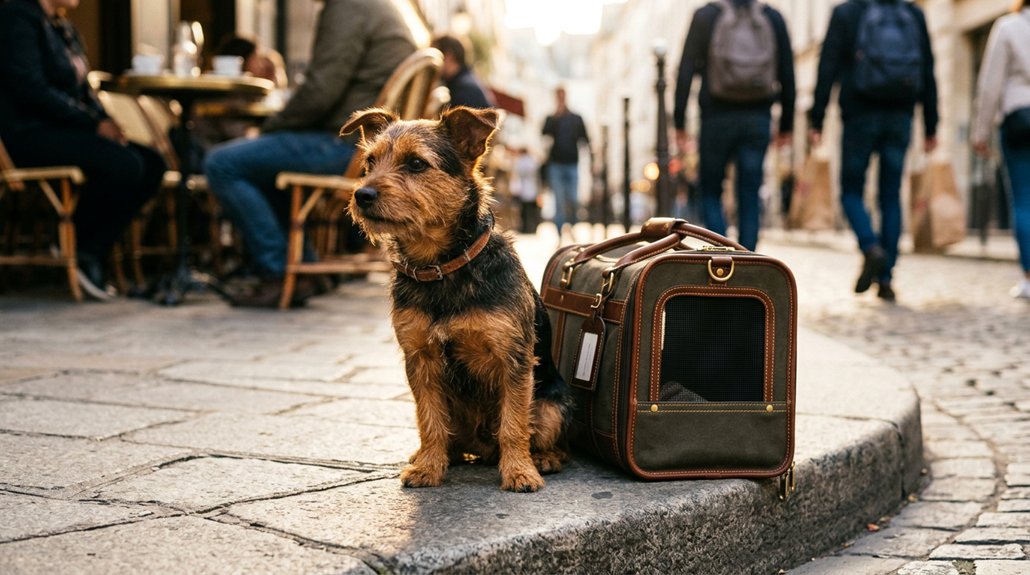
Although traveling with dogs requires careful planning, selecting the right breed can greatly enhance the experience. Small breeds like Toy Poodles and Yorkshire Terriers are exceptionally portable, easily fitting into carriers, making transit seamless across trains, buses, and planes. Chihuahuas and Miniature Pinschers blend robust personalities with minimal exercise needs, adapting well to diverse travel scenarios. For adventure outings, Dachshunds bring courage and comfort, ideally suited for road trips and varied lodgings. Consistent grooming needs and feeding schedules guarantee their overall health, while vet preparations and travel insurance secure peace of mind. French Bulldogs and Basset Hounds thrive in pet friendly venues thanks to their affectionate, low-energy nature. Meanwhile, Cavalier King Charles Spaniels and Pomeranians integrate smoothly with precise behavior cues and compact travel gear.
Why Your Dog’s Temperament Is Key to Travel Success
Your dog’s temperament plays an essential role in ensuring travel harmony, as it directly affects their ability to adapt to new environments. Breeds with a calm disposition, like the Labrador Retriever or Cavalier King Charles Spaniel, often exhibit fewer signs of travel-related stress, allowing for a more enjoyable experience for both you and your pet. Prioritizing a breed’s temperament can considerably enhance your travel plans by minimizing potential challenges and promoting smoother changes between different settings.
Temperament Influences Travel Harmony
Understanding your dog’s temperament is vital for guaranteeing smooth travel experiences. Evaluating temperament allows you to predict how your dog will cope with the unfamiliarity of travel settings. Start with a thorough temperament evaluation, identifying key traits such as adaptability and calmness. Using effective socialization strategies early on can enhance your dog’s patience and social comfort, which is essential for travel harmony. Breeds like the Labrador Retriever or Cavalier King Charles Spaniel usually show greater adaptability, staying composed in new environments. Meanwhile, French Bulldogs and Basset Hounds have natural easygoing personalities, important for minimizing travel-induced stress. For a successful journey, focus on promoting traits like affection and low exercise needs, found in Pugs and Bulldogs, to guarantee a seamless travel experience.
Adapting to New Environments
When selecting a dog breed for travel, considering how they adapt to new environments is paramount. Dogs with strong environmental adaptability directly influence overall travel behavior, reducing stress for both the dog and owner. Breeds like Greyhounds and French Bulldogs exemplify calm and adaptable temperaments, seamlessly adjusting to novel surroundings. Cavalier King Charles Spaniels and Labrador Retrievers benefit from family-oriented social interactions, proving manageable in unfamiliar locales. Additionally, crate trainability in breeds such as Golden Retrievers and Bulldogs boosts their comfort, allowing them to unwind during travel. Small, portable breeds like Toy Poodles and Yorkshire Terriers fit diverse travel scenarios, highlighting their easy-going disposition. Sociable breeds like Beagles and Pugs integrate smoothly into varied environments, enhancing everyone’s travel experience.
Calm Disposition Enhances Experience
Selecting a dog with a calm disposition can greatly enhance your travel experience, guaranteeing both you and your canine companion enjoy the journey more fully. Dogs with gentle temperaments, like Greyhounds and Basset Hounds, exemplify adaptable breeds that acclimate seamlessly to variable environments. Such dogs demonstrate resilience during travel, minimizing stress and promoting relaxation. In addition, breeds like the Cavalier King Charles Spaniel boast lower energy needs, facilitating easier management in confined spaces. Their easygoing attitudes contribute to friendly interactions, essential for positive encounters with strangers. Moreover, the trainability of breeds such as the Labrador Retriever assures they quickly master travel-related commands, fostering well-behaved conduct in different situations. Ultimately, a composed temperament enriches the overall travel encounter for everyone involved.
Training Tips for Stress-Free Dog Travel
To guarantee stress-free travel with your canine companion, start training early by gradually introducing them to different travel environments, such as cars and planes. Crate training is a scientific approach that offers your dog a familiar, secure space, reducing anxiety. Reinforce essential commands and reward positive behavior to promote calmness and good conduct during any journey.
Essential Training Techniques
Although preparing your dog for travel can seem overwhelming, mastering a few essential training techniques can simplify the process and guarantee a stress-free journey. Start by providing socialization opportunities. Introduce your dog early on to various travel environments—cars, buses, busy streets—to increase their adaptability and enhance travel readiness. Implement consistent training commands like “sit,” “stay,” and “leave it,” ensuring your dog responds promptly in new surroundings. Use positive reinforcement, such as treats and praise, to make training enjoyable and reinforce positive behavior. Gradually acclimate your dog to travel gear, like crates and harnesses, by allowing exploration at home. Practice brief travel sessions with a subsequent reward, creating positive associations and helping your dog adapt to longer trips.
Managing Travel Anxiety
How can you guarantee your dog’s travel experience is stress-free? Start by gradually acclimating them to travel environments, such as short car rides or brief stints on public transit. Incrementally increasing trip durations aids in anxiety reduction by fostering familiarity. Positive reinforcement, including treats and praise, is imperative; rewarding calm behavior promotes positive associations with travel, mitigating travel stress. Early introduction to a travel crate is essential—let your dog explore the carrier to create a comforting routine. Consistent feeding and bathroom schedules offer additional security during travel. For dogs highly sensitive to travel stress, consider utilizing calming aids like anxiety wraps or pheromone sprays to help soothe tension. With these methods, your pet can develop resilience to stress.
Choose Low-Shedding Breeds for a Cleaner Travel Experience
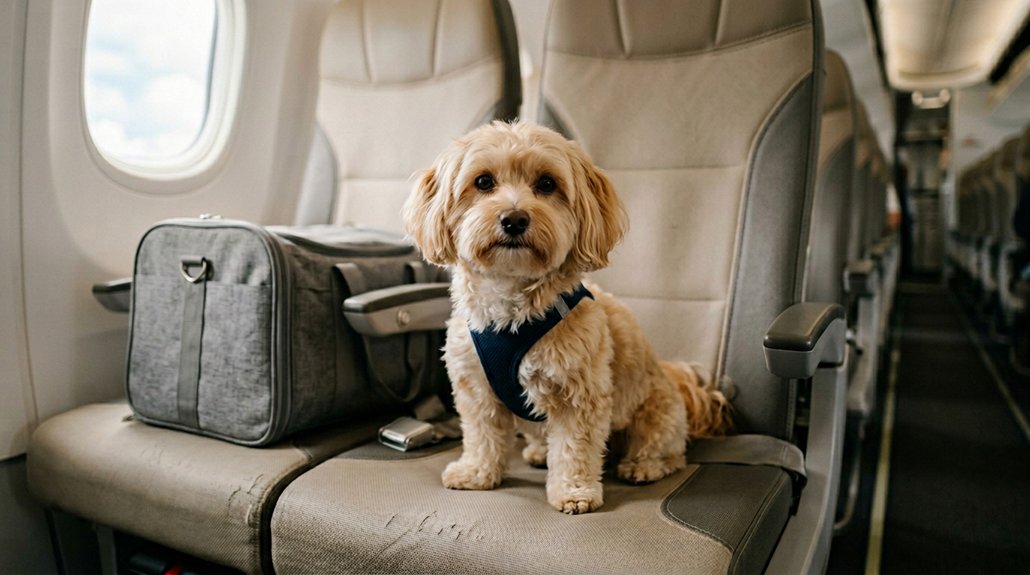
For travelers keen on keeping their environments tidy, selecting low-shedding dog breeds is crucial. Breeds like Poodles and Bichon Frises have predictable shedding patterns, which guarantee minimal fur accumulation in your car or lodging. Furthermore, their coats often fall under hypoallergenic options, minimizing allergic reactions—ideal for sensitive travelers. Owning a Miniature Schnauzer or Yorkshire Terrier means embracing a pet that effortlessly complements a travel-centric lifestyle. These breeds’ low-shedding nature demands considerably less maintenance, freeing you from constant cleaning duties. Shih Tzus and Papillons serve as perfect travel companions, maintaining gracious demeanor without leaving pesky fur trails. Prioritizing a low-shedding breed not only improves your travel cleanliness but also enhances your overall travel experience, allowing more time to enjoy your journeys.
Travel Light: Low-Grooming Dogs
When planning your travels, consider low-grooming dog breeds that seamlessly slot into an adventurous lifestyle without demanding extensive maintenance. Breeds like French Bulldogs and Basset Hounds offer minimal coat care, making them hassle-free companions. These low maintenance breeds reduce the grooming burden, allowing more time to explore. Breeds such as Pugs and Bulldogs require only short walks and light play, providing an easygoing travel routine without exhaustive exercise regimens.
For those seeking calm companions, Greyhounds require reduced grooming and adapt well to various environments. If you prefer family-friendly options, moderate-grooming Labrador Retrievers and Cavalier King Charles Spaniels are excellent travel choices. For compact travel efficiency, smaller breeds like Yorkshire Terriers and Toy Poodles fit seamlessly into carriers, optimizing mobility during your adventures.
Keep Your Dog Healthy on the Road: What to Know
Travel-ready canine companions thrive best when their health is prioritized on the road. Start with essential health precautions by confirming your dog’s vaccinations are current and obtaining a health certificate if crossing state lines or international borders. Pack a travel first aid kit with bandages, antiseptic wipes, and any necessary medications for contingencies. For travel comfort, maintain a consistent diet by bringing your dog’s regular food and supplements to prevent digestive issues. Regular breaks are crucial—allow your dog to stretch and exercise to mitigate anxiety and restlessness. Hydration is critical; always carry fresh water and monitor for dehydration signs, especially in warm or sunny conditions. By addressing these aspects, you guarantee your dog’s well-being during travel.
Planning a Smooth Trip: Tips for Traveling With Your Dog
Prioritizing your dog’s health during travel is just one piece of the puzzle; guaranteeing a smooth trip requires strategic planning. Foremost, select breeds like Toy Poodles or Chihuahuas for easy transport. Training your dog for travel, focusing on crate training, fosters security. Pack essential portable pet gear, such as food, water bowls, and health records, to address veterinary needs seamlessly. Always plan for breaks in extended travel to alleviate stress and discomfort, allowing for sufficient rest and exercise.
Before departure, explore accommodations and transport options to confirm they offer dog-friendly activities, reducing potential travel disruption. These strategic steps will guarantee your canine companion’s travel experience matches the serenity of the trip you envisioned.
- Small, portable dog breeds
- Crate training essentials
- Portable food and water bowls
- Research pet-friendly locations
Frequently Asked Questions
Which Dog Breed Can Be Left Alone All Day?
If you’re seeking breeds that thrive when left alone, consider independent breeds like Bulldogs, Basset Hounds, and Greyhounds. These ideal companions exhibit minimal anxiety, adapting well to solitude given their calm, low-energy characteristics, and secure crate-training.
What Is the 7 7 7 Rule for Dogs?
The 7-7-7 Rule is essential in dog training, emphasizing early socialization methods by exposing puppies to seven environments, seven types of people, and seven experiences. This develops their temperament, reducing behavioral issues and enhancing adaptability.
How Do You Say “I Love You” in Dog Speak?
Imagine your dog’s swirling tail as a vibrant, joyful flag; it’s a heartfelt display of affection. A relaxed dog body, softened eyes, and gentle nudges eloquently convey unconditional love, creating a powerful bond without words.
What Is the Most Easiest Dog Breed to Take Care Of?
You’re looking for a breed that’s simple maintenance and needs low exercise. The French Bulldog tops the list. Its minimal grooming and exercise requirements make it scientifically ideal for anyone with a busy lifestyle.
Conclusion
When traveling with your furry friend, it’s important to remember that an ounce of prevention is worth a pound of cure. Picking the right breed is vital; consider size, temperament, and grooming needs for a serene journey. Well-trained, low-shedding, and healthy dogs make for ideal travel companions. With these insights, you’ll create enjoyable experiences for both you and your dog. Embrace these expert tips, and you’ll both be ready for endless adventures on the road.