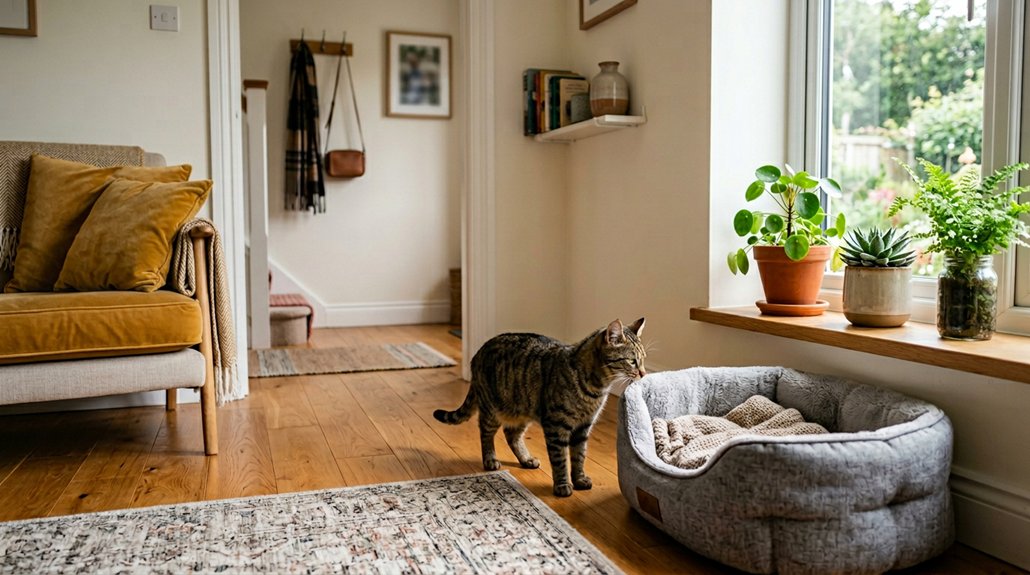
To introduce a cat to your home environment, start by preparing a quiet, cat-proof safe space for initial acclimation. Include essentials like a litter box, food, water, and a cozy bed. Gradually allow your cat to explore their new surroundings, monitoring stress indicators to adapt your approach. Begin scent-swapping when introducing resident pets, emphasizing controlled and gradual interactions. With patience and enrichment, like toys and scratching posts, trust builds over time. Discover additional strategies for a smooth adjustment.
Key Takeaways
- Begin with a designated safe space to help the cat acclimate gradually.
- Provide essential supplies like a litter box, food, and comfortable bedding.
- Use scent swapping to familiarize new and resident pets without stress.
- Monitor body language for stress indicators and adjust the introduction pace accordingly.
- Incorporate enrichment activities like toys and scratching posts for stimulation.
Understanding Your Cat’s Basic Needs
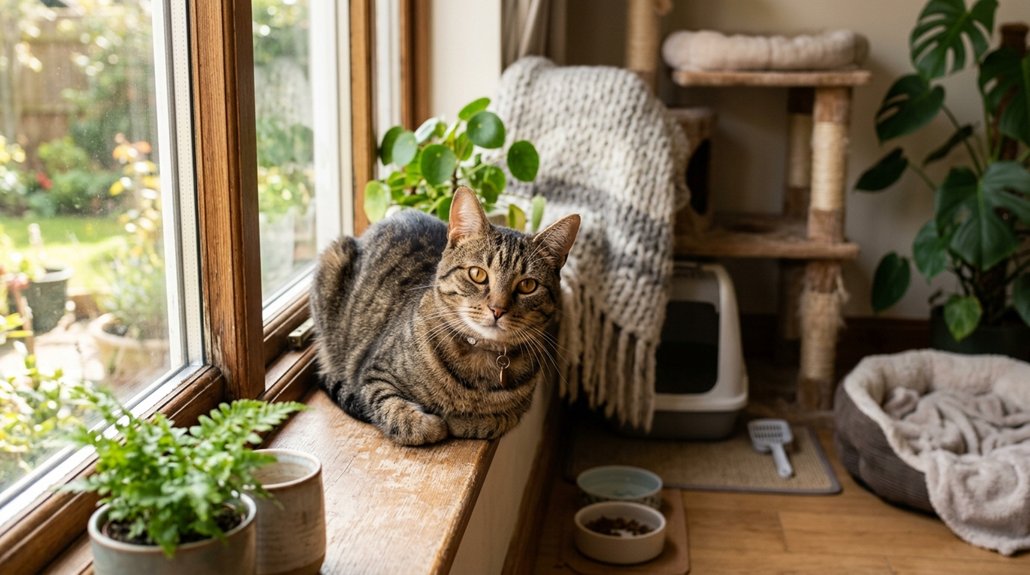
A fundamental step in introducing a cat to your home is ensuring a stable and routine-oriented environment, as cats inherently thrive on familiarity. It’s crucial to acknowledge their feline instincts and natural need for a predictable routine. Consistent feeding, play, and sleep schedules not only satisfy social behavior but also help prevent stress and anxiety. Equip your home with essentials like food and water bowls, a litter box, and a cozy bed—each catering to their fundamental needs.
Creating multiple hiding spots, such as cardboard boxes or cat trees, aligns with their instinctual security-seeking behavior. Engaging toys and scratching posts are necessary in stimulating their curiosity and reducing behavioral issues. Monitoring their body language further aids in understanding their comfort levels and adapting the environment accordingly.
Preparing Your Home for Your New Cat
To guarantee your new cat feels at ease, first, procure essential supplies like a litter box, food and water bowls, nutritious food, and a cozy bed. Next, establish a designated safe space where your cat can gradually acclimate, with necessities like food and litter thoughtfully separated to maintain hygiene. Finally, enhance their environment with enriching elements such as toys and scratching posts, and manage exposure to overstimulating spaces to support a stress-free adjustment.
Essential Supplies Checklist
When preparing your home for a new cat, it’s essential to guarantee you have all the necessary supplies ready to facilitate a smooth change. A proper setup includes key items that cater to your cat’s basic needs and promote healthy behavior. First, confirm you have a litter box. Keep it clean, uncovered, and positioned away from feeding areas to maintain hygiene and encourage use. Second, a scratching post is critical for your cat’s mental and physical health, preventing destructive scratching on furniture. Finally, provide a cozy bed alongside food and water bowls. Start with their current diet to avoid digestive disturbances during their change, gradually introducing new food over a week. This purposeful setup alleviates stress, integrating them comfortably into their environment.
Safe Space Setup
While introducing a new cat to your home can be an exciting experience, it’s essential to establish a safe, designated space to ease their adjustment. Select a quiet room as your cat’s initial safe retreat, outfitted with essentials: an uncovered, clean litter box placed apart from food and water bowls, and a cozy bed. Cat-proof the area by eliminating hazards like loose cords and toxic plants, ensuring windows and doors are secure to prevent escapes. Incorporate enrichment activities—scratching posts, toys, and climbing structures—to offer sensory stimulation and support natural behaviors. Limit early interactions with other pets to help your cat acclimate before expanding their environment.
| Essential | Safety Measures | Enrichment |
|---|---|---|
| Litter box | Remove hazards | Scratching Posts |
| Food bowl | Secure windows | Toys |
| Water bowl | Secure doors | Climbing Structures |
| Bed | Remove cords | Sensory Stimulation |
| Quiet room | Limit interactions | Safe retreats |
Why Start With a Safe Space for Your Cat?
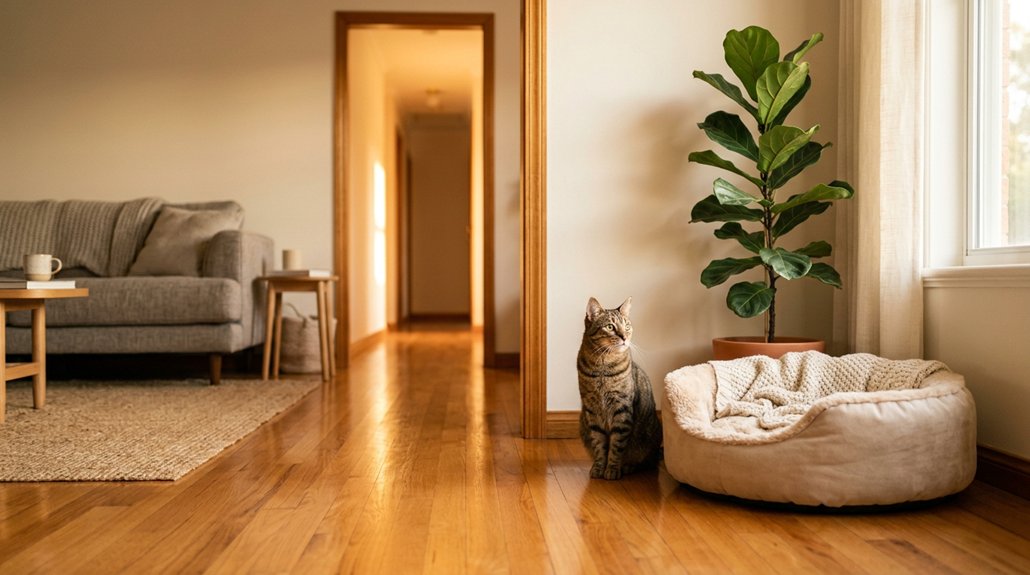
Creating a safe space for your cat is essential for providing comfort and security, as it facilitates a gradual acclimation process to their new environment. By limiting initial exposure to the entire home, you can prevent overwhelming stimuli and effectively reduce stress levels. This controlled setting allows your cat to explore at their own pace while ensuring their fundamental needs are consistently met.
Comfort and Security
Establishing a dedicated safe space for your cat upon arrival is integral to guaranteeing their comfort and security in a new home. Cats, due to their instinctual behaviors, often experience anxiety when introduced to unfamiliar settings. To manage cat behavior effectively and minimize anxiety triggers, follow these principles:
- Provide Essentials: Ascertain the area has food, water, and a litter box, addressing basic needs in a calm environment.
- Create Hiding Spots: Utilize covered beds or cardboard boxes to cater to their natural inclination to hide when anxious, enhancing their security.
- Maintain Low-Stimulus Atmosphere: Keep the area quiet during the initial days to prevent stress, as excessive noise might exacerbate anxiety.
These measures offer a comforting and secure introduction, helping your cat adjust smoothly.
Gradual Acclimation Process
The preceding focus on comfort and security naturally leads to the importance of a gradual acclimation process, anchored by initially providing a safe space. This strategy aligns with cat behavior principles, utilizing feline instincts to minimize stress and anxiety. Through effective space management, you can facilitate gradual exposure, which allows the cat to explore without overwhelming triggers. Essentials like food, water, and a litter box establish a comfort zone, fostering confidence. Incorporating environmental enrichment and creating hiding spots caters to natural retreat behaviors, reducing stress signals. Securing windows and doors in this defined area prevents escapes. By promoting a calm, quiet environment, you encourage positive experiences, enabling trust-building as part of acclimation techniques. This structured approach naturally eases the cat’s adjustment.
Reducing Stress Levels
When introducing a cat to a new environment, it’s crucial to begin in a safe space as this strategy mitigates stress levels effectively. This approach supports stress management by allowing gradual acclimation, reducing stress-related behaviors such as hiding. Environmental enrichment is achieved by ensuring the area contains essential resources and stimuli. Here’s how a safe space contributes:
- Sense of Security: Equip the space with food, water, a litter box, and a cozy bed, which collectively provide reassurance and comfort.
- Controlled Exploration: Allow your cat to explore at their own pace, fostering trust and confidence.
- Monitoring Opportunity: Observe body language to detect stress, allowing for timely interventions.
This method creates a calm atmosphere, enhancing your cat’s emotional well-being and facilitating smoother adaptation.
Letting Your Cat Explore the Home Slowly
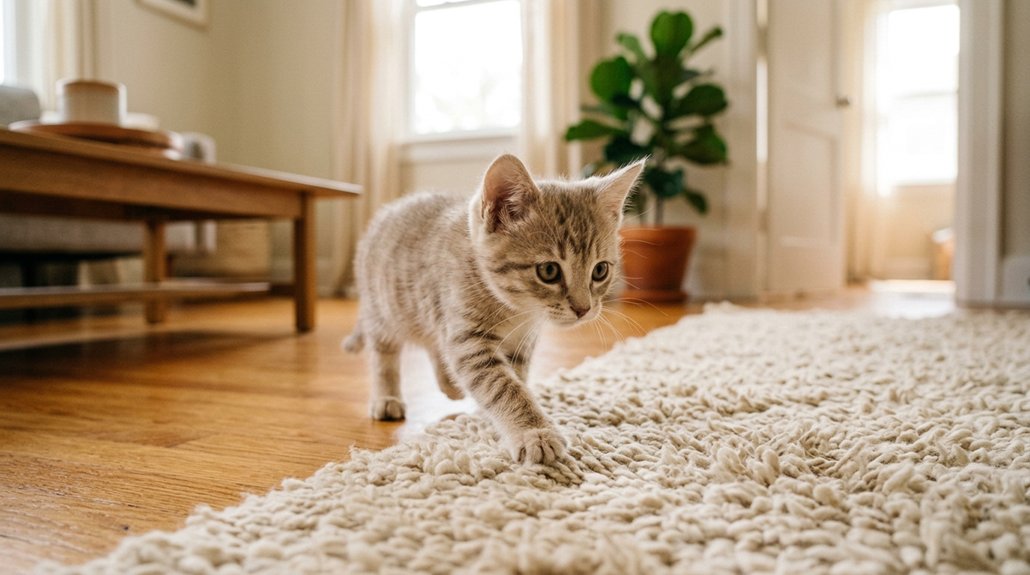
While it’s exciting to introduce your new feline friend to their forever home, initially confining them to a single, resource-rich room is vital to prevent overwhelming them. Slow exploration is necessary; allow your cat to acclimate to this safe space equipped with food, water, and a litter box. It’s important to encourage gradual introduction beyond the initial room, using positive reinforcement like treats or gentle play. Monitor your cat’s body language for stress indicators such as hiding or crouching. When you observe signs of readiness to explore, expand their access gradually. Provide safe retreats to guarantee they feel secure throughout this process. Expand access while supervising the cat’s movements to promote a calm and positive exploration of the home.
Introducing New and Resident Pets
Introducing a new cat to resident pets involves a carefully orchestrated process designed to minimize stress and prevent conflicts. Start by applying cat introduction techniques, which include scent swapping to familiarize pets with each other’s presence. Using a separate room for the new cat initially can help manage anxiety in multi pet households. Here are important steps:
Introducing a new cat requires scent swapping and a separate room to reduce stress and prevent conflicts.
- Scent Familiarization: Swap bedding or toys between cats so they can get used to each other’s scent before visual contact.
- Controlled Environment: Keep the new cat in a different room; resident pets can hear and smell but not see the newcomer.
- Supervised Interaction: Guarantee a safe environment by monitoring their initial meetings closely and intervene to prevent aggression.
Allow retreats and monitor stress levels throughout the process.
Spotting Stress in a New Home
Spotting stress in a new home is critical to ensuring your cat’s well-being during the adjustment period. Recognizing stress signs like decreased appetite, hiding, excessive grooming, and disinterest in interaction is essential. Cat behavior such as pinned-back ears, twitching tails, or crouched posture indicates discomfort. Understand these actions as coping mechanisms; allowing your cat safe retreat spaces can aid in comfort. Monitor stress levels as part of the adjustment timeline, acknowledging that each cat adapts at their own pace. Some cats may adjust within days, while others need several weeks. Positive interactions through play, treats, and gentle encouragement can foster security. Your awareness and proactive approach play a pivotal role in your cat’s adaptation to a new environment.
Building Trust With Your New Cat
Recognizing signs of a cat’s stress is just the beginning of ensuring their comfort in a new home. Building trust requires patience and positive interactions. Here’s how you can strengthen that bond:
- Approach with caution: Interact at eye level, avoiding direct eye contact. This cat body language reassures a shy or fearful feline, encouraging trust.
- Engage in trust building activities: Regular playtime using toys and treats creates positive associations, fostering a sense of security.
- Create a safe environment: Offer calm spaces for retreat. These refuges facilitate comfort, allowing your cat to set the pace for interactions.
Watch for signs like following you, rubbing against you, or sleeping nearby. These behaviors signal growing trust and alignment with your efforts.
Simple Ways to Enrich Your Cat’s Environment
Though cats are independent by nature, enriching their environment is vital for their mental and physical well-being. Incorporate interactive toys and DIY activities, like shoeboxes or cardboard tubes, to stimulate hunting instincts and promote sensory stimulation. Scratching posts and climbing structures are essential for environmental enrichment, allowing your cat to engage in territory marking and physical activity. Vertical and horizontal spaces foster confidence and create enriching exploration opportunities. Establish consistent playtime routines to keep your cat active and engaged. Safe hiding places, such as soft beds or cardboard boxes, provide refuge in stressful situations. To sustain interest, rotate toys regularly, maintaining novelty and reducing boredom-related behaviors. These strategies thoroughly support your cat’s diverse environmental needs and well-being.
Setting Up a Feeding and Care Routine
When introducing a cat to your home, establishing a structured feeding and care routine is essential for ensuring their comfort and well-being. A consistent feeding strategy can reduce stress by creating predictability. Here’s how to set up an effective meal routine:
- Feeding Schedule: Serve meals at the same time daily to foster a reliable pattern. Start with their familiar food, then gradually shift over a week to prevent digestive issues.
- Eating Environment: Position separate bowls for food and water in a quiet, accessible area, away from the litter box, to encourage healthy eating habits.
- Behavioral Stimulation: Introduce food-dispensing toys after the initial adjustment period, promoting hunting instincts and providing mental stimulation. Monitor closely and consult a veterinarian if appetite issues persist.
Handling Setbacks During Integration
Setbacks are a natural part of introducing a cat to a new home environment and often reflect the individual pace at which each cat adjusts. Recognizing integration strategies and monitoring behavioral cues like hiding or aggression are essential. Body language such as hissing or retreating suggests a more gradual approach is needed. Return to earlier steps—like scent swapping or supervised separations—to reinforce familiarity. Positive reinforcement through treats and praise during interactions can reduce anxiety. If issues persist, consulting professionals may be necessary. Here’s a quick reference table:
| Behavioral Cue | Suggested Strategy | Outcome |
|---|---|---|
| Hiding | Increase scent swapping | Enhances familiarity |
| Aggression | Supervised separations | Reduces tension |
| Hissing | Slow interactions | Reduces stress |
| Growling | Increase reinforcement | Builds positive associations |
| Retreating | Consult professionals | Tailored integration strategies |
Frequently Asked Questions
What Is the 3-3-3 Rule With Cats?
The 3-3-3 rule outlines a cat’s behavior adjustment period: first three days involve fear and hiding, next three weeks focus on exploring and adaptation, and by three months, a full behavioral and emotional adjustment is typically achieved.
What Is “I Love You” in Cat Language?
In feline body language, “I love you” is expressed through slow blinking, a behavior observed in 60% of cats. This communication, along with head butting and purring, indicates trust and affection in cat communication.
Where Should a Cat Sleep on Its First Night?
Make certain your cat sleeps in designated safe spaces where it feels secure. Establish a calming bedtime routine to promote relaxation. Provide draft-free, comfortable bedding options to encourage restful sleep, essential for acclimatization to the new environment.
What Are the Red Flags When Introducing Cats?
Watch for those subtle whispers in cat body language, like twitching tails or puffed fur, signaling discomfort. Introduction tips: reduce pressure if avoidance or confrontations occur. A little patience goes a long way in fostering harmony.
Conclusion
Bringing a cat into your home is an exciting journey filled with anticipation. You’ve prepared a safe haven, and gradually, they’ll explore with that innate feline curiosity. Will your resident pets become fast friends or need more time? Patience is essential. As you build trust and enrich their environment, you’ll open up a bond that’s truly rewarding. Stay vigilant, for minor setbacks may arise. Will you adapt and guarantee a harmonious integration? Your steadfastness determines success.