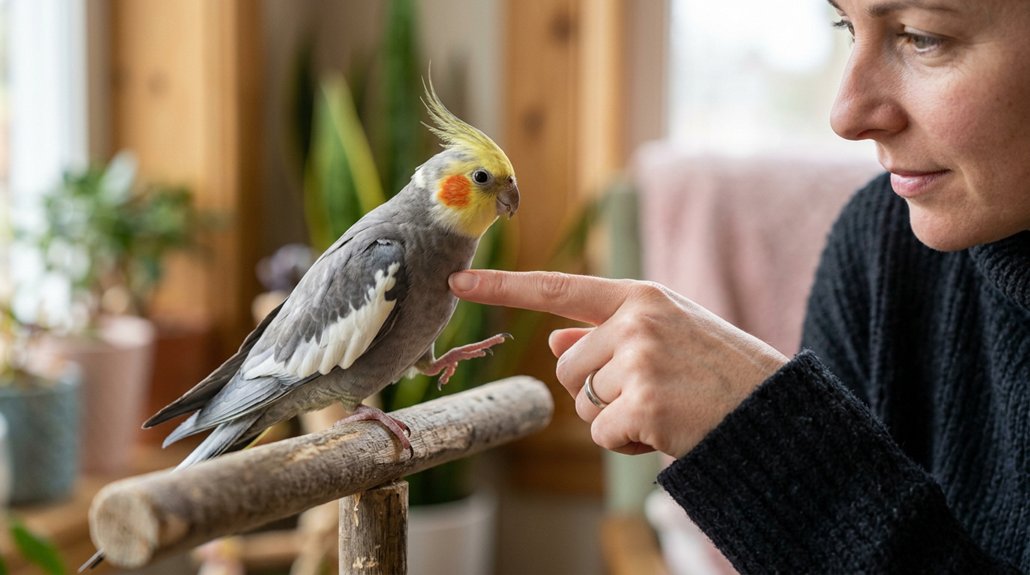
Start in a calm, quiet space with the cage open and your bird relaxed, not rushed. Offer a tiny high-value treat, like cashew or almond, and let your hand stay still so your bird can choose to come forward. Keep sessions short, gentle, and consistent, rewarding every tiny step toward your finger. If your bird pulls away, pause and go back a step, because patient practice often releases the next small win.
Key Takeaways
- Train in a quiet, safe space with the cage open and a nearby perch to reduce stress and flying off.
- Use tiny high-value treats, like cashew or almond pieces, to reward calm approach and every small success.
- Present your hand or perch slowly and steadily, with a consistent cue, so the bird can investigate without fear.
- Start by rewarding touch or one-foot steps, then place the finger under the chest and increase hold time gradually.
- Keep sessions brief and gentle, and step back to an easier stage if the bird shows discomfort or regression.
What Your Bird Needs First?
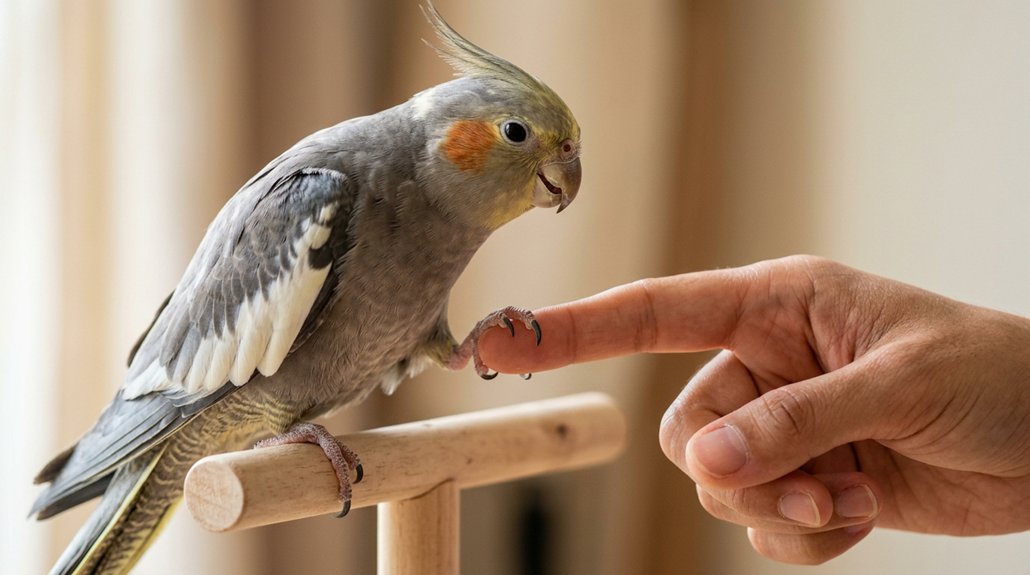
Before you ask your bird to step up, make sure the setup feels safe and low-pressure: a quiet training space, the cage open, and familiar perches nearby can help reduce stress and encourage voluntary movement. You’ll get better results when you watch for readiness, not force it. A quiet environment and basic safety equipment, like secure doors and stable perches, help both of you stay calm. Your bird should already accept your hand near the cage and tolerate gentle petting; that tells you trust is starting to form. Keep your body still, your movements slow, and stop at the first sign of discomfort. Short sessions, ideally before a meal, can help, but don’t rush. When the space feels predictable, your bird can choose to move toward you.
Build Trust With Treats and Calm Timing
Using a favorite high-value treat can help your bird decide that stepping toward you is worth the effort. Offer a tiny cashew or almond through the cage bars and keep it still so your bird chooses the approach. Aim for morning motivation levels when hunger is higher, and notice how calmly it reaches. Once that’s easy, open the door and hold the treat in your fingers inside the cage, stopping at the first sign of unease. Stay motionless until your bird settles. Move the treat gradually onto your palm, then closer to your wrist over short sessions. Good positive reinforcement timing means rewarding every tiny step-on, even quick ones. If progress stalls, shorten the session, return later, and never force the step up.
Show Your Hand Without Spooking Your Bird
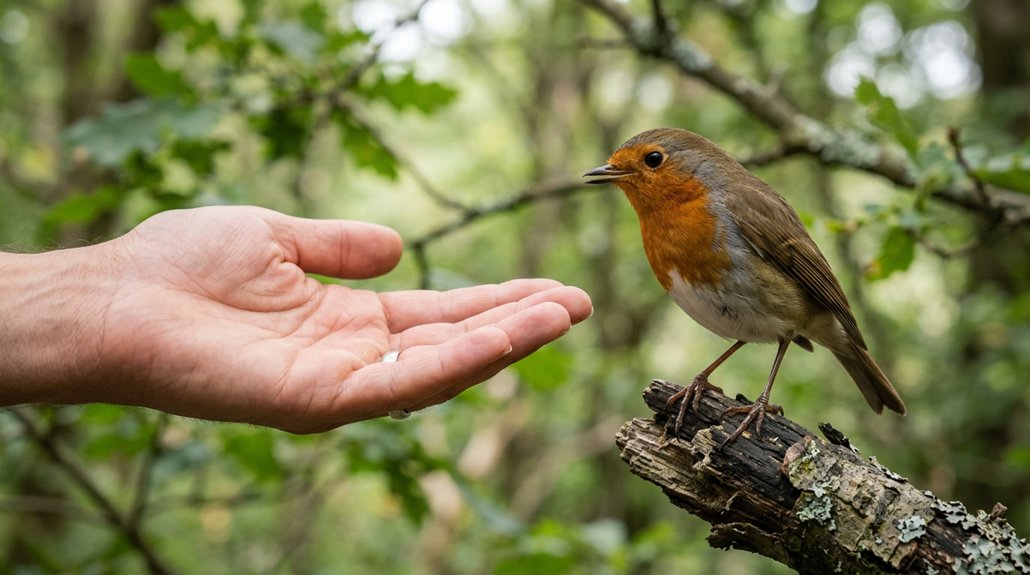
You can show your hand by approaching slowly with a small, high-value treat held steady where your bird can see it. Keep your fingers and palm still, and if your bird seems uneasy, stop right there and give it time to settle. Short, patient sessions help your bird learn that your hand is calm, predictable, and safe.
Offer Treats Calmly
Start with a highly desirable, uncommon treat, like a tiny piece of cashew or almond, and hold it steady through the cage bars so your bird can come forward and take it without feeling rushed. Use a calm voice, slow movements, consistent timing, and soft praise. Offer treats first thing in the morning, or when hunger nudges interest, then retry later if your bird ignores you.
| Tip | Why it helps |
|---|---|
| Steady hand | Reduces fear |
| Visible treat | Sparks curiosity |
| Morning offer | Boosts motivation |
| Gentle pause | Lets trust grow |
| Short sessions | Builds confidence |
Once your bird reliably takes treats, open the door and keep your fingers still. Move only until you notice mild discomfort, then stop. In repeated sessions, shift the treat from fingertips toward your wrist, rewarding every brave step.
Hold Still, Wait Patiently
Once your bird is taking treats calmly, the next step is to show your hand without asking for anything. Hold a small, high-value treat between your fingers and keep your hand still inside the cage or at the door for 30 to 60 seconds. Use slow breathing and soft eye contact, then watch for comfort. If your bird freezes, backs away, fluffs up, or widens its eyes, stop and stay motionless until it relaxes. Don’t lure by moving the treat; stillness teaches confidence, not chasing. Keep sessions short, 2 to 5 minutes, and repeat them several times a day, ideally when your bird’s a little hungry. Only move closer when it consistently approaches and eats from your steady hand.
Teach the First Step-Up on Your Finger
You can begin by offering a high-value treat until your bird calmly accepts it, then show it between your fingers and let your hand stay steady inside the cage. Move your finger slowly toward the perch, and if your bird seems uneasy, stop and wait so it can come to you on its own terms. When it takes the treat from your fingers, shift it just enough that it has to lean or step onto your finger, rewarding every small success right away.
Trust With Treats
Trust begins with a treat the bird can’t resist, offered through the cage bars until it reliably takes food from your fingers—ideally when it’s hungriest, such as first thing in the morning. You’re building a positive association, one calm bite at a time, so your hand starts to mean safety and reward. Then, with the door open, hold the treat in closed fingers and edge forward until the bird shows mild discomfort; pause, wait, then retreat.
- Reward every tiny approach.
- Use snack shaping: move the treat from fingers to palm, then toward the wrist.
- Keep sessions short, gentle, and repeated daily.
If progress stalls, try a better treat, a hungrier moment, and slower movement. Soon, leaning becomes touching, then one foot, then a steadier step-up.
Steady Finger Placement
Hold out a high-value treat first, and wait until your bird takes it calmly from your hand before introducing your finger; that keeps the next step linked to something safe and rewarding. Then place your finger flat and steady just below the chest, near the vent, so it can find the leading edge and balance easily. Keep your hand motionless, with proper posture, and don’t lean or jerk forward. Let the bird notice the fingertip texture, then move closer in tiny millimetre increments across short sessions. When it steps up without hesitation, reward it right away with the treat and quiet praise. Withdraw slowly once it’s secure. Practice a few minutes daily, especially when it’s hungry, and let confidence grow gradually.
Move From Finger to Hand Stepping
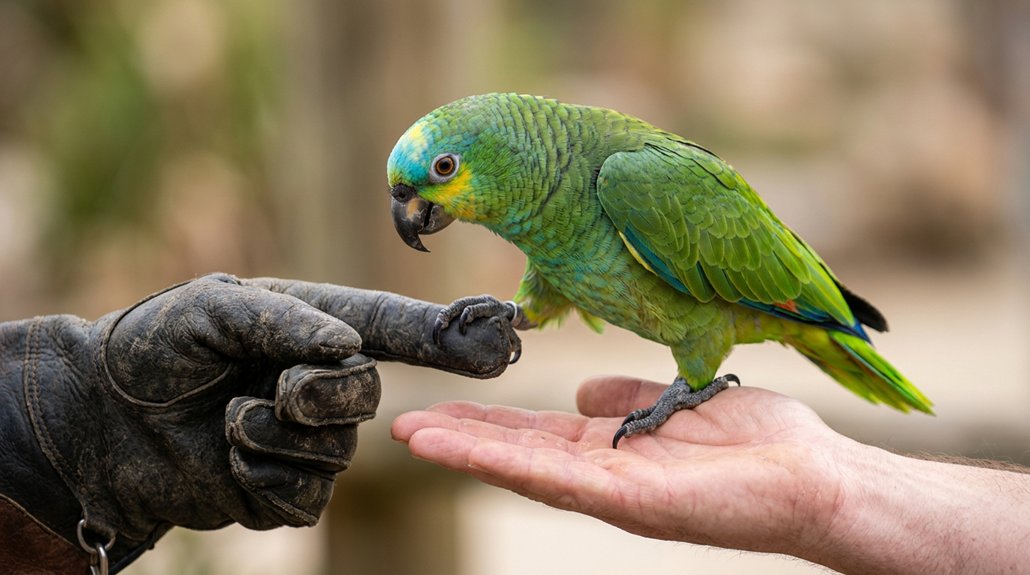
Once your bird is reliably taking treats from your fingertips, start to lure it farther down onto your palm, moving the reward gradually toward your wrist so it has to lean in and briefly place one foot on your hand. Keep your hand still; any shift can make it step off. You’re building hand balance and wrist awareness, so let the bird test the new surface at its own pace.
- Reward each tiny step-on right away with a high-value treat.
- Expect quick, hesitant touches before full stepping.
- Repeat in many short sessions, several times daily.
As confidence grows, increase hold time in small increments. When both feet land on your hand, gently raise and lower it a little, pausing to reward calm steadiness.
Practice Step-Up Outside the Cage
Now that Gizmo is taking the step-up more confidently by hand, start practicing outside the cage in a quiet, familiar room where he already feels comfortable returning to the floor. Good environment setup keeps his focus on you, not surprises. Use patience timing: work when he’s a little hungry, like in the morning, and keep each session just 2–5 minutes. Offer a tiny, high-value treat on your fingers or palm until he takes it calmly. Then place your hand near a low perch or the floor, and slowly invite a step:
| Step | What you do | What Gizmo does |
|---|---|---|
| 1 | Hold treat steady | Takes it |
| 2 | Move hand closer | Leans in |
| 3 | Shift treat toward wrist | Steps on |
| 4 | Reward instantly | Stays engaged |
Stop at mild discomfort, end positive, and repeat often.
Handle Fear, Flying Off, and Backsliding
If your bird starts flying off or dive-bombing during out-of-cage time, keep the space small and safe by working near the cage or a low perch so he can land easily and return to shelter on his own. This lowers flight anxiety and supports perch safety while you rebuild confidence.
Keep the space small and safe near the cage or a low perch, so he can land easily and return to shelter.
- Offer a steady hand or stick at chest height, never grab.
- Use cashew or almond pieces for tiny, frequent wins.
- Pause the moment he looks uneasy, and stay still.
When he backs away, don’t push forward; wait calmly until he relaxes. If he’s regressed, step back one training stage and repeat it across days. Short, gentle sessions help him learn that stepping up brings comfort, not pressure, and that you’ll respect his pace.
Frequently Asked Questions
What Is the 3 3 3 Rule for Birds?
It’s a guideline for you: 3 days to decompress, 3 weeks to adjust, and 3 months to bond. Use positive reinforcement and gradual desensitization, staying gentle, observant, and patient with your bird.
What Colors Are Birds Scared Of?
Birds’re often wary of bright whites, neon reds, oranges, and vivid blues, especially with bright lights or sudden movements. You’ll do best with muted greens, browns, and grays, then watch your bird’s reactions patiently.
Which Fruit Is Not Good for Parrots?
Avocado isn’t good for parrots; its avocado toxicity can be deadly. You should also avoid fruit pits, moldy fruit, and unripe tomatoes. Since parrots have salt sensitivity, keep their diet plain, fresh, and safe.
What Is the 60/40 Rule for Birds?
It’s a gentle balance: you move forward about 60% confidently, then wait 40% calmly so your bird can choose. You’ll pair positive reinforcement and target training, helping trust grow without pressure or fear.
Conclusion
Training your bird to step up isn’t just about getting a perch to your hand—it’s about building trust, one calm moment at a time. Why rush when patience helps your bird feel safe and willing? If you keep your movements gentle, your rewards consistent, and your expectations small, you’ll make real progress. Even when your bird backs off, you’re still learning together. In time, that simple step can become a quiet bond you both trust.