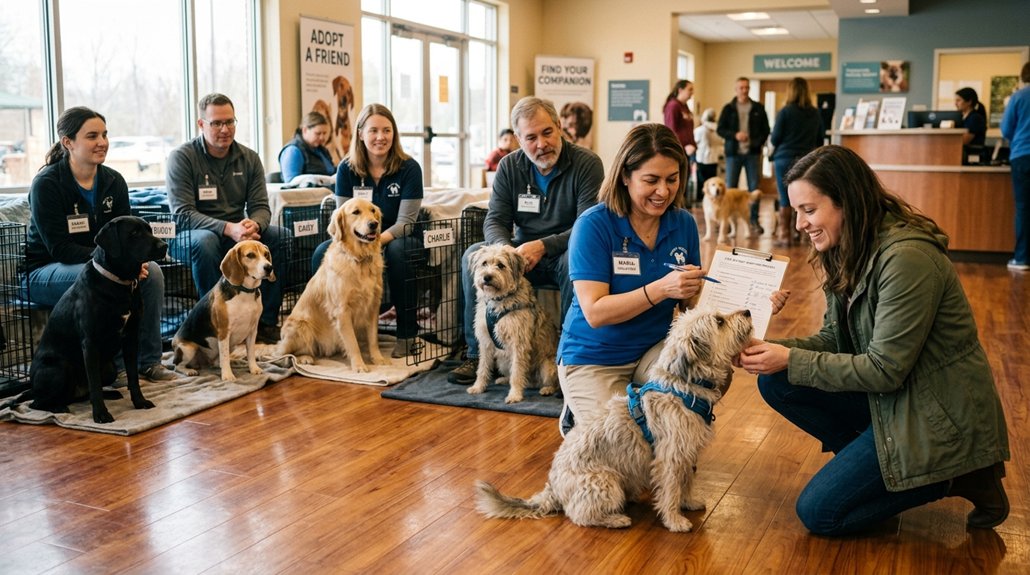
Initiating the dog adoption process involves evaluating your readiness—consider time, financial commitment, and living environment. Select an ideal breed by reviewing your lifestyle and complete the adoption application with thorough details. Prepare for screening, including reference checks and potential home visits. Once matched with a dog, guarantee a safe home and establish a routine. After adoption, access ongoing support and resources. This journey to finding your companion has more insights and steps to explore further.
Key Takeaways
- Assess your readiness for a dog through time, financial, and family considerations.
- Determine the suitable dog breed based on your lifestyle and living environment.
- Complete a detailed adoption application and secure necessary approvals from landlords.
- Prepare your home with safe spaces and a consistent routine for your new dog.
- Access post-adoption support and resources to ensure a smooth transition and ongoing care.
Assessing Your Readiness for Dog Adoption
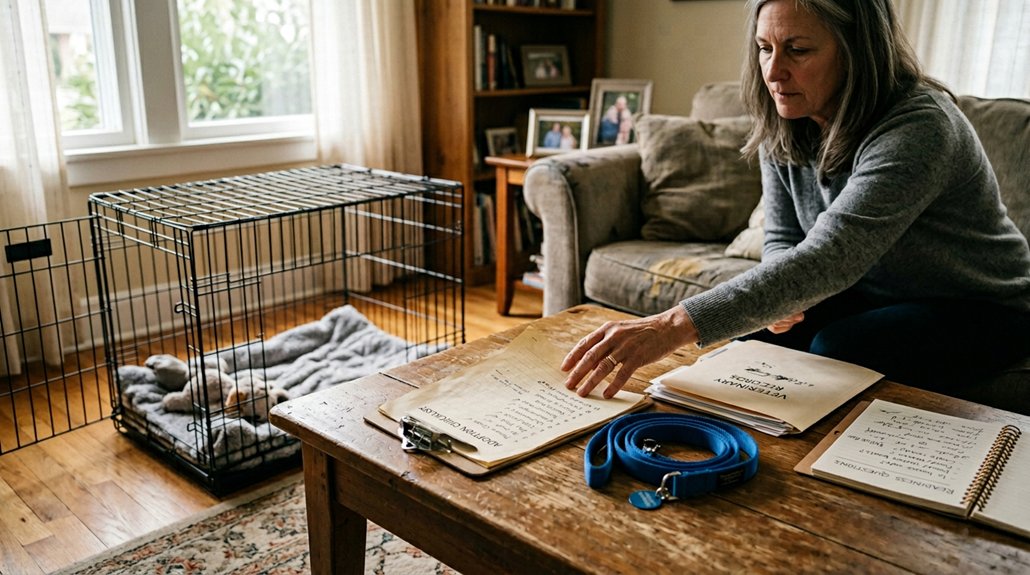
Adopting a dog is a rewarding experience, but it’s essential to evaluate your readiness to guarantee a successful changeover for both you and your future pet. First, consider the time commitment necessary. Dogs need daily walks and consistent care to thrive, so make sure your schedule allows for these responsibilities. Next, assess your financial preparedness. Determine if your budget can cover regular expenses like food, vet visits, and grooming, as well as unforeseen medical costs. Examine your living environment to ensure it accommodates a dog, considering size, activity space, and any pet policies. Reflect on your family’s readiness, balancing energy levels and lifestyle needs to ensure everyone, including the new furry addition, enjoys a harmonious home life.
Identify the Ideal Dog Breed for Your Lifestyle
Once you’ve assessed your preparedness for welcoming a dog into your life, the next step is identifying the breed that best suits your unique lifestyle. Start by conducting a thorough lifestyle assessment. Consider your living environment—smaller spaces might mean smaller breeds, especially in urban settings. Evaluate the breed compatibility by researching characteristics like energy levels. High-energy dogs require more active routines, while low-energy breeds may align better with a quieter lifestyle. Think about age, too; puppies need training, whereas adult dogs might bring calmness and established manners. Keep any household dynamics in mind, ensuring the temperament fits well with children or other pets. Consult shelter staff for insights on breeds that match your work schedule, activity level, and allergies.
Complete the Dog Adoption Application
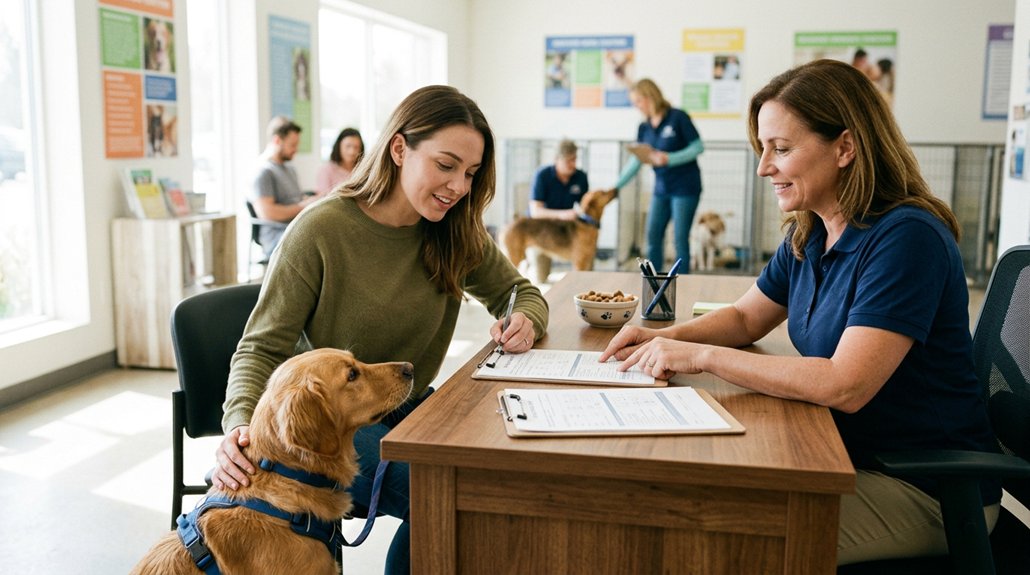
Completing the dog adoption application is a vital step where you provide detailed insights about your lifestyle, training beliefs, and past experiences with animals. It’s important to obtain your landlord’s approval if you rent and verify any breed or size restrictions that might impact your adoption plans. Additionally, make sure your existing pets are current on vaccinations by confirming with veterinary references, and include personal references to demonstrate your readiness to care for a new furry friend.
Key Application Components
As you begin the journey of dog adoption, it’s vital to understand the key components of the application process to secure a successful submission. Start with some essential application tips: Clearly articulate your lifestyle considerations, such as work hours and household dynamics, to demonstrate compatibility with your potential dog’s needs. Verify you have landlord approval if you rent, as breed or size restrictions could affect your adoption eligibility. Veterinary references will be contacted to verify the spaying/neutering and vaccination status of your current pets. Personal references serve to evaluate your responsibility as a future pet owner.
Remember to thoroughly complete all sections before submission to streamline the volunteer review process.
- Detail lifestyle and training beliefs
- Confirm landlord approval for renters
- Provide veterinary references
- Supply personal references
Essential Applicant Information
A fundamental part of the dog adoption process is completing the application with essential applicant information. You’ll need to detail your lifestyle openly, as this lifestyle assessment plays an important role in ensuring the right match with potential pets. Your views on training and prior experiences with animals are assessed, aligning with the application requirements. Honest information about your living situation is essential, especially regarding landlord approval if you rent, to verify any breed or size restrictions. References, both personal and veterinary, provide insight into your past pet ownership and care practices. Every household member should participate in the home visit and informal interview to create a thorough picture of the environment. Once approved, you’ll meet available dogs to find the perfect fit.
Screening Essentials in the Dog Adoption Process
Before bringing a new furry family member into your home, it’s crucial to understand the essential screening elements of the dog adoption process. The screening criteria help guarantee a harmonious match between you and the dog. You’ll need to fill out a detailed application form that explores your lifestyle and pet care history.
Understanding the adoption screening ensures a harmonious match with your new furry family member.
To verify suitability:
- Reference checks: Personal and veterinary references confirm responsibility and existing pet care.
- Landlord approval: Essential for renters, focusing on breed and size limits.
- Home visits: Assessments confirm your environment’s safety and appropriate compatibility.
- Training beliefs: Evaluated to align with potential adoptee needs and standards.
What to Expect When Meeting Potential Dogs
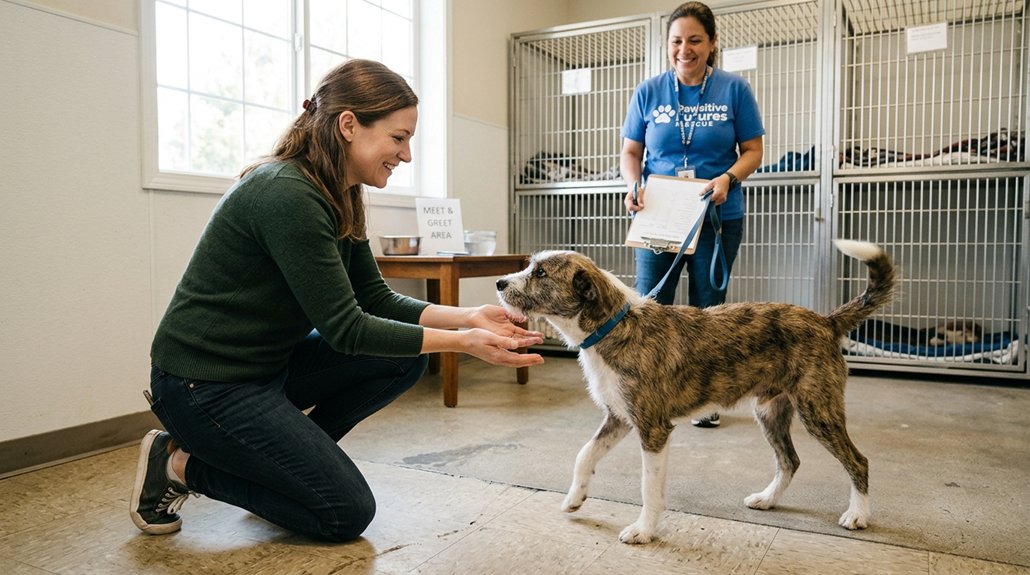
After thorough screening, the next crucial step in the dog adoption process is meeting potential dogs. You’ll typically visit the dog’s foster home or a mutually agreed location to guarantee a relaxed environment. Interacting with the dogs provides a chance to assess compatibility beyond appearances. Pay close attention to dog personality traits, such as energy levels and social behavior, which are key in determining if a dog aligns with your lifestyle. Utilize interaction tips like kneeling to their level or offering treats to create a welcoming atmosphere. Foster caregivers and staff will share insights into each dog’s temperament, health, and specific needs to help with your decision. Remember, it’s about finding the perfect match, not just meeting a specific dog.
Sealing the Deal on Your Adoption
As you move forward in the adoption process, confirm you’ve completed all prerequisites like home visits and reference checks before finalizing the adoption. Signing the final contract terms is essential, as this document officially transfers ownership to you. Carefully review the adoption fee breakdown, which may include a spay/neuter deposit if the dog hasn’t been altered yet.
To guarantee a smooth transfer:
Review initial supplies and compliance requirements to ensure a smooth transition for you and your new pet.
- Review Initial Supplies: You’ll receive a kennel, food bowls, and dog food.
- Understand Refund Policy: A two-week refund period is available if the adoption doesn’t work out.
- Comply with Post-Adoption Requirements: Submit proof of spay/neuter within the designated timeframe to retain your deposit.
- Emphasize Compatibility: The organization’s commitment guarantees a good match for you and your new companion.
This meticulous process strengthens the bond in your growing family.
Preparing to Welcome Your New Dog Home
As you prepare to welcome your new dog home, it’s crucial to establish a safe environment by designating areas for bedding, toys, and food. Gradually introducing your pet to each room will help minimize their anxiety and ease the shift. Creating a consistent daily routine for feeding, potty breaks, and exercise will give your dog the stability they need to adjust comfortably and confidently.
Creating a Safe Space
Welcoming a new dog into your home is an exciting yet critical time, and establishing a safe, comfortable space is essential in ensuring a smooth changeover. Creating a pet-friendly environment means designating a specific area just for your pup—complete it with cozy bedding, toys, and water and food bowls to form an inviting comfort zone. Gradually introduce your new furry friend to different rooms, which can help reduce anxiety and assist in their adjustment to new surroundings. Keep your home safe by removing hazards like toxic plants and securing loose electrical cords. Utilizing gates or other baby-proofing methods helps establish clearly defined areas, offering your dog a secure retreat when they need it.
- Designate a specific space
- Gradually introduce rooms
- Remove potential hazards
- Establish secure retreats
Establishing a Routine
One of the key steps in easing your new dog into its new life is establishing a consistent routine that mirrors a sense of security and predictability. Begin by creating a daily schedule that includes feeding times, potty breaks, and exercise. Designate distinct areas for bedding, toys, food, and water to help them settle. Gradually introduce your dog to different rooms for comfortable acclimation. Use positive reinforcement and training tools like a Halo Collar to aid in commands and guarantee safety. Supervise interactions with family and pets to nurture positive relationships right from the start.
“`markdown
| Activity | Time Frame |
|---|---|
| Feeding | Morning & Evening |
| Potty Breaks | Every 2-3 hours |
| Exercise | Twice a day |
| Training Sessions | 10 min. daily |
| Playtime | 30 min. daily |
“`
Support and Resources After Adoption
Even after you’ve joyfully welcomed your new furry friend home, it’s vital to have resources and support to guarantee a smooth adjustment. Post adoption support plays a significant role in this changeover. You’ll benefit from a follow-up visit by a volunteer, who assures your dog’s well-being and helps address any concerns. Veterinary resources are also available to you—access a detailed medical history report that covers all necessary vaccinations and procedures. Additionally, the rescue provides ongoing help, including information on low-cost veterinary care and solutions for any care challenges you may face. If issues arise, you have:
- A hotline for rehoming (701-205-0190)
- Full adoption fee credit if returned within 60 days
- Guidance on animal care challenges
- Continuous rescue support
Frequently Asked Questions
How Long Does the Overall Dog Adoption Process Take?
The dog adoption process can take a few days to several weeks, depending on the application timeline and required paperwork. You’ll need patience and attention to detail to complete forms and meet any necessary criteria.
Are There Options for Adopting Dogs With Special Needs?
Yes, you can adopt special needs breeds, offering them a loving home. Consider their unique training considerations, including patience and consistency. These dogs can have rewarding companionship potential when provided with the right care and understanding.
Can You Adopt a Dog if You Have Small Children?
Yes, you can adopt a dog if you have small children. Prioritize child-friendly breeds and focus on adoption safety to guarantee a good match. Always consider the dog’s temperament and your children’s needs for a harmonious household.
What if the Adopted Dog Doesn’t Get Along With Resident Pets?
About 40% of adopted dogs find integration challenging, but don’t worry. You can try integration techniques like gradual introductions and conduct a behavior evaluation to guarantee safety and harmony with your resident pets.
Is Adoption Refundable if It Doesn’t Work Out?
Adoption policies vary, but some offer trial periods allowing for returns. Check the specific shelter’s rules to guarantee you’re aware of any refund options if things don’t work out. It’s important to remain compassionate toward all involved.
Conclusion
Adopting a dog is like planting a seed of joy that needs nurturing to grow. As you navigate this journey, consider each step a building block for a lifelong companionship. You’ve laid the groundwork by understanding your readiness, finding a breed that fits your lifestyle, and securing your new friend through the adoption process. Now, it’s about creating a loving home and knowing where to turn for support. Embrace this new chapter with open arms and a full heart.