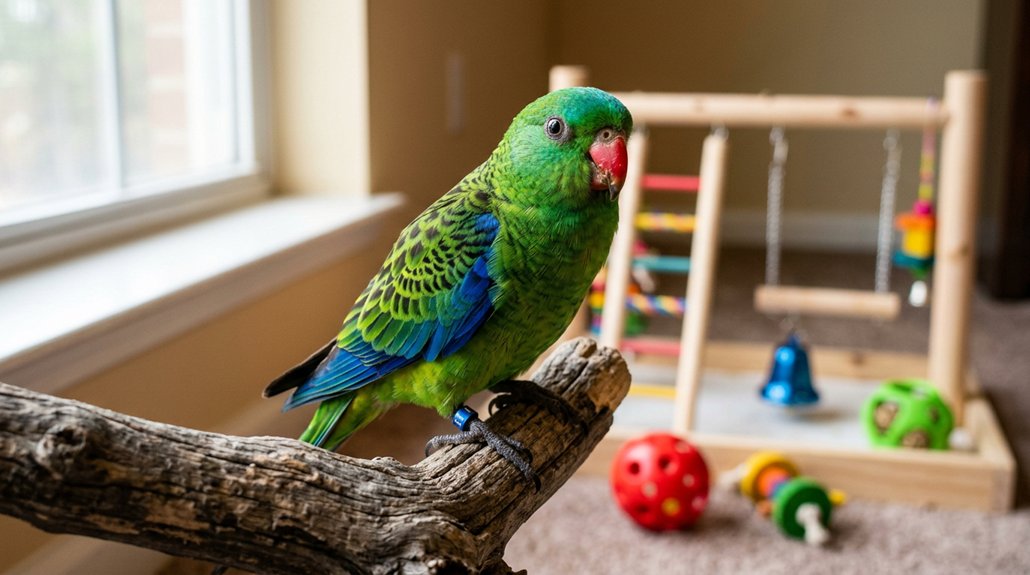
If your bird seems bored, you should add immediate enrichment, more social interaction, and a more varied routine. Watch for pacing, screeching, feather damage, chewing, or lethargy, since these can signal boredom. Rotate toys every few days, include foraging and puzzle feeders, and change their locations to prevent habituation. Offer supervised out-of-cage time, short reward-based training, and safe play sessions. With a few simple changes, you can make each day more engaging and see what helps most.
Key Takeaways
- Watch for boredom signs like pacing, screeching, over-preening, lethargy, or destructive chewing.
- Rotate toys every 3–7 days and keep a mix of foraging, shreddable, puzzle, and chewable options.
- Replace regular meals with simple puzzle feeders or food searches to make eating more engaging.
- Give daily supervised out-of-cage time and short reward-based training sessions to provide exercise and mental stimulation.
- If boredom signs appear suddenly or worsen, consult an avian vet to rule out medical problems.
Signs Your Bird Is Bored
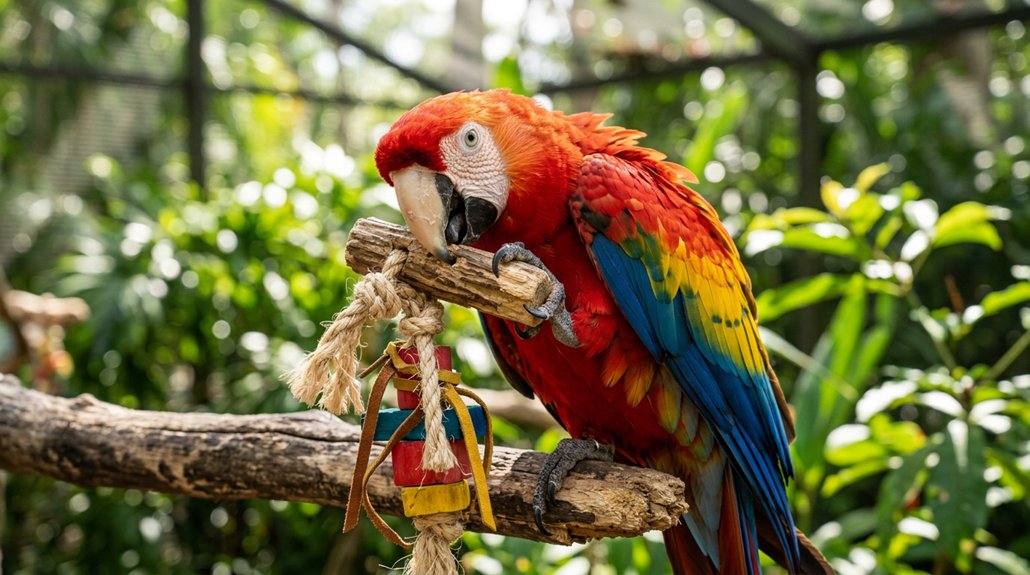
If your bird is bored, you’ll often notice repetitive behaviors such as pacing, head bobbing, or rocking for long periods, along with excessive vocalizing or screeching at unusual times. You may also see attention-seeking calls that don’t fit its usual routine. Over-preening, feather plucking, bald patches, or damaged feathers can indicate chronic understimulation. Lethargy, extra sleep, or ignoring toys and treats suggests mental disengagement. Destructive chewing, shredding, or frenzied tearing of cage items often reflects frustration. These signs matter because boredom can progress into more serious behavioral concerns. Watch for changes in pattern, not just isolated moments. Providing vocal enrichment and environmental variety can help you recognize when your bird’s needs aren’t being met and support healthier daily behavior.
Common Reasons Birds Get Bored
Birds usually get bored when their daily environment doesn’t offer enough to do, explore, or solve. If you keep food in the same bowl at the same time, your bird loses foraging challenge and mental stimulation. In the wild, birds may spend 6–7 hours searching for food, so confined birds often need puzzle feeders or hidden treats. Small cages, limited flight, or no supervised out-of-cage time can reduce movement and increase lethargy. Low social interaction also matters; if you’re absent often or your bird lacks a compatible companion, it may call, scream, or pluck. A static cage with the same toys and textures can quickly become familiar. Seasonal enrichment and social pairing can help maintain interest and support emotional well-being.
Rotate Toys to Keep Birds Interested
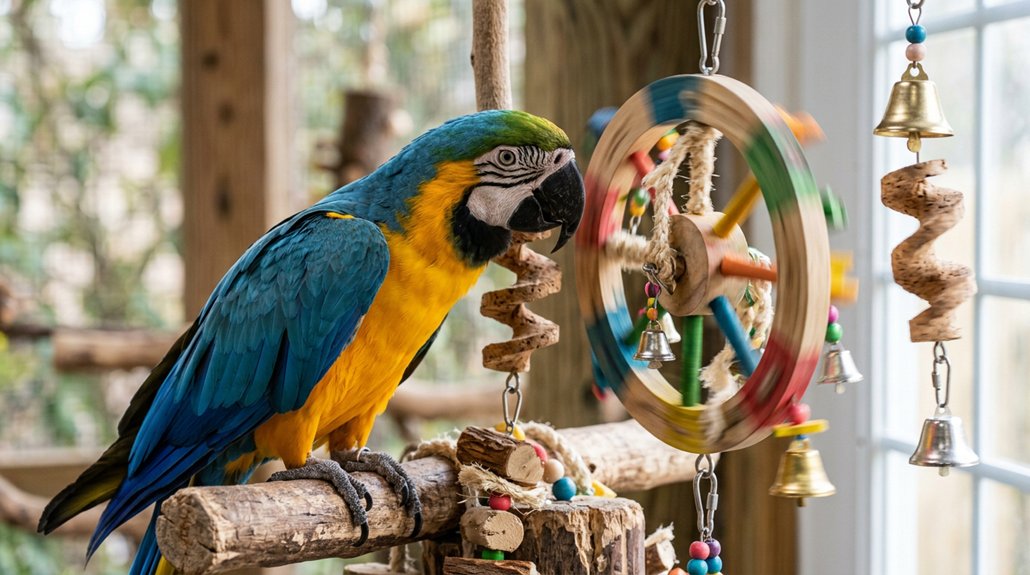
Swap your bird’s toys regularly so the cage doesn’t start to feel predictable. Aim to rotate items every 3–7 days to reduce habituation and support environmental enrichment. Keep 8–12 varied toys on hand, including foraging, shreddable, puzzle, and chewable options, so you can swap them without repeating the same few too often. If a toy is heavily shredded or soiled, replace it right away and let it rest in storage for 1–2 weeks. When you reintroduce a toy, add a small high-value treat or partially unwrap it to restore curiosity. Rotate locations too: move toys between perches, play gyms, and rooms to provide sensory variation and encourage exploration.
Add Foraging and Puzzle Feeding
To keep your bird mentally engaged, build foraging into daily feeding so meals take effort, not just minutes. Aim to replace 1–3 meals a day with Puzzle feeders or simple food searches, so your bird spends hours working for Hidden treats instead of eating all at once. Start with easy options: tuck a few millet sprigs or 5–10 favorite seed or fruit pieces into a crumpled paper cup or coffee filter. Over 1–2 weeks, increase difficulty as your bird learns. Use safe materials such as butcher’s paper, cardboard, untreated wood, and paper towel rolls; avoid foil or plastic parts. Rotate foraging tasks every 3–7 days. Watch for more active foraging and fewer boredom signs like bar-chewing, screaming, or feather plucking; consult an avian vet if changes are sudden.
Make Time for Play, Training, and Safe Outings
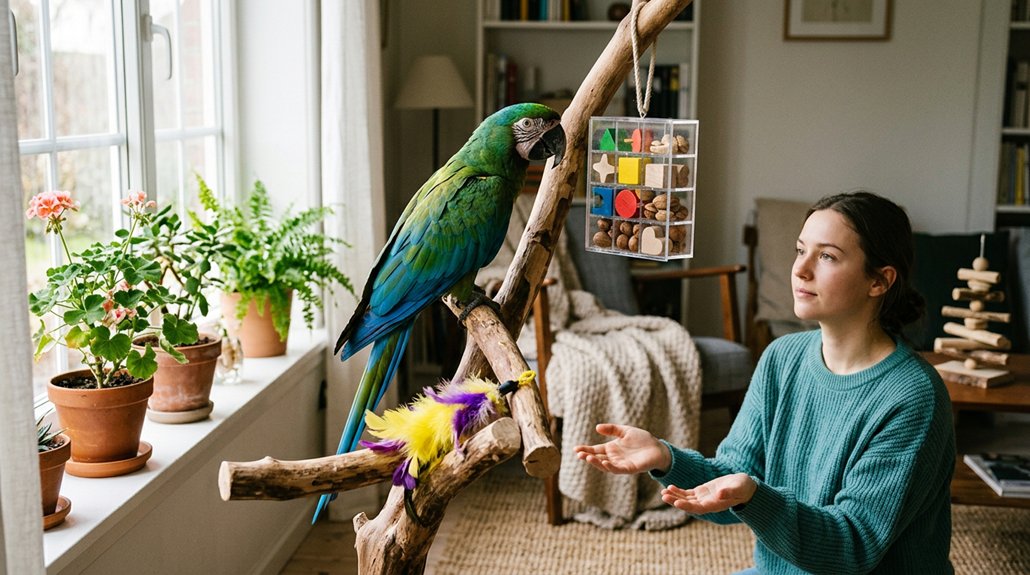
Daily play and training sessions can do a lot to prevent boredom and build confidence. You should schedule at least two 10–20 minute sessions each day, using short, reward-based drills like step-up, recall, and target training. Keep reinforcement small and limited to 5–10 treats, such as millet or chopped produce, so you don’t overfeed.
Schedule at least two 10–20 minute training sessions daily, using short, reward-based drills and small treats.
- Rotate goals weekly to keep tasks challenging.
- Use an interactive perchtime for longer perch stays.
- Provide 30–60 minutes of supervised out-of-cage time daily in a bird-safe room.
- For outings, pack a portable play gym, new toys, and a few favorite treats.
These routines support exercise, mental stimulation, and safe exploration. They also help you track progress and notice changes in energy, focus, or confidence.
Frequently Asked Questions
What to Do if Your Bird Is Bored?
Give your bird more environmental enrichment: daily supervised out-of-cage time, rotated toys, foraging puzzles, varied perches, and training games. You’ll reduce boredom, boost exercise, and support healthy mental stimulation with gentle, caring consistency.
What Is the 3 3 3 Rule for Birds?
The 3-3-3 rule means you give your bird about 3 hours out-cage daily, 3 enrichment activities, and 3 toy rotations weekly. You’ll support flight, foraging, and training sessions through environmental enrichment.
How to Entertain a Bored Bird?
You can entertain your bird with foraging toys, supervised out-of-cage time, and short Training sessions. Rotate toys often, hide treats, and offer shreddables or chewable wood so you’ll keep stimulation fresh and rewarding.
How to Tell if a Bird Is Bored?
You’ll notice boredom through behavioral cues: pacing, rocking, repetitive calls, ignored toys, and destructive chewing. Watch feather condition too—over-preening, plucking, or bald patches. If your bird seems lethargic, it likely needs more stimulation.
Conclusion
If your bird seems bored, treat the signs as a small flare, not a storm. You can brighten the cage like turning a key in a lock: rotate toys, offer foraging challenges, and make time for play, training, and safe outings. These simple changes help keep mind and body engaged. With steady attention, you’ll turn restlessness into curiosity, and your bird’s daily life can feel less like waiting and more like thriving.