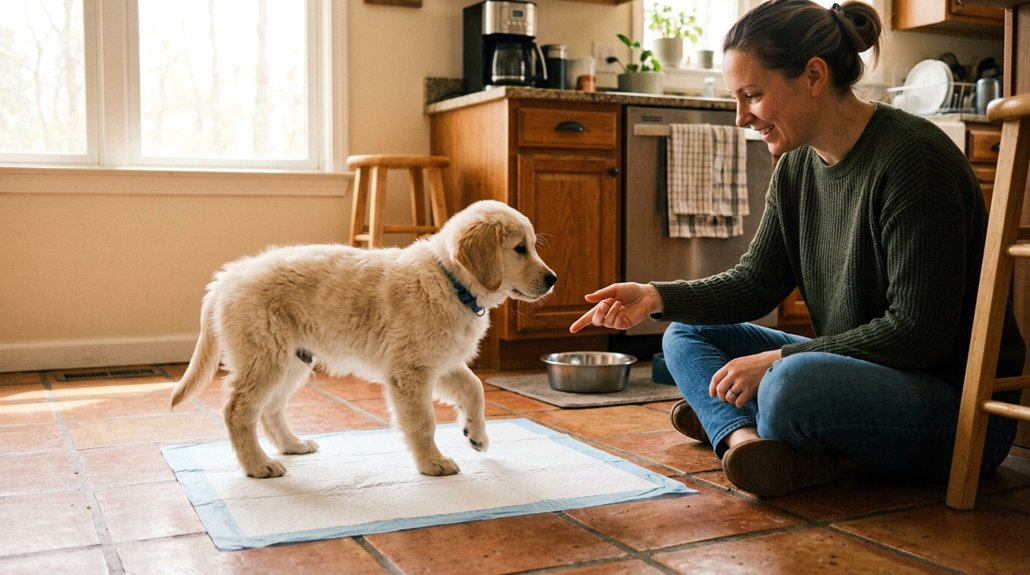
To house train your puppy, begin by recognizing their natural instincts and maintaining a consistent schedule. Utilize crate training, ensuring the correct crate size to encourage cleanliness. Take your puppy outside regularly, especially after waking, eating, or playing, and reward them for eliminating outdoors. Quickly clean any accidents without harsh punishment, and be observant of signs indicating they need to go. For more thorough strategies and troubleshooting tips, your journey doesn’t stop here.
Key Takeaways
- Establish a consistent potty schedule by taking your puppy out after waking, eating, and playing.
- Use crate training to leverage a puppy’s instinct to keep their sleeping area clean.
- Reward with praise or treats when the puppy eliminates outside in the designated spot.
- Promptly clean any accidents using an enzyme-based cleaner to eliminate odors.
- Observe and respond quickly to signs like circling, as they indicate the need for elimination.
Grasping Potty Training Fundamentals for Puppies
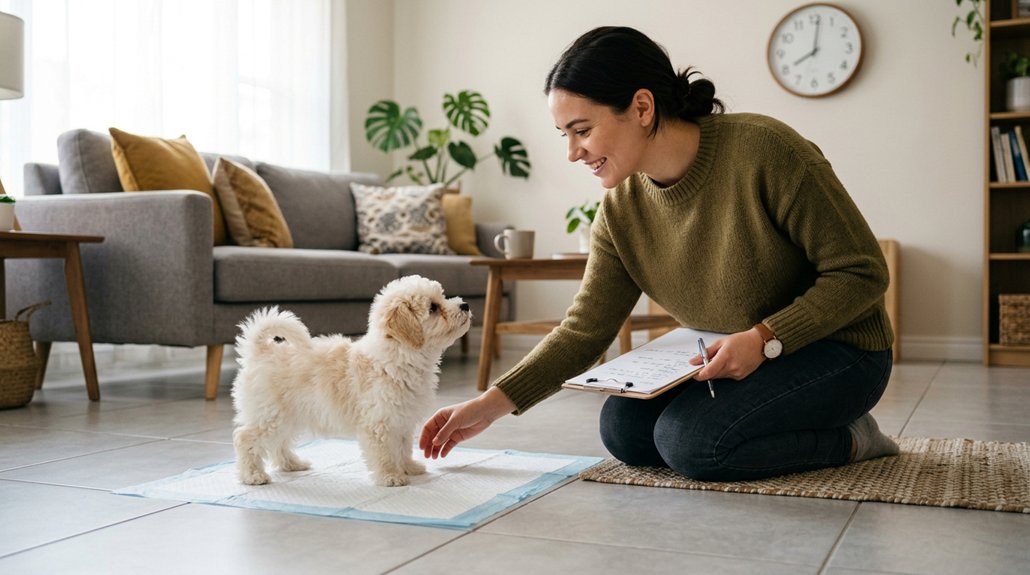
When you’re starting on the journey of potty training a puppy, it’s essential to grasp a few fundamental principles. First, recognizing puppy instincts helps immensely. Puppies naturally prefer to keep their sleeping area clean. Utilizing crate training taps into this instinct by providing a snug space that discourages accidents. Make sure the crate’s the right size—too big, and it loses its effectiveness.
Next, focus on reinforcement strategies. The moment your puppy successfully eliminates outside, shower them with praise and offer a tasty treat. This immediate positive reinforcement strengthens their association with designated areas for potty time. Finally, stay vigilant. Watch for behaviors like circling or sniffing, as these indicate the need to head outside. With patience and consistency, you’ll guide your pup in mastering housebreaking.
Crafting a Reliable Potty Schedule
Creating a reliable potty schedule is essential in effectively house training your puppy. Begin by adopting potty timing strategies, such as taking your puppy out immediately after they wake up, eat, or play. These moments often trigger the need to eliminate. Schedule regular potty breaks every hour for younger puppies, whose bladder control is still developing. Monitor their behaviors closely and stay outside for 5-10 minutes. When they eliminate, employ a reward system—praise or treats work wonders for reinforcing good habits. Consistency is key: take them to the same spot each time, building their confidence and routine. As your pup matures, adjust the schedule, extending intervals between breaks, and helping them develop better bladder control.
Leveraging Crate Training for Efficient Potty Training
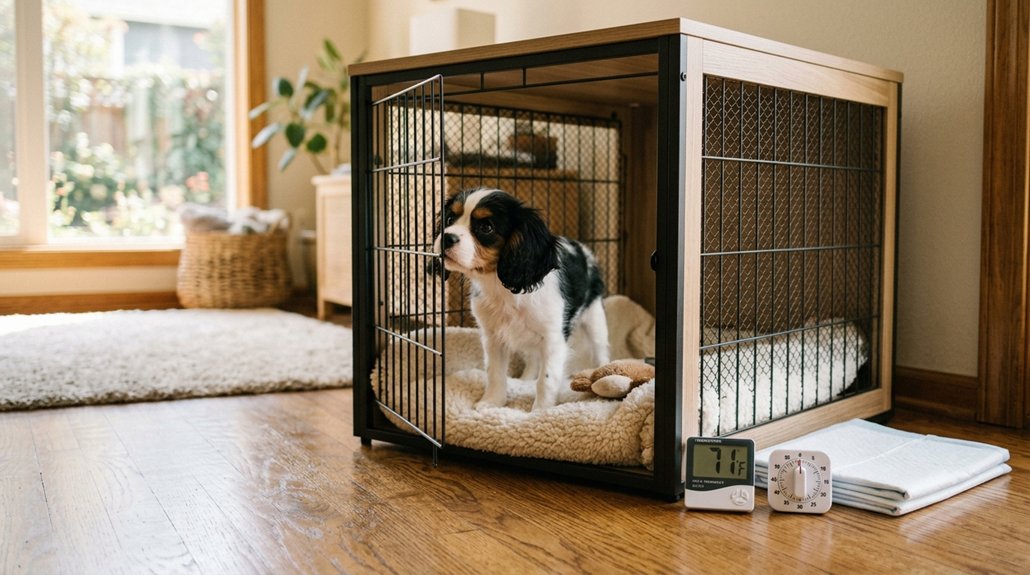
Utilizing crate training for potty training can be incredibly effective, especially since it taps into a dog’s natural instinct to keep their sleeping area clean. First, verify the crate size allows your puppy to stand up, turn around, and lie down comfortably without enough room to designate a bathroom corner. This size restriction discourages accidents while encouraging them to hold their bladder.
Use positive reinforcement right after they successfully do their business outside by rewarding them with treats and praise. This will strengthen their understanding and motivation. Begin with short periods in the crate, gradually extending as they adjust while supervised playtime outside the crate prevents accidents. Through patience and consistency, your puppy will associate the crate with being their safe, clean den.
Techniques for Handling Accidents and Reinforcing Positive Behavior
After establishing a routine with crate training, it’s natural to face the occasional mishap indoors. Effective accident management starts by promptly cleaning any accidents with an enzyme-based cleaner to remove odors, preventing repeated mistakes. If you catch your puppy mid-accident, interrupt with a quick sound like clapping, then redirect them outside. This teaches that the outdoors is the correct place for potty breaks. Focus on positive reinforcement by using consistent commands and rewarding your puppy immediately after they eliminate outside. This reinforces their understanding and encourages future success. Remember, don’t punish unless you catch them in the act—verbal scolding is sufficient. Maintain a structured schedule post-meals, naps, and playtime. This consistency helps solidify good bathroom habits.
Troubleshooting Common Potty Training Challenges

Even though you’re following the best practices for potty training, challenges may still arise that require some troubleshooting. Persistent accidents could signal health concerns, so consider a vet check to rule out issues. If your puppy’s soiling its crate, confusion from past confinement might be the cause. Focus on retraining proper habits with patience. Should anxiety triggers create setbacks, avoid punishment, as it can worsen the situation. Instead, interrupt accidents gently and guide your pup outside.
For small breeds or specific homes, indoor training might be best with consistent structure. Remember to clean accidents with enzyme-based cleaners. Removing odors is essential to stop repeated issues. With a clear, kind approach, you’ll navigate these challenges smoothly and successfully.
Frequently Asked Questions
What Is the Quickest Way to Housebreak a Puppy?
The quickest way to housebreak a puppy involves using the best potty training methods, like consistent routines and positive reinforcement. Avoid common housebreaking mistakes, such as inconsistent schedules and relying on potty pads, for effective results.
What Is the 7 7 7 Rule for Puppies?
Envision this: the “7 7 7 Rule” is your guide to understanding puppy behavior and training techniques. It’s about taking puppies out every hour, matching their age in months, to foster consistent potty habits and prevent mishaps.
What Is the Hardest Month of a Puppy?
The hardest month for a puppy is often the fourth, where their behavior tests boundaries. Use training equipment consistently and maintain patience. This month requires extra clarity in socialization efforts to manage emerging independence and anxiety.
What Is a Red Flag for Potty Training?
A red flag in potty training is frequent indoor accidents—33% of puppies experience behavioral issues. You’ll need patience and possibly a professional evaluation to address underlying health concerns or confusion about proper elimination habits.
Conclusion
By consistently applying these house training techniques, you’ll be well on your way to having a well-behaved puppy. Remember, patience is key— most puppies can be reliably house trained by six months. Did you know that studies show nearly 90% of puppies trained with a consistent schedule and positive reinforcement learn quicker? Stay dedicated and you’ll not only nurture good habits, but also strengthen the bond with your furry friend. Keep encouraging and celebrating every success!