To stop stress-related behavior in your bird, first identify and remove the trigger, then correct the environment, diet, and routine. You should move the cage to a quiet, dim interior space, give 10–12 hours of uninterrupted sleep, and keep feeding and handling predictable. Offer daily enrichment, foraging toys, and brief positive interactions. If your bird has feather picking, labored breathing, weight loss, or sudden behavior change, you should contact an avian vet promptly for more details.
Key Takeaways
- Remove immediate stressors and place the bird in a quiet, dim space for 15–30 minutes, watching breathing and posture closely.
- Seek an avian veterinarian urgently for labored breathing, inability to perch, bleeding, self-mutilation, seizures, or sudden behavior changes.
- Prevent stress with 10–12 hours of uninterrupted sleep, a stable cage setup, and placement away from drafts, windows, and noise.
- Reduce boredom with varied perches, rotating foraging toys, and daily positive-reinforcement interaction or training.
- Support health with a balanced diet, fresh water, and gradual changes, since malnutrition and abrupt shifts worsen irritability and plucking.
How to Spot Stress in Pet Birds
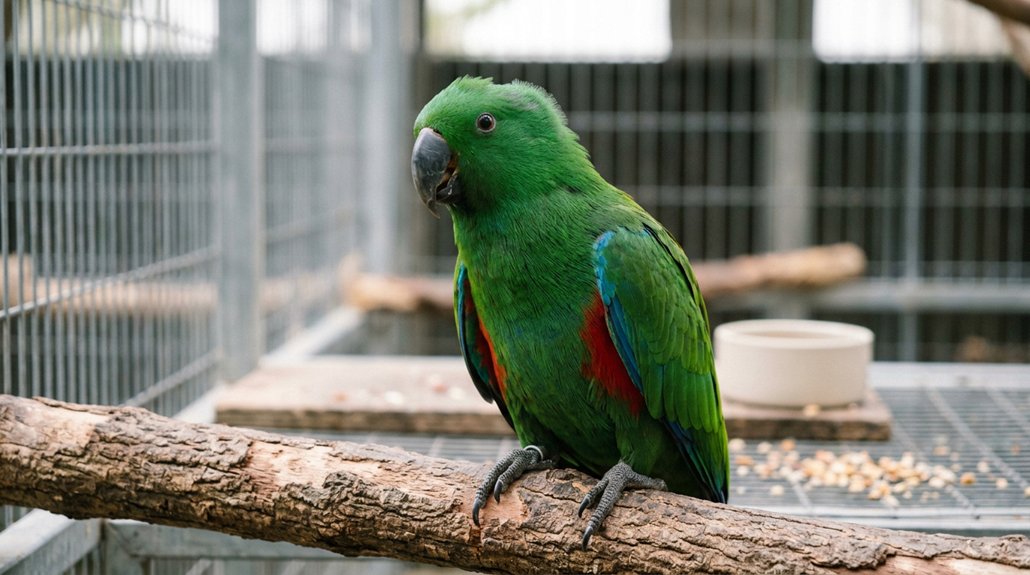
Spotting stress in a pet bird starts with recognizing changes in behavior and body condition early. You’ll often see sudden screaming, repetitive alarm calls, or persistent biting; these can indicate acute distress, boredom, or fear. Watch for feather picking, chewing, or self-mutilation, especially in cockatoos, African greys, and Eclectus, because these signs need veterinary evaluation. Reduced appetite, weight loss, and altered droppings can be early physiologic changes. Stereotyped pacing, toe-tapping, head swinging, or bar-chewing also suggest environmental stress. In severe cases, rapid breathing, trembling, a freeze posture, inability to perch, fluffed or tightly held feathers, or half-closed eyes are urgent findings. Increase social enrichment and consider habitat rotation to reduce risk while you arrange prompt veterinary guidance.
Why Pet Birds Get Stressed
You can usually trace your bird’s stress to common triggers like isolation, sudden cage or household changes, noise, threats, or inconsistent handling. You should also assess health and nutrition factors, since diet deficiencies, abrupt food changes, poor housing, and weak routines can worsen irritability and abnormal behavior. In clinically relevant cases, these stressors don’t act alone; they often combine to produce feather picking, screaming, pacing, and reduced immune function.
Common Stress Triggers
Common stress in pet birds is usually driven by predictable environmental and husbandry factors rather than “bad behavior.” Boredom and social isolation are major triggers, especially in highly social species such as cockatoos and African greys, which may develop feather plucking or stereotypies when they don’t get daily interaction and foraging opportunities. You’ll often see risk rise after cage moves, new people or pets, repainting, or altered light cycles. Ongoing noise, construction, thunder, or predator sightings can cause alarm calls, pacing, and feather damage. Inadequate sleep, poor cage placement, frequent handling, or traumatic trims can also destabilize behavior. Your bird may benefit from predictable routines, enrichment puzzles, ambient music, and controlled exposure to change. Don’t overlook abrupt diet shifts, which can worsen irritability and resilience.
Health And Nutrition Factors
Health and nutrition issues can quietly drive stress-related behavior in pet birds, even when the cage environment seems stable. You should assess for nutrient deficits, poor hydration, and inconsistent feeding, because each can amplify corticosterone and destabilize behavior.
- Low protein, vitamin A, calcium, and essential fatty acids can reduce immune support and promote feather-plucking.
- A sudden diet shift or unpredictable food removal can disrupt gut health and trigger irritability.
- Seed-only diets and calorie-heavy treats may cause obesity, lethargy, and poor stress tolerance.
- Inadequate water or poor-quality food can cause dehydration, electrolyte imbalance, and rapid vocalization changes.
Chronic malnutrition also impairs feather follicles and wound healing, so persistent damage often needs veterinary care plus nutritional rehabilitation.
Common Bird Stress Triggers at Home
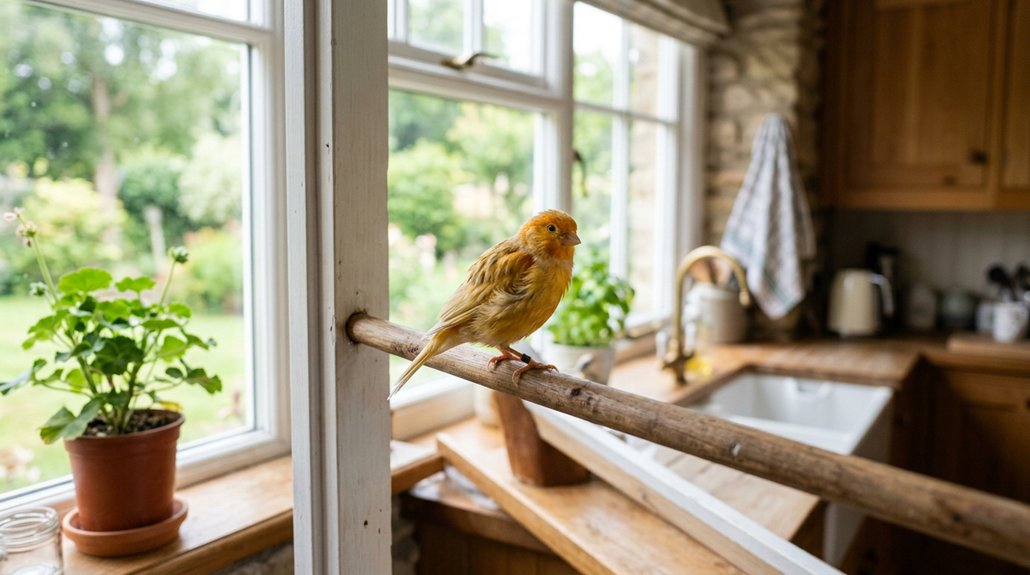
At home, stress in birds is most often driven by predictable environmental and husbandry changes: boredom and inadequate mental stimulation, sudden shifts in cage location or household routine, poor sleep or lighting cycles, substandard cage conditions, loud noises or perceived threats, and nutritional disruption. You should assess social enrichment and environmental stability first. If you keep a highly social bird, like a cockatoo or African grey, limited interaction, foraging, or out-of-cage time can trigger screaming, biting, or feather plucking. Moving the cage, adding pets, or remodeling can provoke immediate distress. Too little sleep, dirty or undersized cages, and few perches or toys often cause pacing or head bobbing. Construction, thunder, or predators outside can trigger fear. Sudden diet changes may worsen irritability; consult an avian veterinarian.
How Bird Stress Harms Health
When stress becomes chronic, it raises corticosterone in birds, suppressing immune function and making bacterial, viral, and fungal infections more likely. You may see chronic corticosterone effects as poor healing, dull plumage, and recurrent illness.
- Prolonged feather picking can scar skin and damage each feather follicle, so regrowth may stop.
- Stress-related anorexia can cause weight loss and vitamin A or protein deficiency, weakening feathers, wound repair, and organ function.
- Repeated high stress may disrupt reproduction, increasing egg-laying problems, egg-binding risk, and lower fertility.
- Rapid breathing, tremors, or collapse suggest acute cardiovascular strain or shock and need urgent veterinary care.
How to Calm a Stressed Bird
You should first recognize stress signals such as rapid breathing, feather picking, reduced appetite, or sudden behavior change, since these often indicate an active problem. Then you can reduce environmental triggers by moving the cage to a quiet interior room, limiting drafts and traffic, and restoring a consistent light-dark cycle. If you must handle your bird, keep contact brief and calm, minimize visual stimulation, and use a soft towel only when necessary.
Recognize Stress Signals
Stress-related behavior in birds often shows up before severe injury, so watch closely for early warning signs such as sudden increases or decreases in vocalization, feather picking, bar-biting, pacing, or changes in droppings. You should assess body language and subtle vocalizations with the same attention you’d give to physical signs.
- Note posture: fluffed feathers, crouching, or rigidity can indicate distress.
- Track movement: repetitive pacing or cage climbing may signal anxiety.
- Inspect plumage and skin: feather loss or picking suggests escalating stress.
- Monitor droppings and appetite: changes can reflect systemic strain.
If these signs persist, worsen, or include rapid breathing, severe feather loss, self-mutilation, weight loss, or lethargy, you should seek an avian veterinarian promptly for diagnosis and a behavior plan.
Reduce Environmental Triggers
To calm a stressed bird, first reduce environmental stimulation by moving the cage to a quiet interior room, away from windows and high-traffic areas, where visual threats and sudden noise can trigger screaming, feather plucking, or pacing. Restore a fixed daily routine: provide 10-12 hours of uninterrupted dark sleep, set feeding times, and keep out-of-cage interaction predictable. Make certain adequate cage size, correct perches, and 6-8 varied foraging toys, rotated weekly, as ambient enrichment against boredom-driven stereotypies and bar-chewing. Minimize abrupt household changes, including repainting, new pets, and lighting shifts; introduce necessary changes gradually with positive-reinforcement desensitization. Maintain scent control by avoiding strong odors. If severe stress appears, such as panting, trembling, or freeze posture, reduce stimuli further and limit disruption.
Use Calm Handling
When handling is necessary, keep sessions brief and predictable—ideally 1–5 minutes at first—to avoid escalating corticosterone and overwhelming the bird. Use a slow approach at eye level, speak softly, and don’t stare or move abruptly; these cues lower the chance of freeze or fight responses.
- If restraint’s needed, drape a gentle towel over the bird to reduce visual input.
- Keep grip firm enough for safety, but never tight; release as soon as the task’s complete.
- After handling, return the bird to a quiet, dim area for 15–30 minutes.
- Monitor breathing and posture; quiet respiration is normal, but panting, trembling, or immobility warrant stopping and seeking immediate veterinary or rehabilitator advice.
When to Call an Avian Vet
Recognizing red flags early can be lifesaving, so call an avian veterinarian promptly if your bird develops labored breathing, persistent fluffed posture, trembling, inability to perch, bleeding, or any obvious injury. These emergency signs often signal acute, potentially fatal disease, and veterinary timing matters. You should also seek evaluation for abrupt feather-picking with skin damage, self-mutilation, rapid feather loss, marked aggression, sudden vocal changes, head tremors, circling, or seizures, because pain, toxicity, or neurologic illness may be involved. Make an appointment if you notice significant weight loss, reduced appetite, or altered droppings, since these changes can reflect systemic disease. If stress behaviors persist for more than 1–2 weeks despite routine restoration, you’ll need diagnostic workup and a tailored treatment plan.
How to Prevent Bird Stress Every Day
Every day, you can reduce stress-related behavior by making sleep, enrichment, diet, housing, and interaction nonnegotiable. Protect sleep hygiene: provide 10–12 uninterrupted hours in a quiet, dark room on a fixed light-dark schedule.
- Rotate Daily enrichment by changing or hiding food in 3–5 toys each week to prevent boredom, feather plucking, and stereotypies.
- Feed a species-appropriate diet: 70–80% formulated pellets, plus fresh fruits and vegetables, to limit nutritional irritability and feather damage.
- Keep the cage clean, spacious, and stable; it should exceed twice your bird’s wingspan in width and sit indoors, away from drafts, windows, and predators.
- Schedule 10–30 minutes of social interaction and training daily with positive reinforcement to reduce screaming and aggression.
Frequently Asked Questions
How to Reduce Stress in Birds?
You can reduce stress by using Routine consistency and Environmental enrichment: keep fixed sleep/wake times, add foraging toys and supervised out-of-cage time, provide a quiet cage location, and monitor diet, weight, and behavior closely.
What Is the 3 3 3 Rule for Birds?
You’re using a three-step triage: three minutes of quiet calming, three hours of low-stimulation monitoring, and three days of close observation. Like a storm passing, environmental enrichment and diet changes shouldn’t begin until stress signs stabilize.
How to Handle Hormonal Behavior in Birds?
You’ll handle hormonal behavior by first confirming breeding aggression and hormone cycles with an avian vet, then reducing daylight, nesting cues, and back petting. You’ll keep routines calm, diet balanced, and consider hormonal therapy if persistent.
How Do Birds Act When Stressed?
You’ll often notice vocal changes, feather condition decline, trembling, rapid breathing, fluffed or tightly held feathers, biting, pacing, and reduced appetite. You might also see half-closed eyes, abnormal droppings, and an inability to perch safely.
Conclusion
By watching your bird’s body language, you can spot stress early and stop harmful habits before they escalate. Reduce common triggers, restore routine, and provide quiet, consistent care to calm your companion. If feather plucking, appetite loss, or aggression persist, seek an avian vet promptly. With steady support and stress-smart stewardship, you’ll strengthen your bird’s health, stability, and comfort every day.