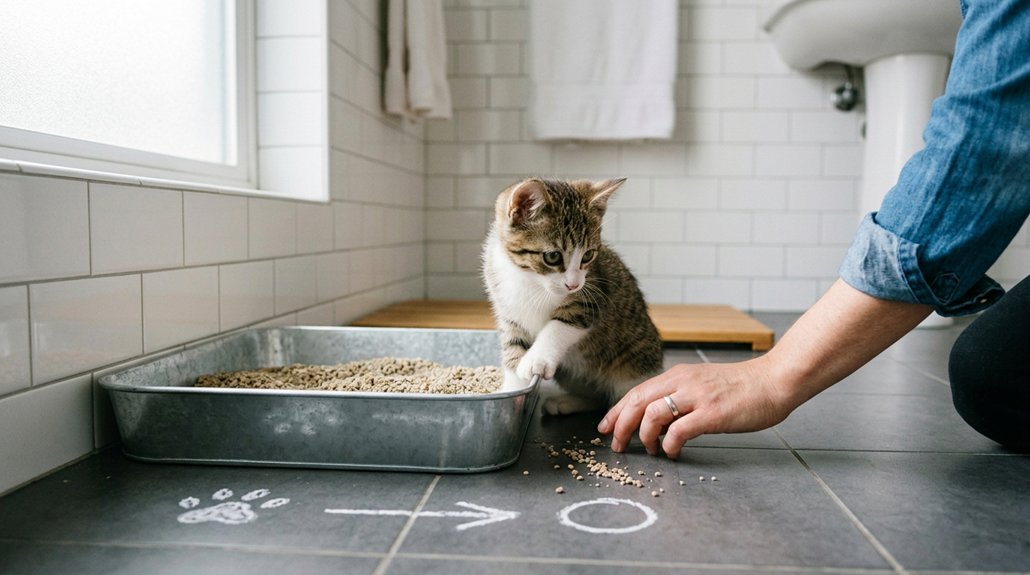
Litter train a kitten by starting at 3-4 weeks of age, when they begin managing bathroom habits. Choose natural, non-clumping litter and set up a shallow, open-top box in a quiet, accessible corner. Gently place your kitten in the box after meals and naps, using praise and treats for positive reinforcement. Keep the area clean daily, removing soiled litter promptly. If you’re interested, there’s more to discover about optimizing the environment and addressing accidents.
Key Takeaways
- Start training when kittens are 3 to 4 weeks old for effective habit development.
- Use natural, non-clumping litter to provide safety and comfort for sensitive paws.
- Position the litter box in a clean, quiet corner for easy access and minimal stress.
- Implement positive reinforcement with praise and treats after successful litter box usage.
- Maintain daily cleaning of the litter box to encourage consistent use and reduce accidents.
Determine Kitten Readiness for Litter Training
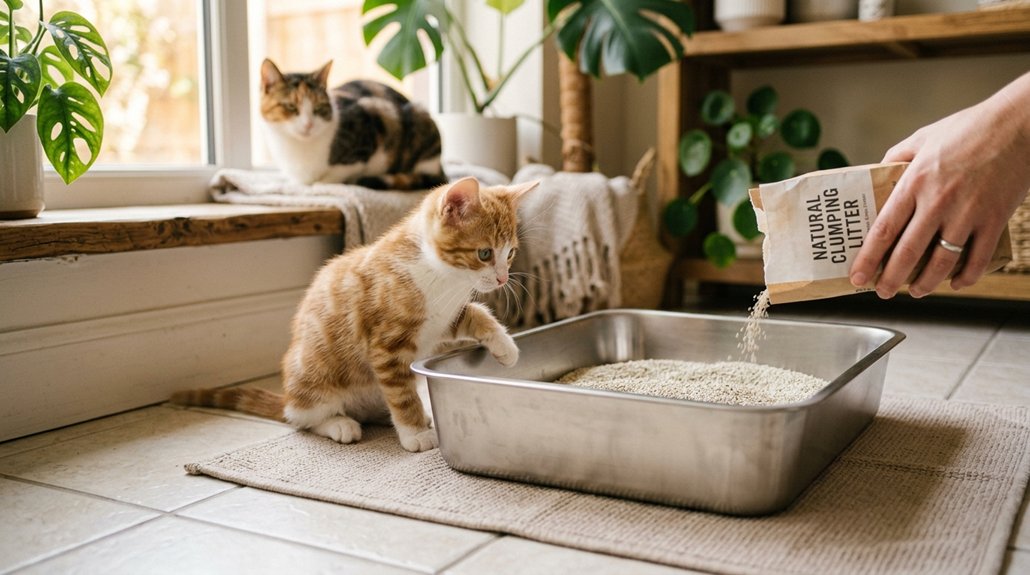
When is the right time to begin litter training a kitten? You should start around 3 to 4 weeks of age. At this stage, kittens typically begin managing their bathroom habits independently. Observe their behavior closely; monitoring signs like crouching or sniffing around indicates they might need to use the litter box. Initially, newborns rely on their mother or a caregiver for elimination stimulation, which changes as they mature to 3 weeks old. If your kitten isn’t using the litter box as expected, evaluate their environment, focusing on litter box placement and accessibility. Remember, each kitten’s development rate varies, requiring patience and adjustments tailored to their readiness. By understanding these behavioral cues, you’re setting the foundation for successful litter training.
Choose the Perfect Litter for Your Kitten
Selecting the right litter for your kitten is essential to guarantee both comfort and safety during the training process. Start by opting for natural, non-clumping litter types, such as those made from recycled paper, wood pellets, or corn. These options minimize ingestion risks, especially important for kittens who explore with their mouths. Focus on small-grained litter texture, as it provides comfort for their sensitive paws and helps facilitate instinctive waste covering. Avoid scented litters and those with harsh chemicals; strong odors can deter use and cause respiratory issues. Since kittens can be particular, experiment with different types like clumping clay, natural alternatives, and lightweight varieties to find one they prefer. Make sure the litter is suitable for kittens over three weeks old.
Create an Accessible Litter Box Setup
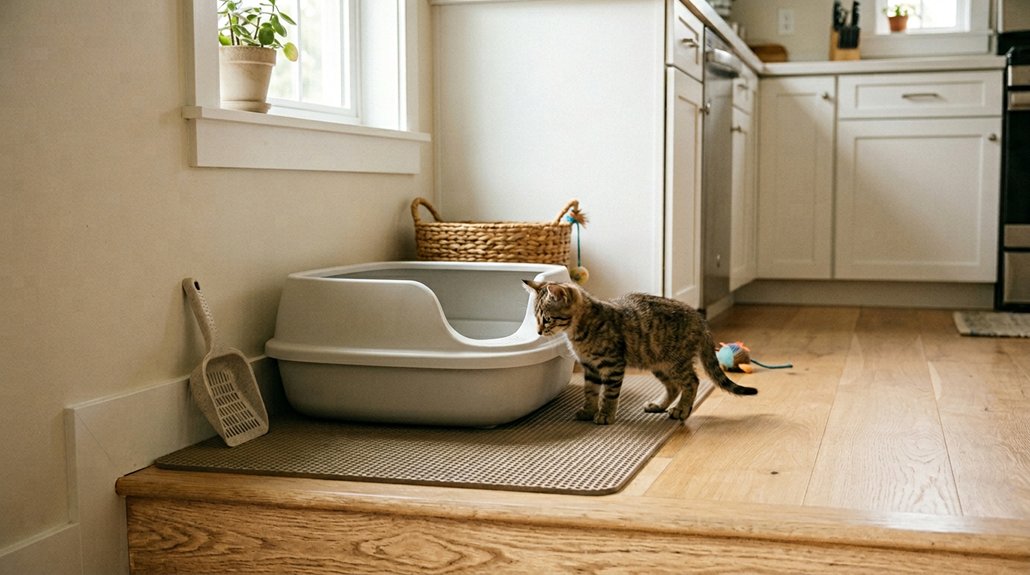
Set up a kitten-friendly litter box by placing it in a clean, quiet corner that’s easily accessible and away from high-traffic areas. Opt for an open-top, shallow box filled with natural, pellet-based litter to guarantee safety and comfort. Reinforce positive habits by restricting the kitten’s roaming area and maintaining a regular cleaning schedule to promote consistent use.
Kitten-Friendly Box Placement
Positioning a litter box correctly is essential in guaranteeing your kitten successfully learns to use it. The right litter box location plays a critical role during the training phase. Make sure it’s in an accessible, clutter-free corner. Here are some guidelines:
- Use an open-top, shallow box for ease of entry and exit.
- Confine the kitten to one room initially to simplify locating the box.
- Consider cardboard trays for very young kittens to aid confidence.
- Limit the distance to within 10 feet when using multiple boxes, especially in multi-cat homes.
- Maintain a clean area to encourage regular usage.
Positioning impacts how comfortable and confident a kitten feels while using the litter box. Proper placement supports effective training and fosters positive litter habits.
Safe Litter Selection
While ensuring your kitten’s safety and comfort, selecting the right litter is essential to avoid potential health issues and promote effective training. Opt for natural litter options, focusing on pellet-based types to accommodate kitten sensitivity. Avoid clumping litters and those with fragrances or harsh chemicals, as these can harm delicate paws and respiratory systems. Kittens under 2-3 months are particularly vulnerable to these risks.
To create an accessible litter box setup, choose an open-top, shallow box. This design allows easy entry and exit, encouraging regular use. Consider cardboard trays for very young kittens until they fit standard sizes. Place the litter box in a clean, clutter-free corner for easy location and adjustment. Regularly monitor and adjust your setup to support ongoing training and comfort.
Positive Reinforcement Techniques
Having chosen the appropriate litter and box setup, the focus shifts to reinforcing positive litter habits in your kitten. Implementing praise methods and treat incentives effectively can create a strong, positive association with the litter box. Monitoring your kitten’s behavior is essential. Place the kitten in the litter box during key moments to encourage use. When your kitten successfully uses the box, reinforce that behavior:
- Immediate Praise: Gently praise your kitten immediately after successful use.
- Treat Incentives: Offer a small treat to build positive reinforcement.
- Routine Monitoring: Watch for signs your kitten needs to eliminate, and act promptly.
- Daily Cleaning: Maintain a clean litter box, scooping daily.
- Quiet Placement: Make sure the litter box is in a calm, accessible spot.
This systematic approach guarantees consistent litter habits.
Introduce Your Kitten to the Litter Box
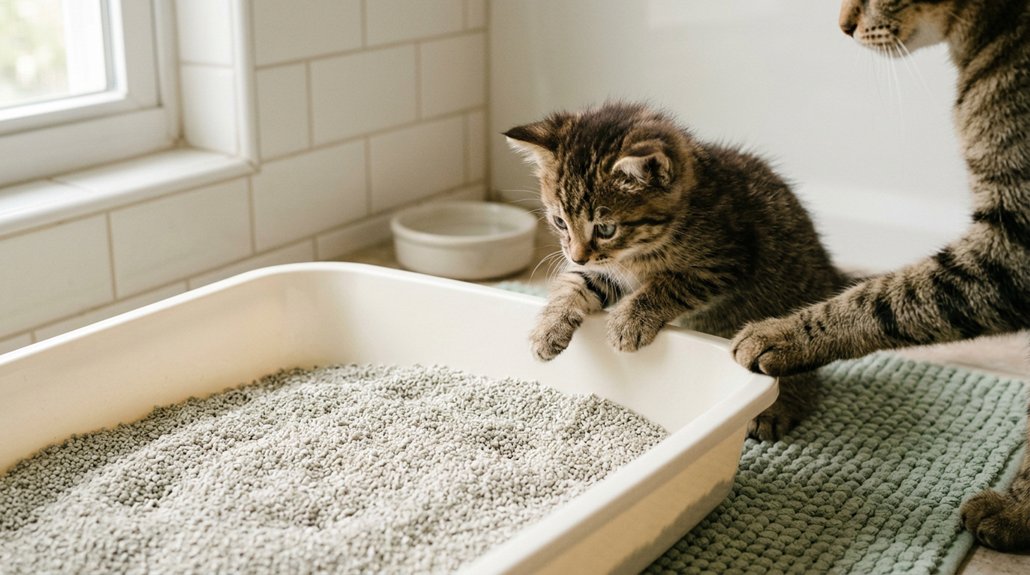
Introducing your kitten to the litter box is a crucial step in their early development, ideally beginning around 3 weeks of age to align with their instinctual elimination behavior. Utilize your kitten’s natural instincts to facilitate initial exposure to the litter box. Begin by placing an open-top, shallow litter box in a quiet, accessible area. Gently introduce your kitten to the box, particularly after meals and naps when they’re most likely to eliminate. Observe for behavioral cues like crouching or sniffing, which indicate a potential need to use the box. Promptly guide them to the litter box during these moments. This strategic timing and attention guarantee that your kitten becomes familiar with the litter box and develops a consistent elimination routine early on.
Use Positive Reinforcement for Litter Success
To successfully litter train your kitten, implement a praise and rewards system that encourages consistent habit formation. Provide treats immediately after successful litter box use and continuously praise your kitten in an upbeat tone to reinforce desired behavior. As your kitten becomes accustomed to this routine, gradually reduce treats while maintaining a calm environment to prevent any negative associations.
Praise and Rewards System
- Reward with treats immediately after successful litter box use
- Use gentle verbal praise or petting as reinforcement
- Gradually phase out treats but keep praise consistent
- Avoid punishment, as it leads to negative associations
- Keep a repeatable, calm routine to support training success
Encourage Consistent Habit Formation
While it’s tempting to wait before implementing rewards, immediate positive reinforcement is essential for helping your kitten develop consistent litter habits. For ideal habit establishment, reward timing is critical. Use treats right after your kitten successfully uses the litter box, creating a positive association. This method strengthens their understanding and boosts their confidence. Accompany treats with verbal praise and gentle petting to enhance this positive reinforcement. Regularity is significant; consistency in reward timing guarantees your kitten connects the behavior with the rewards. Gradually phase out treats, maintaining verbal encouragement to support a lasting habit. Watch for any signs of distress or reluctance, reassessing the litter and environment for a stress-free experience that fosters ongoing litter box use.
Addressing Accidents and Stress in Litter Training
- Ensure the litter box is in a quiet, easily accessible location.
- Monitor changes in the kitten’s environment or litter preferences.
- Consider altering the litter type or placement if accidents persist.
- Provide a calm atmosphere during litter training exercises.
Following these steps will promote effective training.
Keep the Litter Box Clean and Inviting
Maintaining a pristine litter box is essential to successful litter training, as kittens are naturally inclined to use a clean space for elimination. For effective litter box maintenance, scoop the box daily to guarantee a hygienic environment. Washing the box every 1-2 weeks with mild soap and water curbs odor and bacteria buildup, keeping it inviting for your kitten. Select fresh, non-clumping litter suitable for kittens to minimize health risks. Place the box in a quiet, low-traffic area, providing a stress-free elimination zone. Promptly remove soiled litter, and for spills outside, utilize enzyme-based cleaners. These kitten hygiene tips assure a comfortable and consistent space, encouraging regular use and reducing potential accidents. Adhering to these practices will streamline the litter training process.
Frequently Asked Questions
What Is the Fastest Way to Litter Train a Kitten?
Guarantee fast litter training by placing the litter box in a quiet, accessible location. Use shallow boxes with non-clumping, kitten-safe litter. Reinforce correct usage with treats and praise, and observe for elimination cues to guide them correctly.
What Is the 3-3-3 Rule for Kittens?
Think of the 3-3-3 rule as your kitten’s journey from seeds to a sturdy plant. In three days, it’s acclimating. At three weeks, it learns kitten behavior and litter box skills. By three months, independence blooms.
Where Should a Kitten Sleep on the First Night?
Place your kitten in a quiet, comfortable space with a warm bed or cozy blanket, ensuring their sleep environment feels secure. Avoid high-traffic areas, and consider a soft-sided crate or kitten-proof room to enhance comfort and safety.
How Long Does It Take to Potty Train a Kitten?
Typically, you’ll find kittens usually adjust to the litter box within three to eight weeks. Statistics show 80% use it consistently by week four, depending on their individual behavior and any changes in their environment.
Conclusion
Training your kitten to use the litter box is a step-by-step process that pays off in spades. By ensuring readiness, selecting the right litter, and setting up an accessible environment, you’re laying the groundwork for success. Introduce your kitten patiently and reward them generously to reinforce positive behaviors. Remember, accidents are part of the journey, not the end. Keep the box clean and your kitten will appreciate the inviting setup, making the training a resounding success.