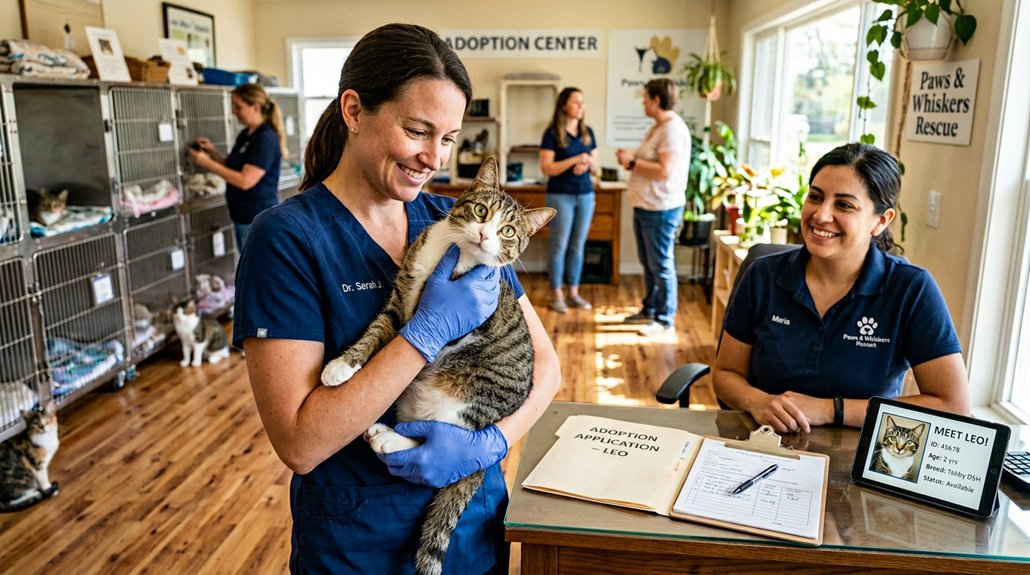
To adopt a cat, use resources like Petfinder.com or local shelters to find available cats. Prepare for your shelter visit by checking adoption hours and knowing what questions to ask. Complete the application accurately, highlighting past pet experiences. At the meet and greet, involve family members and interact calmly. Understand the adoption contract and fees. Ready your home with essential supplies and safety measures. Introduce your cat gradually and guarantee ongoing care. Each step reveals further insights into successful adoption.
Key Takeaways
- Research adoption resources like Petfinder.com and breed-specific rescue organizations for updated shelter and cat listings.
- Prepare necessary documents and questions before visiting the shelter to ensure a smooth adoption process.
- Engage with adoption counselors during the meet and greet to understand the cat’s personality and needs.
- Review and sign the adoption contract, acknowledging care responsibilities and potential return policies.
- Gather essential supplies and create a safe home environment to support the cat’s acclimatization and well-being.
Finding Local Adoption Resources Online
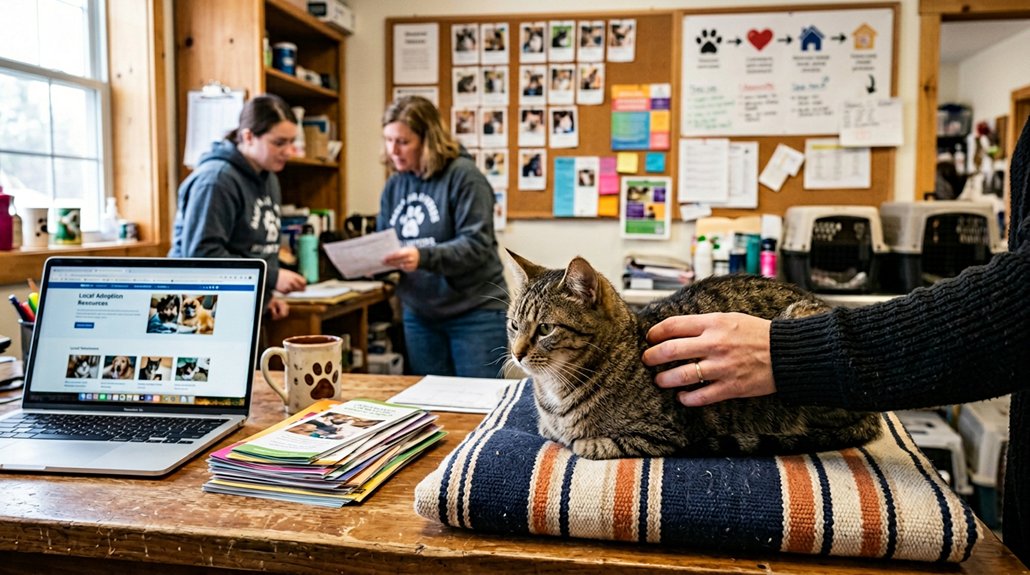
Anyone beginning the search for local cat adoption resources will find an abundance of options online. Start by visiting extensive online adoption platforms like Petfinder.com, where connections are made to over 14,000 shelters and rescue organizations nationwide. Social media and community groups also offer valuable insights into nearby adoption events, highlighting opportunities at local shelters. Explore municipal animal shelter websites for details on available cats and their specific adoption processes. If you prefer a particular breed, breed-specific rescue organizations focus on dedicated types and can be a great resource. Don’t overlook community resources such as local classified ads and bulletin boards, both online and offline, where individuals and shelters post listings of cats needing homes. Each platform presents unique ways to find your future feline friend.
Preparing for Your First Shelter Visit
Before starting your first shelter visit, it’s important to conduct thorough research to guarantee a smooth and productive experience. Begin by checking local shelters’ adoption hours so you can engage with staff and interact with the animals. Prepare a list of questions regarding the cats’ health history, behavioral traits, and any special needs. This helps define suitable matches. Involve all household members in the visit—shelter etiquette encourages family involvement—to assess compatibility between cats and your family. You should come prepared with necessary documents, such as a government-issued ID and proof of address, to streamline the process if you find a cat you wish to adopt. Remain open to diverse cat types, as the ideal companion might defy initial expectations.
Tips for a Successful Adoption Application
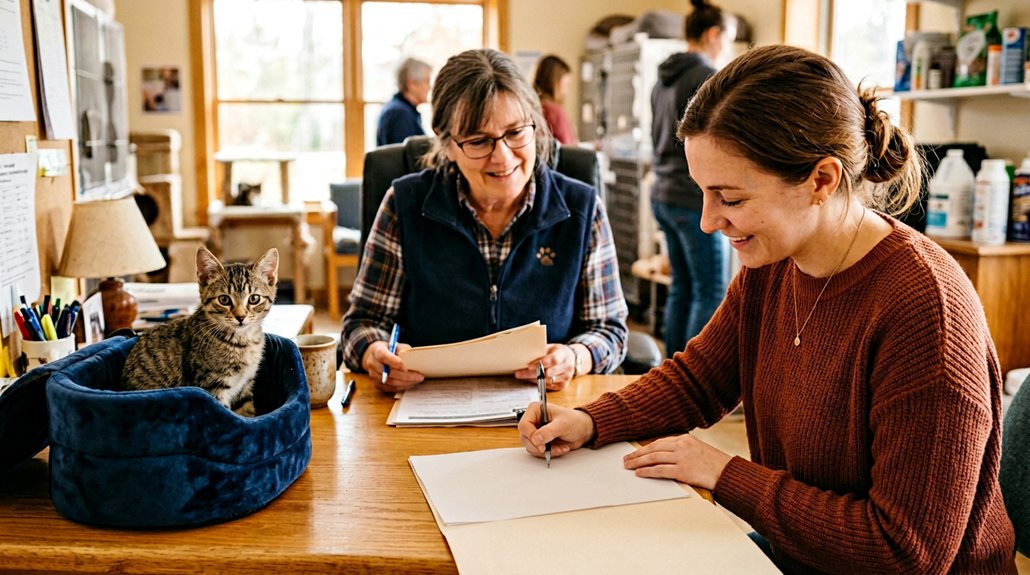
When completing your adoption application, guarantee you’ve filled out all sections accurately and reflectively to demonstrate your capability to provide a loving home for a cat. Take the time to highlight any previous pet experiences, as this information helps shelters gauge your understanding of animal care and assess compatibility with their cats. Before submitting, make certain to check the confirmation box to indicate you’ve understood the terms, and be ready for potential follow-up inquiries from adoption counselors to guarantee a successful match.
Completing Your Application Form
Starting on the cat adoption journey begins with meticulously completing your application form, a crucial step that can greatly impact your chances of a successful match. Application tips include filling out every section thoroughly, with a focus on information accuracy. Provide precise details about your living situation and any previous pet experiences; these elements are important for the shelter to determine the right feline fit. Clearly articulate aspects of your lifestyle, including your work schedule and family dynamics, which are essential in evaluating suitability.
Ensure you’ve read the shelter’s adoption process page to align with their specific requirements. Double-check your application for completeness and correctness before submitting. Afterward, keep in touch with the shelter to address any follow-up queries promptly.
Highlighting Pet Experience
While applying for cat adoption, highlighting your pet experience can greatly boost your application’s success. Clearly document previous pet ownership experiences like feeding, grooming, and veterinary visits. Specify the types of pets you’ve managed, their outcomes, and durations of care. It’s beneficial to include insights into cat behavior by showcasing training or socialization efforts. Honesty about your lifestyle, including your time commitments and household dynamics, offers shelters valuable transparency. Outline any support systems, like friends or family experienced with cats, to demonstrate preparedness.
| Aspect | Details | Importance |
|---|---|---|
| Pet Care Management | Feeding, grooming, vet visits | Shows responsibility |
| Types & Outcomes | Previous pets, duration, learnings | Displays experience |
| Cat Behavior Insights | Training, socialization efforts | Highlights understanding |
| Lifestyle & Support | Time, household dynamics, help | Guarantees readiness |
How to Ace the Meet and Greet
Ever wondered how to make a stellar impression during a cat meet and greet? Start by ensuring all family members attend. This allows the cat to observe varied family dynamics while giving everyone a chance to discuss adoption. Pay keen attention to cat behaviors. Approach calmly, letting the cat choose interaction. This not only respects its autonomy but helps determine compatibility with your household. Observe how it reacts to each person—understanding these nuances is essential in evaluating a potential fit. Engage with adoption staff for valuable insights on the cat’s personality and needs. Additionally, be open to a possible home visit, allowing the shelter to assess if your environment aligns with the cat’s requirements.
Signing the Adoption Contract

After a successful meet and greet, you’ll proceed to the formal phase: signing the adoption contract. This essential step confirms your contract obligations in pet ownership—caring for the cat responsibly. The contract specifies the necessity to provide medical care, nutrition, and a safe environment. It highlights adoption fees, ranging from $25 to $150, which often include spaying/neutering, vaccinations, and a health exam. Importantly, clauses might mandate returning the cat to the shelter if future care becomes impossible, safeguarding the animal’s well-being. Thoroughly review this contract before signing to comprehend its terms and conditions.
| Contract Elements | Details |
|---|---|
| Adoption Fees | $25 to $150 covers medical care |
| Owner Responsibilities | Medical, nutrition, safe environment |
| Return Clause | Shelter return if care’s impossible |
Understanding these details is key to responsible pet ownership.
Approving the Adoption: What Comes Next?
In the domain of pet adoption, guiding through the approval process is an essential step that demands attention and readiness. Once you’ve submitted your application, the adoption timeline can vary due to shelter policies and workload. Here’s what typically follows:
- Review Process: Expect a review of your application, where timelines depend on shelter policies.
- Meet and Greet: If approved, schedule a meeting at the shelter. It’s crucial that all household members attend to confirm compatibility.
- Contract Signing: After a successful meeting, sign the adoption contract and handle any fees.
- Home Visit: Some shelters may conduct a home inspection to verify it’s a suitable environment before finalizing adoption.
Adherence to these steps guarantees a smooth change for both you and your new feline friend.
Getting Your Home Ready
When preparing your home for a new cat, begin by assembling an essential supplies checklist that includes a comfortable bed, litter box, food, and water dishes. Make certain your space is thoroughly cat-proof by removing hazardous items like small objects, toxic plants, and securing electrical cords. Additionally, setting up scratching posts and climbing structures will provide important physical and mental stimulation, encouraging your cat’s natural instincts while involving your entire household in the process.
Essential Supplies Checklist
Before welcoming your new feline friend home, it’s essential to gather all the necessary supplies to guarantee their comfort and well-being. Supplies organization is important to make sure you’re prepared for their arrival. Here’s a checklist of essential items:
- Litter Box and Litter: Place the litter box in a private area separate from food and water bowls for best use and hygiene.
- Food and Water Bowls: Select durable, non-slip options and locate these separately from the litter area.
- Cat Bed and Soft Blanket: Offer a cozy sleeping environment to help your cat feel secure.
- Scratching Posts and Toys: Provide mental stimulation and physical outlets for your cat’s energy.
Home Safety Measures
Alongside gathering essential supplies, it’s equally important to prepare your home to confirm a safe environment for your new cat. Start by addressing common home hazards: remove loose items and secure electrical cords to prevent them from becoming enticing playthings. Small objects that could be swallowed should be safely stored. For feline safety, ascertain windows and balconies are tightly secured to avoid falls, as cats are curious and agile. Designate a quiet, comfortable space complete with hiding spots like cat trees or boxes to help reduce stress. Position the litter box privately, away from food and water, to encourage consistent use. Finally, eliminate toxic plants, and keep chemicals, cleaning supplies, and garbage well out of your cat’s reach.
Introducing Your Cat to Its New Environment
Although welcoming a new cat into your home is exciting, it’s important to introduce your feline friend to its environment in a measured, thoughtful manner. Start with these steps:
- Prepare a Quiet Space: Designate a calm area equipped with essentials like a bed, litter box, and food/water dishes. This helps the cat acclimate slowly.
- Implement Exploration Techniques: Allow the cat to explore this space at its own pace. Offer familiar scents and cozy spots to make it feel secure.
- Limit Initial Interactions: Initially restrict exposure to new people and pets. This guarantees the cat bonds with its surroundings gradually.
- Engage in Behavior Monitoring: Watch for stress or anxiety signs. Providing hiding spots, like boxes or cat trees, helps maintain a sense of security.
Ongoing Care and Support After Adoption
Once your new feline friend is comfortable in its new environment, it’s time to focus on ongoing care and support to guarantee a healthy and happy life. Regular veterinary check-ups are essential for monitoring long-term health, with preventive care and vaccinations scheduled yearly. Establish a consistent feeding routine with high-quality food tailored to your cat’s age and dietary needs, ensuring fresh water is readily available. Daily playtime, lasting 15-20 minutes, will stimulate mental and physical wellness. Create a safe and enriching environment, featuring vertical spaces and hiding spots like cat trees.
| Care Aspect | Frequency | Purpose |
|---|---|---|
| Vet Check-ups | Annually | Monitor health |
| Feeding Schedule | Daily | Nutritious diet |
| Playtime Activities | Daily | Mental & physical health |
| Grooming | Regularly | Coat & skin maintenance |
Regular grooming helps prevent matting and hairballs.
Frequently Asked Questions
What Is the 3-3-3 Rule for Cat Adoption?
The 3-3-3 rule outlines a cat’s initial adjustment post-adoption. Expect three days of stressed feline behavior, three weeks to sense security, and three months for full comfort and bond development with your new pet.
What Is “I Love You” in Cat Language?
Imagine the symphony of feline affection: slow blinks signal trust, purring hums contentment, kneading echoes comfort. When tails dance upright, or they shadow your footsteps, it’s cat communication’s song expressing their heartfelt “I love you.”
What Color Cat Is Least Desired?
In shelters, black cats often face longer wait times for adoption compared to others. Color psychology and adopter preferences lean towards orange tabbies and lighter shades, potentially due to superstition or perceived photogenic qualities over darker hues.
What Is the Adoption Process Like for a Cat?
Strangely enough, the adoption process involves meeting shelter requirements, understanding cat behavior, and paying adoption fees which cover essentials. Post-adoption care guarantees a smooth changeover, focusing on routine, bonding, and addressing any behavioral adjustments needed.
Conclusion
Adopting a cat is like starting a journey across a rich tapestry of experiences. You’ve navigated the digital seas to find adoption resources, prepped for your first shelter visit, and crafted a standout application. You’ve aced the meet and greet, signed the adoption contract, and learned the post-approval steps. With your home ready and introductions carefully choreographed, your new feline family member is set to thrive. Remember, ongoing care is the thread that weaves your story together.