Yes, you can leave your bird alone during the day for a short stretch, usually about 8–12 hours, if food and fresh water are ready and the cage is safe, stable, and quiet. Keep light and temperature consistent, and avoid leaving perishables out. If you’ll be gone more than a day, arrange a sitter or daycare, since risk rises fast. Watch for lethargy, dirty water, or reduced eating, and there’s more to know about safer setups.
Key Takeaways
- Short daytime absences of 8–12 hours are usually manageable for most healthy birds.
- Avoid leaving a bird unattended more than about 24–30 hours without someone checking in.
- For longer days, arrange at least one in-person visit daily, with twice-daily visits safer.
- Leave enough food and fresh water, and replace water every 12–24 hours to prevent spoilage.
- Keep lights, temperature, and routine stable, and use a sitter or camera to monitor for stress or illness.
How Long Can You Leave a Bird Alone?
Most bird owners can manage short absences of 8–12 hours, but a bird shouldn’t be left truly unattended for more than about a day. You can usually leave your bird for a workday if food and water are secure, but risk rises quickly after that. Birds’ high metabolisms mean they may need access to food within hours, and contaminated water can become unsafe just as fast. If water spills, your bird may be without drinkable water for many hours. For absences beyond a day, arrange a sitter or daycare to refresh supplies and monitor temperature, lighting, and hazards. You should also consider behavioral enrichment and age considerations, since younger, older, or anxious birds may cope less well with isolation.
What Birds Need Before You Go
Before you leave, you’ll want to set out extra fresh food and more than one clean water source, since birds can go through food quickly and soiled water can become unsafe within hours. Keep their light and sleep cycle normal by leaving light on in the morning and off at night, and keep the room at a stable, species-appropriate temperature. Arrange at least one in-person check, or camera monitoring with a trusted sitter, so water can be replaced, spoiled food removed, and your bird’s condition confirmed.
Food And Water Prep
Always leave at least two full bowls of fresh food—main pellets plus a small portion of favorite foods—so your bird doesn’t miss tossed or scattered pieces and can keep eating despite a high metabolism. Use multiple bowls to reduce competition and support steady intake, especially if one dish gets soiled or tipped.
- Add foraging enrichment with hidden treats on safe perches to encourage frequent nibbling.
- Fill clean water dishes or multiple water bottles, and secure them to limit spills and bacterial growth.
- Remove perishables unless a sitter can replace small portions of diced produce promptly.
If you’ll be away more than a few hours, arrange daily checks; twice daily is safer. This helps you catch missed meals, contaminated water, and other problems before dehydration or starvation becomes critical.
Light And Sleep Balance
A bird’s sleep depends on a steady light/dark cycle, so you’ll want to preserve about 10–12 hours of daylight and 10–12 hours of darkness before you leave. This schedule supports circadian cues and helps maintain normal melatonin regulation, which promotes restful sleep and lowers stress. Turn lights off at least 8–10 hours before your bird’s usual bedtime, and don’t leave constant artificial light on while you’re away; continuous lighting can disrupt sleep and cause behavioral or health problems. If you’re leaving during short days or winter, use a timer-controlled full-spectrum or daylight-equivalent light to mimic morning light instead of extending illumination all day. If conditions change, ask a sitter to switch lights on in the morning and off at night.
Check-In And Monitoring
Once your bird’s light and sleep schedule is set, the next priority is reliable check-ins while you’re away. Arrange at least one in-person visit daily, ideally twice, so food and fresh water can be replaced before starvation or contamination becomes a risk. A camera with a remote-viewing app helps with behavioral monitoring, but it can’t detect spilled water, soiled bowls, or injuries.
- Secure extra food and multiple water dishes.
- Ask the sitter to replace water every 12–24 hours.
- Confirm heat, AC, and cage-cover routines.
During each visit, your checker should note appetite, droppings, and any abnormal signs, then follow your emergency protocol if something looks off. This routine keeps conditions stable and lowers stress.
Why Food, Water, and Light Matter
You’ll want to leave ample fresh food and accessible water, because birds have a high metabolism and can become unwell within hours if they can’t eat or drink. Check water at least once daily and replace any soiled or spilled water, since contamination can lead to dehydration or infection quickly. Keep a normal light-dark schedule so your bird can eat safely during daylight and rest well at night.
Food And Water Safety
Food and water need close attention because birds have very high metabolisms and can start to suffer from missed meals within hours. You should provide fresh, reachable food at least twice daily and confirm it’s being eaten. Stable bowl placement matters: scattered food may be ignored, while feeding enrichment such as foraging toys can keep meals accessible and reduce waste.
- Replace water daily, and sooner if it’s spilled or soiled.
- Check bowls more often if your bird tips, bathes, or drips into them.
- For a single-day absence, leave extra food and secure water, then arrange an in-person check or live camera monitoring.
Keep conditions consistent, because stale water can support bacterial growth quickly. Good setup lowers risk and helps you leave your bird briefly with confidence.
Lighting For Eating And Rest
After food and water are set up safely, lighting becomes the next factor that helps a bird eat and rest normally. Birds can’t see well in darkness, so you need bright daytime light near food, water, perch placement, and window access. Keep a natural schedule: lights on by day, off at night. Don’t leave a light on 24/7, because constant light disrupts sleep and can reduce feeding. If you’re away, timed lights or a sitter can maintain routine. Covering a cage at night is fine for short absences, but don’t cover it during the day. Poor light plus dirty dishes can quickly cause dehydration or starvation.
| Time | Lighting | Effect |
|---|---|---|
| Day | Bright | Eating |
| Day | Visible | Drinking |
| Night | Dark | Sleep |
| 24/7 | Constant | Harm |
| Short absence | Timed | Stable |
How to Set Up a Safe Short Absence
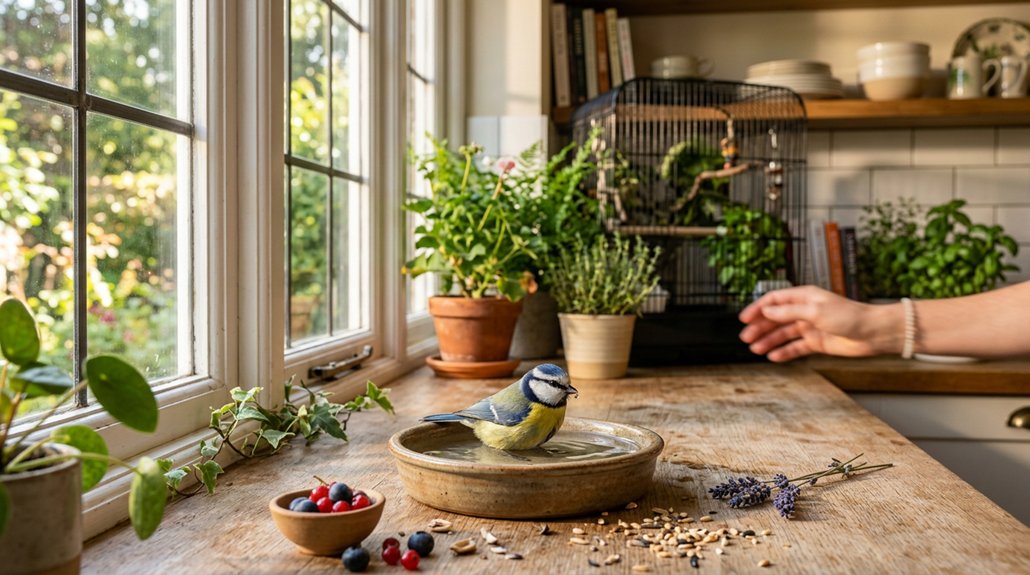
To set up a safe short absence, provide two full water vessels—one in use and one spare—and a generous supply of the bird’s familiar food so fresh water and food remain available for up to 24 hours. Keep the cage in its usual location and preserve the normal light schedule; if needed, use a timed lamp, because birds eat poorly in darkness and abrupt changes increase stress.
- Use behavior enrichment with familiar toys and foraging treats if your bird isn’t used to a cover.
- For emergency prep, arrange camera monitoring or ask a trusted person with a key to check once daily.
- Have them replace water, refresh food, and confirm there are no spills.
Don’t extend the absence beyond about 24–30 hours without in-person care; longer trips need a sitter or daycare.
Signs Your Bird Was Alone Too Long
If you return and notice dropped weight or a thinner body, it may mean your bird didn’t get enough food because food was scattered or the feeder ran empty. Check water next: dirty, foul-smelling water, sunken eyes, or lethargy can point to dehydration and bacterial growth. You may also see excessive sleeping, fluffed feathers, or daytime inactivity, which can reflect stress, illness, or missed light and feeding cues. A soiled vent area, matted feathers, or unusually dirty substrate suggests the cage wasn’t maintained. Missing toys, chewed bars, frantic pacing, or feather-plucking are stress behaviors that often appear after too much isolation. These signs can trigger owner guilt, but they’re useful clinical clues, not a verdict. Promptly restore care and observe closely.
When to Call a Pet Sitter or Bird Daycare
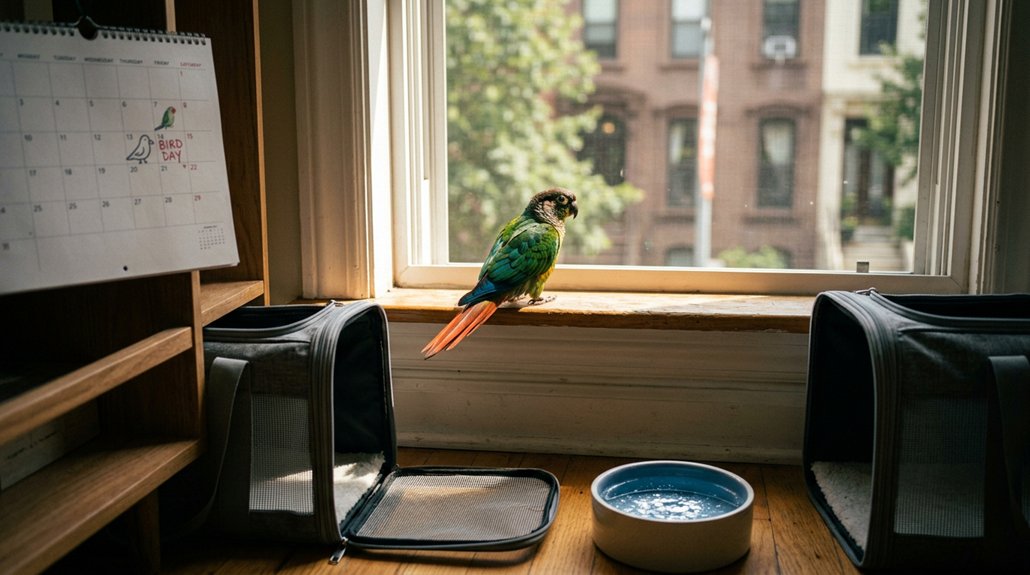
When your absence will run longer than about 8–12 hours, arrange a pet sitter or bird daycare, since birds have very high metabolisms and can begin to suffer if food and water aren’t checked at least twice daily. You should prefer twice-daily visits, morning and evening, to refresh water, replace scattered food, and confirm normal activity.
- Use sitter vetting to verify avian experience and emergency readiness.
- Ask for written instructions on feeding, lighting, temperature, and your emergency vet contact.
- Consider a camera so you can check behavior between visits.
For multi-day trips or overnight stays, daycare or an experienced friend is safer than leaving extra supplies. Proper avian transport may be needed if your bird must be moved. This setup lowers risk and helps you feel confident.
What to Do for Longer Trips
For trips that stretch beyond a day, arrange for someone to visit at least once daily, with twice-daily visits preferred, so your bird’s food, water, and overall condition are checked on a reliable schedule. On your travel checklist, include extra food, multiple clean water dishes, and sealed backups, but don’t depend on them for more than 24–30 hours because spills and bacterial growth can occur. A remote camera can help you observe behavior, yet it can’t clean droppings or correct problems. Add toys, foraging treats, and a timed light if needed so your bird stays active and can eat in daylight. For multi-day absences, a trusted sitter or professional daycare is safest, with an emergency protocol and vet contact if anything looks abnormal.
Frequently Asked Questions
What Is the 3 3 3 Rule for Birds?
The 3-3-3 rule means you’ll give your bird 3 hours of supervised social enrichment, 3 hours minimum uninterrupted sleep, and check food and water every 3 hours; it also guides behavior training and adjustment.
What Is the 60/40 Rule for Birds?
The 60/40 rule means you’d aim for 60% out-of-cage time and 40% cage time each active day. It supports social enrichment and behavioral training; a bird in hand is worth two in the bush.
Do Birds Get Lonely if Left Alone?
Yes, birds can get lonely if you leave them alone too long. You’ll usually help by providing social enrichment, stable routines, and minimizing environmental changes; daily checks, food, water, and observation keep them safer and calmer.
What Do I Do With My Bird When I Go on Vacation?
Use boarding options or a trusted pet sitter. You’ll need daily, ideally twice-daily visits for water, food, health checks, and lights. Don’t rely on extra supplies alone; use cameras only as backup.
Conclusion
In the end, you can leave your bird alone for a short time during the day if you’ve set up food, water, light, and a safe environment. Think of these basics as the rails on a bridge—they keep your bird steady while you’re away. Check your bird’s routine, watch for stress, and arrange help for longer absences. With proper planning, you can leave and return with confidence.