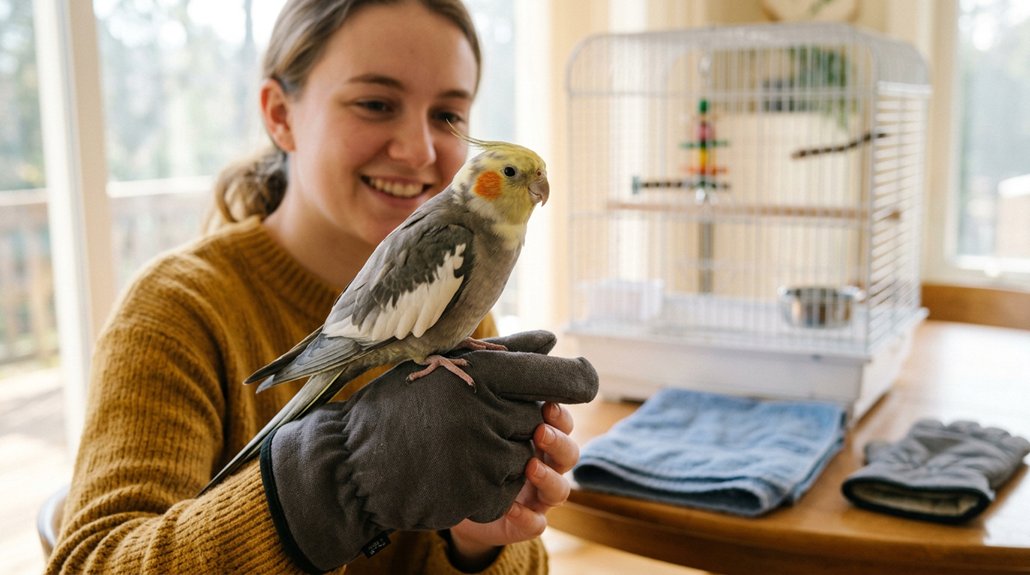
To handle your bird safely, watch its body language first: pinned eyes, fluffed feathers, lunging, open beak, or a raised crest mean you should pause. Start short, calm daily sessions outside the cage, and ask for step-up with a treat or perch reward. Pet only the head, neck, or feet with light pressure. Avoid shoulder perching. Use towels only when needed, and if you keep going, you’ll learn the safer details that make handling easier.
Key Takeaways
- Watch body language first; stop handling if you see pinned eyes, lunging, open beak, fluffed feathers, or tail flaring.
- Support the bird’s body and feet, and pet only the head, neck, and feet with light pressure.
- Start short daily sessions outside the cage on a neutral surface to build a calm, predictable routine.
- Teach step-up with treats, praise, and a perch or hand target; never grab or force the bird.
- Use towel restraint only when necessary, after desensitization, and keep it brief with the head uncovered.
Read Bird Body Language
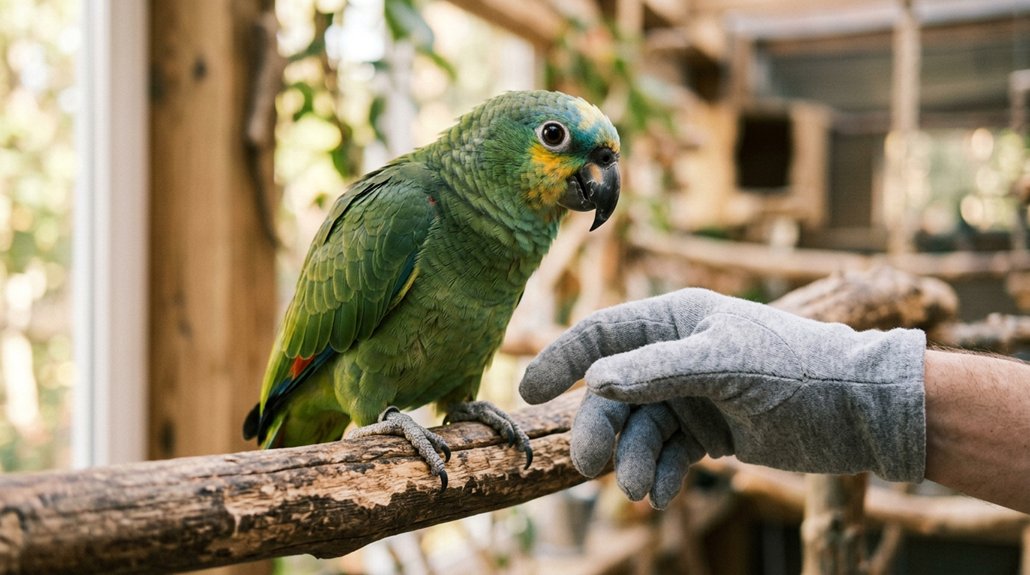
Reading a bird’s body language is the most reliable way to understand what it’s communicating, since much of avian signaling is visual rather than vocal. You should focus on posture, movements, eye language, and feather signals. Eye pinning and tail flaring often indicate arousal, but if you also see an open beak, lunging, or a raised crest, treat the display as a warning. Fluffed feathers can reflect contentment, yet they can also suggest illness or threat, so you’ll need to check eating, activity, and droppings. A lifted foot may mean readiness to step up or a need for distance; offer your hand slowly and watch for calm. Beak clicks, grinding, hissing, and head bobbing vary by species, so learn your bird’s normal signals and context.
Set a Safe Bird Handling Routine
You should establish a daily handling routine from the day you adopt your bird, matching the time you can realistically provide so trust can build and stress can stay low. Handle your bird outside the cage for training, use a neutral surface for step-up practice, and respect signals such as eye pinning, fluffed feathers, or a foot-lift by stopping or reducing handling. Keep petting limited to the head and feet, avoid shoulder perching, and use towel restraint only when it’s truly necessary for safety or medical care.
Daily Handling Routine
Set a consistent daily handling routine, ideally starting with one 30–60 minute session each day, so your bird learns what to expect and stress stays lower when the schedule remains predictable. Align handling with your morning enrichment and feeding schedule so timing stays stable. Begin outside the cage in a neutral area, such as the cage top or a nearby perch, and use treats plus gradual step-up practice rather than force. Watch body language throughout; relaxed head grinding suggests comfort, while eye pinning, tail flaring, and an open beak can signal escalation. If several warning cues appear, end the session. Keep petting limited to the head and feet, and reinforce a clear “step up” cue with repetition and rewards.
Respecting Bird Boundaries
When handling begins, establish a routine from day one that matches the level of interaction you can maintain long term, because inconsistent contact can increase stress and frustration. You should approach calmly and let the bird initiate contact when possible. Offer your hand or arm and use a consistent cue, such as “step up,” then reward voluntary stepping with a small treat. Practice outside the cage on neutral perches to respect personal space and territorial limits. Keep petting to the head and feet only; don’t stroke under the wings or along the back. Watch boundary signals like pupil dilation, lunging, or an open beak, and stop immediately if they appear. If restraint is ever necessary, use towel familiarity first and apply the least force required.
Teach Your Bird to Step Up
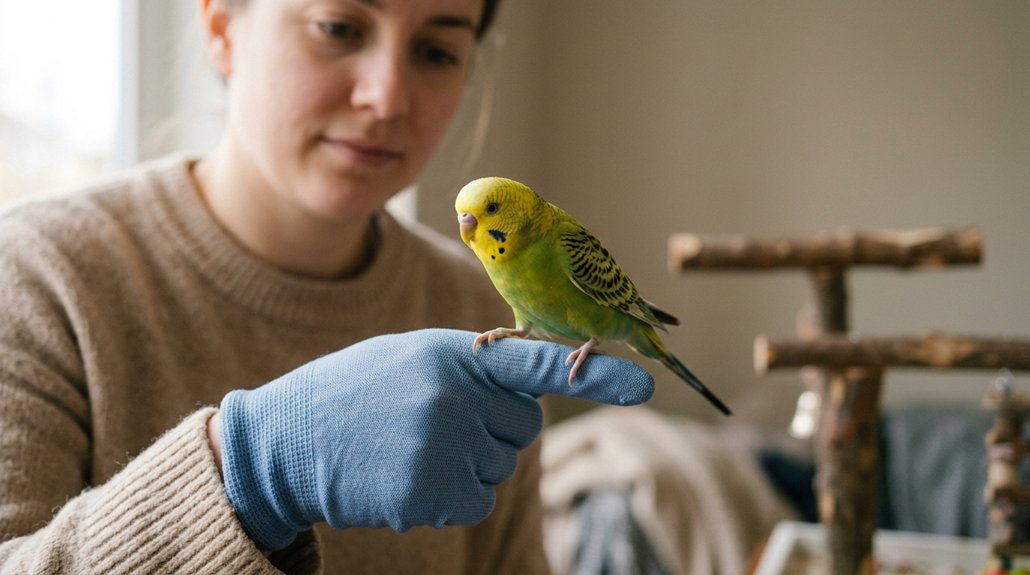
Start step-up training outside the cage, using a neutral surface such as the cage top or a nearby perch so the bird does not feel its home space is being invaded. Offer your arm or a perch and use arm targeting with a treat held close to the toes. When the bird leans and places one foot forward, reward immediately. Keep sessions short, daily, and calm.
| Surface | Cue | Reward |
|---|---|---|
| arm | step up | treat |
| perch | step up | praise |
| towel | step up | treat |
| washcloth | step up | praise |
Use the verbal cue only after reliable stepping begins. If needed, start with perch transfer or a stick perch, then substitute your hand gradually. Raise your arm only a few inches once stepping is consistent. Never force, grab, or extend sessions beyond comfort; stress can cause shutdown.
Pet Your Bird the Right Way
Petting your bird should always begin with a calm approach and a quick read of its body language. If you notice relaxed beak grinding or soft chirps, you can continue; pinned eyes, lunging, or an open beak mean you should stop. Offer a finger slowly and let the bird choose contact, rather than reaching in. Use proper stroking only on the head, neck, and feet, and keep each touch brief. Move in the feather direction with light pressure, never under the wings or along the back. Sudden motions can stress or injure your bird. During hormonal or nesting periods, reduce petting further, especially prolonged head and neck contact, to limit territorial or aggressive behavior. Consistency and restraint help your bird stay comfortable and safe.
Why Shoulder Perching Is Risky
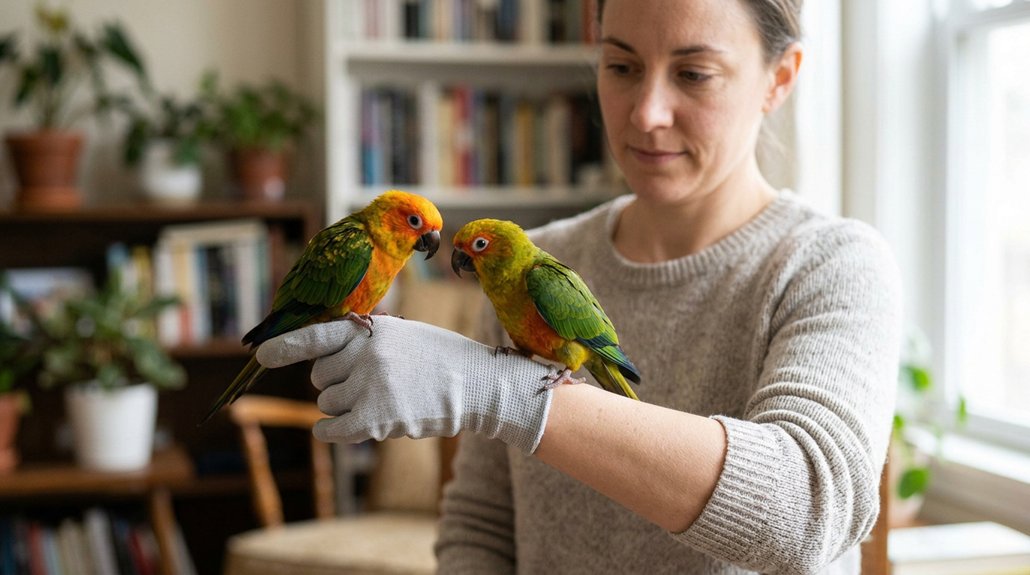
Shoulder perching may seem convenient, but it makes it harder to monitor your bird’s body language and respond to warning signs like eye pinning, wing twitching, or tail flaring. This position also threatens face safety, because your bird can bite the ear or cheek without much warning. | Risk | Effect | Result |
| — | — | — |
|---|---|---|
| Limited view | Hidden cues | Delayed response |
| Face access | Sudden bite | Bleeding injury |
| Restricted escape | Panic flapping | Fall or trauma |
It can also encourage mate-like bonding and territorial behavior, so you may see jealousy toward others. Birds may drift behind your head or into your neck area, where you can’t control movement well. For safer handling, choose perch alternatives that keep the bird in front of you and easier to observe.
Use Towel Training Safely
You can introduce a soft, lightweight towel through simple games like peek-a-boo or gentle tug so your bird starts linking it with calm, positive contact. Once your bird accepts the towel, practice draping it loosely and rewarding steady behavior, then only use gentle restraint after your bird can step onto your hand or a perch. Keep sessions brief, avoid chest pressure, and stop immediately if you see severe stress signs.
Towel Familiarization Games
Start towel familiarization gradually by turning the towel into part of positive play, such as peek-a-boo or gentle tug, so the bird learns that it predicts treats and attention rather than restraint. Use a lightweight, soft towel for towel enrichment, and let your bird inspect it on its own terms. You can drape it nearby, then reward calm approaches, stepping on, or perching with high-value treats and praise. Keep sessions brief and predictable. If your bird accepts it, add short, non-threatening touches over the back for a few seconds while watching for wide eyes, a tightened beak, or frantic wing beats. Avoid perfumed fabrics to limit unwanted scent association. Regular, positive towel games help keep the towel familiar for future veterinary care, transport, or nail trims.
Gentle Towel Restraint
When towel restraint becomes necessary, use the towel your bird already knows from positive games and keep the process calm and deliberate. Select a soft, medium-weight towel without loose threads: bath towel for large parrots, hand towel for small birds. Use slow introductions before restraint by draping it briefly during treats, then removing it. This builds tolerance. When you must proceed, scoop your bird from below, wrap the wings snugly against the body, and avoid chest compression. Leave the head exposed for breathing monitoring. Keep the hold brief, ideally under a minute for minor tasks. Watch for flapping, freezing, or panting. Afterward, release the bird calmly, then offer praise and a favorite treat to reduce aversion and support future handling compliance.
Common Bird Handling Mistakes
Common handling mistakes often come from moving too quickly or reading a bird’s signals too late. You shouldn’t use sudden grabbing or forced removal to make a bird step up; that increases fear and biting. Instead, cue a step up with treats and gradual practice. Don’t pet below the neck, along the back, or under the wings, because those areas can trigger sexual or territorial behavior; limit contact to the head and feet. Avoid shoulder perching until your bird is trained and attentive, since it hides body language and can lead to surprise bites or flight. Use towels only after desensitization, with gentle restraint if needed. Keep handling consistent and predictable, ideally about one hour daily, then adjust slowly to reduce stress and behavioral problems.
Build Trust With Positive Reinforcement
Positive reinforcement helps a bird learn that your hands, presence, and cues predict good outcomes rather than threat. You should begin handling outside the cage in short daily sessions, about 30–60 minutes total, so the routine feels predictable and you don’t invade its home space. Use high-value, species-appropriate treats to reward calmness, leaning toward your hand, and stepping up. Teach step up by luring the bird onto your hand with a treat, repeating the motion before adding the verbal cue. Watch body language closely; if you see pupil dilation, an open beak, lunging, a flattened crest, or tension, slow down. For fearful birds, use a towel or washcloth for target training and simple trust games, pairing each success with praise and treats to reduce fear.
Frequently Asked Questions
What Is the 3 3 3 Rule for Birds?
It’s a phased avian acclimation guideline: 3 days of quiet settling, 3 weeks of calm, limited contact, and 3 months of consistent handling and flight training. You’ll adjust pace to your bird’s stress cues.
What Are the 5 S’s of Bird Watching?
You’ll use Size, Shape, Silhouette, Sounds, and Status. You’ll compare bird behavior, habitat clues, flight patterns, and feeding signs, then note size, body shape, calls, and structural details to identify species precisely.
How to Safely Restrain a Bird?
You safely restrain a bird only when necessary, using proper support and gentle restraint. Cradle the body, secure wings, and keep the head free. Don’t squeeze; stop if breathing changes or distress appears.
What Is the 60/40 Rule for Birds?
The 60/40 rule means you’ll spend 60% of sessions on calm, predictable bonding and 40% on stimulating work, keeping perching balance steady—like walking a tightrope. It isn’t wing trimming; it’s stress-aware enrichment.
Conclusion
If you watch your bird closely, you’ll notice the signals before stress turns into a bite. When you use a calm routine, teach step-up cues, and handle only the safe areas, you reduce risk and build trust. Shoulder perching, rough restraint, and rushed touch can quickly change a good session into a dangerous one. Keep practicing positive reinforcement, and you’ll create the kind of handling that feels safe, predictable, and far more cooperative.