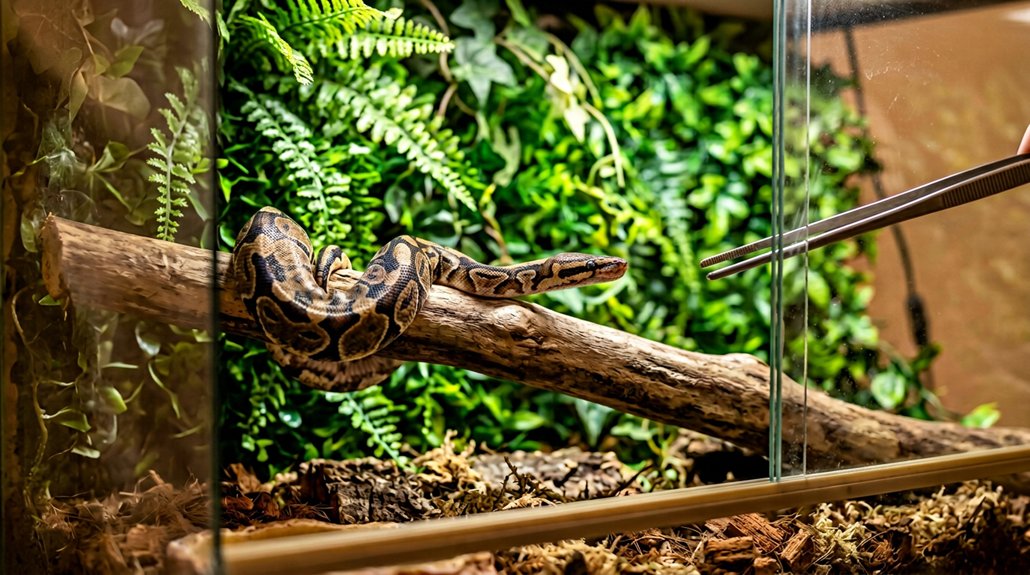
For your ball python, maintain a diet of primarily mammalian prey, such as rats or mice, sized to about 10% of its body weight. Juveniles should eat every 10 days, while adults feed every 3-4 weeks. Defrost prey in lukewarm water and offer it using tongs to mimic natural hunting. Monitor weight weekly to avoid overfeeding and watch for hunger cues like increased activity. Exploring further will enrich your understanding of ideal feeding techniques.
Key Takeaways
- Ball pythons primarily eat rodents like rats and mice, occasionally also consuming birds such as quail.
- Ideal meal size is about 10% of the snake’s total body weight, adjusted as they grow.
- Juveniles need feeding every 10 days; adults require a meal every 3-4 weeks.
- Thaw frozen prey by submerging it in lukewarm water before feeding.
- Use tongs to simulate hunting; present meals in dim lighting for comfortable feeding.
Understanding Ball Python Diet Needs
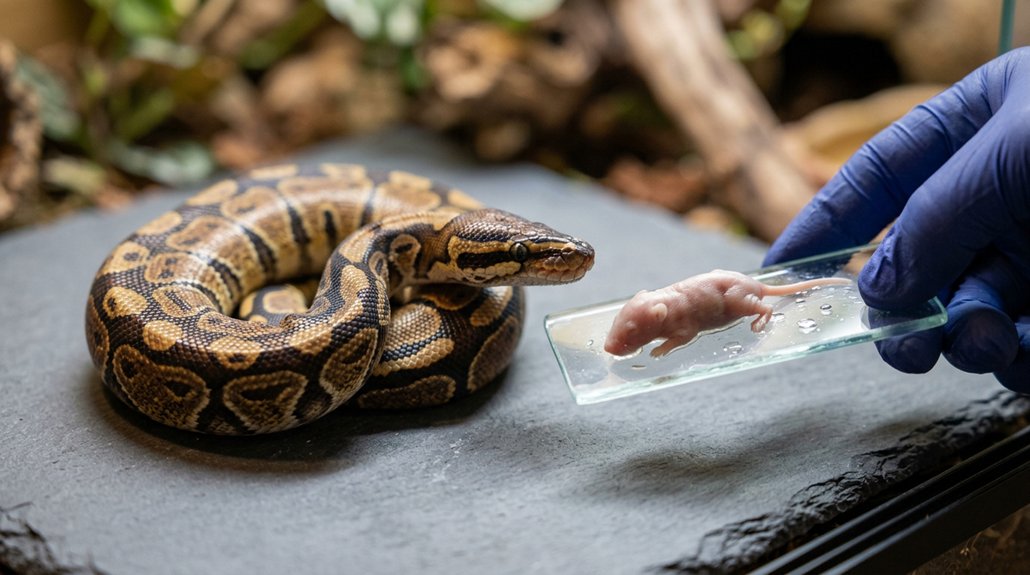
Ball pythons, commonly known as royal pythons, require a carefully balanced diet that reflects their natural consumption patterns in the wild. Natural feeding involves offering a varied diet typical of their environment, primarily consisting of mammals such as rats and mice, and occasionally birds like quail. These dietary variations are essential for replicating their hunting habits and ensuring nutritional diversity. Evidence suggests that offering meals approximately 10% of the snake’s total body weight is suitable for promoting peak growth and health. You should monitor their body weight regularly—preferably weekly—to verify both the appropriateness of meal size and overall health. Feeding schedules should align with the python’s developmental stage, typically every 10 days for juveniles and every 3 to 4 weeks for adults.
Choosing the Best-Sized Meal for Your Ball Python
Recognizing the specific feeding needs of your python forms the foundation for determining the ideal meal size. A suitable meal size constitutes about 10% of the snake’s body weight, promoting proper nutrition across growth stages. To guarantee you’re providing appropriate feeding intervals, weigh your snake routinely. This consistent monitoring maintains weight management and helps adjust the prey selection as your python matures. Frozen options in pet stores usually list weight and size, assisting in selecting appropriate meal variability. Avoid overfeeding, as excessive meal size leads to unhealthy weight gain. Adjust your approach as your python evolves, assuring its feeding aligns with developmental changes. Accurate meal sizing supports your python’s overall health and well-being, reflecting evidence-based feeding practice.
Defrosting and Preparing Food for Ball Pythons
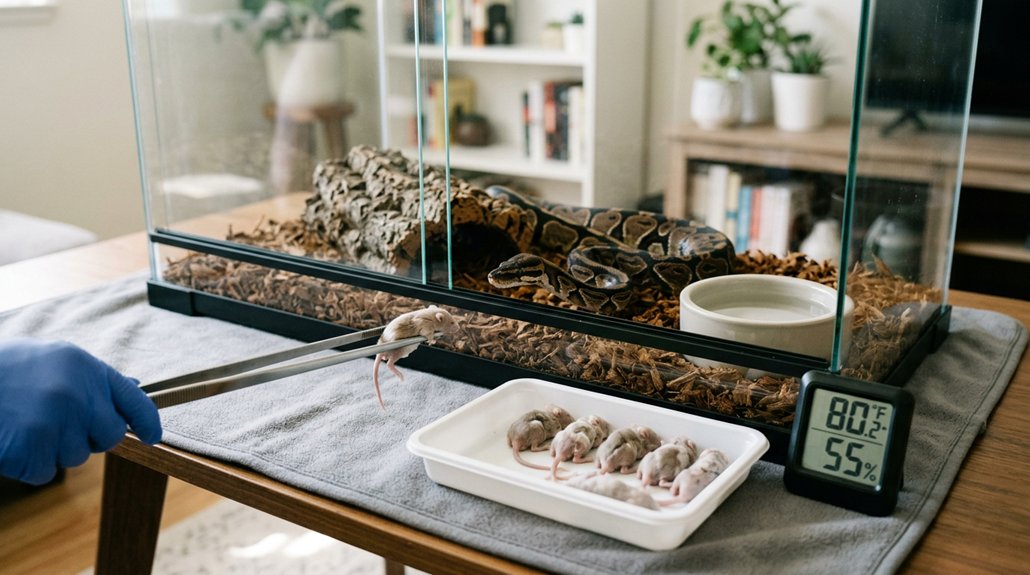
The process of defrosting and preparing food for ball pythons is crucial for guaranteeing they consume meals with ease and without health risks. Ideal defrosting techniques involve submerging frozen prey in lukewarm water for about 30 minutes. This method guarantees the food reaches the appropriate food temperature, warm to the touch, allowing the snake to consume it comfortably. Follow these steps for effective preparation:
Defrost frozen prey in lukewarm water for about 30 minutes to ensure it reaches a comfortable, warm temperature for feeding.
- Defrost: Submerge until limbs move freely, indicating thorough defrosting.
- Temperature Check: Verify the food temperature is suitable by touching the prey; it should feel warm, akin to a live meal.
- Stimulation: Briefly dip the thawed prey in warm water to evoke the python’s natural hunting instincts.
These steps promote successful and stress-free feeding encounters.
Practical Feeding Techniques for Ball Pythons
Effective feeding techniques for ball pythons can greatly influence their dietary health and behavioral enrichment. You should consider the meal’s presentation as a critical aspect of feeding. Utilizing tongs to offer thawed prey can simulate a more natural hunting experience. Ascertain the prey is approximately 10% of your snake’s body weight and has been properly thawed; submerge in lukewarm water until warm. Present the meal in dim lighting or minimal interaction to match the python’s natural feeding behaviors. Alternatively, placing prey in the enclosure allows the snake to feed at its own pace. Consistency in technique increases the snake’s comfort and can adapt to changes in feeding habits. Warm water-dipped prey enhances scent and temperature, sparking interest in feeding.
Feeding Frequency Guidelines for Growth Stages
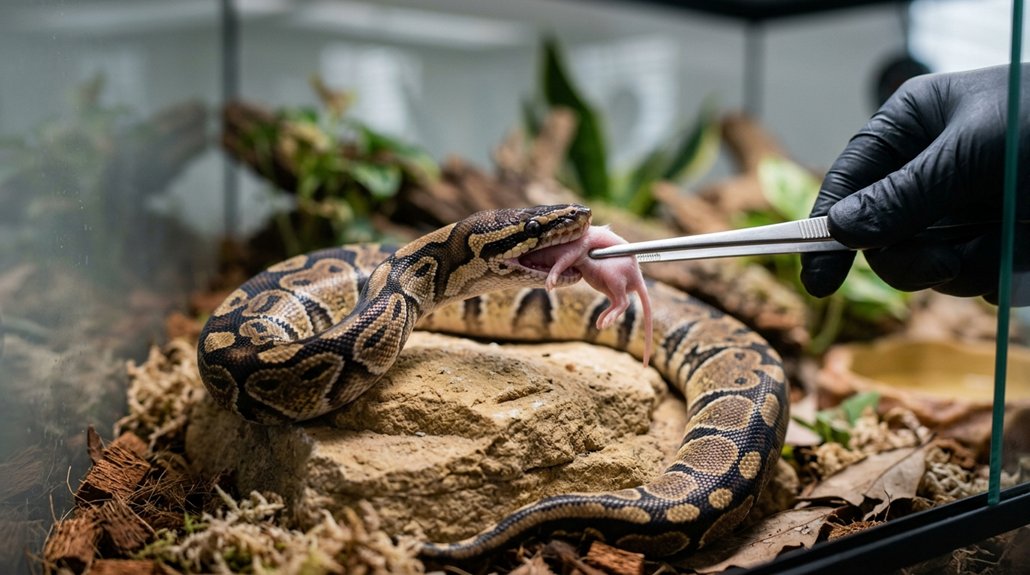
Understanding the feeding frequency for ball pythons is essential for their health, as juveniles necessitate nutrition every 10 days to fuel their accelerated growth, while adults thrive on a schedule of every 3 to 4 weeks due to a decelerated metabolism. You should note that some mature ball pythons can sustain themselves on just 8 to 12 meals per year, highlighting their remarkable adaptation to intermittent food availability. Observing hunger cues and adapting to behavioral shifts can further fine-tune feeding regimens, preventing overfeeding and ensuring ideal weight maintenance across all life stages.
Juvenile Feeding Schedule
Feeding juvenile ball pythons every 10 days is essential to support their rapid growth and development. This feeding schedule guarantees juveniles receive consistent nutrition. Adopting a scientific approach, you should observe the following guidelines to optimize your python’s health:
- Meal Variety: While frozen-thawed rodents are standard, varying prey types helps guarantee thorough nutrition. Adjust sizes as they grow, always offering prey about 10% of your snake’s body weight.
- Growth Observation: Weekly weight checks can provide data to adjust feeding schedules and meal sizes, reflecting their growth stage accurately.
- Prevent Overfeeding: Although frequent meals might seem beneficial, overfeeding could result in unhealthy weight gain, so adhere strictly to the schedule.
Implementing these steps guarantees your juvenile ball pythons thrive, showcasing healthy and consistent growth.
Adult Diet Timing
For adult ball pythons, an ideal feeding frequency is vital to sustain their health without leading to obesity or malnutrition. Typically, feeding every 3 to 4 weeks is recommended. Some adults require only 8 to 12 meals annually due to their ability to maintain leanness on less frequent feedings. It’s important to take seasonal adjustments into account as pythons may exhibit altered feeding habits, consuming less during winter and resuming in spring. Regular monitoring of body weight helps guarantee health, as a drop over 10% is concerning. Be mindful of individual preferences which can affect meal acceptance and necessitate adaptive strategies.
| Feeding Interval | Season | Average Meals Per Year |
|---|---|---|
| Every 3 weeks | Spring/Fall | 12-18 |
| Every 4 weeks | Summer | 9-12 |
| Reduced Feeding | Winter | 6-8 |
Signs of Hunger
Maintaining an ideal feeding schedule for adult ball pythons sets the stage for evaluating the cues indicative of hunger across different growth stages. Observing hunger cues in ball pythons involves noting specific behavioral observations. Juveniles, necessitating nutrients for peak growth, display hunger cues like:
- Increased activity levels: This behavior indicates a search for food sources.
- Heightened environmental interest: They exhibit focused observation compared to their otherwise docile nature.
- Physical tension: Look for a distinctive tensing of muscles, a prelude to feeding readiness.
Juveniles generally require a feeding interval of 10 days. Adult feeding frequency varies, typically every 3 to 4 weeks. Evidence-based observation of feeding patterns is essential, as excessive intake risks obesity, while inadequate feeding affects their growth trajectory. Stay alert to seasonal behavioral changes.
Monitoring Ball Python Health and Hunger
A critical aspect of caring for a ball python involves systematically observing its health and hunger cues to guarantee well-being. Regular weight monitoring is essential; place your python on a scale weekly, making certain its body weight remains stable. Significantly, a loss exceeding 10% signals potential health issues, prompting immediate investigation into underlying causes. Healthy ball pythons occasionally fast, which isn’t inherently alarming. However, prolonged food refusal combined with decreased weight requires attention.
Monitor health indicators such as activity levels and body posture. An active, tensed posture typically signifies hunger readiness. Seasonal shifts influence feeding behaviors, as winter and spring may alter activity patterns. Maintain a serene environment during feeding to minimize stress, as individual preferences affect their willingness to eat when observed.
Common Feeding Mistakes and Their Solutions for Ball Pythons
When managing your ball python’s diet, it’s critical to be aware of overfeeding risks, with meal portions ideally constituting 10% of the snake’s body weight to evade excessive weight gain. Evidence suggests juveniles should eat every 10 days, while adult feeding intervals extend to 3-4 weeks, ensuring ideal metabolic function. Observing weight fluctuations and hunger signals can provide insight into dietary adequacy, where regular weigh-ins help track any deviations indicative of health issues.
Overfeeding Risks and Prevention
Overfeeding can become a significant health concern for ball pythons, leading to obesity and other metabolic disorders. To prevent such overfeeding consequences and guarantee obesity prevention, it’s vital to follow key practices. First, feed adult ball pythons once every 3 to 4 weeks using a meal size approximately 10% of their total body weight. This approach helps maintain metabolic balance.
Second, adjust meal sizes as your snake grows to avoid excessive feeding, which may contribute to unhealthy weight gain. Finally, implement systematic weight monitoring. Weigh your ball python weekly to track any weight changes.
- Regulate Feeding Frequency: Adhere to recommended intervals.
- Adjust Meal Sizes: Confirm it suits snake size.
- Monitor Weight: Identify overfeeding through weight tracking.
Recognizing Hunger Signals
Understanding hunger signals in ball pythons is vital for preventing common feeding mistakes that can lead to health issues. Recognize their hunger cues through increased activity and a tense body posture. These behavioral signals indicate readiness to feed. Avoid overfeeding by sticking to portions approximately 10% of your snake’s body weight. A calm, secure environment during feeding can mitigate issues if your ball python refuses to eat due to feeling observed. Some respond well to darker settings or less visibility. Individual feeding preferences vary; adapting methods, like using tongs or placing food in the enclosure, is important. Weekly weight monitoring is recommended; note any weight loss exceeding 10%, which may signify potential health concerns requiring intervention.
Incorporating Ball Python Behavior in Feeding Practices
While maintaining an ideal feeding regimen for ball pythons, observing their unique behavioral patterns is critical for encouraging consistent and stress-free eating habits. By understanding these behaviors, you can tailor the feeding environment to each snake’s specific preferences using strategic observation techniques. Ball pythons may show predilections for eating in dim lighting or solitude, avoiding human presence. Observing pre-feeding activity levels provides insight into hunger cues and wellness, promoting effective feeding experiences. By adapting your approach based on their behavior, you enhance their feeding responses:
- Develop a subtle feeding environment. Reduce light and limit disturbances.
- Utilize observation techniques. Notice activity before feeding as an indicator of hunger.
- Custom-tailor feeding practices. Adjust setups as snakes adapt to food types, ensuring comfort.
Each python’s individuality amplifies its feeding success.
Frequently Asked Questions
Do Ball Python Bites Hurt?
Ball python bites typically don’t hurt much, resembling a pinprick due to their small, sharp teeth. Understanding ball python behavior and feeding misconceptions reduces bite incidents. Always clean bites promptly to prevent infection, ensuring swift wound recovery.
Can I Feed My Ball Python Crickets?
You may wonder about cricket nutrition for ball pythons, but don’t do it—it’s unsuitable. Despite their protein content, crickets lack essential nutrients found in rodent prey. Consider alternative feeders like mice or rats for better health.
How Do I Know if My Ball Python Is Hungry?
You’ll observe hunger signs like increased activity and exploration. Document their feeding frequency, and note changes. Weekly weighing offers evidence-based insights into health, while acknowledging seasonal behavior fluctuations, ensuring any stress factors are minimized for ideal feeding conditions.
Can I Feed My Ball Python Raw Chicken?
Feeding your ball python raw chicken isn’t recommended due to raw chicken concerns, such as lack of nutrients and bacterial risks. Focus on alternative protein sources like appropriately sized mammals or birds that offer a more balanced nutritional profile.
Conclusion
Feeding your ball python requires understanding its dietary needs and behaviors. Are you ready to monitor its health and adapt practices to guarantee ideal growth? You’ll need to take into account meal size, preparation, and feeding frequency to align with scientific observations. Avoid common mistakes by being informed and attentive to your python’s signals. Incorporate evidence-based techniques and adjust based on detailed observations, ensuring your python thrives in captivity. Remember, a well-fed python is a healthy python.