Taming your bird works best when you make daily care calm, predictable, and never forced. Keep its cage spacious, quiet, and filled with varied perches, chew toys, and foraging items. Feed at the same times, sit nearby with soft speech, and use tiny high-value treats within 1–2 seconds of calm behavior. Teach step-up with a stable perch, watch for fear signals, and back up if needed. A few patient habits can change everything, and more useful details are ahead.
Key Takeaways
- Create a calm, spacious cage setup with varied perches, safe toys, and consistent daily care.
- Approach the bird slowly with soft speech, minimal eye contact, and predictable routines to reduce fear.
- Build trust through short, regular visits and treat-based interactions at the same times each day.
- Use positive reinforcement with high-value treats, rewarding calm behavior and desired actions within seconds.
- Teach step-up gradually, back up when the bird shows stress, and stop if illness or pain seems likely.
Why Taming Helps Your Bird
Taming helps your bird because it makes everyday care safer, faster, and less stressful for both of you. You’ll notice that nail trims, wing checks, and vet visits happen with less struggle, so there’s less risk of injury or missed problems. A tame bird’s reduced stress also shows in calmer body language, with fewer defensive lunges and less fear-based aggression. When you can handle your bird quickly in an emergency, you may prevent flight-related accidents and respond sooner to sudden illness. Consistent, positive interactions build trust, which makes training and enrichment easier to accept. That steady cooperation supports mental stimulation and helps limit boredom-related behaviors. Over time, this adds up to improved welfare and a stronger bond between you and your bird.
Create a Calm, Safe Cage
A calm cage gives your bird a secure place to rest, eat, and observe the room without feeling trapped. Choose a spacious, non-round cage that’s 1.5–2 times your bird’s wingspan wide, so it can stretch and flap safely. Thoughtful cage placement matters: set it in a quiet, bright room, away from drafts, harsh sun, busy doorways, and pets’ sightlines.
- Use perch variety: natural wood, rope, and cement.
- Space 3–4 perches so your bird can move with ease.
- Add safe chew toys, a shallow bath, and foraging items.
Keep the setup tidy and consistent, removing fresh food within 2–4 hours. Rotate enrichment weekly so the cage stays interesting, balanced, and calm.
Build Trust With Daily Routines
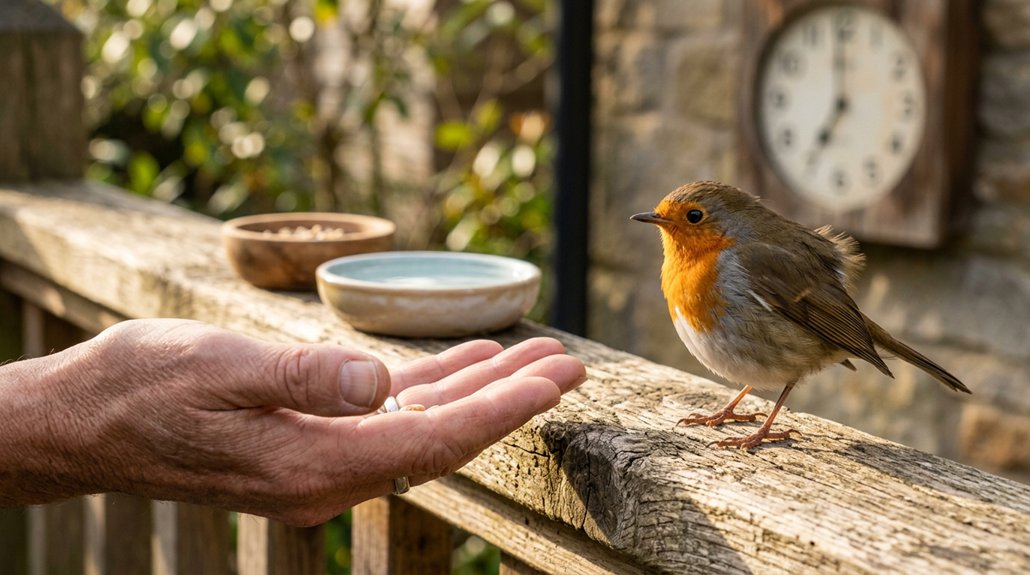
You build trust when your bird can predict you, so feed at the same times each day and keep the routine steady. You can also sit nearby for a few quiet minutes daily, speaking softly or reading aloud so your presence feels normal, not sudden. Over time, these small, repeated moments teach your bird that you’re calm, consistent, and safe.
Consistent Feeding Times
Feeding your bird at the same times each day—ideally early morning and late afternoon—helps build the kind of predictable routine birds learn to trust. With scheduled feedings, you give your bird a clear pattern to expect, and that steadiness can slowly reduce fear. Keep location consistency by using the same feeder spot and similar portion sizes, so the scene feels familiar rather than uncertain.
- A bird arriving a little earlier each day
- The same dish, same shelf, same light
- Notes in a journal on food choices and reactions
Over several weeks, watch how your bird responds and adjust only when the pattern is clear. Reliable mealtimes become quiet chances for positive reinforcement, and your patience can turn feeding into a dependable bridge toward trust.
Calm Daily Presence
Twice a day, sit quietly near the cage for 10–20 minutes and let your bird get used to your calm presence. Read, breathe, or offer soft vocalizations so your bird links you with safety, not pressure. Keep your body language steady: crouch slightly, avoid direct eye contact, and move slowly. Feed on the same morning and late-afternoon schedule, and approach in the same order each time. These patterns help your bird predict you and relax. Keep the room stable, with no sudden noises or changed perches. Add brief 3–5 minute treat or training sessions several times a day, then stop after a success. Over time, shared silence and reliable routines make you seem familiar, and familiar feels safe.
Use Treats to Create Positive Associations
You’ll get better results when you choose a treat your bird truly values, like a favorite seed or fruit piece, and save it for training. Offer it right after you appear, so your bird starts linking your presence with something good. When your bird stays calm, approaches, or steps up, reward that behavior quickly and consistently.
Choose High-Value Treats
A few well-chosen treats can turn a nervous bird’s first encounters into something worth repeating. Start with primary rewards such as whole cashews, palm nuts, or tiny bits of apple and mango; they’re often more motivating than seeds for wary birds. Watch for cashew preferences and keep a fruit rotation so you can see what draws the quickest approach. Once your bird accepts hand contact, use pea-sized pieces, not big portions, so you can reward often without overfeeding.
- Offer the treat within 1–2 seconds of the wanted behavior.
- Note which item makes your bird lean in, pause, or step closer.
- Rotate choices to prevent boredom and satiety.
Keep your observations steady, and let the bird’s response guide each session.
Pair Treats With Presence
Start by making your presence predict something good: offer a high-value treat like a whole cashew or palm nut from a comfortable distance, then gradually shorten that distance over several sessions so the bird begins to link you with reward. Keep the routine steady: the same times, the same spot at the cage front, so your arrival becomes easy to anticipate. This kind of distance conditioning works best when your posture stays quiet and unhurried. Each calm moment can earn immediate delivery, building presence reinforcement without pressure. If you want to hand-feed later, drop pieces into a bowl near your hand first, then move to an open palm. As tolerance grows, use smaller pieces, reserving bigger rewards for occasional stepping-up.
Reward Calm Bird Behaviors
When your bird shows calm body language—lowered head, relaxed feathers, slow blinking—reward it immediately with a tiny, species-appropriate treat, such as a pea-sized piece of cashew, palm nut, or favorite fruit, so the calm state becomes worth repeating. Use a gentle voice, soft eye contact, and slow movement while you deliver the treat from a flat hand or nearby bowl.
- Keep each reward tiny and timely.
- Move the bowl closer as fear fades.
- Pair treats with hand targeting, then add a brief head scratch or toy.
In short sessions, you’re teaching your bird that calmness brings good outcomes. Reinforce often at first, then taper gradually as trust grows. If stress returns, step back and proceed more slowly.
Teach Step-Up With No Force
Begin by offering a stable perch against your hand and cueing “step up” as you reward even the smallest forward movement with a high-value treat, such as a cashew or piece of palm nut, so the bird never has to be forced into contact. Watch your perch placement closely: hold it level above the legs, then keep your hand still. Use gradual desensitization by shaping approach, touch, partial weight, and then a full step. Keep sessions brief, just 1–3 minutes, and repeat them several times a day. End each try on success, then deliver food immediately. Once the bird steps reliably onto the perch, replace it with your finger. If the bird stalls, simply pause, stay calm, and return to the easier step before asking again today.
Spot Fear Signals Before You Advance
As you keep building step-up trust, watch the bird’s body closely before you move to the next ask. You’re looking for fear signals in body language: crouching, puffed feathers, rapid breathing, hissing, or backing into a corner. If the bird stiffens, freezes, or goes suddenly silent, stop and give it space for several minutes.
- Turning the head away or breaking eye contact
- Moving farther from your hand or perch
- Repeated retreating instead of approaching
Use relaxed cues—lowered head, resting posture, slow blinking, and preening—as signs you can cautiously advance. If you see lunging, wing-flaring, or biting attempts, withdraw at once and return to the last comfortable distance. This careful reading helps you avoid pushing past comfort.
Reset Training After Setbacks
If your bird slips backward—freezing, refusing to step up, or showing aggressive displays—shorten the next few sessions to just 1–2 minutes and return to the last step where you saw relaxed body language for three straight successes. First, rule out pain or illness; sudden changes or persistent refusal mean veterinary checkups, because discomfort can look like training trouble. Then move backward through your hierarchy: distance, presence, treat-through-bars, perch stepping. Use short breakups in practice, not longer pushes, and wait until your bird accepts a treat or holds a calm posture three times in a row before advancing. Replace direct hand offers with a stable perch or target stick, and boost reinforcement when needed. Log triggers, body language, and rewards. If setbacks repeat, pause formal training for several days.
Maintain Trust With Daily Interaction
Daily, spend a predictable few minutes near your bird—three short 5–10 minute visits or one 15–20 minute session—to keep you familiar and reduce stress. Use a slow approach, soft speech, and calm movements so your bird can read you easily. Trust maintenance depends on repetition, timing, and restraint.
- Offer a small cashew piece or fruit bit right after a desired response.
- Include one cue, like “step up,” and end with success.
- Watch for puffed feathers, hissing, or backing away; if they appear, shorten the visit.
When you stay consistent, your presence starts to feel safe. Each brief interaction teaches your bird that you’re predictable, gentle, and worth approaching.
Frequently Asked Questions
What Is the 3 3 3 Rule for Birds?
It’s a guideline for you: 3 days for wariness, 3 weeks for routines, and 3 months for trust-building. Watch behavioral cues, keep things calm, and add environmental enrichment gradually as your bird settles.
How to Train a Bird to Trust You?
You train trust with short, calm sessions, positive reinforcement, and perch training. Offer treats through the cage first, then from your hand. Watch relaxed body language, end on success, and back up if it’s fearful.
How to Grab a Bird Trust as a Pet?
Birds remember routines well: studies suggest many learn cues within 10–20 repetitions. You should read body language, move slowly, and use bonding activities like treats and step-up practice, rewarding calm contact and never forcing a grab.
What Is the Best Way to Tame a Bird?
Use patient, short daily sessions, and let you bird choose contact. Pair treats with calm cues, watch behavioral enrichment, and respect socialization timing. Reward tiny steps, back up if it’s afraid, and never force handling.
Conclusion
Taming your bird works best when you move slowly and consistently. Birds that get at least 2 to 4 hours of daily social interaction often show fewer stress behaviors and stronger trust over time. Watch their posture, respect their signals, and keep each session calm and short. When you use routine, treats, and gentle step-up practice, you’re not forcing progress—you’re earning it. With patience, you’ll build a bond that feels safe, steady, and lasting.