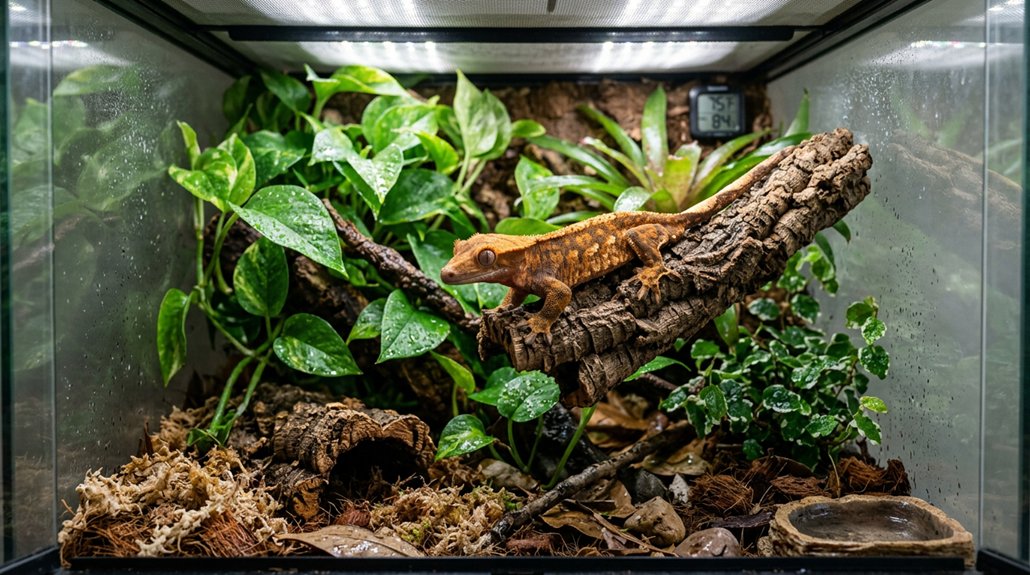
To care for a crested gecko, set up a minimum 20-gallon habitat with climbing structures, maintain humidity at 70-80%, and temperatures between 72-80°F. Feed them high-quality powdered diets like Repashy, with gut-loaded insects weekly, and provide a shallow water dish. Monitor health for signs like shedding issues or lethargy. Handle gently, ensuring a clean environment with daily spot checks. There’s much more to discover to keep your gecko thriving and healthy.
Key Takeaways
- Ensure a minimum habitat size of 20 gallons with secure ventilation to accommodate an adult crested gecko.
- Maintain humidity levels between 70-80% using misting and moisture-retaining substrates within the enclosure.
- Provide a balanced diet using high-quality crested gecko diet powders and gut-loaded insects for protein variety.
- Monitor temperature: 72-80°F by day and 60-68°F at night, using heat sources as necessary.
- Regularly clean the habitat and monitor gecko’s health for signs of dehydration or other issues.
Setting Up Your Crested Gecko Habitat
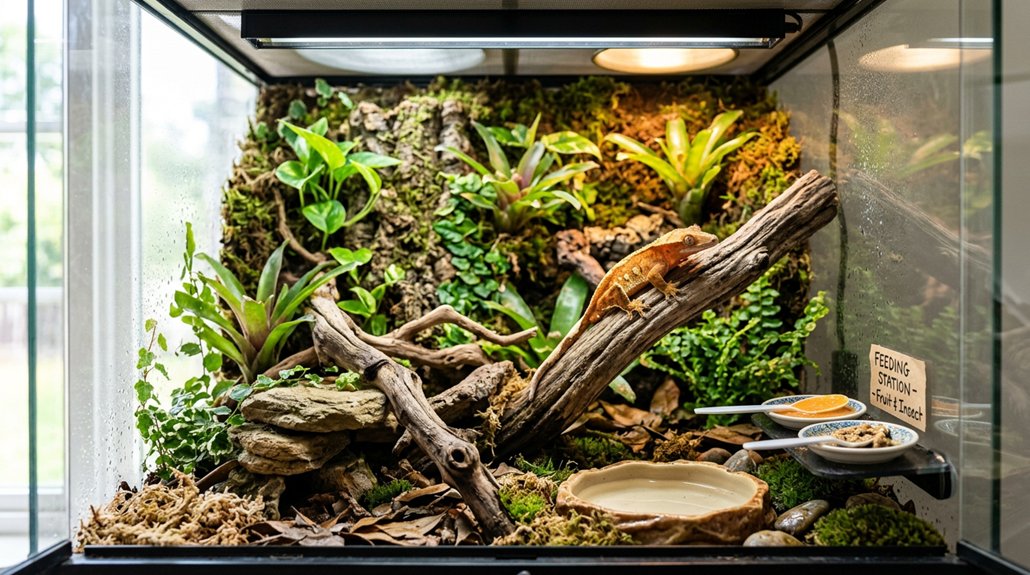
To create an ideal environment for your crested gecko, you’ll need to set up a habitat that emphasizes vertical space, given their arboreal nature. Providing a minimum habitat size of 20 gallons with dimensions of 18x18x24 inches is recommended for adults. Focus on habitat decoration by incorporating climbing structures such as branches, vines, and non-toxic plants, offering enrichment and mimicking their natural ecosystem. These provide essential vertical pathways for exercise and exploration.
Maintain humidity levels at 70-80% through daily misting and employ moisture-retaining substrates like coconut fiber or sphagnum moss. Verify the habitat is topped with a secure, screened lid for ventilation and escape prevention. Regularly monitor the environment to sustain peak conditions, securing stability and gecko well-being.
Choosing Essential Supplies
When assembling a must-have starter kit for your crested gecko, prioritize an enclosure with a secure, screened lid, UVB lighting, and a heat source to create a suitable microclimate. Essential feeding supplies include specialized crested gecko diet powders which provide balanced nutrition when mixed with water, along with live insects for periodic protein supplementation. Guarantee the habitat replicates their natural environment using moisture-retaining substrates, branches, and effective humidity management tools such as a hygrometer and misting system.
Must-Have Starter Kit
For guaranteeing your crested gecko thrives, focus on assembling a starter kit with the essential supplies tailored to their unique needs. Prioritize a minimum 20-gallon tall enclosure to cater to their climbing instincts. Materials such as glass or PVC promote ideal humidity control, while a secure, screened lid prevents escapes. Equip the habitat with moisture-retaining substrates like coconut fiber or sphagnum moss, mirroring their natural environment. Provide branches or vines for safe climbing, fostering their activity and well-being. Essential instruments—a temperature and humidity gauge—will aid in maintaining suitable environmental conditions.
| Component | Description |
|---|---|
| Enclosure | Minimum 20 gallons, focus on height |
| Lid | Secure, screened for ventilation |
| Substrate | Coconut fiber, peat, sphagnum moss |
| Climbing Setup | Branches or vines for safe climbing |
| Monitoring | Temperature and humidity gauge |
These steps form the cornerstone of creating a conducive habitat.
Essential Feeding Supplies
Nourishment is a cornerstone of crested gecko care, and selecting the right feeding supplies guarantees their dietary needs are met. High-quality complete powdered diets, like Repashy and Pangea, guarantee balanced nutrition and support their omnivorous preferences. Introduce nutritional variety by occasionally incorporating gut-loaded live insects, such as crickets and dubia roaches, as treats once or twice weekly. These practices cater to the crested gecko’s feeding frequency and mimic their natural diet.
A clean, shallow water dish is essential, even if they prefer droplets on leaves. Precision tools, like a small cup or bowl for powdered food, prevent messes and help monitor consumption. Dust insects with calcium powder—adding D3 if UVB lighting is absent—to maintain ideal health and prevent deficiencies.
Creating an Ideal Enclosure
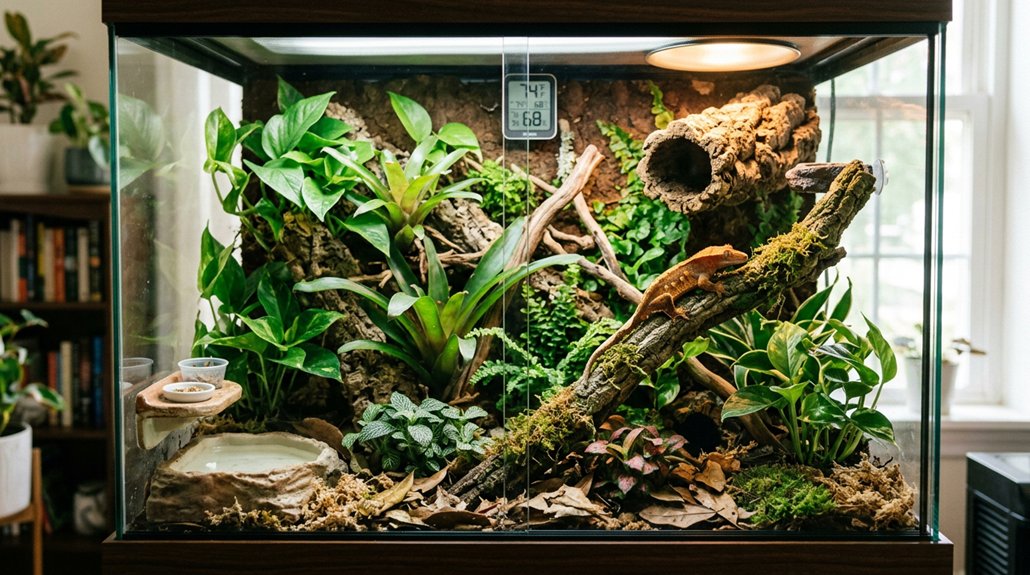
To optimize the enclosure size for your crested gecko, aim for a minimum of 20 gallons, prioritizing vertical space to support their climbing behavior. Enhancing habitat conditions involves securing a ventilated screen cover, incorporating branches and non-toxic plants, and maintaining appropriate temperature and humidity levels with low-wattage heat sources and moisture-retaining substrates. Consider adding a drainage layer along with natural decor elements like cork bark and hiding spots to replicate their native environment effectively.
Optimizing Enclosure Size
Crafting the ideal enclosure for your crested gecko is essential to ensuring their well-being and comfort. Expertise suggests that suitable enclosure dimensions for adults should be no less than 18x18x24 inches, while juvenile geckos thrive in spaces starting at 12x12x18 inches. Tall enclosures, about 18x18x36 inches, cater to their arboreal nature and promote habitat enrichment through climbing opportunities. A well-ventilated design with screened lids also facilitates maintaining humidity between 70-80%, preventing escapes and ensuring comfort. Preferred materials, such as glass or PVC, are effective at retaining the needed humidity.
- Minimum Enclosure Size: 20 gallons for adults.
- Recommended Dimensions: 12x12x18 inches for juveniles.
- Arboreal Living: Taller enclosures enhance climbing opportunities.
- Ventilation and Material: Choose glass or PVC with screened lids.
Enhancing Habitat Conditions
An ideal habitat is a cornerstone of crested gecko care, focusing on tailoring conditions to mirror their natural environment. Opt for a minimum 20-gallon enclosure, emphasizing vertical space for their climbing instincts. Such a space, enriched with naturalistic elements like branches, vines, and non-toxic plants, enhances behavioral enrichment and comfort. Employ moisture-retaining substrates and a drainage layer to maintain proper humidity levels, preventing mold.
| Factor | Details | Benefits |
|---|---|---|
| Enclosure Size | Minimum 20 gallons | Adequate space for movement |
| Substrate | Coconut fiber or sphagnum moss | Retains moisture, prevents mold |
| Humidity Levels | 70-80%, with periods of 50% | Promotes respiratory health |
| Natural Elements | Branches, vines, plants | Encourages natural behavior |
| Temperature | 72-80°F gradient | Supports thermoregulation |
Daily misting with a secure screen lid guarantees ideal humidity and ventilation.
Feeding Your Crested Gecko Properly
Although ensuring ideal nutrition for your crested gecko can seem intimidating, it’s essential for their health and well-being. Establishing a balanced diet variety and feeding schedule is fundamental. Here’s how:
- Commercial Food: Provide a primary diet of commercial powdered foods, like Pangea or Repashy, mixed with water daily. These offer balanced nutrition important for their overall growth and health.
- Live Insects: Enhance diet diversity by offering live insects, such as small crickets or dubia roaches, 1-2 times weekly. Dust these with calcium powder, choosing with or without D3 depending on your UVB light setup.
- Feeding Routine: Adhere to a consistent feeding schedule to support healthy eating habits and observe your gecko’s behavior for signs of satiation or disinterest.
- Health Monitoring: Regularly check stool and hydration, consulting a vet if abnormalities arise.
Maintaining Ideal Temperature and Humidity
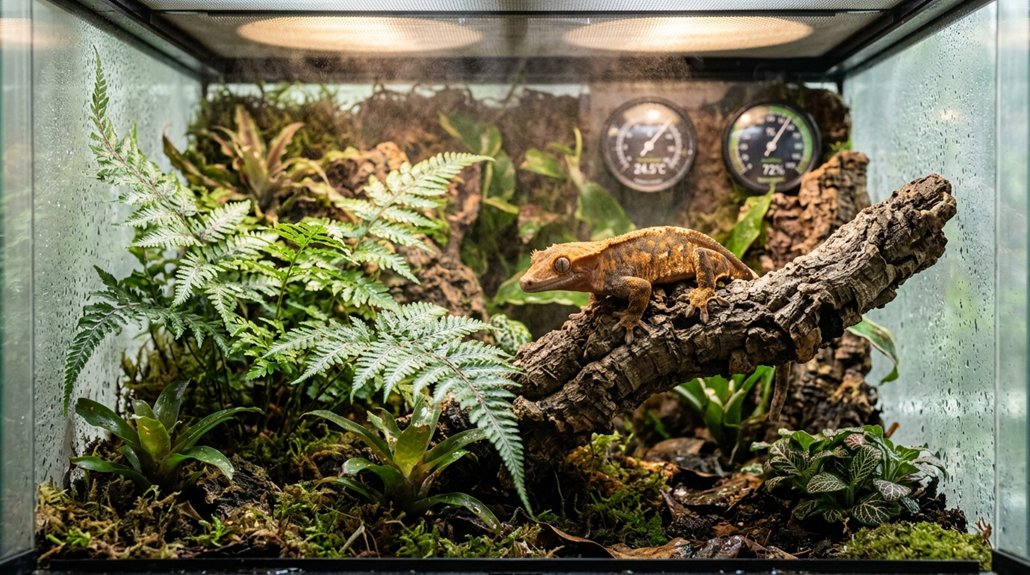
To make certain your crested gecko thrives, maintaining precise environmental conditions is essential. An ideal temperature ranging from 70°F to 78°F, with cooler nighttime dips between 60°F and 68°F, replicates their natural habitat effectively. It’s important to avoid surpassing 80°F to prevent heat stress, safeguarding the safety of your reptile. Humidity management involves daily misting to achieve levels of 70% to 80%, letting the enclosure dry to around 50% before re-misting. Utilizing a digital thermometer and hygrometer offers accurate monitoring, critical for ideal conditions. Implement low-wattage UVB lighting for 6-8 hours daily, supporting their appetite and activity without risking eye damage. With expert oversight, you’re equipped to guarantee your gecko’s health and comfort within these environmental parameters.
Building Trust Through Safe Handling
While maintaining the appropriate temperature and humidity keeps your crested gecko healthy, fostering a bond through safe handling is paramount for trust-building. Implementing effective trust building techniques involves understanding their behaviors and needs. Here’s a concise guide to optimize your handling sessions:
Fostering trust with your crested gecko involves safe handling and understanding their unique behaviors.
- Surface Safety: Handle your gecko over soft surfaces to mitigate injury risk during their characteristic leaps.
- Timing Awareness: Minimize handling during shedding periods, allowing the gecko to adapt stress-free.
- Session Management: Begin short handling sessions, lasting 5-10 minutes, after an acclimation period of two weeks.
- Gentle Interaction: Use soft, slow movements, avoiding the tail, and provide your gecko the freedom to explore your hand for a positive bonding experience.
Spotting Common Health Issues
An astute eye is essential when monitoring the health of your crested gecko. Practicing symptom identification aids in recognizing deviations like shedding difficulties, an indicator of potential issues. If your gecko shows lethargy, swollen limbs, or sudden weight loss, it could signal metabolic bone disease; a professional evaluation by a veterinarian is critical. Respiratory distress symptoms, including excessive mucus and labored breathing, demand immediate attention, reflecting possible infections. Similarly, gastrointestinal problems manifest as runny or bloody stools with concomitant weight loss, necessitating prompt medical intervention.
Preventative care involves ensuring hydration, as signs like sunken eyes or reduced appetite indicate dehydration. By acting promptly and understanding these indicators, you can maintain your crested gecko’s health and avert severe complications.
Maintaining a Safe and Clean Habitat
- Daily Cleaning: Spot-clean to eliminate waste and uneaten food—strategically preventing bacteria buildup.
- Weekly Cleaning: Utilize reptile-safe solutions or diluted bleach for a thorough habitat cleanse.
- Substrate Care: Avert using indigestible materials like gravel that could obstruct digestion.
- Environmental Simulation: Add branches and vines for climbing, which reduces stress by emulating natural habitats.
Regularly mist the enclosure, allowing brief drying periods to forestall mold and respiratory issues.
Frequently Asked Questions
What Does a Crested Gecko’s Habitat Need?
Your crested gecko’s habitat needs a vertically spacious terrarium setup with branches and plants, maintained at 70-80°F. Guarantee 70-80% humidity through misting, using organic substrates like coconut fiber, suitable for their temperature requirements and humidity levels.
Can Geckos Hear You?
Yes, geckos can hear you due to their sound sensitivity. They detect sounds through tympanic membranes. While they don’t rely purely on hearing, gentle sounds like your voice can soothe them, potentially reducing their stress levels.
What’s a Cute Name for a Gecko?
Imagine an enchanting New Caledonian rainforest; a name like “Cascade” offers a spirited touch. Crested Gecko Names crafted with precision delight in their unique crests, while Adorable Gecko Nicknames like “Squiggles” charm with playful resonance. Choose wisely!
What to Feed Crested Geckos and How Often?
Provide powdered fruit diets daily for ideal nutrition. Supplement with gut-loaded insects 1-2 times a week. Dust insects with calcium, considering UVB exposure. These best feeding practices meet crested geckos’ nutritional requirements and promote health.
Conclusion
Caring for your crested gecko is akin to mastering the art of bonsai—delicate, precise, and immensely rewarding. As their miniature rainforest guardian, maintain a favorable balance in their microhabitat, ensuring ideal temperatures, humidity, and cleanliness. Nurture their diet with varied sustenance that echoes a diverse ecosystem. Through gentle handling, build trust, and remain vigilant for health anomalies. By attentively shaping their environment, you’re not just providing care; you’re weaving a tapestry of life, ensuring your gecko thrives.