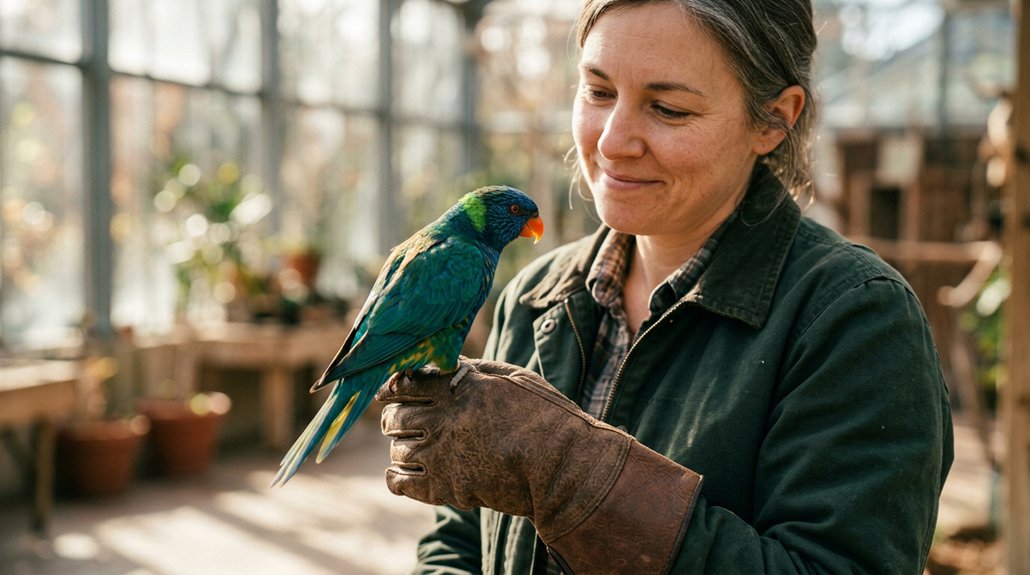
Build trust with your pet bird through short daily visits, calm speech, and a consistent, bird-led presence near the cage. Watch for relaxed feathers, lowered head, and soft body posture before offering gentle touch or a favorite treat. Share small bites of bird-safe foods, and keep sessions brief if your bird retreats or gets agitated. Never force contact or use dominance tactics, since that can damage trust and increase biting; there’s more to learn if you keep going.
Key Takeaways
- Spend 5–10 minutes daily sitting calmly near your bird to build trust through predictable, low-pressure presence.
- Offer favorite treats by hand and pair calm behavior with praise to create positive associations.
- Read body language closely and stop interaction if your bird retreats, stiffens, pins eyes, or shows agitation.
- Use gentle, brief head or neck touches only when your bird leans in, lowers its head, and stays relaxed.
- Respect boundaries, avoid forced contact, and let your bird choose when to approach or return to its cage.
Start Bonding With Short Daily Visits
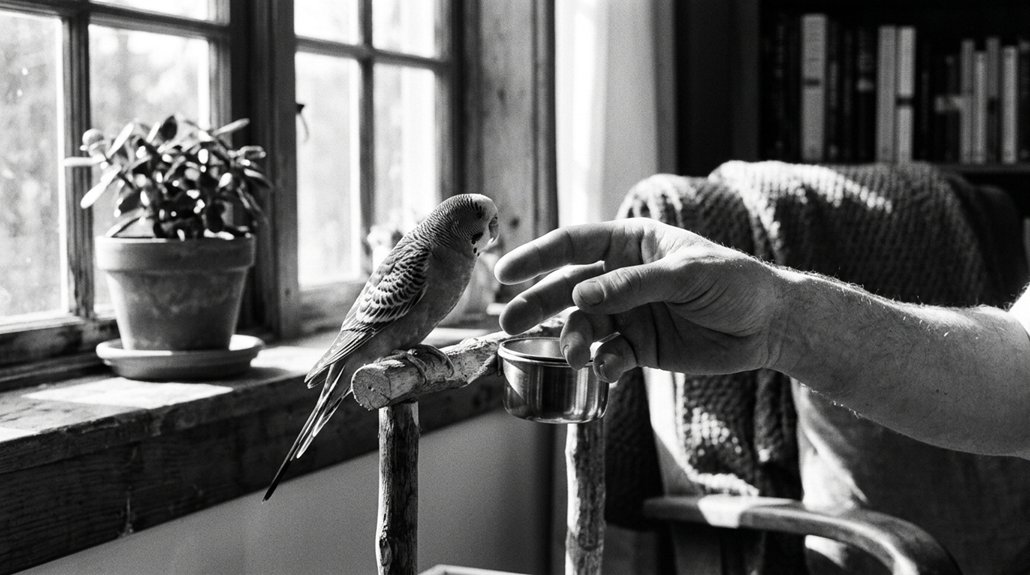
Start by visiting your bird for just 5–10 minutes each day, sitting quietly beside the cage at bird-eye level and speaking softly so it can begin to associate your presence with calm, safety, and predictability. Keep your quiet presence consistent, and use gradual proximity by adding a minute or two when the bird seems settled. Offer a single favored treat by hand or through the bars to build positive association, but don’t overdo it. Move slowly, avoid sudden reaches, and keep your voice low so you don’t trigger alarm. If your bird retreats, stiffens, or becomes vocal and agitated, end the session calmly and try again later with less time. These short, measured visits let you earn trust without overwhelming the bird.
Read Your Bird’s Body Language
Because your bird can’t tell you in words what it wants, reading its body language is the next best way to build trust safely. You’ll notice relaxation when head feathers soften, the head lowers for scratches, and wings stay tucked close; that’s when gentle touch is welcome. If your bird moves away, retreats to the cage back, or keeps feathers sleek, it needs space. Watch for warning signs too: rapid lunges, snapping, pinned eyes, eye dilation, or ruffled crown feathers can signal agitation and possible biting. Quiet chirps and contact calls usually show curiosity, while harsh squawks, growls, or hissing suggest stress. Leaning toward you, stepping up, and soft bobbing show trust; rigid posture means tension. Support calm feather grooming, and respond slowly.
Share Safe Meals With Your Bird
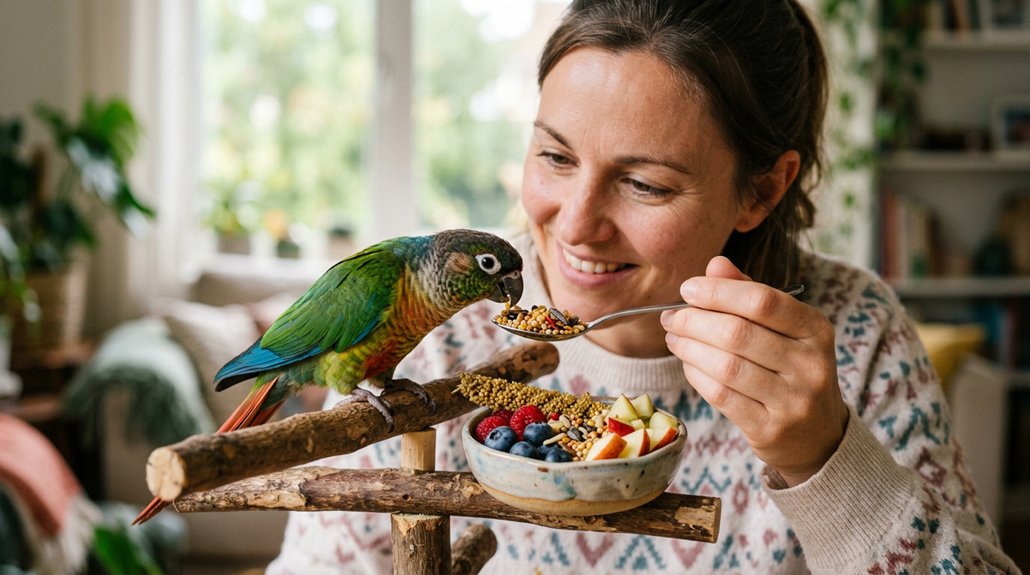
Sharing a meal can strengthen your bond with your bird when you do it safely and predictably. Sit beside your bird and offer small, bird-safe bites from a clean plate to support shared enrichment and natural foraging.
- Use leafy greens, apple slices, cooked egg, or plain pasta.
- Place a designated perch or bowl near the table and serve the same snack at the same time.
- Keep meal routines consistent, and avoid avocado, chocolate, caffeine, alcohol, garlic, onions, and salty or seasoned foods.
Wash hands and utensils to prevent cross-contamination. Offer treats sparingly, under about 10% of daily calories, as positive reinforcement. If you hand-feed, move slowly, keep your voice calm, and pause if your bird retreats or seems stressed.
Use Gentle Touch Only When Welcome
Gentle touch can deepen trust only when your bird clearly invites it. Watch for trust signals: lowered head, relaxed feathers, and a lean toward your hand. Then you can offer brief, light contact on the head or neck, using gentle pressure and a calm voice. Increase duration only if your bird stays still and relaxed.
| Signal | Meaning | Response |
|---|---|---|
| Lowered head | Invitation | Offer scratch |
| Relaxed feathers | Comfort | Continue gently |
| Leans in | Acceptance | Maintain touch |
| Freezes | Stress | Stop now |
| Bites | Discomfort | Give space |
Favor preening zones, not wings or belly. Pair tolerant behavior with a small treat. If your bird pulls away, fluffs, or slicks feathers back, end contact immediately and let trust rebuild on your bird’s terms.
Avoid Dominance and Forced Contact
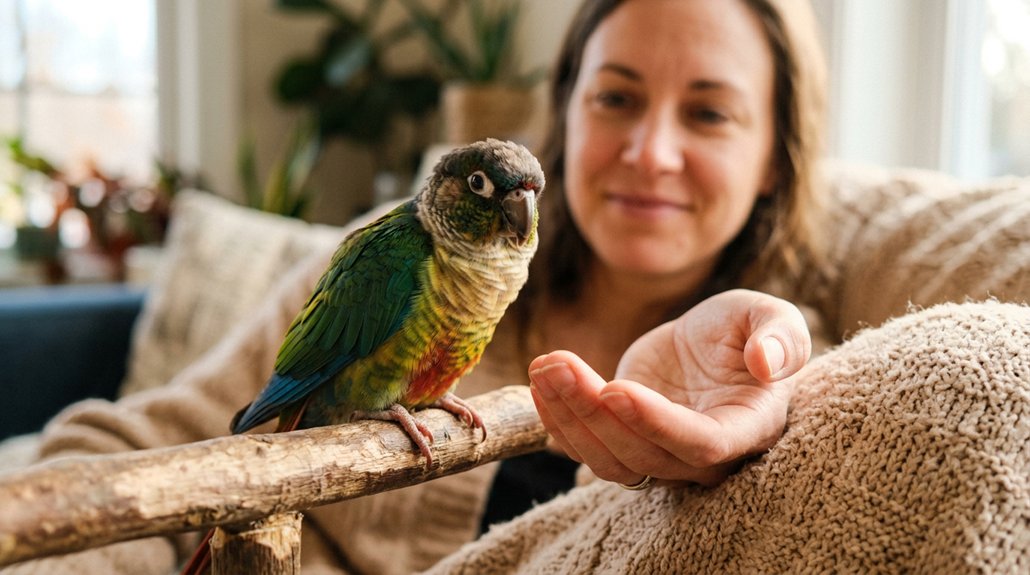
When you’re trying to build trust, avoid dominance-based tactics such as controlling cage height or blocking a bird from being above your head; these methods come from dog training and can increase fear instead of confidence. You’ll get better results when you respect boundaries and let your bird choose proximity.
- Offer a cue like “touch?” and wait for lowered head, relaxed feathers, or a lean toward you.
- If your bird leans away, slicks feathers, raises its head, or retreats, stop and give space.
- Use gradual desensitization: sit nearby, speak softly, and reward calm curiosity with treats.
Let your bird retreat to its habitat freely and keep access open during out-of-cage time. Forced contact can trigger biting and long-term avoidance, but patient, consent-based interactions build safety and trust.
Frequently Asked Questions
What Is the 3 3 3 Rule for Birds?
It’s a guideline: your bird may need 3 days to settle, 3 weeks to feel safe, and 3 months to trust you. During flight training and vocal mimicry, you’ll progress slowly, gently, and consistently.
How Do You Say “I Love You to Your Bird”?
You can say it softly, using consistent verbal cues like “I love you,” plus gentle whistles. Pair it with play routines and mirror interactions only when your bird’s relaxed, so you don’t overwhelm it.
How to Gain Trust With a Bird?
You’ll build trust like laying steady bricks: use Positive reinforcement with small treats, gentle voice, and calm presence. Practice Gentle handling only after your bird relaxes, and back off if you see fear or slicked-back feathers.
How Long Does It Take to Bond With a Bird?
You’ll usually need several weeks to 3–6 months; rescued birds may take a year. Use training patience and environment enrichment, plus daily calm contact, to build trust. Watch behavior, not the calendar, for bonding progress.
Conclusion
A strong bond with your bird grows like Odysseus’s steady return: through patience, consistency, and respect. Keep your visits short and regular, watch for subtle changes in posture and voice, and offer safe food only when it’s appropriate. Let touch happen on your bird’s terms, not yours. When you avoid force and dominance, you’ll build trust that’s calm, durable, and deeply rewarding for both of you.