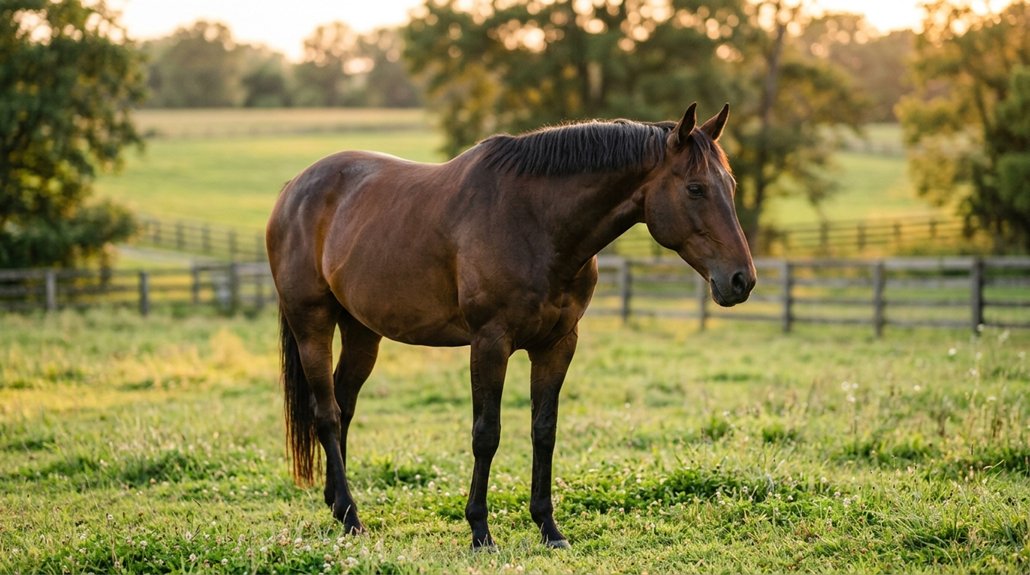
You’re exploring calm horse breeds that are easy to handle, perfect for riders of all skill levels. American Quarter Horses and Morgan Horses are exemplars of gentle temperament and reliable performance, fostering strong bonds and learning with ease. Easy-going breeds like the Appaloosa and Paint Horse offer versatility and a non-intimidating presence for novices. With focus on energy regulation and emotional stability, these breeds promote rider confidence. Interested in discovering more about matching horse traits with riding goals?
Key Takeaways
- American Quarter Horses are adaptable, calm, and excellent for beginner riders.
- Morgan Horses exhibit a gentle temperament, enhancing their ease of handling.
- Paint Horses offer a sociable nature, facilitating an easier learning experience.
- Appaloosas provide patience and versatility for various equestrian activities.
- Cob breeds, including Irish and Welsh Cobs, are sturdy and dependable for newcomers.
Why Calmness Matters in Equestrian Activities
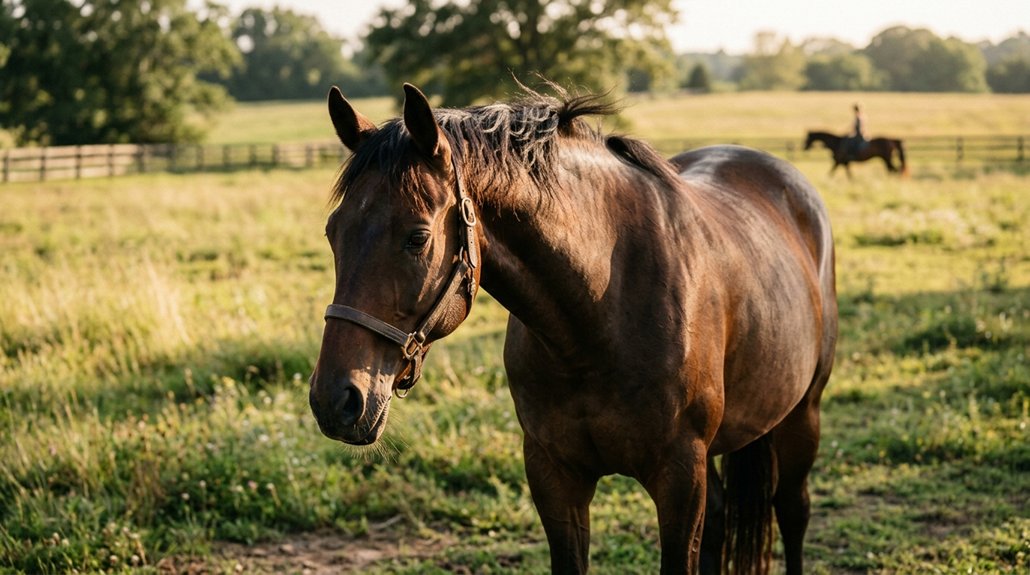
In equestrian activities, calmness in horses profoundly impacts safety and effectiveness. You’ll notice that a horse’s predictable behavior minimizes the risk of accidents, a significant aspect when engaging in riding and handling routines. The calmness importance can’t be overstated; it fosters a tranquil environment that benefits both horse and rider, ensuring a seamless equestrian experience.
Training becomes increasingly efficient with calm horses like American Quarter Horses and Morgan Horses, renowned for their docile nature. This temperament not only enhances skill development but also provides an ideal foundation for therapeutic riding programs. In these settings, emotional stability encourages trust and opens effective communication channels. In addition, maintaining a stress-free interaction with calm horses strengthens the equestrian bond, nurtures companionship, and cultivates mutual respect.
Traits of Easy-Going Horse Breeds
When evaluating easy-going horse breeds, you’ll find that their temperament and trainability are essential, as these breeds usually display a calm demeanor and a willingness to learn, which is vital for effective rider education. Their moderate energy levels contribute to manageable handling, allowing for smooth rider-horse interaction and skill development without excessive exertion. Additionally, their compatibility and versatility make these breeds ideal for various equestrian pursuits, fostering reliable partnerships that are beneficial for both novice and seasoned riders.
Temperament and Trainability
Although various factors contribute to a horse’s overall temperament and trainability, certain breeds consistently demonstrate traits that make them particularly easy-going and suitable for all riders. To understand temperament, evaluate aspects like gentle disposition and emotional stability. Breeds such as the American Quarter Horse and Morgan Horse possess these characteristics, facilitating their approachability. When analyzing trainability, observe intelligence and enthusiasm to please. These attributes boost responsiveness in training and adaptability to new situations. The Appaloosa and Paint Horse often form strong bonds with handlers, enhancing a horse’s willingness to learn and adjust. Their emotional stability guarantees less unpredictability, which is essential for novice riders. By focusing on these traits, you can select a horse breed that promises safer and more enjoyable riding experiences.
Energy and Handling
Since easy-going horse breeds exhibit moderate energy levels, they’re particularly suited for novice riders who may find overly spirited horses intimidating. You’ll appreciate the energy regulation inherent in breeds like the American Quarter Horse and Morgan Horse. These breeds balance enthusiasm with calmness, providing reliable feedback without overwhelming you. When handling these horses, employ techniques that focus on positive reinforcement and gentle cues to capitalize on their willingness to please. Integrating such handling techniques fosters a cooperative atmosphere, encouraging a strong bond with these horses. Additionally, the Cob and Appaloosa exhibit a gentle presence, essential for building your confidence and augmenting safety. This equilibrium in energy and handling cultivates rewarding and manageable riding experiences, reinforcing your role as an effective handler.
Compatibility and Versatility
Easy-going horse breeds exhibit remarkable compatibility and versatility, making them ideal for various equestrian activities and skill levels. When considering horse selection, breeds like the American Quarter Horse and Paint Horse stand out for their calm demeanor, providing novice riders and families a reliable partnership. The Morgan and Appaloosa excel in multiple disciplines, fluidly adapting to your riding goals, whether you’re trail riding or engaging in casual arena work. Their forgiving nature fosters confidence, especially in beginners. Intelligent and enthusiastic breeds like the Norwegian Fjord and Cob are especially trainable, enhancing rider-horse synergy.
| Breed | Trait | Advantage |
|---|---|---|
| American Quarter | Calm demeanor | Ideal for novice riders |
| Morgan | Versatile | Adapts to various disciplines |
| Norwegian Fjord | Trainable | Enhances compatibility |
Safety and Learning Benefits of Calm Horses
You’ve likely noticed that calm horses offer substantial benefits in building rider confidence, enhancing riding skills, and reducing rider anxiety. These horses’ stable temperament minimizes the likelihood of unpredictable behavior, allowing you to concentrate on technical skills like mounting and basic riding techniques. Additionally, their reliability in various situations fosters trust, resulting in a secure setting for progressive learning.
Building Rider Confidence
A calm horse is invaluable for building rider confidence, particularly for novices. Their gentle disposition provides a stable platform for you to engage in confidence building exercises and trust enhancing activities. This tranquil equine environment reduces accident risks, allowing you to focus on skill acquisition rather than potential hazards.
Through structured interactions with calm horses, you can embrace confidence building exercises that progress your riding competence at a comfortable pace. Trust enhancing activities further solidify the harmony between you and the horse, fostering a mutually beneficial relationship. This harmony stems from the horse’s consistent demeanor, where reliability and emotional stability become cornerstones of your experience.
Ultimately, the positive reinforcement from successful interactions nurtures both your confidence and passion for riding, creating a truly enriching journey.
Enhancing Riding Skills
While engaging with calm horse breeds, novice riders greatly enhance their riding skills, benefiting from both safety and learning advantages. Calm horses exhibit emotional stability, minimizing sudden reactions and easing skill progression. This stability allows you to concentrate on overcoming riding challenges without the pressure of handling high-energy equines. Their forgiving nature is fundamental in creating a constructive learning environment, promoting technique mastery and solidifying horsemanship foundations. Additionally, the predictable temperament guarantees a smoother experience vital for learning complex maneuvers.
| Advantage | Benefit |
|---|---|
| Minimized Risk | Fewer sudden reactions |
| Forgiving Nature | Encourages skill improvement |
| Emotional Stability | Focused skill acquisition |
| Predictable Experience | Smooth learning trajectory |
| Enhanced Communication | Trust between rider and horse |
Such attributes facilitate meaningful communication and trust, necessary for proficiency in riding techniques.
Reducing Rider Anxiety
When engaging with calm horse breeds such as the American Quarter Horse and Morgan Horse, novice riders can greatly reduce anxiety, allowing for a secure and focused learning environment. These equines offer a stable psychological platform conducive to mindful riding. Their gentle temperaments enhance anxiety management by minimizing reactions to unexpected stimuli, so you can concentrate on acquiring skills, rather than managing reactivity. Research indicates that interacting with these predictable horses bolsters your confidence, which is critical for retaining riding techniques and maximizing your satisfaction. Moreover, the steady nature of calm horses cultivates a trusting bond, establishing effective communication between you and the horse. This reliability guarantees a safe, methodical progression in skill development while considerably lowering the risk of accidents.
Recommended Calm Horse Breeds for Beginners
Several horse breeds stand out as ideal companions for beginners due to their calm dispositions and reliable nature. When considering horse selection, it’s crucial to align the breed with preferred riding styles. You’ll find that these breeds offer a solid foundation for novice riders.
Choosing the right horse breed ensures a calm and reliable start for novice riders.
- American Quarter Horse: Known for its adaptability across riding styles, it’s the quintessential beginner’s choice.
- Morgan Horse: Its gentle temperament and enthusiasm make horse selection straightforward.
- Paint Horse: Offers a sociable nature, easing the learning curve.
- Appaloosa: Exhibits patience and versatility, ideal for diverse equestrian activities.
- Cob Breeds: Particularly Irish and Welsh Cobs, are sturdy and dependable, perfect for a confident start in equestrian pursuits.
Each offers stability, making them perfect for beginners.
How to Tell If a Horse Is Right for You?
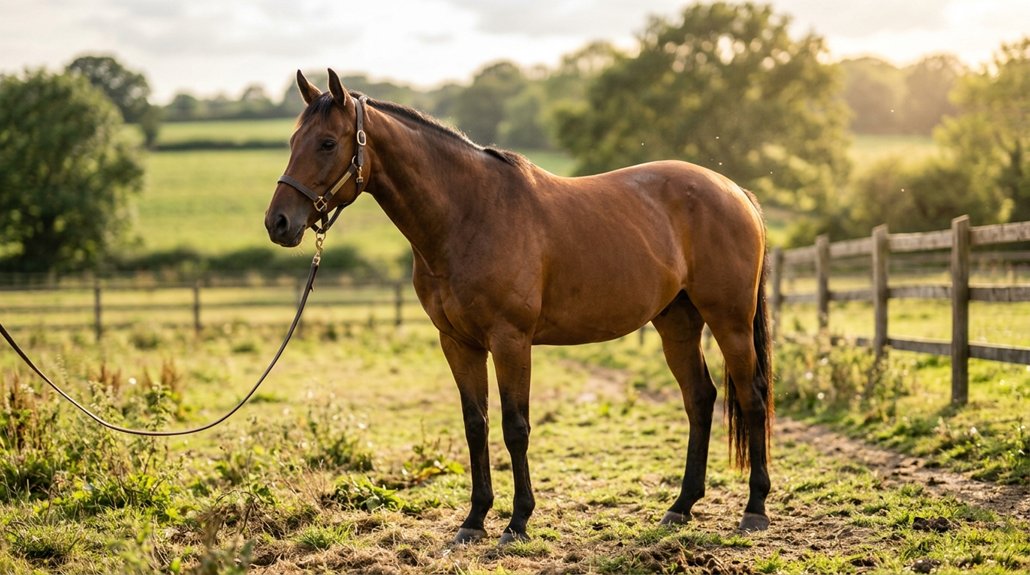
Understanding how to evaluate a horse’s suitability for you requires a precise approach and familiarity with specific criteria. When engaging in horse selection, a thorough temperament assessment is crucial. You’ll want to observe the horse’s behavior around people and other horses; look for calmness and a steady, non-reactive demeanor. Evaluate its experience level—mature horses (8-15 years) often provide reliability and established training for novices. Pay close attention to energy levels; a moderate-energy horse typically offers a manageable experience, building confidence without overwhelm. Consult with an experienced trainer or caretaker to match the horse’s traits to your riding style and skill level. Finally, verify the horse’s health history and soundness. Healthy horses lead to an easier and consistent riding encounter.
Building Lasting Bonds With Easy-Going Horses
Some horses naturally exude a calm and easy-going demeanor, making them ideal partners for building a lasting bond. By fostering a trusting relationship with breeds like the American Quarter Horse and Morgan Horse, you’ll cultivate an emotional connection marked by mutual understanding. Consistent handling and positive reinforcement are key, guaranteeing the horse feels secure in its environment. Novice riders gain confidence with forgiving breeds such as the Appaloosa, through shared experiences. Regular grooming and care are critical, as horses that enjoy interaction form deeper emotional ties.
- Engage in trail riding for shared enjoyment.
- Practice groundwork to enhance communication.
- Utilize consistent handling to guarantee security.
- Provide regular grooming for emotional connections.
- Enjoy successful interactions to boost confidence.
Prioritize these practices for a rewarding equine partnership.
Frequently Asked Questions
What Is the Calmest Breed of Horse?
You’d find the American Quarter Horse to be the calmest breed due to its calm temperament, gentle demeanor, and reliable horse characteristics. These qualities make it an outstanding choice for novices needing ease in handling and riding.
What Is the 1/2/3 Rule for Horses?
The 1/2/3 rule for horses isn’t complicated. It focuses on calm horse behavior, reliable training techniques, and selecting a horse that matches your experience. This guarantees a safer, more enjoyable relationship without overwhelming new riders.
What Is the Most Gentle Horse to Ride?
You’d find the American Quarter Horse exceptionally gentle to ride. To guarantee a smooth experience, employ gentle riding techniques and evaluate the horse’s temperament precisely, focusing on their responsiveness and adaptability during different riding sessions.
What Is the Most Comfortable Horse Breed to Ride?
In summary, the Tennessee Walking Horse takes the cake for comfortable riding due to its unmatched gait. Its temperament guarantees a consistently smooth experience, making it ideal for both casual rides and competitive settings.
Conclusion
In the world of equestrian activities, choosing a calm horse breed is like finding a steady ship in a stormy sea. Their temperate nature not only promotes safety but also enhances learning for beginners, allowing you to navigate equestrian pursuits with confidence. By understanding a horse’s traits and building a strong bond, you guarantee a rewarding partnership. So, analyze your needs, consider the suggested breeds, and commence on a journey where harmony and skill development go hand in hand.