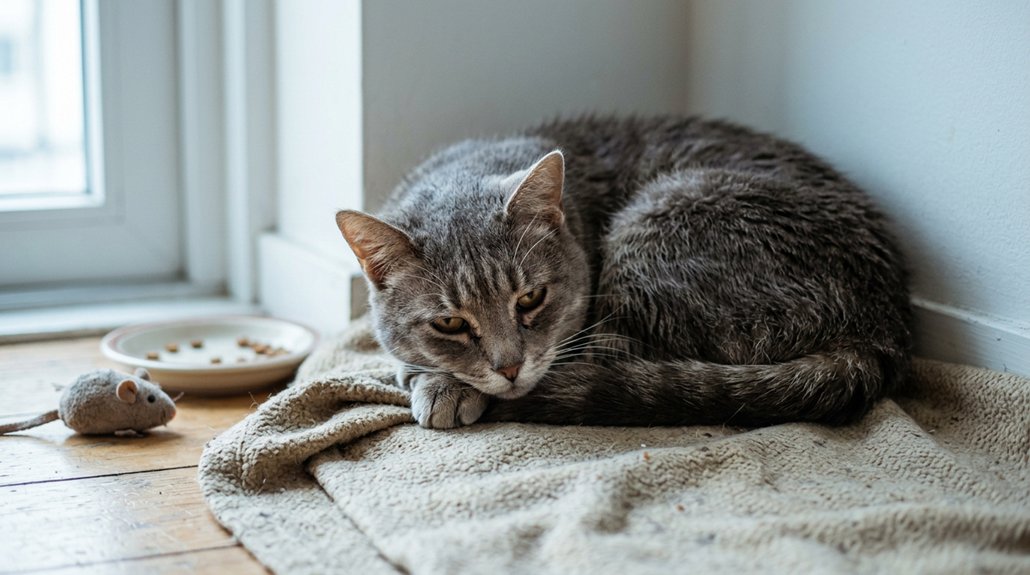
To recognize depression in cats, watch for behavioral changes like reduced food intake or altered sleeping patterns. These shifts can indicate emotional distress. Look for social withdrawal, grooming changes, or increased lethargy, often signaling deeper issues. Environmental changes or lack of stimulation might also affect mental health, leading to depression. Providing a consistent routine, enrichment options, and professional guidance can support your cat’s well-being. Exploring further, you’ll discover effective strategies and supportive environments.
Key Takeaways
- Observe changes in appetite such as reduced food intake or a lack of interest in meals.
- Monitor altered sleeping patterns, including increased sleep or nighttime restlessness.
- Note social withdrawal behaviors, like avoiding family members or other pets.
- Identify changes in grooming habits, such as neglect or excessive grooming.
- Look for signs of lethargy, diminished energy levels, and increased tendency to hide.
Understanding Depression in Cats
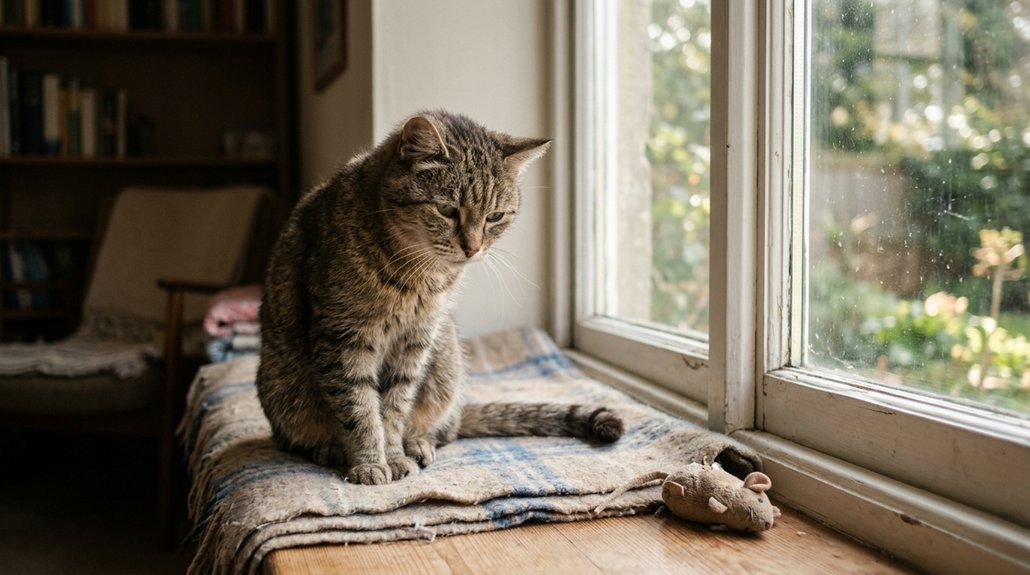
Depression differs from typical sadness by potentially impairing a cat’s daily functioning drastically. It’s important to recognize that these behavioral shifts often reflect deeper emotional distress. Regular veterinary visits play an essential role in distinguishing depression from other health issues, helping maintain your cat’s overall health and happiness.
Spotting Depression in Your Cat: Signs to Watch For
While changes in feline behavior might seem subtle, they’re invaluable indicators when evaluating your cat’s emotional well-being. Recognizing depression involves observing specific emotional cues in their daily routines. Here are the key signs to watch for:
Recognizing depression in cats relies on observing subtle changes in their daily behavior and routines.
- Appetite Changes: Notice if your cat eats less or shows no interest in food, as this can lead to weight loss and signal depression.
- Sleeping Patterns: Monitor whether your cat sleeps excessively or is restless during the night, as these behaviors indicate a low mood.
- Social Withdrawal: Pay close attention if your cat avoids family members or other pets, suggesting emotional distress.
- Grooming: Look for neglect in grooming or excessive grooming, as a depressed cat might have a dull coat or skin issues.
Environmental and Physical Factors Affecting Cat Depression
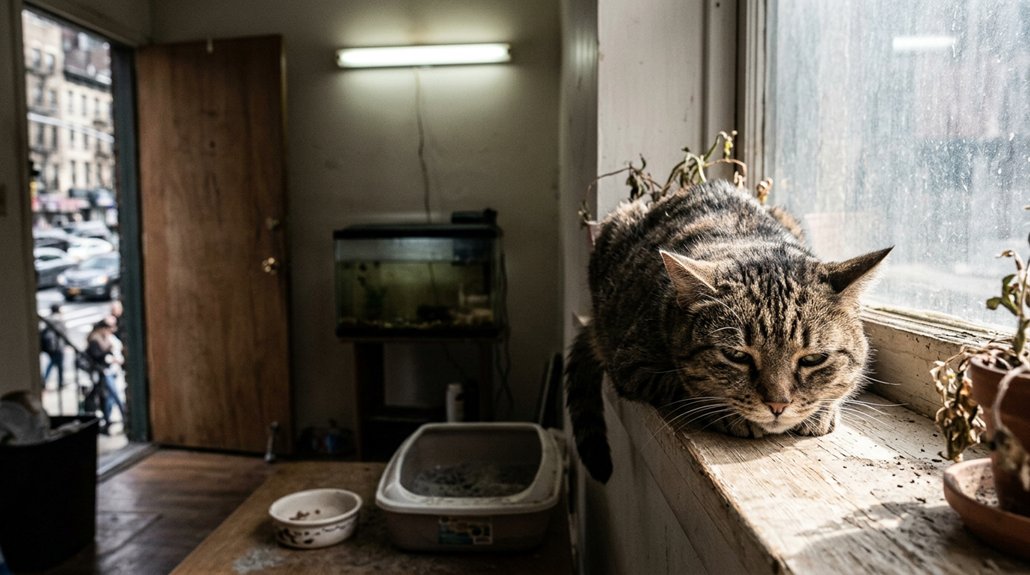
You’re likely aware that environmental and physical factors can greatly influence your cat’s mental health. Changes like moving to a new home or experiencing a major life event can disrupt their routine, while medical conditions or lack of stimulation might exacerbate depressive symptoms. It’s essential to recognize these elements since addressing them can aid in improving your cat’s overall well-being and quality of life.
Environmental Change Effects
Many environmental changes have the potential to induce depression in cats by disrupting their accustomed sense of security. Recognizing environmental triggers is essential for effective stress management in felines. Here are some factors to take into account:
- Home Modifications: Moving to a new residence or even rearranging furniture can unsettle your cat, creating anxiety or depression.
- Family Dynamics: Introducing a new pet or baby can be stressful, leading to withdrawal or depressive signs in resident cats.
- Traumatic Events: Experiences such as natural disasters or accidents may trigger depressive symptoms as cats perceive threats and instability.
- Routine Disruptions: Changes in work schedules or reduced social interaction frequency can increase stress, enhancing vulnerability to depression.
In addressing these, verify your cat’s environment remains as consistent and enriched as possible.
Impact of Medical Conditions
Understanding environmental factors is a significant step, but it’s also important to contemplate how medical conditions affect a cat’s emotional well-being. Conditions like arthritis, diabetes, or dental disease can lead to significant discomfort and alter a cat’s behavior, often presenting depression-like symptoms. These ailments demand attention; regular veterinary check-ups are essential for early detection and managing these issues effectively. Medical interventions, such as medication or surgery, can alleviate physical discomfort, potentially improving mood. Incorporating behavioral therapy may also help in addressing emotional distress by modifying environmental stressors and enhancing interaction. Remember, cats are sensitive to household emotional climates and sudden changes. Proactive care and empathy can transform a cat’s response to distress, ensuring a healthier, happier life.
Stimulus and Activity Deficiency
A cat’s environment and activity level play pivotal roles in its mental health. When deprived of stimulating toys and interactive play, cats, especially those indoors, might express depression due to boredom and frustration. Here’s how you can help:
- Stimulating Toys: Provide toys that challenge their intellect and keep them engaged. Puzzle feeders or treat-dispensing toys can spark curiosity.
- Interactive Play: Dedicate time each day to interactive sessions. Use toys like laser pointers or feather wands to mimic prey and encourage natural hunting behaviors.
- Environmental Enrichment: Install climbing structures or scratching posts. This satisfies their instinctual need for climbing and scratching.
- Routine Stability: Maintain a consistent daily schedule to reduce stress from separation anxiety and environmental changes.
How Consistent Routines and Mental Engagement Prevent Depression in Cats
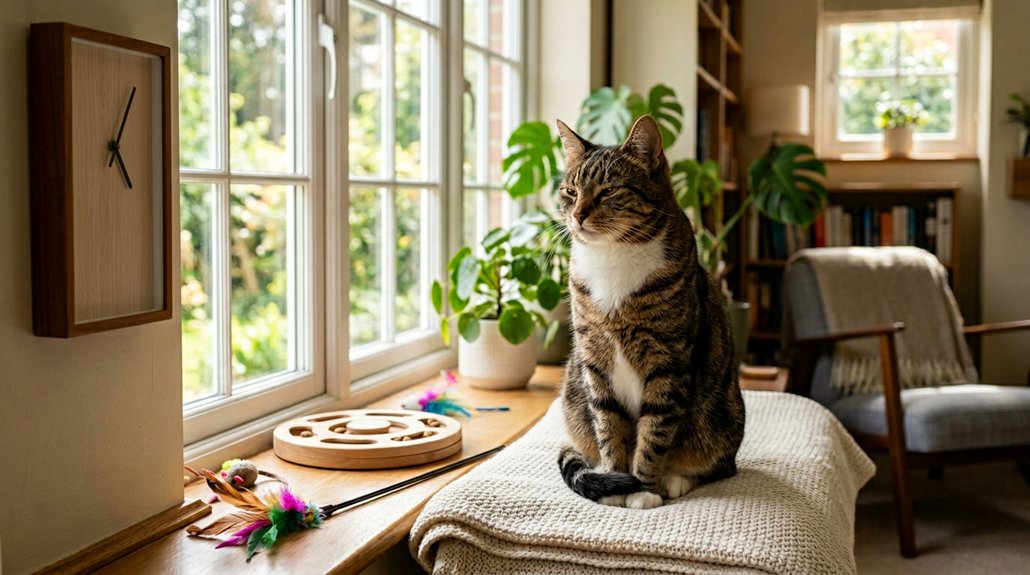
To prevent depression in your cat, maintaining consistent routines for feeding, playtime, and interaction is essential, as it provides stability and reduces anxiety. Engage your cat mentally with interactive toys and puzzles, which will stimulate their mind and alleviate boredom. By incorporating daily play sessions and environmental enrichment, such as scratching posts and climbing structures, you strengthen your bond and support a happier, more secure feline companion.
Importance of Routine Consistency
When you maintain consistent routines for your cat, you can greatly contribute to their emotional stability and prevent depression. Routine benefits include a secure environment that minimizes stress and reduces the chances of depressive tendencies. A predictable schedule helps in the following ways:
- Stress Reduction: Regular routines decrease anxiety by providing a stable and predictable environment, essential for your cat’s wellbeing.
- Habit Formation: Set schedules help cats develop healthy habits that promote emotional stability, especially vital for sensitive cats.
- Sense of Security: Familiar feeding and playtimes reassure your cat, reinforcing their sense of safety and confidence.
- Overall Wellbeing: Maintaining consistency across daily interactions and resting spots supports mental health, giving your cat a comforting and reassuring environment.
Enhancing Mental Engagement
While it might seem surprising, a well-established routine combined with ample mental engagement is essential for preventing depression in cats. Consistent play routines not only cater to your cat’s hunting instincts but also provide necessary cognitive stimulation. Incorporate interactive toys and engaging puzzle games to encourage sensory exploration and enrich the environment. This creates a dynamic space for your cat, alleviating boredom—a key factor in depressive symptoms. Consider integrating training sessions as part of daily activities; they’re excellent for behavior modification and bolstering mood. Remember, when routines are disrupted—such as changes to feeding times or play schedules—it can stress your cat. Maintain predictability by adhering to established patterns to support their psychological well-being and overall happiness.
Benefits of Playtime Activities
In creating a balanced and stimulating environment, playtime activities serve as a cornerstone for feline mental health. Consistent play schedules offer crucial benefits by mimicking hunting instincts, keeping indoor activities invigorating. Using interactive toys can transform mundane settings into dynamic spaces that challenge your cat, enhancing mental stimulation and preventing depression. Here’s how these elements combine effectively:
- Routine Flexibility: Establish consistent yet adaptable play schedules to instill security and reduce stress.
- Engagement Techniques: Incorporate toy variety to target different senses, keeping engagement levels high.
- Social Play: Engage in activities that encourage bonding, alleviating loneliness.
- Mental Stimulation: Opt for puzzles and toys that dispense food, enriching your cat’s environment.
These methods create essential mental engagement, benefiting overall well-being.
Strategies for Supporting a Depressed Cat
Identifying strategies to support a depressed cat is essential in helping them return to their usual selves. Enhancing social interaction by maintaining a consistent daily routine for feeding and playtime can positively impact their mood. Ensuring your cat has access to interactive toys, climbing structures, and areas to explore encourages mental and physical stimulation. Consider alternative therapies, such as calming aids like pheromone diffusers and natural supplements, to promote emotional wellbeing. Gradually introducing a new companion can also alleviate loneliness. Scheduling a veterinary appointment is a prudent step to rule out underlying medical issues contributing to your cat’s depressive symptoms. With empathy and care, you can help navigate your cat toward recovery and a return to their vibrant, joyful self.
When Professional Help Is Needed for Your Cat
How do you know when it’s time to seek professional help for your cat’s depression? Recognizing the signs of urgency is essential. Persistent changes in appetite, energy, or behavior often indicate that veterinary attention is needed. Here’s a guide for when to seek professional assistance:
- Persistent Symptoms: If symptoms like lethargy or loss of appetite last more than a couple of days, consult your vet.
- Behavioral Changes: Sudden aggression, withdrawal, or increased hiding necessitate a thorough behavioral evaluation.
- Compulsive Behavior: If compulsive actions or severe anxiety appear, professional help can offer effective solutions.
- Physical Symptoms: Symptoms like ongoing vomiting, drastic weight loss, or litter box issues could signal medical conditions requiring urgent attention.
Act promptly to guarantee your cat’s health and well-being.
Ensuring a Cat-Friendly Home
To guarantee your home is welcoming for your feline friend, consider integrating elements that cater to their instinctual needs and preferences. Vertical and horizontal spaces like shelves and cat trees promote cat enrichment, enabling climbing and exploration that naturally alleviates anxiety. Provide safe spaces, such as covered beds or quiet corners, allowing your cat to retreat and relax when needed. Interactive toys and puzzles foster mental stimulation, crucial for preventing boredom—a frequent trigger for depression in indoor cats. A consistent routine encompassing feeding, playtime, and social interaction imparts stability, essential for a cat’s overall well-being. Ample access to resources like litter boxes, food bowls, and water stations reduces resource competition and potential stress, ensuring your home is truly cat-friendly.
Setting Up an Environment to Combat Cat Depression
While it may seem intricate, setting up an environment to combat cat depression is integral to fostering a healthy, happy companion. Creating a space that addresses your cat’s physical and psychological needs can greatly enhance their well-being. Here are key elements to keep in mind:
Crafting a nurturing space combats cat depression and ensures a happy, healthy feline friend.
- Vertical Spaces: Install cat trees or shelves to allow climbing and exploration, catering to their natural instincts.
- Sensory Enrichment: Add window perches or cat-safe plants to stimulate their senses and enrich their mental environment.
- Safe Retreat Spaces: Provide covered beds or quiet corners for stress escape and security.
- Consistent Routine: Establish regular feeding, play, and interaction times to reduce anxiety and offer predictability.
These steps help mitigate depression, encouraging a more content and lively cat.
Frequently Asked Questions
How Do I Know if My Cat Is Depressed or Just?
You’ll notice if your cat’s depressed by observing behavioral changes and feline body language. Look for reduced playfulness, grooming negligence, or unusual vocalizations. Sudden shifts from their regular habits often suggest more than just a passing mood.
What Is the 3-3-3 Rule for Cats?
The 3-3-3 rule is like a magical map guiding you through the mysterious land of cat behavior. Within three days, weeks, and months, your feline’s health visibly improves as they adjust, settle, and flourish.
What Is “I Love You” in Cat Language?
In feline communication, “I love you” is expressed through emotional cues like slow blinking, soothing purring, affectionate kneading, or an upright tail. These signs professionally demonstrate cats’ trust and affection, indicating their emotional connection towards you.
How Do You Cheer up a Depressed Cat?
Lift a cat’s spirits with a playground of playful activities that’d make any feline royalty purr with delight. Prioritize comfort zones and routine, ensuring insecurity evaporates. Use calming aids and social interaction to truly transform their mood.
Conclusion
In understanding and addressing cat depression, awareness and adjustments are key. Spot signs and seek solutions swiftly for your feline friend. Consistent care and creative engagement can counteract sadness and stress. Provide a peaceful, playful, and predictable environment to combat melancholy. If professional intervention is necessary, pursue it promptly, prioritizing your pet’s psychological well-being. By fostering a fulfilling, friendly, and feline-focused home, you’re ensuring your cat’s happiness and health remain secure and stable.