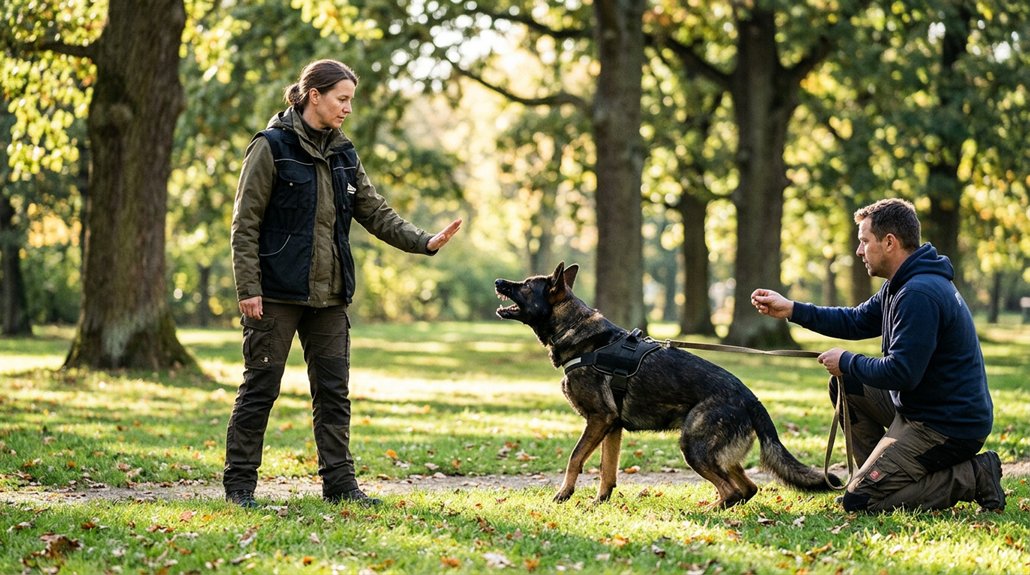
To handle aggressive behavior in dogs safely, recognize warning signs like raised hackles and a fixed stare. Quickly implement safety measures: create restricted areas and use safety stations with leashes and muzzles. Identify specific triggers such as resource guarding, and employ positive training with rewards and desensitization. Seek professional guidance to rule out medical issues and develop tailored strategies. By understanding dog body language and aggression types, you can enhance safety and promote harmony. Discover how to maintain these strategies effectively.
Key Takeaways
- Equip safety stations with leashes, muzzles, and barriers to ensure immediate control and prevent incidents.
- Document incidents meticulously to identify aggression triggers like resource guarding or environmental stimuli.
- Use positive reinforcement to reward calm behavior and implement desensitization techniques to decrease aggression.
- Consult veterinarians to rule out health issues and engage behaviorists for specialized aggressive behavior management.
- Monitor and adjust strategies regularly, observing body language to enhance safety and understanding in managing aggression.
Spotting Aggression in Dogs
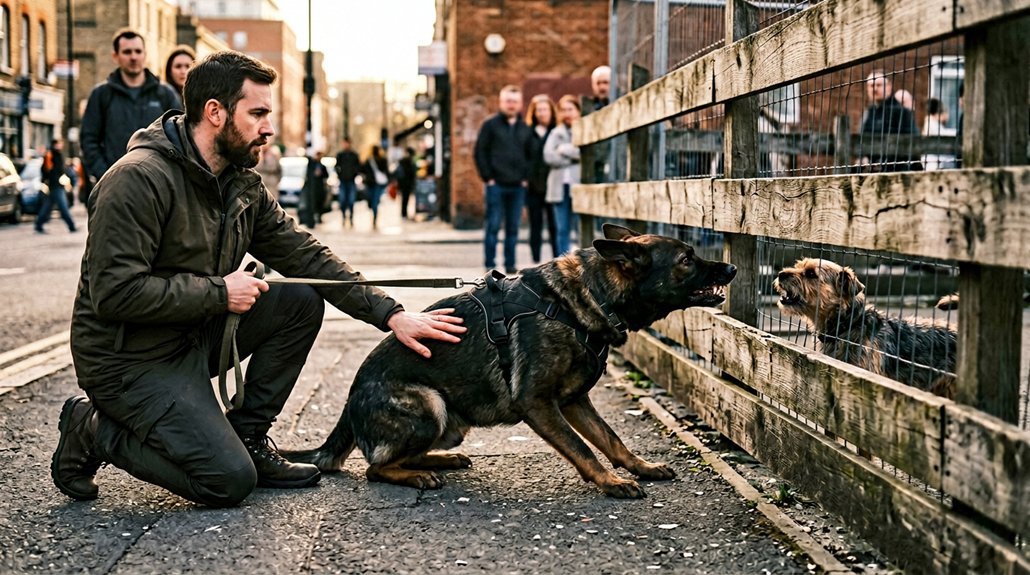
Spotting aggression in dogs is essential for ensuring the safety of both the pet and those around it. You’re looking for warning signs like raised hackles, a tense body posture, or a fixed stare before any aggressive act occurs. Recognizing changes in your dog’s behavior, such as increased irritability or reactivity, especially when socializing, is important for preventing escalation. Each type of aggression, whether territorial, possessive, or fear-induced, has its own unique triggers and contexts. By understanding these, you can better predict possible aggressive episodes. Maintaining a detailed log of incidents, noting both triggers and settings, will aid in thoroughly addressing these issues. This information is critical for early intervention and helps you manage your dog’s aggressive tendencies effectively.
Implement Safety Measures Immediately
Identifying signs of aggression in your dog is only the first step; immediate action is necessary to guarantee safety. Implementing safety measures mitigates risks linked to aggressive behavior. Start by integrating leash training and keep safety equipment accessible throughout your home. Consider these essential strategies:
Immediate action is crucial; safeguard your home with leash training and ready safety equipment.
- Equip “Safety Stations”: Position leashes, basket muzzles, and tethers in convenient spots for quick deployment.
- Secure Entrances: Lock doors and safeguard outdoor spaces to minimize unexpected provocation.
- Install Barriers: Use baby gates to create restricted areas, reducing exposure to potential triggers.
- Review Regularly: Continuously evaluate and update your safety measures for effectiveness.
Pinpoint Specific Triggers of Aggression
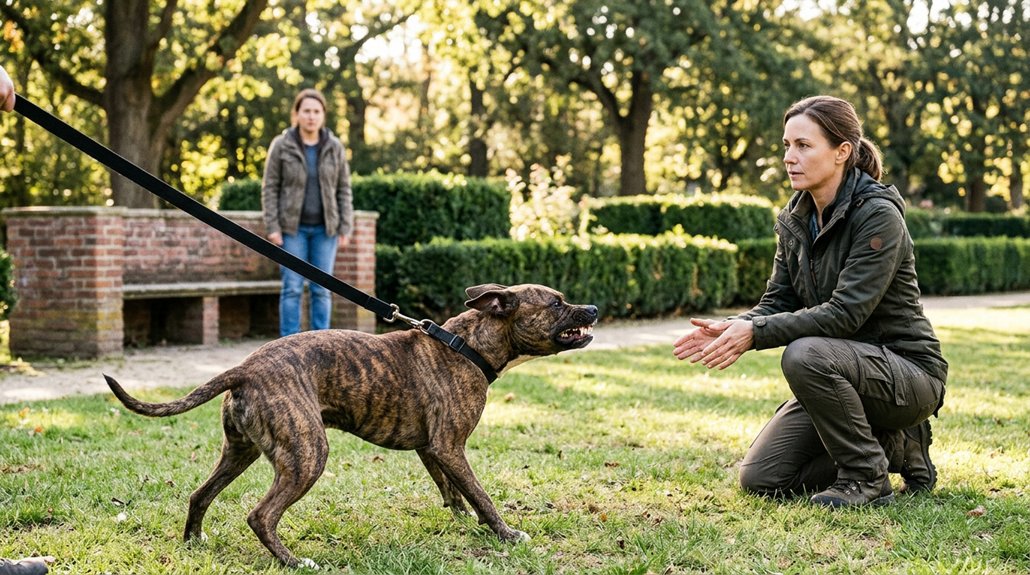
When it comes to understanding canine aggression, recognizing the specific triggers is paramount. Start by observing the environmental stimuli around your dog—identify if certain contexts, like the presence of other animals or unfamiliar people, heighten aggression. Document these instances diligently, noting the surroundings and stimuli involved. Pay attention to common triggers such as resource guarding, where your dog may become protective over food or toys. Familiarize yourself with your dog’s body language; signs like growling or stiffening often precede aggression, indicating perceived threats. Remember, your dog’s reactions might be unique, requiring tailored solutions. Consulting with a trained behavior consultant can offer invaluable insights into the patterns you’ve noted, guiding you toward effective management strategies focused on your dog’s specific needs.
Train With Positive Behavior Techniques
Observing your dog’s specific triggers is just the beginning of curbing aggressive behavior. To enhance this journey, train with positive behavior techniques that encourage good habits through treat incentives and calming exercises. Here’s how you can make a difference:
- Reward Desired Behaviors: Consistently offer treats or praise when your dog exhibits calm and non-aggressive behavior. This positive reinforcement helps create a favorable training environment.
- Desensitization and Counterconditioning: Gradually expose your dog to triggers while rewarding calm reactions, reducing reactivity over time.
- Teach Self-Calming Exercises: Commands like “settle” or “place” can control arousal levels, aiding your dog in stressful situations.
- Implement “No Petting” Rules: Introduce visitors without immediate petting to prevent attention-seeking aggression, reinforcing calmness instead.
Seek Guidance From Professionals
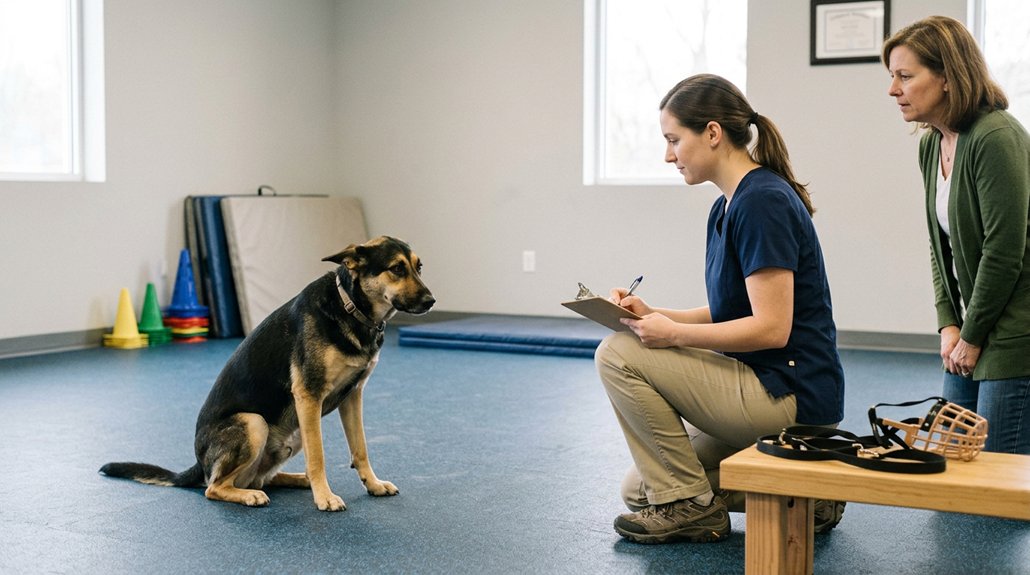
Though it may seem challenging, enlisting help from professionals is a critical step in managing your dog’s aggressive behavior. A vet consultation is essential, as it helps rule out medical issues like pain or neurological problems that might contribute to aggression. Once health concerns are cleared, engaging behavior specialists can greatly aid in formulating tailored treatment plans. These experts will diagnose the specific aggression type, employing positive reinforcement techniques that don’t inadvertently reinforce negative behavior. They provide ongoing assessments, adjusting strategies as your dog progresses, ensuring modifications are effective and safe. Additionally, these professionals educate you on dog body language and signs of stress, enhancing the mutual understanding and safety between you and your canine companion.
Frequently Asked Questions
How to Snap a Dog Out of Aggression?
To snap a dog out of aggression, don’t confront directly. Use calming techniques and behavior modification like desensitization. Redirect their focus with commands, and guarantee your safety with tools. Keep the environment calm and reinforce positive reactions.
Can Thyroid Problems Cause Aggression in Dogs?
Absolutely, thyroid dysfunction can trigger aggression in dogs. You might think their aggression’s unrelated, but hormonal imbalances affect mood. Typically, once treated, aggression often diminishes. Always consult a vet to confirm if it’s a thyroid issue.
What Is a Red Flag Puppy’s Behavior?
A red flag puppy’s behavior manifests in warning signs like excessive fearfulness, possessive aggression, or unpredictable reactions. You’ll need early intervention to prevent these issues from developing into more serious aggression as your puppy matures.
What Is the #1 Most Aggressive Dog Breed?
There’s no definitive “#1 most aggressive” breed, as individual temperament varies. Instead, focus on understanding breed characteristics and potential aggression triggers. Prioritize early socialization and responsible handling to reduce aggression, showing empathy towards the dog’s background.
Conclusion
Dealing with a dog’s aggression requires the finesse of a maestro conducting a delicate symphony. Imagine steering a ship through stormy seas—every action deliberate, every decision essential. By quickly spotting aggression, taking safety measures, identifying triggers, and employing positive training, you create a harmonious environment. Remember, you’re not alone on this journey; professional guidance can be your lighthouse, guiding you safely to calmer waters. With patience and understanding, you can transform tumult into harmony.